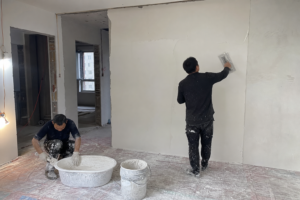
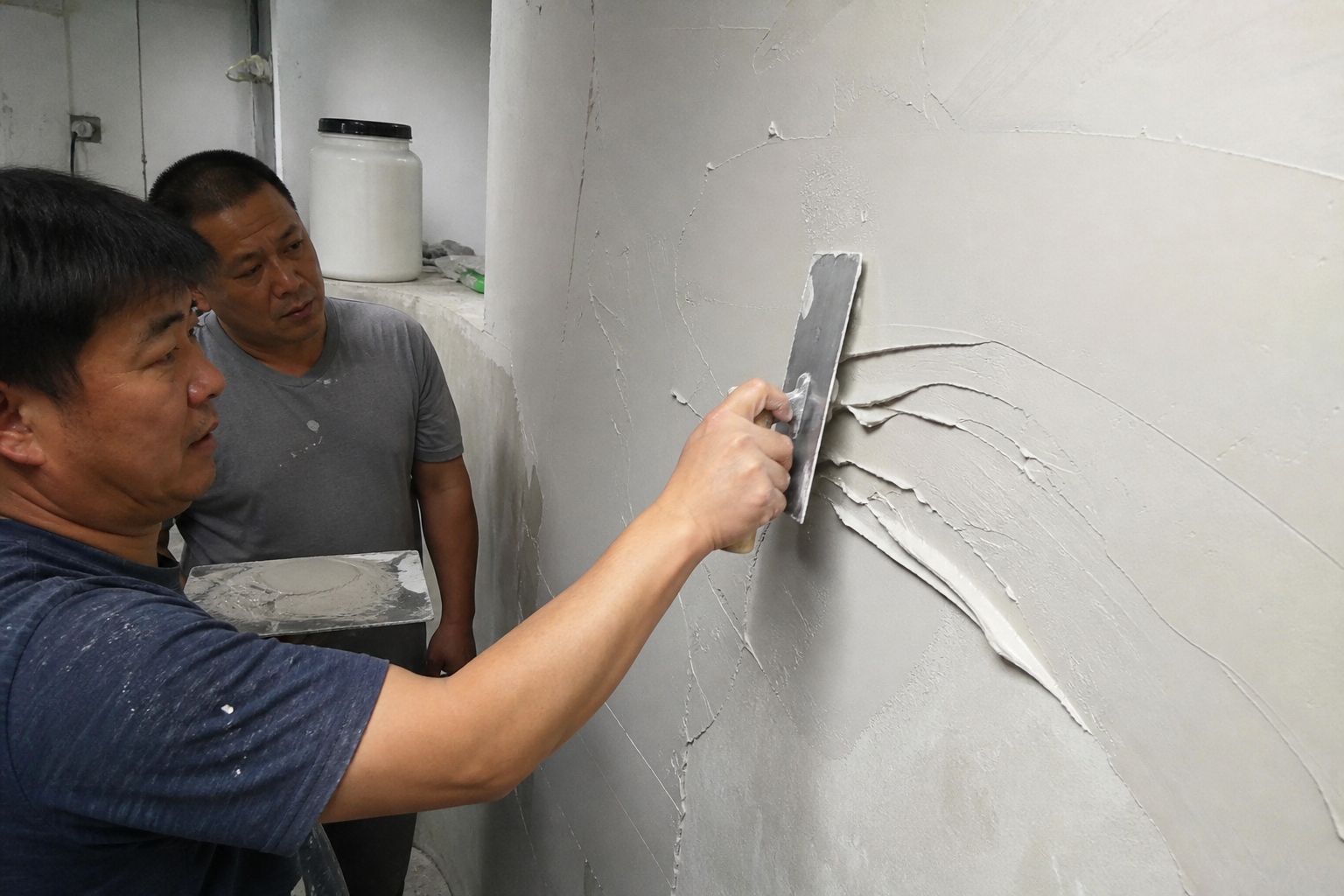
A high HPMC viscosity on the certificate can reassure a buyer—and still fail to explain why putty gathers into rolls, tears open, drags behind the blade, or lifts from the wall. The immediate temptation is to request an even higher-viscosity grade. That response may raise cost without removing the actual cause.
In our application work, we treat rolling and tearing as system symptoms. Powder packing, binder balance, water demand, cellulose-ether wetting, maturation, blade shear, coat thickness, substrate suction, and weather all act together. The practical purchasing question is therefore not “Which viscosity is highest?” but “Which material and test combination gives repeatable application behavior?” The following diagnostic route moves from the symptom to a controlled supplier and batch-release decision.
1. Why a Single HPMC Viscosity Cannot Explain Putty Rolling or Tearing
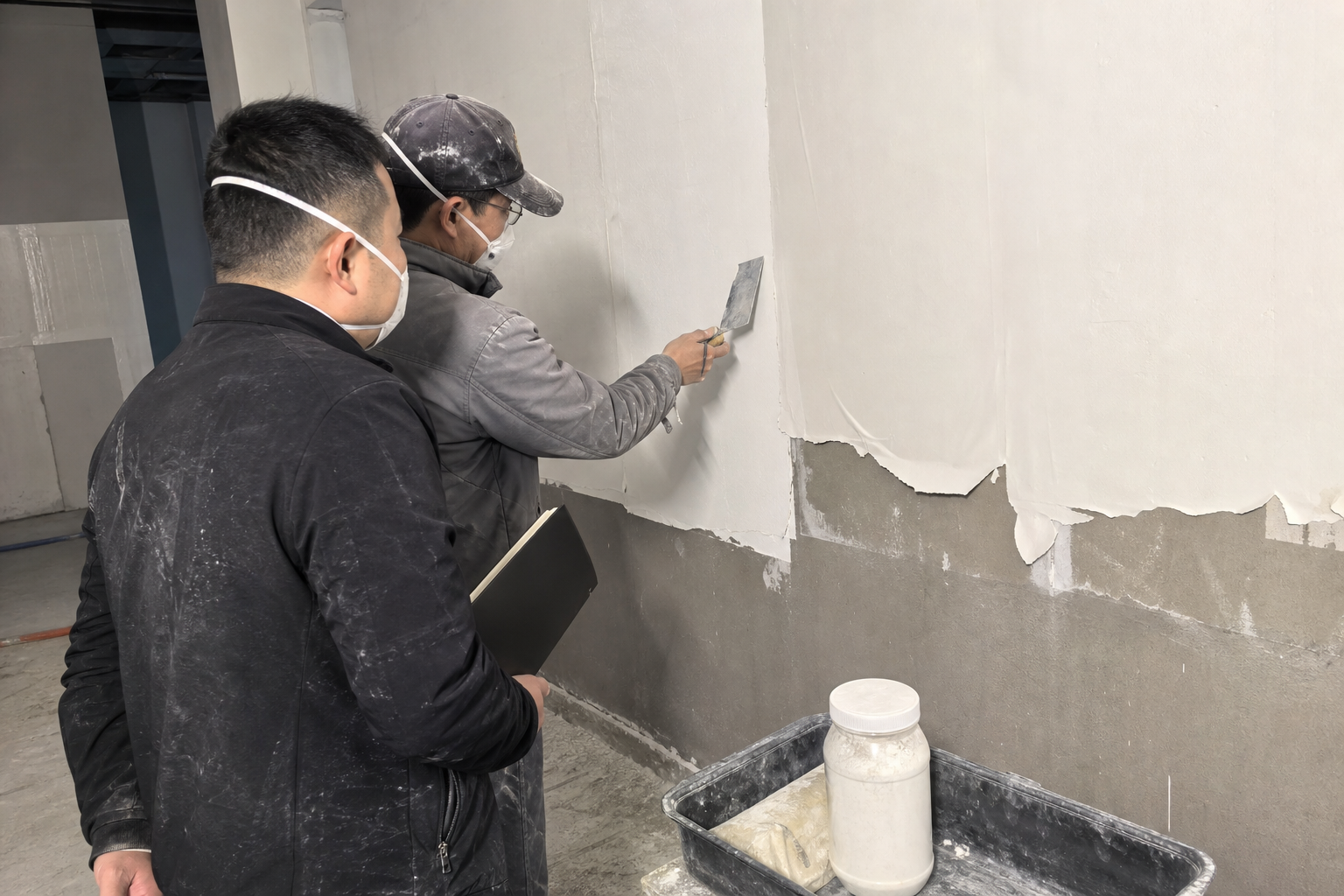
Problem: A COA viscosity result is often treated as a direct prediction of trowel feel. Yet wall putty is a particle-rich, non-Newtonian paste, while the reported HPMC value usually comes from a defined polymer solution under a defined method. The two systems do not experience the same concentration, shear history, or surfaces.
Agitation / Answer: A high HPMC viscosity proves performance only under the stated solution test conditions. It does not independently predict wall-putty lubrication, adhesion, water retention, or recovery after trowel shear. Rolling and tearing must be diagnosed as formulation-and-application responses, using matched preparation and a real trowel panel—not a single COA number.
Start by separating three observations that buyers frequently combine:
- Solution viscosity: useful for identity and lot consistency when concentration, temperature, spindle, speed, container, and conditioning are fixed.
- Fresh-putty rheology: governed by HPMC plus mineral surface area, soluble salts, binder hydration, entrained air, water level, and other additives.
- Application behavior: the balance of wet adhesion, cohesion, lubrication, shear thinning, structural recovery, and water loss against the substrate.
ASTM D2196 explains why a lone rotational speed gives less characterization of a non-Newtonian material than readings at multiple speeds; it also distinguishes apparent viscosity, shear thinning, and thixotropic recovery.1 ISO 2555 likewise defines an apparent-viscosity method using a single-cylinder rotational viscometer.2 We use those sources for the principle of method consistency, not as wall-putty acceptance standards.
Before changing grade, record the exact defect. Does material curl ahead of the blade, detach behind it, form rubbery strings, expose dry powder, or tear only on a second pass? Then compare the supplier result under one agreed method and run the same putty formula. Our guide to reading an HPMC COA helps buyers capture the test conditions behind the number, while our construction HPMC quality-test overview shows why application checks belong beside incoming data. This prevents a specification from rewarding a high number that does not solve the field symptom.
2. How Should Powders, Water, and Mixing Order Be Standardized?
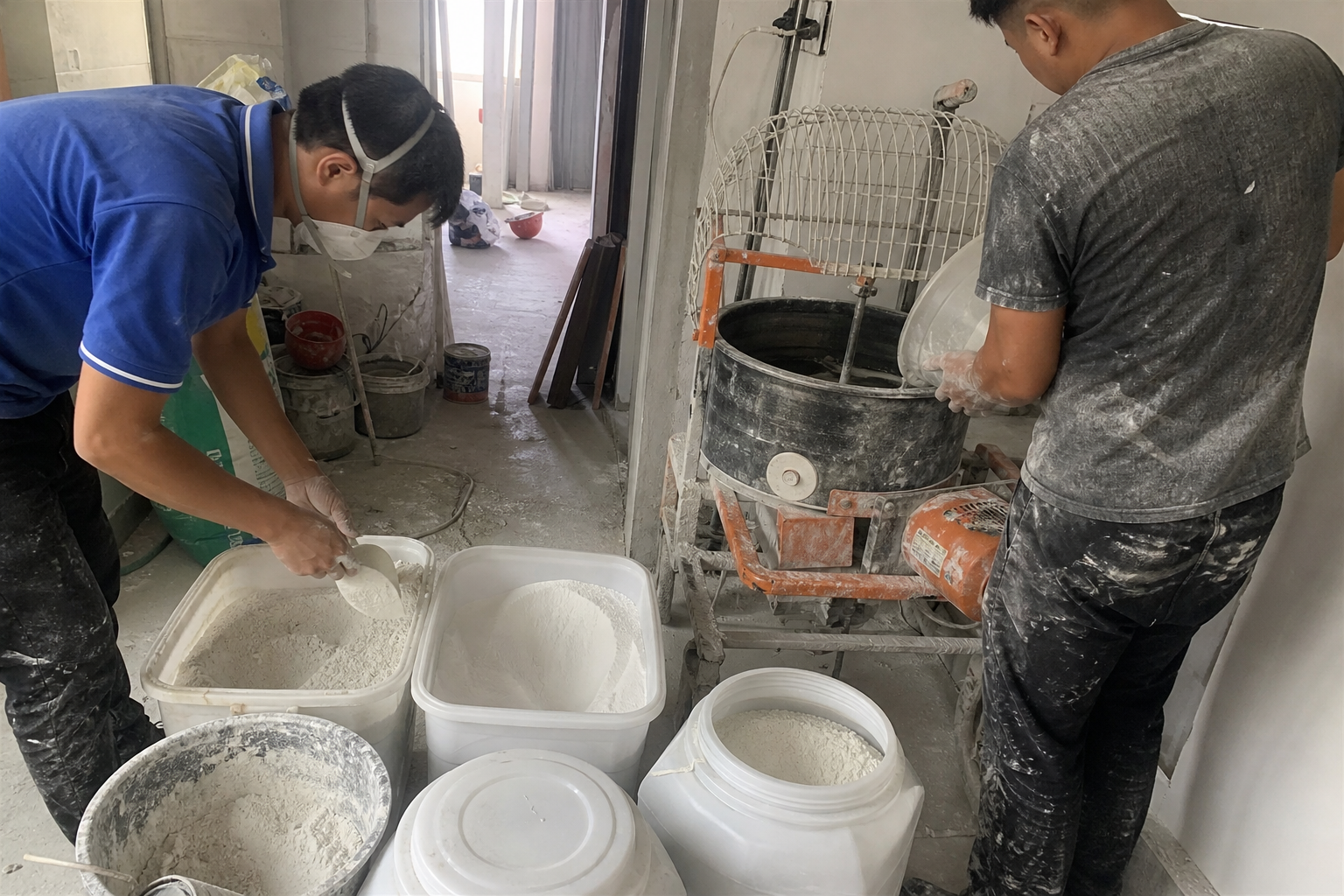
Problem: A supplier comparison becomes meaningless when one trial uses a different filler lot, binder balance, powder grading, water adjustment, or addition sequence. Fine particles and porous minerals can increase water demand; poorly distributed binder can create local drag. Operators may then add water by feel, masking the original difference.
Agitation / Answer: Lock the full wall-putty recipe before judging HPMC: identify every powder lot, hold filler grading and binder ratio constant, weigh the water, and follow one timed addition sequence. If water is adjusted until the paste merely “feels right,” the test compares operator corrections rather than cellulose-ether performance.
Build a controlled trial sheet rather than relying on a recipe name. At minimum, it should capture:
| Control point | What we hold constant | Why it matters |
|---|---|---|
| Mineral package | Supplier, lot, grading, and dry condition | Changes packing, surface area, and water demand |
| Cementitious or polymer binder | Identity and proportion | Changes cohesion, wet adhesion, and hydration |
| Water | Weighed quantity and source | Changes paste structure and blade drag |
| Addition order | Written sequence | Affects HPMC dispersion and local wetting |
| Mixer | Vessel, tool, speed setting, and time | Changes shear and air entrainment |
| Rest and remix | Defined sequence | Allows hydration before evaluation |
We first dry-blend the powders consistently, unless the validated production process specifies another route. We then add the dry blend to the measured water in the same manner for every candidate, mix with the same equipment, scrape the vessel consistently, rest, and remix. Trial labels remain blind to the operator where practical, reducing expectation bias.
ASTM C305 covers reproducible mechanical mixing of hydraulic-cement pastes and plastic-consistency mortars.3 It is not a wall-putty acceptance standard and may not reproduce a factory mixer. Its relevant lesson is that mixing equipment and sequence must be controlled if results are to be compared. Buyers can also review our wall-putty formulation and additive guide to map likely interactions and our explanation of why HPMC is added to dry-mixed mortar for the functional context. Only after a fixed base formula produces a repeatable control should we compare HPMC samples or decide whether the powder system itself needs correction.
3. Is the HPMC Fully Dispersed, Dissolved, and Matured?
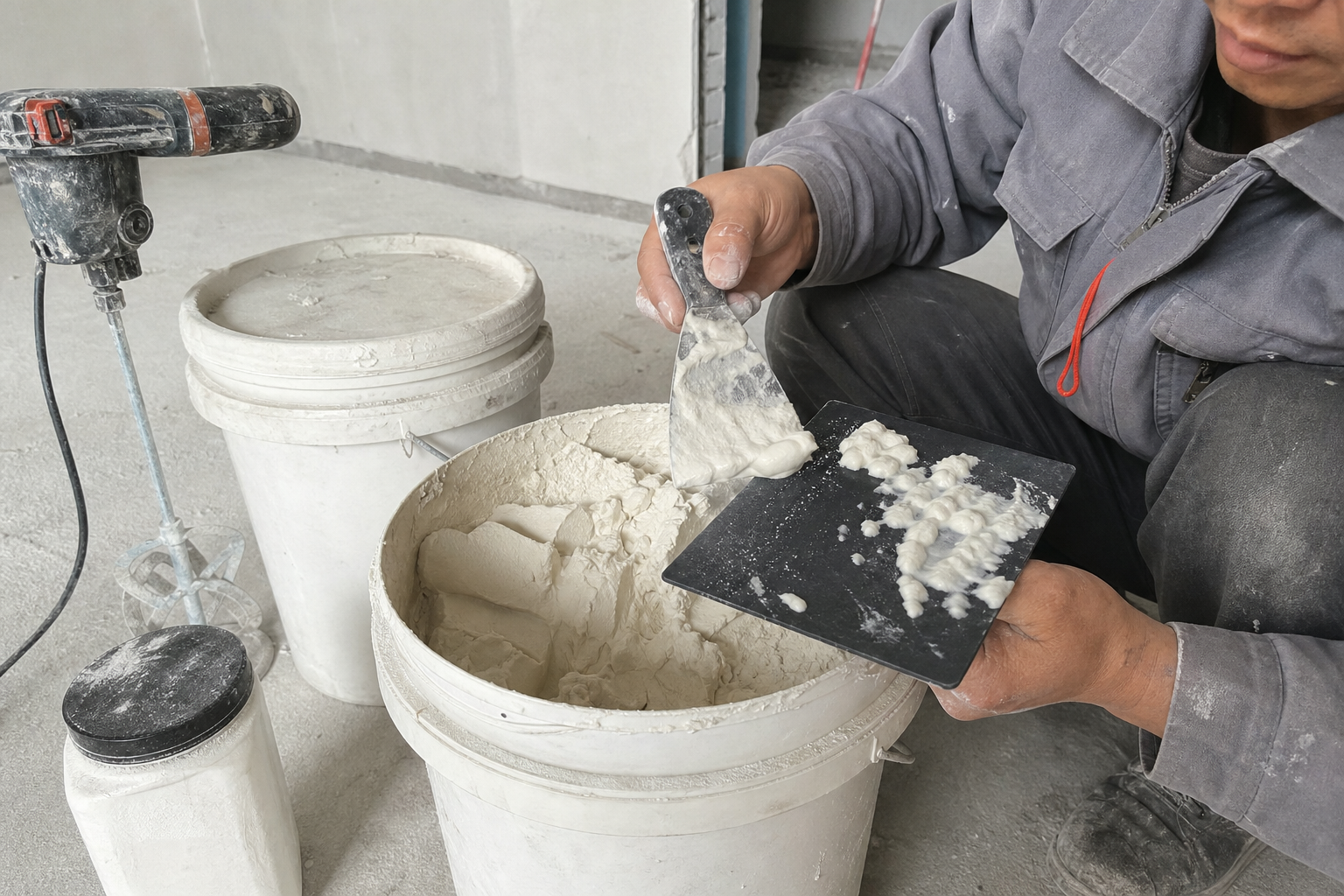
Problem: The COA can be in specification while HPMC remains unevenly distributed in the actual putty. Fast surface wetting may enclose dry material; insufficient dry blending can form concentrated pockets; an early trowel test can evaluate incomplete hydration. These conditions create alternating slippery and dragging zones that resemble a grade failure.
Agitation / Answer: Do not approve or reject HPMC immediately after wetting. Check dry-blend uniformity, visible agglomerates, vessel walls, maturation time, and the paste after a controlled remix. A compliant COA cannot reveal local fisheyes or incomplete hydration in your formula; only standardized preparation and inspection can separate dispersion failure from grade mismatch.
We inspect the entire preparation pathway. First, sieve or spread a small dry-blend sample and look for streaks or soft clusters. During water addition, watch whether floating gel skins, pellets, or wall deposits appear. After the defined maturation period, cut through the paste with a spatula and press a thin smear onto a contrasting plate. Clear gel specks, dry cores, or abrupt texture changes are evidence to investigate—not material to ignore and average into a viscosity reading.
The trial record should distinguish:
- Dispersion: whether individual HPMC particles were separated before substantial hydration.
- Dissolution/hydration: whether water reached the polymer uniformly.
- Maturation: whether the selected formula had its defined rest before final remix and testing.
- Agglomeration: whether lumps came from addition practice, moisture-damaged powder, or incompatible local concentrations.
Avoid inventing a universal waiting time. Surface treatment, particle size, water chemistry, temperature, and formula composition can change hydration behavior. We ask the supplier for preparation instructions, then validate one fixed schedule in the buyer’s own matrix. If the paste improves after controlled maturation and remixing, escalating HPMC viscosity is unlikely to be the first correction.
Storage history also matters. Moisture exposure can promote caking and poor dosing even when the original release data were acceptable; our HPMC storage guidance for humid climates provides receiving and warehouse checks. For a broader intake sequence, use the HPMC receiving-inspection checklist. Retain samples from both the suspect bag and an unopened comparison bag so the supplier can reproduce the actual dispersion question rather than retest an unrelated fresh sample.
4. What Does the Putty Do Under Real Trowel Shear and Substrate Suction?
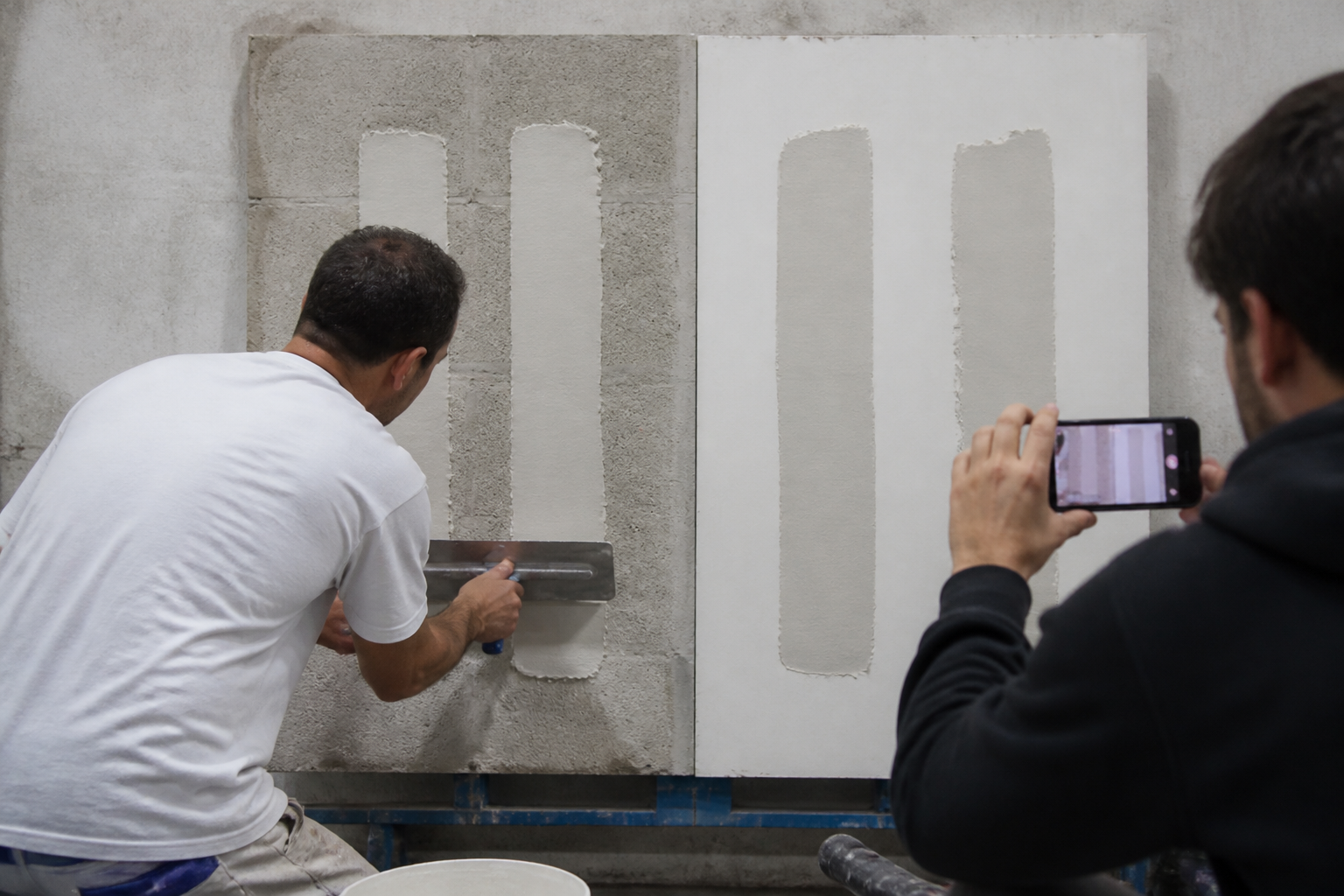
Problem: A cup can look smooth while the same putty tears on a wall. The blade imposes pressure and changing shear; a thin pass loses water faster than a thick patch; an absorbent substrate pulls liquid from the interface. Repeated passes may then increase drag, stringing, rolling, or local debonding.
Agitation / Answer: Reproduce the application, not just the beaker. Trowel equal putty masses at controlled thickness onto identified substrates, record suction and ambient conditions, and observe the first pass, return pass, edge, and finish. The useful grade is the one balancing lubrication, cohesion, wet adhesion, and shear recovery throughout the working sequence.
Use paired panels: the actual job substrate and a repeatable reference board. Document whether each surface is dusty, sealed, dampened, primed, or highly absorbent. A simple substrate check can compare the behavior of a consistent water drop or another site-approved suction procedure, but the result should be treated as a comparative observation rather than an invented universal limit.
Apply with the same blade geometry, angle convention, operator sequence, pass count, and target thickness. We record:
- resistance as the blade starts and accelerates;
- curling or rolling at the leading edge;
- tearing, chatter, or bald spots behind the blade;
- stringing when the trowel lifts;
- paste transfer to the blade versus wet adhesion to the wall;
- change after the planned open interval and return pass;
- differences between the reference and job substrate.
If failure appears only on the absorbent board, investigate suction control, water retention, surface preparation, and application timing before blaming solution viscosity. If both boards fail immediately, inspect powder grading, water balance, HPMC hydration, and lubrication. If the first pass is acceptable but repeated working creates elastic strings or rolls, the shear history and recovery behavior deserve attention.
Our article on how HPMC improves water retention explains the moisture-control mechanism, but retention alone still does not guarantee good trowel feel. Film the blade and paste edge with a phone from the same angle. Video, panel labels, and retained wet/dry samples give the supplier more diagnostic value than adjectives such as “sticky” or “heavy.” They also reveal whether two operators are actually applying the same test.
5. How Do We Turn a Supplier Sample into a Reliable Batch-Release Decision?
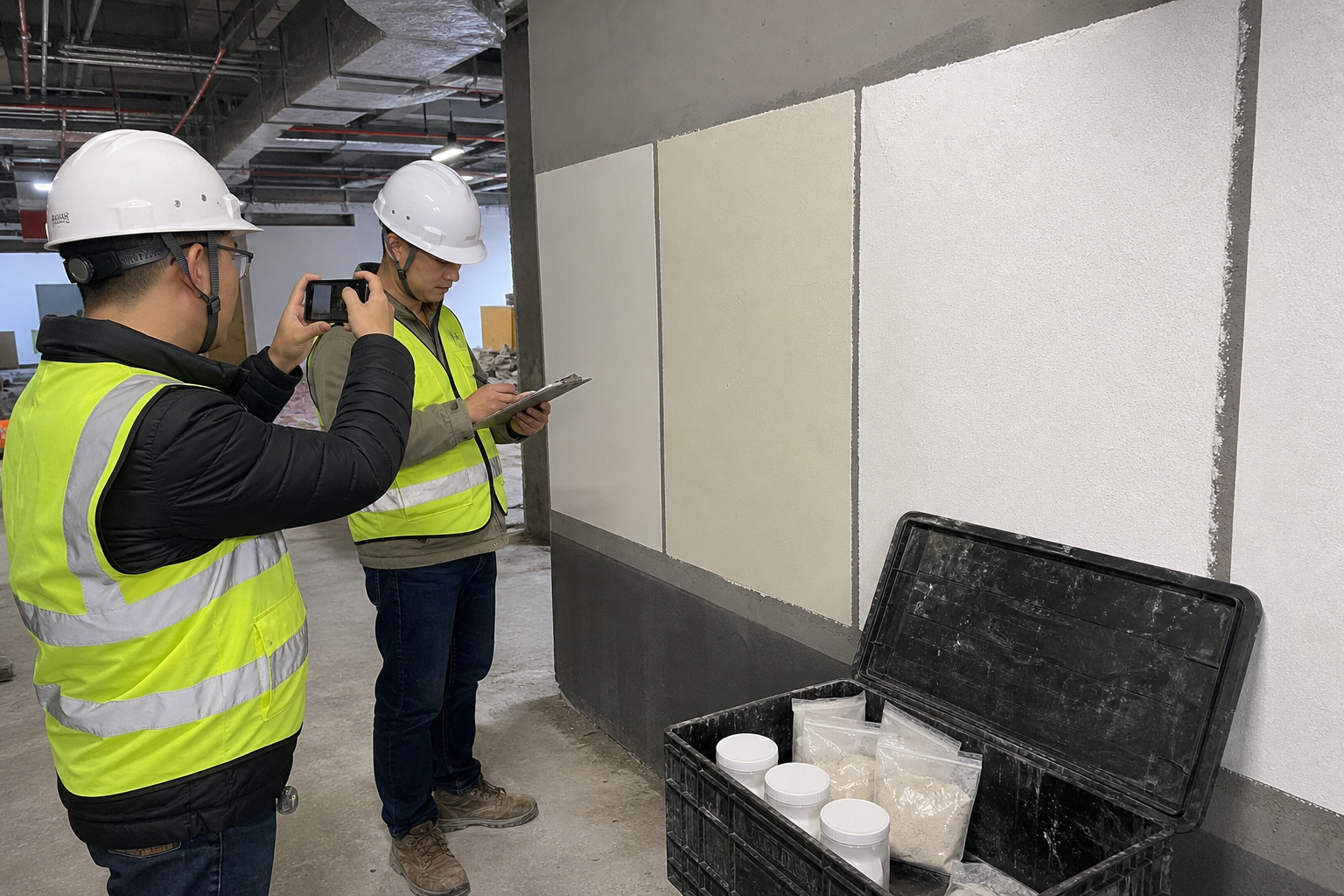
Problem: A carefully selected sample can pass once and still fail to protect routine purchasing. Formulas drift, raw-material lots change, production mixing differs from laboratory preparation, and field substrates vary. Without linked records and retained materials, buyers and suppliers argue from disconnected COAs, photographs, and memories.
Agitation / Answer: Use a closed qualification loop: register the supplier sample, screen it in a locked laboratory formula, confirm it on a representative field panel, retain traceable materials, then release each batch against agreed incoming and application criteria. No supplier comparison is complete until the same evidence chain can investigate a future complaint.
We recommend five gates:
- Supplier sample registration: record product code, lot identity, package condition, documents, and receipt history.
- Laboratory comparison: test the candidate and approved control blind in the same formula, preparation sequence, and trowel protocol.
- Field-panel confirmation: use the intended mixer, water practice, tool, coat build, and representative substrate without turning the first commercial job into the experiment.
- Retention: seal representative HPMC, dry blend, key powders, and finished putty with traceable labels and defined retention responsibility.
- Batch release: combine document review, identity/consistency checks, and a practical application check at a frequency justified by risk.
In one anonymized application-support workflow from our records, a buyer initially framed rolling as a request for higher viscosity. We froze the powder set and water procedure, repeated dispersion and maturation, then compared labeled trowel panels on reference and job substrates. The review redirected discussion from the headline COA value to preparation and substrate interaction. We omit customer identity, location, commercial details, formulation numbers, conditions, and results because those records are confidential; the transferable value is the investigation sequence, not an invented success statistic.
For incoming controls, our receiving-inspection checklist provides a practical starting point. To audit a prospective source beyond one sample, use our B2B guide to choosing an HPMC manufacturer. Agree in writing which viscosity method identifies consistency, which locked formulation challenges application behavior, who approves deviations, and how complaint samples return. That closed loop makes supplier comparison and batch release evidence-based rather than dependent on the highest viscosity claim.
Rolling or tearing under the trowel is not proof that HPMC viscosity is too low. It is evidence that the complete material-and-application system needs a controlled diagnosis. We begin with the symptom, standardize powders and water, verify hydration, reproduce field shear and suction, and preserve traceability through release.
Frequently Asked Questions
1. Can a higher-viscosity HPMC stop wall putty from rolling?
Sometimes a different grade may help, but the viscosity number alone cannot predict the result. First hold the base formula, water, mixing, maturation, substrate, and trowel method constant. Compare the approved control and candidate under the same conditions before changing the purchasing specification.
2. Why does wall putty tear only on the second trowel pass?
The first pass may change paste structure while the substrate continues removing water. A later pass can therefore encounter higher drag, reduced interfacial moisture, or different structural recovery. Record pass timing, pressure sequence, thickness, and substrate suction to distinguish these mechanisms.
3. How can we tell whether HPMC has fully hydrated?
Use a fixed mixing-rest-remix procedure, inspect the vessel and paste for gel skins or dry cores, and smear a thin layer on a contrasting plate. Compare behavior before and after the validated maturation stage. Do not infer complete hydration from elapsed time alone.
4. What should a supplier comparison include besides the COA?
Include traceable samples, matched test-method details, a locked wall-putty formula, controlled water and mixing, blind trowel panels, representative substrates, photo or video records, retained materials, and predefined batch-release criteria. This compares practical consistency rather than marketing labels.
5. Are ASTM D2196, ISO 2555, or ASTM C305 wall-putty acceptance standards?
No. ASTM D2196 concerns rotational rheology of non-Newtonian materials, ISO 2555 covers an apparent-viscosity method for liquid resins, and ASTM C305 addresses mechanical mixing of hydraulic-cement pastes and mortars. Here they support method-consistency principles; buyers must define and validate putty-specific acceptance criteria.
Request a Diagnostic HPMC Sample Plan
Send us your current wall-putty base formula categories, COA test method, mixing sequence, observed symptom, substrate description, and anonymized trowel video. We will help structure a matched HPMC sample comparison and a laboratory-to-field panel plan before you revise the bulk specification.
References
- ASTM International, “ASTM D2196-20: Standard Test Methods for Rheological Properties of Non-Newtonian Materials by Rotational Viscometer,” https://www.astm.org/d2196-20.html. This source supports consistent characterization of apparent viscosity, shear thinning, and thixotropy; it is not cited as a wall-putty acceptance standard.
- International Organization for Standardization, “ISO 2555:2018—Plastics—Resins in the liquid state or as emulsions or dispersions—Determination of apparent viscosity using a single cylinder type rotational viscometer method,” https://www.iso.org/standard/70023.html. This source supports consistency in apparent-viscosity measurement; it is not a wall-putty acceptance standard.
- ASTM International, “ASTM C305-20: Standard Practice for Mechanical Mixing of Hydraulic Cement Pastes and Mortars of Plastic Consistency,” https://www.astm.org/c0305-20.html. This source supports reproducible mixing principles; it is not a wall-putty acceptance standard.