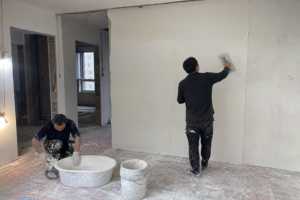
HPMC water retention is critical when dry-mix mortar, tile adhesive, putty, gypsum, or EIFS materials lose moisture too quickly. Rapid water loss can shorten working time and interfere with binder hydration. I use HPMC to control that movement, but I always match the grade and dosage to the complete formulation and application conditions.
HPMC improves water retention by hydrating in the aqueous phase, increasing viscosity, and forming a polymer network that slows water migration into absorbent substrates and evaporation into the air.1 It does not permanently lock in water. Its effectiveness depends on the HPMC grade, dosage, binder, fillers, additives, substrate, temperature, humidity, and test method.
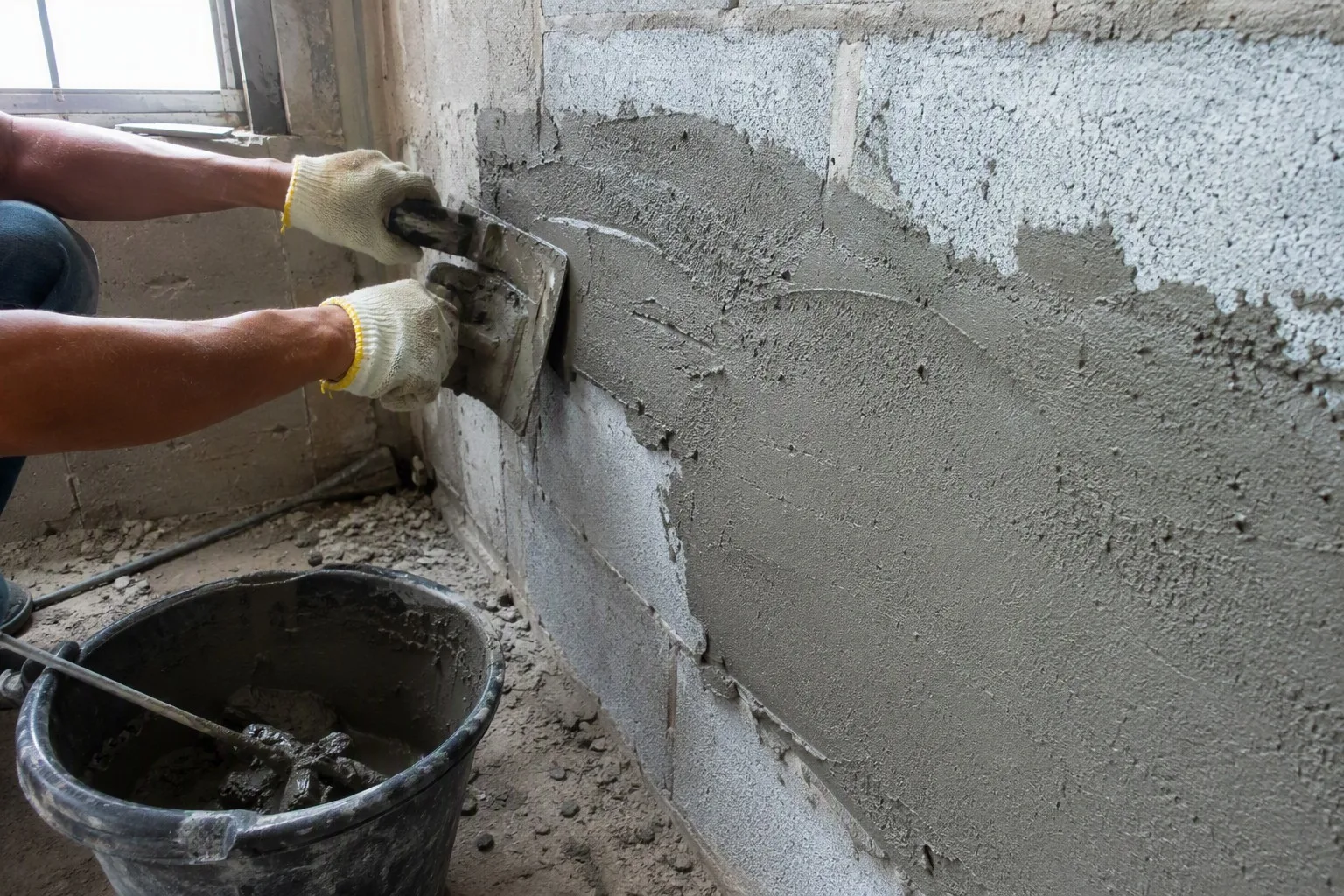
This basic mechanism sounds straightforward. However, I often find that purchasing decisions become difficult when viscosity, water retention, workability, and open time are treated as interchangeable properties. I separate these factors before I compare samples, investigate complaints, or recommend an HPMC specification.
What Is the HPMC Water Retention Mechanism?
A mortar can lose water before the binder has enough time to hydrate or before an installer has finished applying the material.2 That loss may occur through substrate absorption, surface evaporation, or both. I view HPMC as a water-movement regulator rather than a material that seals water permanently inside the mix.
HPMC improves water retention after its polymer particles disperse and hydrate in the mixing water. The hydrated chains increase aqueous-phase viscosity and create resistance to water movement. This process reduces rapid transfer toward porous surfaces and slows evaporation, helping the material preserve workable moisture for application and binder hydration.
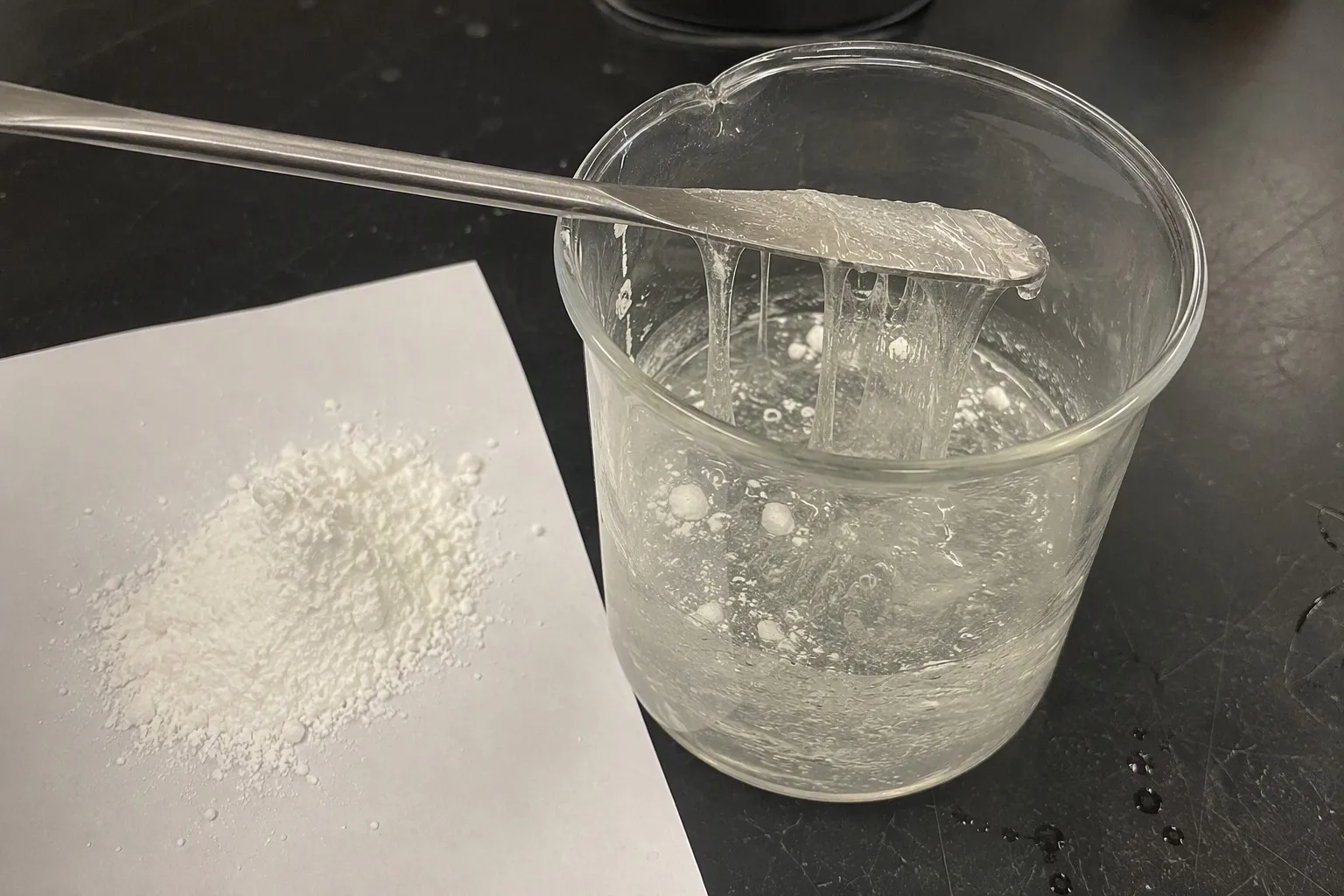
HPMC Controls Water Movement
I use the phrase controlled water movement because it describes the mechanism more accurately than “water locking.” Water remains available to interact with cement, gypsum, and other formulation components. HPMC mainly changes how quickly that water can migrate.
In a dry-mix product without a suitable cellulose ether, water may move rapidly toward:
- An absorbent concrete, block, brick, or plaster substrate
- The exposed surface of the wet mortar
- Dry or porous mineral fillers within the formulation
- Adjacent layers with different moisture conditions
After HPMC hydrates, it thickens the liquid phase between solid particles. Water must then move through a more viscous medium. The hydrated polymer network also restricts the mobility of the aqueous phase. These effects can delay excessive moisture loss during mixing, resting, application, and early setting.
Why Controlled Moisture Matters
I connect water retention with several practical requirements, but I do not treat these requirements as identical:
- Workability: The mortar needs enough moisture to spread, trowel, pump, or level as intended.
- Open time: A tile adhesive needs adequate time between spreading and tile placement.3
- Binder hydration: Cementitious binders require available water for hydration.
- Surface finishing: Putty and plaster need a workable moisture balance during smoothing.
- Substrate contact: Mortar must remain plastic enough to wet and contact the receiving surface.
A product can show good apparent consistency in the bucket while still losing water too quickly on a porous substrate. Conversely, very strong thickening can make a product difficult to spread without solving every open-time or adhesion issue.
In my internal comparative work, I keep the base formulation and test conditions as consistent as practical. Otherwise, I cannot determine whether an observed change comes from HPMC, the substrate, mixing, or another raw material.
I also avoid applying one mechanism-based conclusion to every product. Cement mortar, gypsum plaster, skim coat, tile adhesive, and EIFS base coat have different binders, water demands, application thicknesses, and setting processes. The technical principle remains useful, but the correct HPMC grade must still be confirmed in the actual system.
Why Does High Viscosity Not Always Guarantee Better HPMC Water Retention?
A buyer may see two HPMC grades and assume that the grade with the higher quoted viscosity will retain more water. That shortcut creates procurement risk because viscosity values are method-dependent4. It also ignores substitution level, hydration behavior, dosage, formulation chemistry, and real application conditions.
High viscosity can support HPMC water retention, but viscosity alone does not determine the result. Buyers should compare grades using the same solution concentration, temperature, instrument, spindle, speed, sample preparation, and conditioning method. They should then test the products at equal dosage in the intended dry-mix formulation.
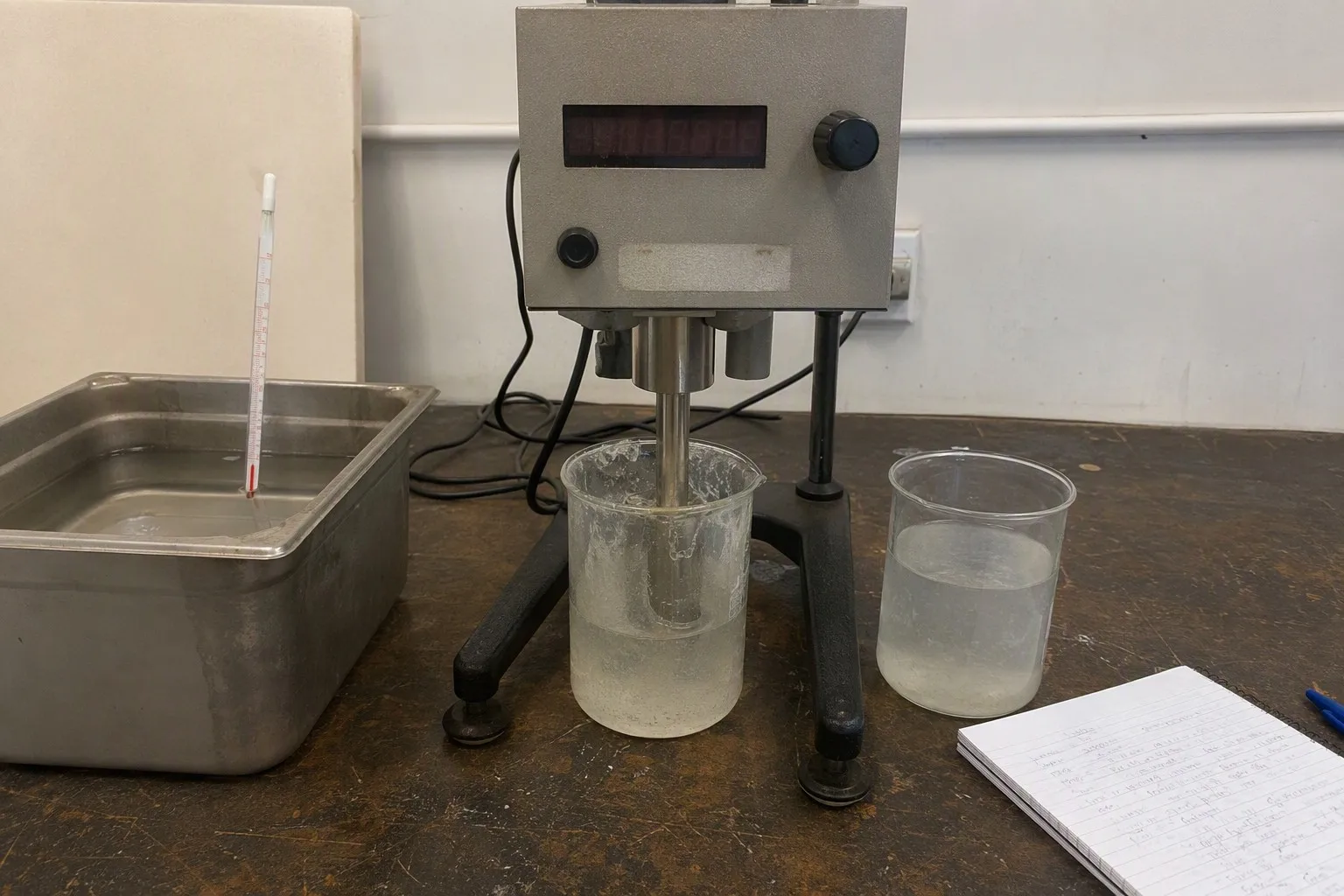
Viscosity Numbers Need Test Context
I never compare viscosity numbers until I know how the suppliers measured them. A value reported from one test method may not be directly comparable with a value produced by another method.
A usable technical data sheet should identify relevant conditions such as:
- Solution concentration
- Test temperature
- Viscometer type
- Spindle and rotational speed, where applicable
- Sample preparation and dissolution procedure
- Whether the reported value is typical, target, or specification range
- Moisture basis or other correction method, if used
Even when two suppliers use comparable viscosity methods, equal viscosity does not prove equal application performance. HPMC products can differ in particle size, surface treatment, substitution characteristics, dissolution behavior, moisture content, and production consistency.
HPMC Grade and Dosage Work Together
An HPMC grade must hydrate at the right stage and provide an appropriate rheological effect. If hydration is delayed too much, the wet mix may not develop the expected consistency during normal mixing. If dissolution is poorly controlled, lumping or uneven distribution can interfere with performance.
Dosage also matters. I evaluate dosage in the actual formulation because a change in cellulose ether content can affect more than water retention. It may influence:
- Wet consistency
- Sag resistance
- Trowel feel
- Air entrainment
- Adhesive transfer
- Surface smoothness
- Pumping or spray behavior
- Setting and early application characteristics
The direction and size of these effects depend on the system. I therefore avoid universal dosage recommendations without a verified formulation and test method.
| Evaluation factor | Why it matters | Procurement check |
|---|---|---|
| Quoted viscosity | Indicates solution-thickening behavior under stated conditions | Compare only equivalent methods |
| HPMC dosage | Changes polymer concentration in the wet mix | Test equal and realistic dosages |
| Binder type | Cement and gypsum systems respond differently | Identify the complete binder system |
| Filler grading | Changes water demand and packing | Keep raw materials constant during trials |
| Other additives | RDP, starch ether, retarders, and defoamers may interact | Record all additive types and levels |
| Substrate absorption | Controls how quickly water leaves the mortar | Use a defined reference substrate |
| Temperature and humidity | Affect evaporation and hydration | Condition samples and record conditions |
In customer-sample investigations, I have seen how easily teams can blame HPMC when several variables changed at once. I first reconstruct the test conditions. I then compare retained production samples, customer samples, and reference material under aligned conditions where possible. These observations help with troubleshooting, but I do not present one investigation as universal laboratory proof.
How Should Buyers Test HPMC Water Retention?
Uncontrolled sample testing can make a suitable HPMC grade look poor or an unsuitable grade look acceptable. Different water additions, substrates, mixing times, and room conditions can overwhelm product differences. I recommend a staged evaluation that combines incoming-product checks, controlled mortar tests, and application-relevant trials.
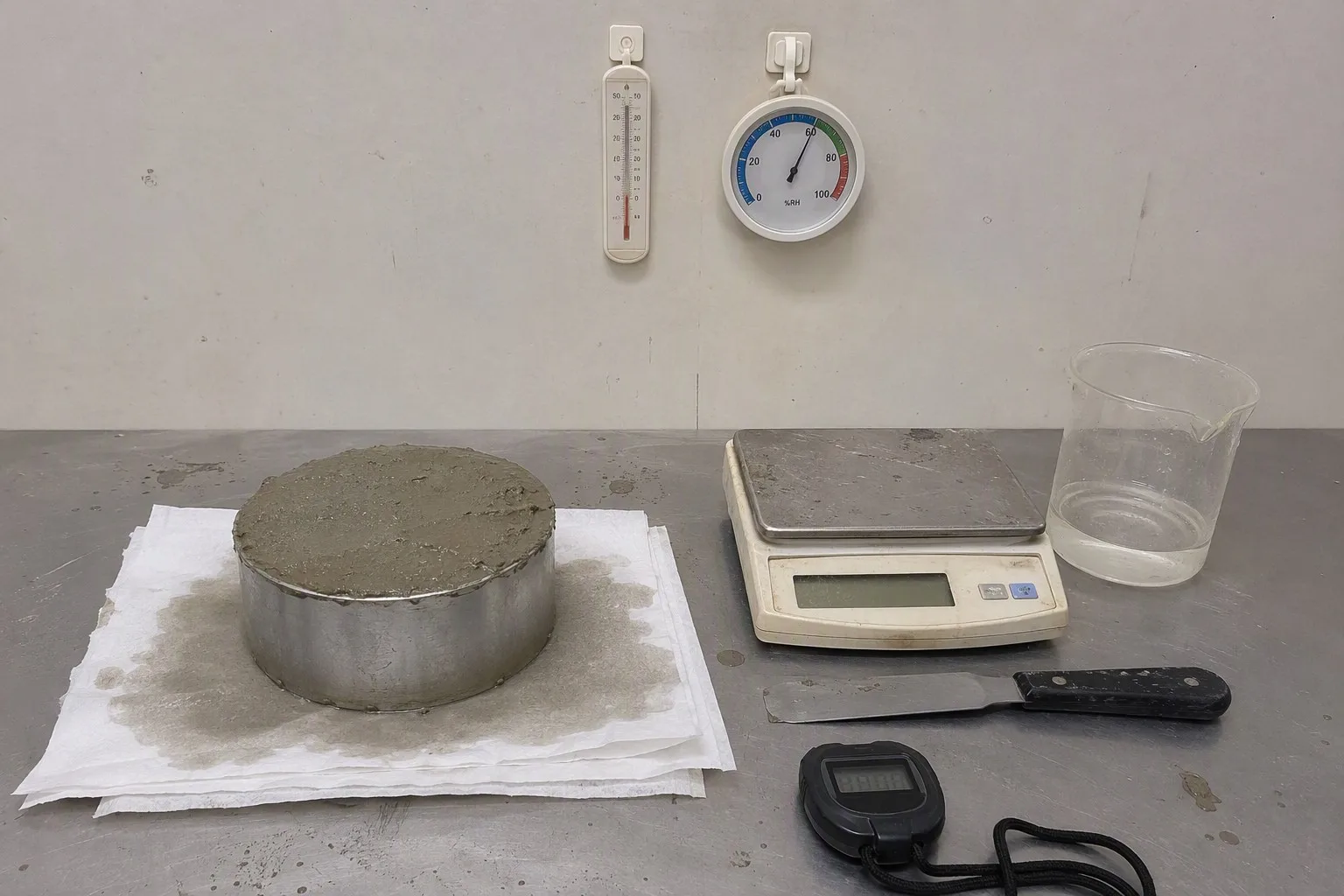
Buyers should test HPMC water retention with a fixed formulation, dosage, water-to-dry-mix ratio, mixing procedure, conditioning period, substrate, temperature, and humidity. They should use a recognized or mutually agreed method, document every variable, and repeat the comparison before approving a grade or investigating a quality claim.
Start With Raw-Material Verification
I begin by confirming that the received material corresponds to the agreed specification. Depending on the purchasing agreement and the buyer’s laboratory capability, incoming checks may include:
- Package identification and batch number
- Visual appearance
- Moisture or loss-on-drying result
- Viscosity under the agreed method
- pH under the stated preparation method
- Dissolution or dispersion behavior
- Retained-sample comparison
- COA review against the purchase specification
A certificate of analysis is useful, but I treat it as a document to verify rather than automatic proof of application fitness. The buyer should confirm whether the listed parameters, test methods, limits, and batch information match the agreed contract.
The same principle applies to quality-management certificates, safety data sheets, and product declarations. Buyers should check the issuing organization, document scope, validity period, revision status, and connection to the actual manufacturing site and supplied product.
Use a Controlled Formulation Test
I recommend changing only one main variable at a time. For an HPMC comparison, that variable should normally be the HPMC sample. The binder, sand, fillers, RDP, starch ether, water, dosage, and mixing process should remain fixed.
A useful comparative protocol records:
- Exact dry formulation by mass
- HPMC dosage and batch
- Water addition
- Mixing equipment, speed, and duration
- Resting and remixing procedure
- Sample temperature
- Laboratory temperature and relative humidity
- Substrate type and pretreatment
- Application thickness
- Test timing
- Number of repetitions
Recognized methods may include standards such as EN 1015-8 or ASTM C15065 where their scope suits the product. Buyers should verify the current edition, method scope, equipment, and suitability with a qualified testing professional. A standard plaster or mortar method may not reproduce every condition found in tile adhesive, gypsum, putty, self-leveling mortar, or an EIFS application.
Understand What a Filter-Paper Method Measures
Alongside the standards noted above, buyers may also encounter filter-paper water-retention procedures. DIN 18555-7 is one commonly referenced example for fresh mortar. The general principle is simple to describe: fresh mortar is held in a defined test ring placed on standardized filter paper, and the water absorbed by the paper over a fixed period is used to indicate how strongly the mortar holds its mixing water. A smaller measured water loss is interpreted as higher water retention under that specific procedure.
I mention the principle rather than a fixed pass mark on purpose. A filter-paper result is only meaningful together with the conditions that produced it. Before comparing two numbers from different sources, it is worth confirming several points with a qualified testing professional:
- Which edition of the method was applied, and whether that edition is still current
- Whether the method scope actually covers the product in question, since a plaster or masonry mortar procedure may not represent tile adhesive, gypsum, putty, self-leveling mortar, or an EIFS system
- The mortar formulation, water addition, and mixing procedure used for the test
- Sample and laboratory temperature and relative humidity
- Test timing, equipment condition, and the number of repetitions behind the reported figure
In practice, a supplier reporting a water-retention percentage without the accompanying method and conditions has reported a number, not a comparison. Two suppliers can both be accurate and still disagree, simply because the procedures differ. When water retention matters commercially, I prefer to see the method identified explicitly, then confirm the result in the buyer's own formulation rather than accept a single figure from a datasheet.
Add an Application-Relevant Trial
A numerical water-retention result does not answer every commercial question. I also examine the properties that matter to the intended product, such as open time, consistency retention, sag, spreading, surface finishing, adhesive transfer, or wet mortar stability.
I use laboratory and pilot-scale results to narrow the choice. I recommend qualified application testing before a buyer changes a commercial formula. Field variables can be broader than laboratory variables, so final approval should reflect the buyer’s production equipment, local raw materials, packaging, storage, climate, and application practices.
How Can I Troubleshoot Poor HPMC Water Retention?
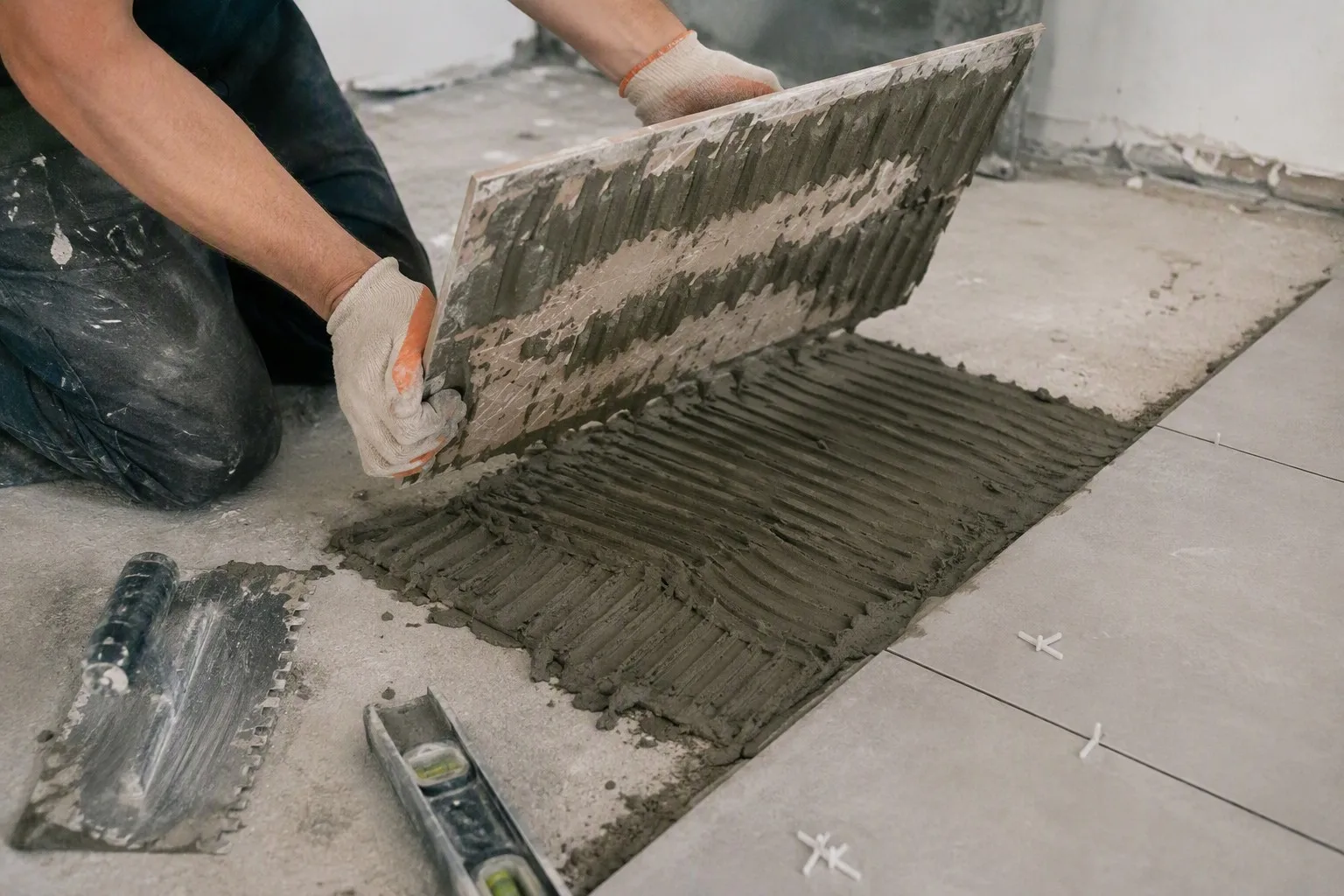
A retention complaint may appear as rapid stiffening, poor trowel feel, short open time, dry edges, weak substrate contact, or finishing difficulty. These symptoms do not identify one cause by themselves. I avoid replacing the HPMC grade until I have separated product, formulation, substrate, process, and environmental variables.
I troubleshoot HPMC water retention through four questions: What binder and application system is involved? Which HPMC grade, viscosity method, and dosage are used? What other materials are in the formulation? What substrate and environmental conditions apply? The answers determine which controlled comparison should come next.
1. What Is the Binder and Application System?
I first identify the product rather than accepting a general description such as “mortar.” A tile adhesive does not have the same performance priorities as a gypsum plaster or cement-based skim coat.
I ask for:
- Binder type and approximate binder level
- Cement, gypsum, lime, or blended-binder details
- Aggregate and filler type
- Intended application thickness
- Manual, pumped, sprayed, or machine-applied use
- Required working time and finishing behavior
- Relevant local or customer test standard
The binder system affects water demand, setting, ionic conditions, and additive interactions. I therefore do not transfer an HPMC recommendation from one application directly to another without testing.
2. Which HPMC Grade, Method, and Dosage Are Used?
I check the complete product identity and batch number. I then confirm the viscosity method because a bare viscosity figure has limited diagnostic value. I also verify the actual addition rate, weighing accuracy, premixing uniformity, and storage condition.
HPMC can segregate in a poorly handled dry blend, especially when particle sizes and bulk densities differ across raw materials. Sampling location can then affect the result. A representative sampling plan is important before anyone concludes that a batch is inconsistent.
3. What Else Is in the Formulation?
Other ingredients can change water demand, rheology, setting, and air content. I review the complete formulation, including recent supplier or batch changes.
Potential variables include:
- Cement source and age
- Gypsum type and quality
- Calcium carbonate fineness
- Sand grading and moisture
- Redispersible polymer powder
- Starch ether
- Retarders or accelerators
- Defoamers and air-entraining agents
- Fibers and lightweight fillers
- Water quality
I often find that troubleshooting becomes faster once the team creates a change timeline. That timeline should show when the complaint started and which raw material, process setting, or environmental condition changed around the same time.
4. What Are the Substrate and Environmental Conditions?
A highly absorbent block can draw water from a mortar much faster than a conditioned laboratory plate. Hot, dry, or windy conditions can also accelerate surface evaporation.6
I record:
| Condition | Possible effect | Check |
|---|---|---|
| Porous or dusty substrate | Faster water absorption and weaker contact | Measure or classify absorption; prepare as specified |
| High material temperature | Faster evaporation and changed consistency | Record dry-mix and water temperatures |
| Low relative humidity | Faster surface moisture loss | Compare under conditioned conditions |
| Air movement | Increased evaporation | Control drafts during comparison |
| Excessive delay after mixing | Reduced usable consistency | Standardize resting and application time |
| Incorrect water addition | Alters rheology and retention behavior | Weigh water rather than estimating volume |
This four-question framework prevents premature conclusions. If the issue remains unresolved, I recommend sending sealed samples from the affected batch, a reference batch, and the relevant raw materials to a qualified laboratory or technical team. The investigation should use mutually agreed methods and documented chain-of-custody information.
How Should Buyers Select an HPMC Water Retention Supplier?
An inconsistent HPMC supply can force manufacturers to adjust water, additive dosage, or processing from one delivery to the next. That instability increases production risk even when every batch appears to meet a broad viscosity range. I therefore evaluate the supplier’s controls as carefully as I evaluate an individual sample.
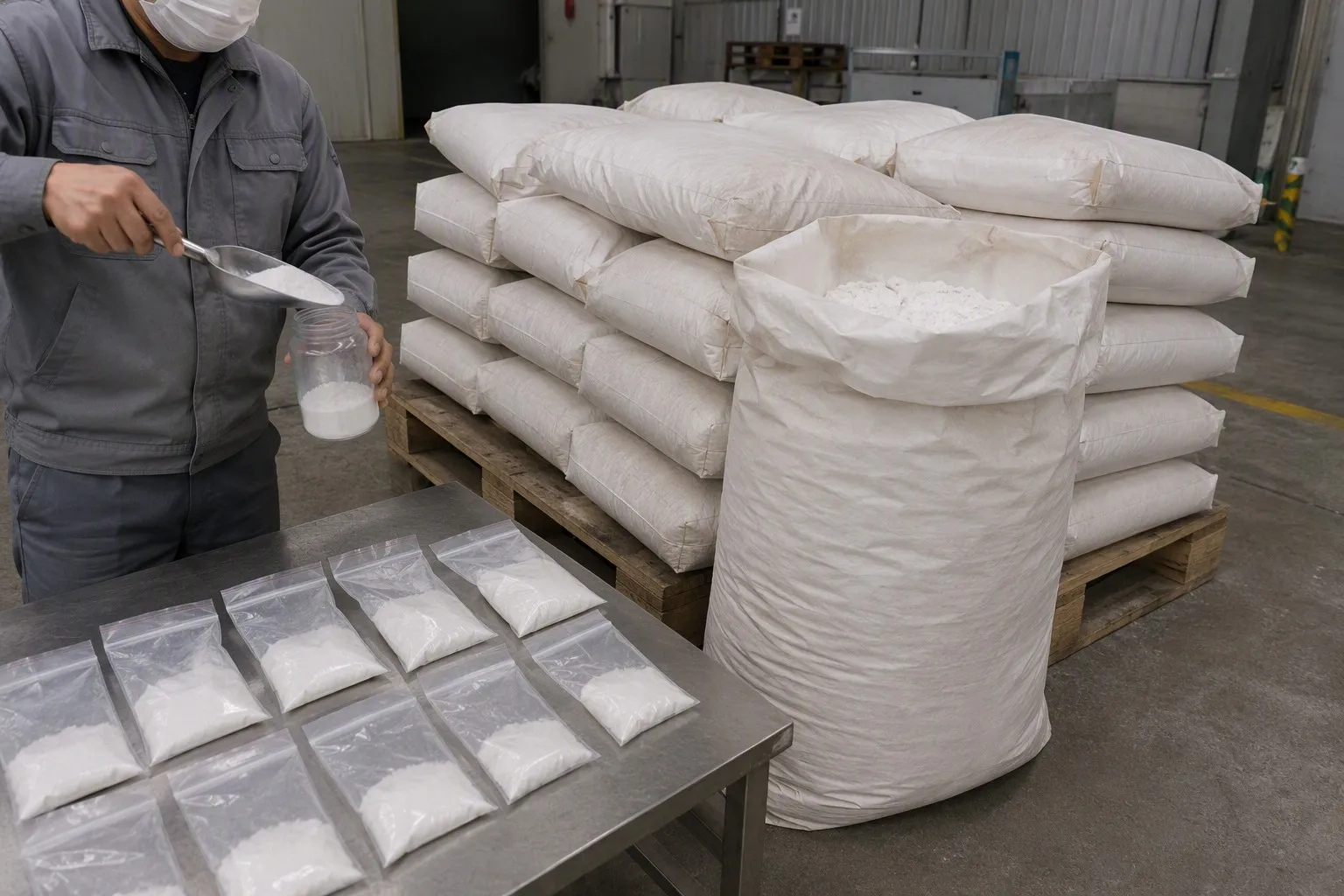
A suitable HPMC water retention supplier should provide consistent batches, clearly defined test methods, traceable COAs, representative samples, technical communication, and documented change control. Buyers should also verify manufacturing capacity, quality-system documents, packaging options, export experience, complaint procedures, and performance in the buyer’s own formulation.
Evaluate Consistency, Not Just One Strong Sample
A specially selected sample may perform well, but procurement depends on repeatability. I prefer to compare samples from multiple production batches when a project volume justifies the work. The evaluation should use the same test method and base formulation.
Useful supplier questions include:
- What parameters are controlled during production?
- How is each batch sampled?
- Which viscosity method appears on the COA?
- What are the agreed specification limits?
- Are retained samples stored for quality investigations?
- How are out-of-specification results handled?
- How does the supplier notify customers about significant changes?
- Can the supplier support custom grades or OEM packaging?
- Which export documents can the supplier provide?
- What information is required for a complaint investigation?
Build a Practical Approval Package
I recommend that buyers create a written approval package rather than approving a product by trade name alone. The package may contain:
- Product specification
- Agreed test methods
- Approved application and dosage range
- Reference formulation
- Laboratory comparison results
- Pilot-production results
- Reference sample
- COA and SDS requirements
- Packaging and labeling requirements
- Change-notification and complaint procedures
At Shijiazhuang Jinghong Chemical Technology Co., Ltd., our production and quality-control work covers HPMC and other construction additives such as RDP/VAE, HEC, and MHEC. Based on that context, I can discuss sample matching, batch documents, customized specifications, OEM packaging, and export requirements with overseas buyers. However, I still recommend that each customer verify the proposed grade in its own formulation.
Price also needs context. A lower price per kilogram does not necessarily create a lower cost per tonne of finished mortar. Buyers should consider dosage, batch consistency, production adjustments, rejected material, complaint risk, technical response, and supply reliability. A controlled total-cost evaluation gives a more useful result than a quotation comparison alone.
Frequently Asked Questions
Does HPMC permanently lock water inside mortar?
No. I describe HPMC as slowing water movement rather than permanently locking water in place. Hydrated HPMC increases the viscosity of the aqueous phase and restricts migration toward porous substrates or the air. Water remains available for binder hydration, setting, drying, and other processes within the formulation.
Does a higher HPMC dosage always improve water retention?
A higher dosage can increase the HPMC effect, but I do not assume that more is always better. Excessive or poorly matched dosage may change consistency, air content, spreading, finishing, setting behavior, or production cost. The correct level should be confirmed through controlled formulation and application testing.
Can I compare HPMC viscosity values from different suppliers?
You can compare them only after confirming that the suppliers used equivalent test conditions. I check concentration, temperature, instrument, spindle, speed, dissolution procedure, and reporting basis. If these factors differ, the viscosity numbers may not represent the same property or predict equivalent mortar performance.
Why does tile adhesive still have a short open time with high-viscosity HPMC?
High viscosity alone does not determine open time. I would investigate the HPMC grade and dosage, cement and filler system, RDP and other additives, water level, substrate absorption, application thickness, temperature, humidity, and air movement. Open time requires a formulation-level evaluation rather than a single raw-material number.
What documents should I request from an HPMC manufacturer?
I suggest requesting a technical data sheet, batch-specific COA, current SDS or MSDS, agreed product specification, test-method details, packaging information, and relevant quality-system documents. Buyers should verify each document’s scope, validity, revision status, and connection to the supplied product and manufacturing site.
Conclusion
HPMC water retention comes from a hydrated polymer network that increases aqueous-phase viscosity and slows water loss into absorbent substrates and the surrounding air. I do not judge this performance by viscosity alone. I consider the grade, dosage, binder, fillers, additives, test method, substrate, and environment together. Consistent comparative testing and reliable batch control reduce procurement risk. For an application-specific HPMC evaluation, contact Shijiazhuang Jinghong Chemical Technology Co., Ltd. to discuss your formulation, target specification, sample requirements, COA/MSDS documents, packaging, and export needs.
<!-- JH_HPMC_APPLICATION_LINKS_START --><p class="jh-related-applications"><strong>Related HPMC applications:</strong> To apply these principles in specific dry-mix systems, review the selection guidance for <a href="https://jinghonghpmc.com/hpmc-for-dry-mix-mortar/">HPMC for dry-mix mortar</a>, <a href="https://jinghonghpmc.com/hpmc-for-tile-adhesive/">HPMC for tile adhesive</a>, and <a href="https://jinghonghpmc.com/hpmc-for-gypsum-plaster/">HPMC for gypsum plaster</a>.</p><!-- JH_HPMC_APPLICATION_LINKS_END -->
"Water Retention Mechanism of HPMC in Cement Mortar - PMC", https://pmc.ncbi.nlm.nih.gov/articles/PMC7372461/. Studies of cellulose ethers in cement-based mortars report that hydrated polymer modifies the aqueous-phase rheology and contributes to improved water retention. Evidence role: mechanism; source type: paper. Supports: That cellulose ethers including HPMC alter the rheology and water-retention behavior of cement-based mortars.. Scope note: Descriptions of a continuous “polymer network” are mechanistic models; their relevance and relative importance vary with HPMC chemistry, dosage, and mortar composition. ↩
"Effect of Moisture Exchange on Interface Formation in ... - PMC", https://pmc.ncbi.nlm.nih.gov/articles/PMC5456528/. Research on fresh cementitious mortars recognizes substrate suction and evaporation as routes by which mixing water may be lost during the early application period. Evidence role: general_support; source type: paper. Supports: That fresh cementitious mortars can lose mixing water to absorbent substrates and environmental evaporation during early application.. Scope note: Actual loss rates are highly dependent on substrate absorptivity, ambient conditions, mortar composition, and application geometry. ↩
"EN 12004-1:2017 - Adhesives for Ceramic Tiles ...", https://standards.iteh.ai/catalog/standards/cen/48998e72-43b4-4ab9-9385-a9399c2c4689/en-12004-1-2017?srsltid=AfmBOooN1FPvolwKYK-2Xn9AqH2je1LG1ektbpC-GJAmfZe1HLKfCer4. Tile-adhesive standards define open time as the interval after application during which tiles may be placed while the adhesive retains the specified bonding performance. Evidence role: definition; source type: institution. Supports: The standardized meaning of open time for ceramic tile adhesives and its relationship to tile placement after spreading.. Scope note: The applicable threshold and test procedure depend on the edition and jurisdiction of the relevant tile-adhesive standard. ↩
"Fluid Suspensions and Emulsions | NIST", https://www.nist.gov/programs-projects/fluid-suspensions-and-emulsions. Viscosity is a method-dependent measurement: reported values depend on defined sample preparation, temperature, concentration, instrument geometry, and shear conditions. Evidence role: definition; source type: institution. Supports: That viscosity is measured under specified conditions and is affected by variables such as temperature, concentration, and shear conditions.. Scope note: A general viscosity standard does not by itself establish which test conditions best predict water retention in a particular dry-mix formulation. ↩
"prEN 1015-8 - Test Methods for Water Retentivity of Fresh ...", https://standards.iteh.ai/catalog/standards/cen/331be945-48bf-4323-adb1-7e5c37e5f7b5/pren-1015-8?srsltid=AfmBOooZuLHflyhpABBEBMtWWqZp4Cm1caMPV3skk4nnyzzHWn92X6WL. EN 1015-8 specifies a method for determining the water-retention value of fresh mortar, while ASTM C1506 covers water retention of hydraulic cement-based mortars and plasters. Evidence role: definition; source type: institution. Supports: The official scope and subject matter of EN 1015-8 and ASTM C1506 water-retention test methods.. Scope note: Users must consult the current official editions because method details, scope, and suitability for a specific product category may differ. ↩
"Guide for Curing Portland Cement Concrete Pavements, II ...", https://www.fhwa.dot.gov/publications/research/infrastructure/pavements/pccp/05038/005.cfm. Guidance on fresh concrete and cementitious materials identifies high temperature, low relative humidity, and air movement as conditions that increase surface evaporation. Evidence role: mechanism; source type: institution. Supports: That evaporation from fresh cementitious surfaces increases with higher temperature, lower relative humidity, and greater wind speed.. Scope note: Evaporation estimates for concrete provide contextual support; exact rates for thin mortar layers require product- and site-specific assessment. ↩