
METHYL HYDROXYETHYL CELLULOSE
MHEC (HEMC) for Tile Adhesive, Gypsum & Dry-Mix Mortar
MHEC and HEMC are two common ways the industry writes the same product name: methyl hydroxyethyl cellulose. In a dry-mix system the grade is chosen for how it manages water, consistency and application rheology — not for the abbreviation printed on the bag. Which grade fits your tile adhesive, gypsum product or dry-mix mortar still has to be verified in your own formula, substrate and climate.
A TDS is issued per grade, an SDS for the destination market, and a batch COA for the lot actually supplied.
- Cellulose ether for construction
- Tile adhesive · gypsum · dry-mix
- Grade trial before release

WHAT TO EVALUATE
Four things decide whether a grade is usable in your system
None of them can be read from a product name. Each may support workability or application behaviour, but the value only counts together with the test conditions you actually ran — so record the conditions next to the result.
Water retention under the specified test
Water retention may support workability and cure in thin, porous or absorbent systems, but the figure means little on its own: the method, dosage basis and the mix it was run in decide what it says about your formula.
Record with the resultTest method and instrument, dosage basis (on total dry mix), mix water ratio, temperature, substrate absorption.
Consistency, sag/slip and application feel
Consistency and sag resistance may support vertical build and tile hold, yet the same grade can feel different once filler grading, binder level or water ratio change.
Record with the resultTarget consistency by your own method, layer thickness, trowel or notch pattern, substrate, ambient temperature.
Open/adjustment behaviour in the full system
Open time and adjustment behaviour may be influenced by the grade, but redispersible powder level, retarders, filler blend and climate move them as well. Verify in the complete system instead of assuming a direction.
Record with the resultOpen-time method and interval, re-tempering practice, temperature and RH, batch size.
Air entrainment, setting and finish compatibility
Air entrainment, setting behaviour and finish may shift with the grade and with mixing energy. Check them together with the rest of the binder package rather than in isolation.
Record with the resultMixing speed and time, maturation time, setting test method, finishing step, cure condition.
MHEC (HEMC) is used here for water management and rheology. It is not the main binder or film former of a dry-mix system — cement or gypsum and the redispersible powder carry that role.
APPLICATION TARGETS
Where an MHEC (HEMC) grade is asked to work
Four construction targets drive most grade questions. For each one, the useful conversation is about the target, the variables that move it, and the check that proves it — not about a single viscosity figure.
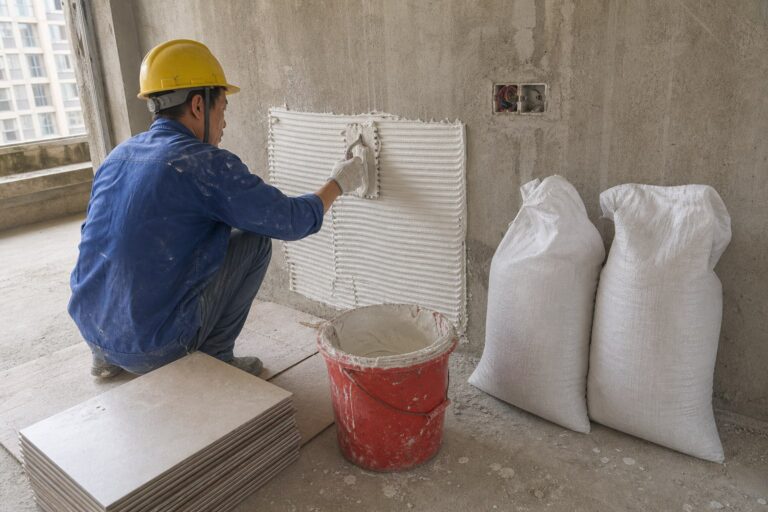
01 · TILE ADHESIVE
Tile adhesive
A notched bed has to hold the tile without slip and still leave enough time to position and adjust it.
- Key variables
- Redispersible powder level, filler grading, water ratio, notch size, substrate absorption, site temperature.
- Verify
- Slip and sag on the specified substrate, open time by your method, adjustment after placement, adhesion on the cured system.
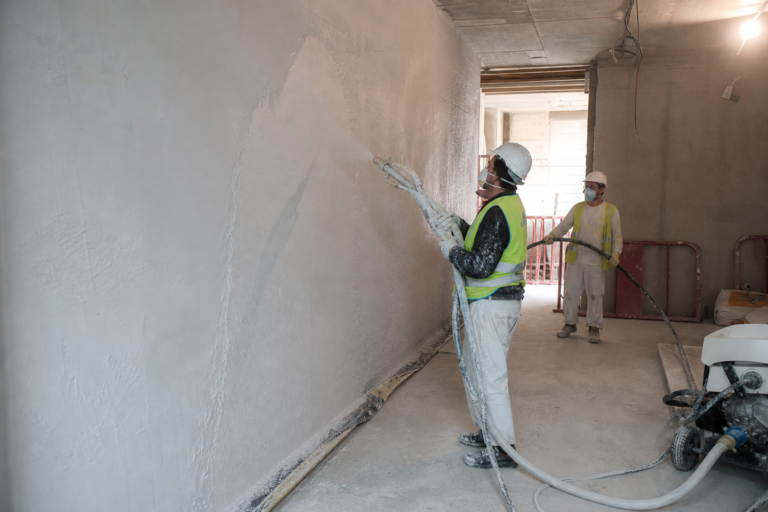
02 · GYPSUM
Gypsum plaster & jointing compounds
Machine or hand application, where water demand, set and finish timing are set by the gypsum itself.
- Key variables
- Gypsum grade and set modifier, water ratio, mixing energy, spray or hand method, ambient humidity.
- Verify
- Set time, trowel and finish window, edge cracking, adhesion to the specified background.
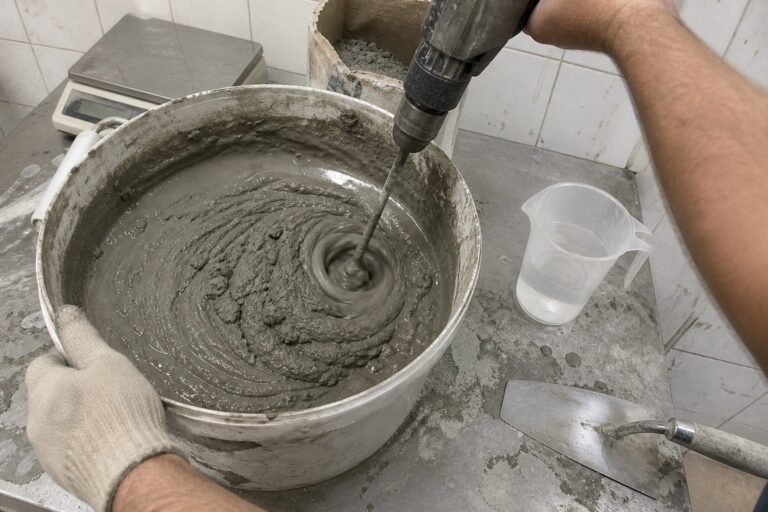
03 · DRY-MIX
Dry-mix mortar & renders
Factory dry mixes, where dosing accuracy and mixing consistency decide how repeatable the fresh mortar is.
- Key variables
- Binder and mineral system, filler blend, mixing sequence and time, maturation, dosage basis.
- Verify
- Fresh density and air content, workability retention, hardened properties on the specified substrate.

04 · PUTTY & SKIM
Wall putty & skim coat
Thin-layer filling and skimming, where the mix has to stay open under the trowel and sand without dragging.
- Key variables
- Filler type and fineness, water ratio, layer thickness, substrate absorption, drying conditions.
- Verify
- Trowel drag and open time, sanding behaviour, cracking or shrinkage at the specified thickness, adhesion after cure.
The application pages above are HPMC references: the test logic carries over to MHEC (HEMC), but a grade still has to be verified in your own formula before it is released.
GRADE SELECTION
The inputs that actually narrow the shortlist
A grade is selected from the conditions of use, not from a specification sheet alone. These are the inputs worth collecting before any quotation is compared.
CONTROLLED REPLACEMENT TRIAL
Four steps from shortlist to release
A replacement is a trial, not a substitution. Keep the comparison narrow so the result points at one variable.
-
Define the control formula, target and failure
Write down the current formula, water ratio and the failure you are solving — slip, short open time, weak water retention, finish drag — plus the limit that counts as a pass.
-
Shortlist grades from grade-specific TDS
Compare only grades whose TDS states test method, concentration and temperature. Two grades with a similar viscosity label are not automatically interchangeable.
-
Run side-by-side trials changing one variable
Same filler batch, same binder, same mixer and operator. Change dosage or grade — one variable per run, with the control mixed on the same day.
-
Review fresh-state and conditioned results together
Judge the fresh mix and the hardened or conditioned end-use result as one set. A fresh-state improvement that fails the end-use check is not a result.

Keep in the trial record
- Water to binder ratio and total mix mass
- Mixing sequence, mixer type and mixing time
- Maturation time before application
- Application thickness and trowel or notch
- Substrate, preparation and absorption
- Ambient temperature and relative humidity
- Sag / slip, open time, adjustment, finish, setting
DOCUMENTS, LOT AND PACKING
What can be released with the material
Documents follow the grade, the destination and the batch. Anything beyond that is stated only when it applies to the shipment in question.
TDS per grade
Issued for the specific grade, with the test methods and conditions used for the values it reports.
SDS for destination
Prepared for the market the material is shipped to, so the regulatory basis matches the delivery.
Batch COA for the lot
Certificate of analysis for the lot actually supplied, not a generic or historical report.
Packing and shipment
Packing format, quantity and shipment details confirmed in the order documents before dispatch.
Certifications, capacity figures or full chain-of-custody claims are not implied by this page. Ask for the document that applies to your grade, market and batch.
TECHNICAL GUIDES
Read before you shortlist
Background, application context and a direct comparison — in that order. Start with the basics, then read the application closest to your formula.
-
Basics
What Is MHEC Used For? Applications in Building Materials
Where MHEC sits in building materials and what it is asked to do in a dry-mix system.
-
Application
HPMC for Tile Adhesive | Grade Selection & Sample Support
How a cellulose ether grade is selected for a notched-bed tile adhesive.
-
Application
HPMC for Dry-Mix Mortar | Grade Selection & Testing
Grade selection and testing logic for factory dry-mix mortar and renders.
-
Application
HPMC for Gypsum Plaster | Grade Selection & Testing
Water demand, set and finish timing in gypsum plaster and jointing compounds.
-
Comparison
HPMC vs. MHEC: Which Cellulose Ether is Best for You?
Where the two ethers differ in practice, and how to compare them without a spec-sheet guess.
FAQ
Questions buyers ask before a trial
Are MHEC and HEMC the same product name?
Yes. Both abbreviations describe methyl hydroxyethyl cellulose; MHEC puts the methyl group first, HEMC puts the hydroxyethyl group first. The letters name the same mixed cellulose ether, so compare grades on their TDS and test method rather than on the abbreviation.
What is MHEC (HEMC) used for in dry-mix mortar?
In dry-mix mortar it is used to manage water retention, consistency and application rheology in the fresh mix, for example in tile adhesive, gypsum plaster and jointing compounds, renders, and wall putty or skim coat. It is not the main binder or film former: cement or gypsum and the redispersible powder carry that role, so performance has to be judged in the complete formula.
Can a grade be selected by viscosity alone?
No. A viscosity value only means something with its test method, concentration, temperature and spindle or rotor. Grades that read the same on paper can behave differently in water retention, sag and open time, so a shortlist has to be confirmed by a trial in your own formula, substrate and climate.
How should a replacement trial be run?
Start from the current formula as the control and define the failure or target. Shortlist grades from grade-specific TDS, then run side-by-side mixes that change one variable at a time with the same filler batch, mixer and operator. Record water ratio, mixing and maturation, thickness, substrate and ambient conditions, and review fresh-state and hardened results together before switching.
Which documents can be requested?
A technical data sheet for the grade under evaluation, a safety data sheet for the destination market, a batch certificate of analysis for the lot actually supplied, and packing and shipment confirmation. State the grade, application and destination in the inquiry so the documents match the material.
REQUEST DOCUMENTS AND SAMPLE
Request MHEC (HEMC) documents and a sample
Send the application details with the inquiry so the grade shortlist, the TDS and the sample match your mix instead of a generic grade.
Include in your message
- Application and formula type
- Binder and filler system
- Current grade and viscosity test method
- Water ratio, mixing and maturation
- Substrate, layer thickness and climate
- Target, failure and destination
- Documents needed: TDS, SDS, COA, sample