
Hydroxyethyl Cellulose
HEC for Water-Based Coatings & Formulation Control
HEC is a non-ionic, water-soluble cellulose ether. In aqueous systems it is used to build viscosity, influence suspension and change how a wet coating flows and is applied. The grade has to be chosen around your formulation, addition sequence, dispersion conditions, pH and electrolyte environment, and the tests the finished coating has to pass — not from the product name alone.
TDS is issued per grade, SDS for the destination market, and a batch COA for the lot actually supplied.
- Non-ionic cellulose ether
- Water-phase rheology
- Coating-first grade shortlist
- Trial-based dosage
What it is used for
What HEC can help control in a water-based coating
In coatings HEC works mainly in the water phase: it thickens the continuous phase and changes the balance between flow, suspension and application. Every effect below is a property of the finished paint, so each one has to be measured in your own formulation rather than assumed from a datasheet.
01
Rheology & application feel
HEC builds viscosity in the water phase and may support brush and roller response, sag resistance and levelling in an emulsion paint. The response depends on the grade, its use level and the rest of the rheology package.
Verify: viscosity under your stated method, concentration and temperature, plus sag, levelling and spatter on the real substrate.
02
Suspension & storage checks
A raised low-shear viscosity may help hold pigments and fillers in suspension and limit settling or syneresis during storage. It does not replace a dispersion or anti-settling system on its own.
Verify: settlement and syneresis after your storage or accelerated storage period, redispersion and viscosity drift.
03
Water management & open time
HEC holds water in the wet film, which may extend open time and support wet-edge behaviour. How much it helps depends on binder, solids, substrate absorption and the climate on site — it is not a fixed gain.
Verify: open time and wet-edge under your application conditions, at the solids level you actually produce.
04
Film & finish compatibility
HEC is a rheology modifier, not the primary film-forming binder. Its effect on levelling, gloss, opacity and appearance has to be judged in the dried film, together with binder, dispersant and defoamer interactions.
Verify: levelling, spatter, gloss and appearance after drying, against the coating you sell today.
No HEC grade is a performance guarantee. Viscosity, suspension and film behaviour are outcomes of the complete formulation, dosage, addition sequence, dispersion and test method — so treat everything above as a property to be confirmed in your own paint.
Coating-first selection matrix
Where to evaluate HEC first: water-based coatings
Water-based architectural paint is the primary target for this page. The same grade can behave differently across paint types, so each card states what a trial has to reproduce rather than what the additive will do on its own. Mineral and construction mixes are covered as a secondary use.
Interior & exterior emulsion paint
The main evaluation field for HEC: thickening the water phase of a styrene-acrylic, acrylic or vinyl-acrylic emulsion paint and balancing viscosity build against flow and application. Interior and exterior grades differ mainly in binder and exposure, which changes how much rheology modification the paint can tolerate.
Reproduce in the trial: pigment volume concentration, binder type, dispersant and defoamer package, then measure viscosity, sag, levelling, spatter and storage.
High-build & textured water-based coatings
Thick-film products put more demand on structure and water retention. HEC may support build and application behaviour, but the same dosage that helps structure can lift viscosity past the point where the product sprays, rolls or levels.
Reproduce in the trial: film build per coat, wet-edge and open time, sag on vertical surfaces, cracking or mud-cracking on drying.
Primers & water-based functional coatings
Primers, adhesion promoters and general water-based industrial coatings are assessed case by case. HEC is usually a secondary rheology component here, so compatibility with the binder and with any functional pigment matters more than viscosity alone.
Reproduce in the trial: substrate, binder system and any declared performance claim — no claim is made on this page.
Mineral & construction mixes
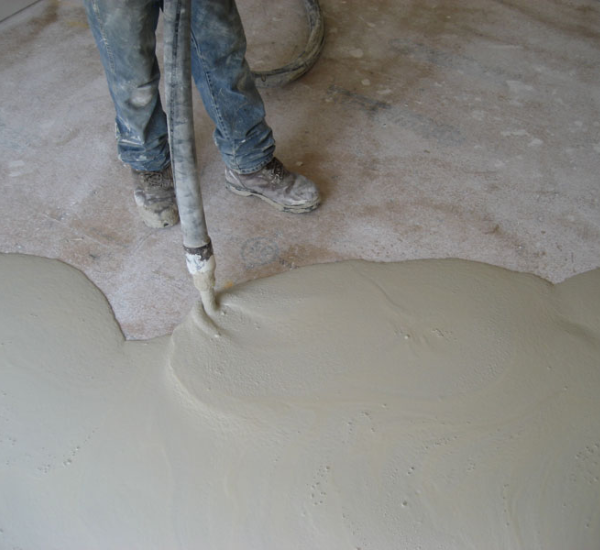
HEC is also evaluated in cement- and gypsum-based mixes, where water retention and workability matter. This is a secondary application on this page; the coating discussion above does not transfer to mortar performance.
Reproduce in the trial: mix design, water demand, open time and the hardened properties your specification requires.
How HEC behaves inside a paint
The five benefits article explains the mechanism side of the same decisions, including where thickening helps and where it costs you levelling or gloss.
Read the coatings guide →Dispersion & dissolution
Four steps that decide whether HEC works in your paint
Most HEC problems in a coating are created before the paint is tested: powder added too fast, into the wrong phase, at the wrong point in the batch. These four steps are the sequence a trial should control.
Define the water phase and the addition point
Record the water temperature, pH, co-solvents and where HEC enters the batch — pre-dispersed in water, or added after pigments and dispersant. The addition point changes both hydration and the final rheology, so it belongs in the batch record.
Disperse without lumping
Add powder into moving water at a controlled rate rather than dumping it into a static vortex. Shear has to be high enough to wet the particles and low enough not to entrain air. Lumps and fish-eyes are formed at this stage and are difficult to remove later.
Allow hydration under controlled conditions
HEC needs time in water before it develops its full viscosity. Keep the mixing time and temperature you use in the record, and do not judge viscosity from a sample taken before the batch is fully hydrated.
Evaluate the final formulation
Measure in the finished paint, not in a water-only solution. Compare against your current thickener at equal solids and the same test method, and include sag, levelling and spatter alongside viscosity.
If a batch already shows lumps, gels or a viscosity that will not develop, work through the HEC dissolution troubleshooting guide before changing the grade.
Batch record for the dispersion step
- Water temperature, pH and any co-solvent
- Addition point and powder feed rate
- Mixer type, speed and mixing time
- Hydration time before viscosity is measured
- Viscosity method, concentration and temperature used
Grade selection & comparison
Shortlist on the TDS, decide on the trial
HEC is supplied in a range of viscosity grades. The datasheet tells you what a grade measures under one stated method; it does not tell you how your paint will behave. Use four steps to move from the application to a defensible choice.
Application and target behaviour
Write down the coating type, solids and pigment volume concentration, the rheology problem you are solving — settling, sag, spatter, poor open time — and the application method. Keep it to one or two targets so the trial can answer them.
Existing formula and benchmark
Record the thickener you use now, its use level, the water phase and any co-thickener. Without a benchmark, a trial result has nothing to be compared against and any difference can be batch noise.
Shortlist grades on supplied TDS
Ask for the TDS of each grade on the shortlist and compare them on the same basis: the viscosity range under the stated method, concentration and temperature, plus any grade-specific handling notes. Two or three candidates is enough.
Controlled batch trial
Run the candidates against your benchmark with a fixed water phase, shear, addition order, maturation time and test temperature. Change one variable at a time and keep the finished-paint tests identical across candidates.
What the trial should record
- Viscosity under your specified method, temperature and concentration
- Sag, levelling and spatter at the application film build
- Storage or accelerated storage result: settling, syneresis, viscosity drift
- Film appearance, gloss and opacity against the benchmark
- Dosage, solids and pH of each batch
| Decision point | What to fix in the comparison | What to measure |
|---|---|---|
| Viscosity grade | Same test method, concentration and temperature for every candidate | Viscosity profile at low and high shear relevant to your application |
| Dosage | Same water phase, solids and addition order | Viscosity, sag, levelling and spatter at each use level |
| Dispersion | Same powder feed rate, mixing time and hydration time | Lump and fish-eye count, time to full viscosity development |
| Finished film | Same substrate, film build, drying and test conditions | Appearance, gloss, opacity and any declared performance claim |
A viscosity grade is a datasheet parameter, not a recommendation. Whether a grade suits your coating is decided by the controlled batch, measured against the benchmark you sell today.
Documents, batch & packing
The paperwork follows the grade and the lot
Documents are issued for the product you actually evaluate and the lot you actually receive. Each item is confirmed on request for the agreed grade, destination and shipment.
Technical data sheet per grade
Properties and handling notes for the specific grade on your shortlist, so candidates are compared on the same basis instead of a generic product description.
Safety data sheet for the destination
Issued in the format and language required by the destination market, and for the transport mode where applicable.
Batch COA for the supplied lot
Certificate of analysis tied to the batch number on the bag, covering the lot that is actually shipped to you.
Packing & shipment confirmation
Bag type, net weight, pallet pattern and marking confirmed per order, together with the shipping documents for the agreed terms.
No certificate, approval or traceability system is claimed beyond what is issued with the order. If your project needs a specific test report, declaration or third-party document, state it in the inquiry so it can be confirmed before shipment.
Prefer the form? Send the same details below — it reaches the same team.
Technical guides
Read in this order before you run a trial
These guides cover the material, the coating mechanism, wider applications, dissolution problems and sourcing. Use them alongside the sections above, then bring the open questions into the sample request.
What is hydroxyethylcellulose and how is it used in manufacturing?
The base explanation: what HEC is, how it is made and where it fits in water-based manufacturing.
02 · CoatingsHEC in paints: five key benefits for coatings
The coating-specific view of thickening, suspension, water retention and film formation, and what each one costs.
03 · ApplicationsKey applications of HEC in industrial settings
How the same chemistry is used outside architectural paint, and why the requirements differ.
04 · TroubleshootingWhy HEC does not dissolve: troubleshooting guide
Lumps, fish-eyes, slow viscosity development and what to change in the addition sequence.
05 · SourcingHow to source high-quality HEC from China
What to ask a supplier for, which documents to check and how to qualify a grade before scale-up.
FAQ
Questions buyers ask before sampling HEC
What is HEC used for in water-based coatings?
How should an HEC grade be selected?
Why does HEC form lumps or fish-eyes during addition?
Can dosage be chosen from viscosity alone?
Which documents can be requested?
Send the formulation brief, not just a grade name
A useful answer needs the context of your paint. Include these points and the reply can be specific about grade, documents and sample quantity.
- End use and coating type
- Water phase, solids and current thickener benchmark
- Addition sequence and dispersion equipment
- Test method, temperature and concentration you use
- Target rheology or application defect to fix
- Destination market and required documents
Grade and dosage are confirmed only after finished-paint testing.