
HPMC for Self-Leveling Compounds
Evaluate HPMC at low addition levels against flow, segregation control, water retention, surface quality and setting. The correct balance must be confirmed in the complete self-leveling formulation.
Recognize the failure before changing the grade
Flow drops too much
Check HPMC dosage, dispersant demand, mixing energy and waiting time.
Bleeding or segregation appears
Review particle grading, water, stabilizer balance and placement depth.
Pinholes remain
Check air entrainment, defoamer compatibility, mixing and substrate preparation.
Edges do not merge
Review flow retention, working time, pour sequence and environmental conditions.
Surface skins early
Check evaporation, substrate temperature, water management and finishing delay.
Strength is below target
Assess binder, water, aggregate, curing and admixtures; HPMC alone does not determine strength.
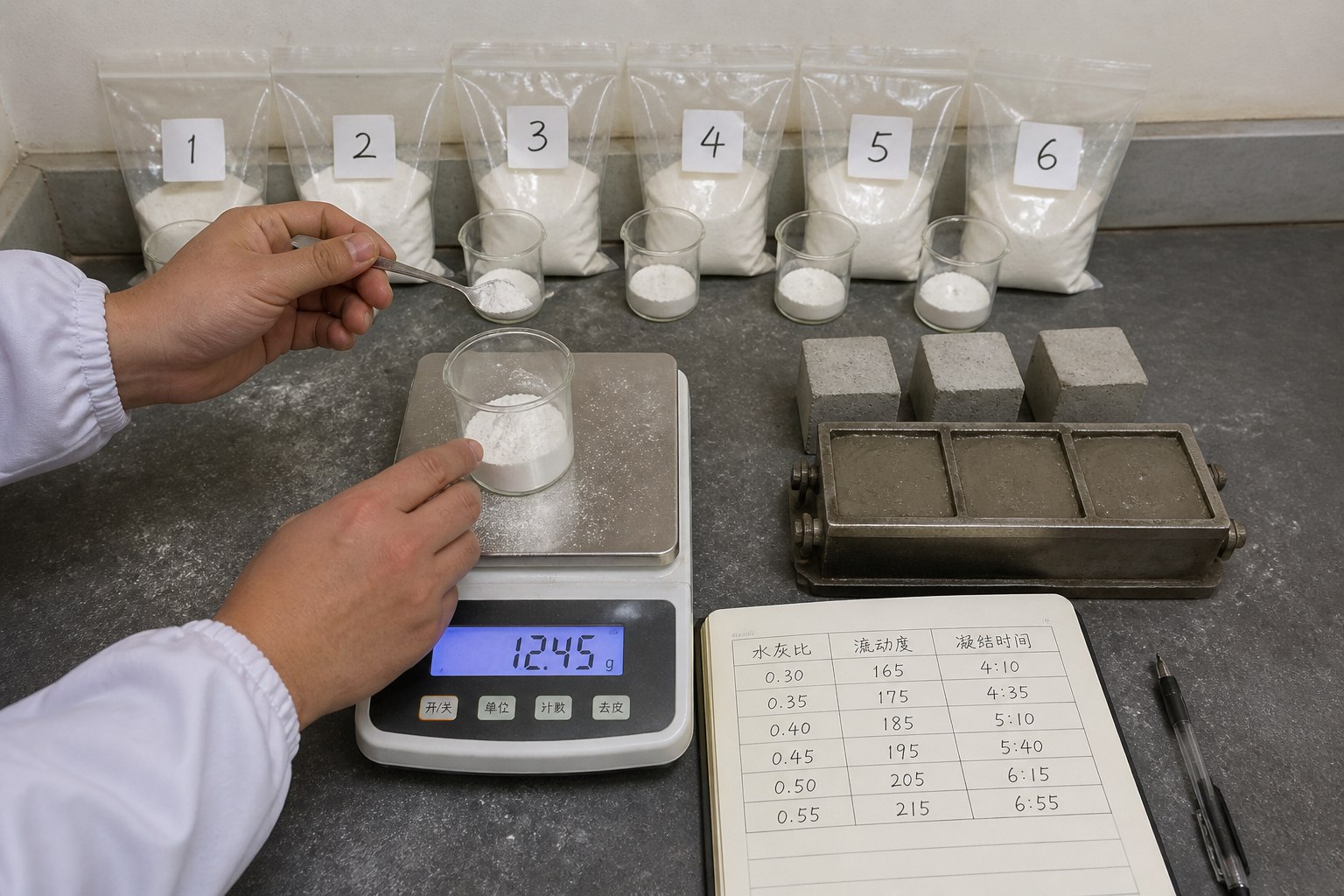
Use rheology control without sacrificing leveling
Self-leveling systems demand a narrow balance: enough stability to limit segregation and water movement, while preserving the flow needed to form a level floor. HPMC must be evaluated with dispersants, defoamers, binders and aggregates.
Support mix stability
Help manage water and fines while checking that flow remains within the target range.
Control surface water
Evaluate bleeding, edge separation and consistency during the open period.
Protect application consistency
Review flow retention and placement behavior under actual mixing and site conditions.
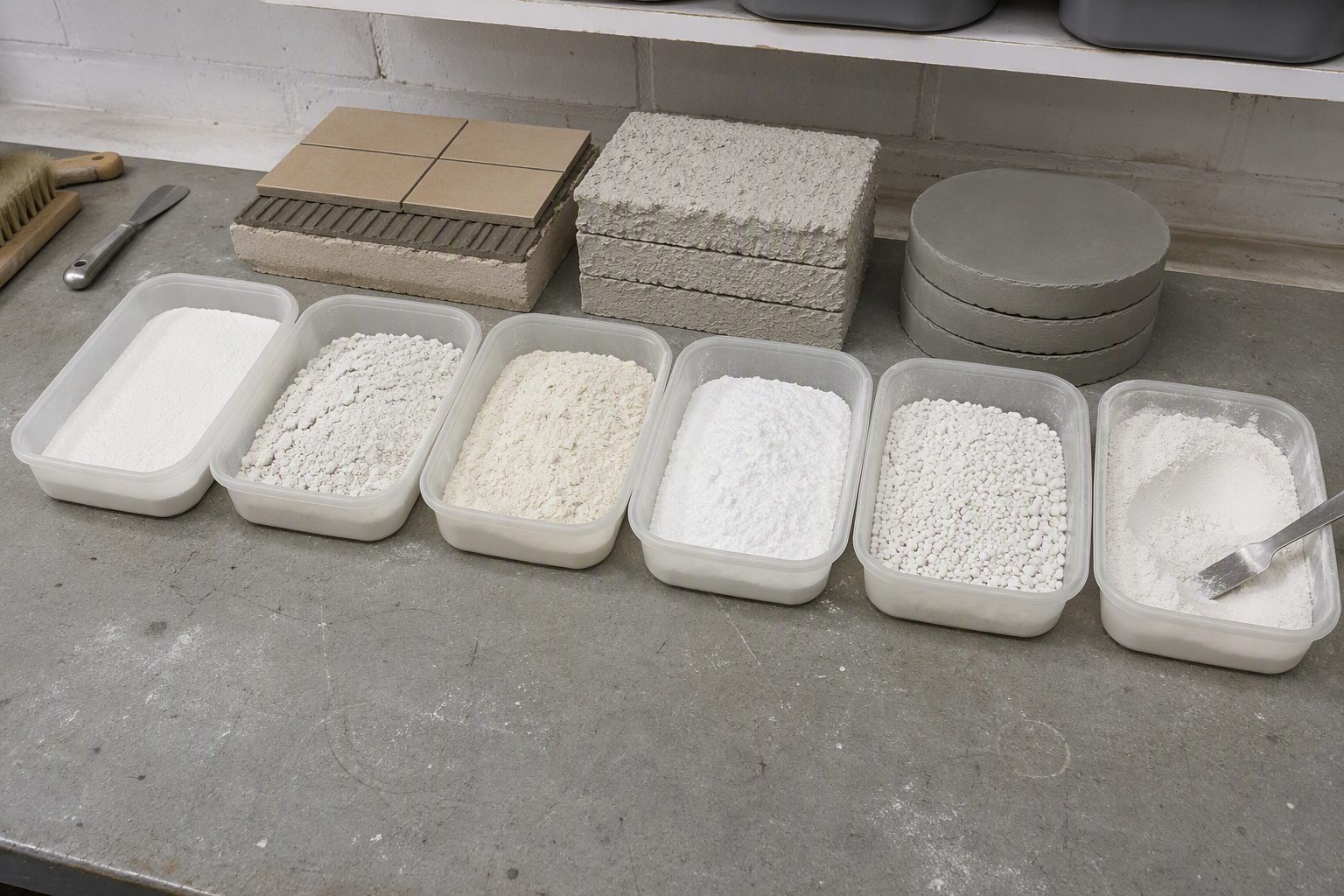
Select against flow and stability together
A grade that works in tile adhesive or wall putty may be too thickening for self-leveling. Candidate screening should focus on dosage sensitivity and interaction with the whole admixture package.
| Selection input | Why it matters |
|---|---|
| Binder system | Cement, calcium aluminate, gypsum and blended systems set differently. |
| Flow target | Define initial flow and flow retention before screening. |
| Layer thickness | Thin smoothing layers and deeper pours have different stability risks. |
| Admixture package | Dispersant, defoamer, retarder and accelerator interactions are critical. |
| Placement method | Manual pour and pumping introduce different shear and air conditions. |
De-risk your replacement trial before bulk approval
A structured sample comparison turns technical uncertainty into a documented purchase decision.
Define
Share the formulation, current grade, test method, conditions and problem.
Shortlist
Select candidates around the actual application and acceptance target.
Compare
Use the same raw materials, water, mixing, timing and environment.
Confirm
Repeat promising trials before approving a commercial order.
Build confidence beyond the first sample
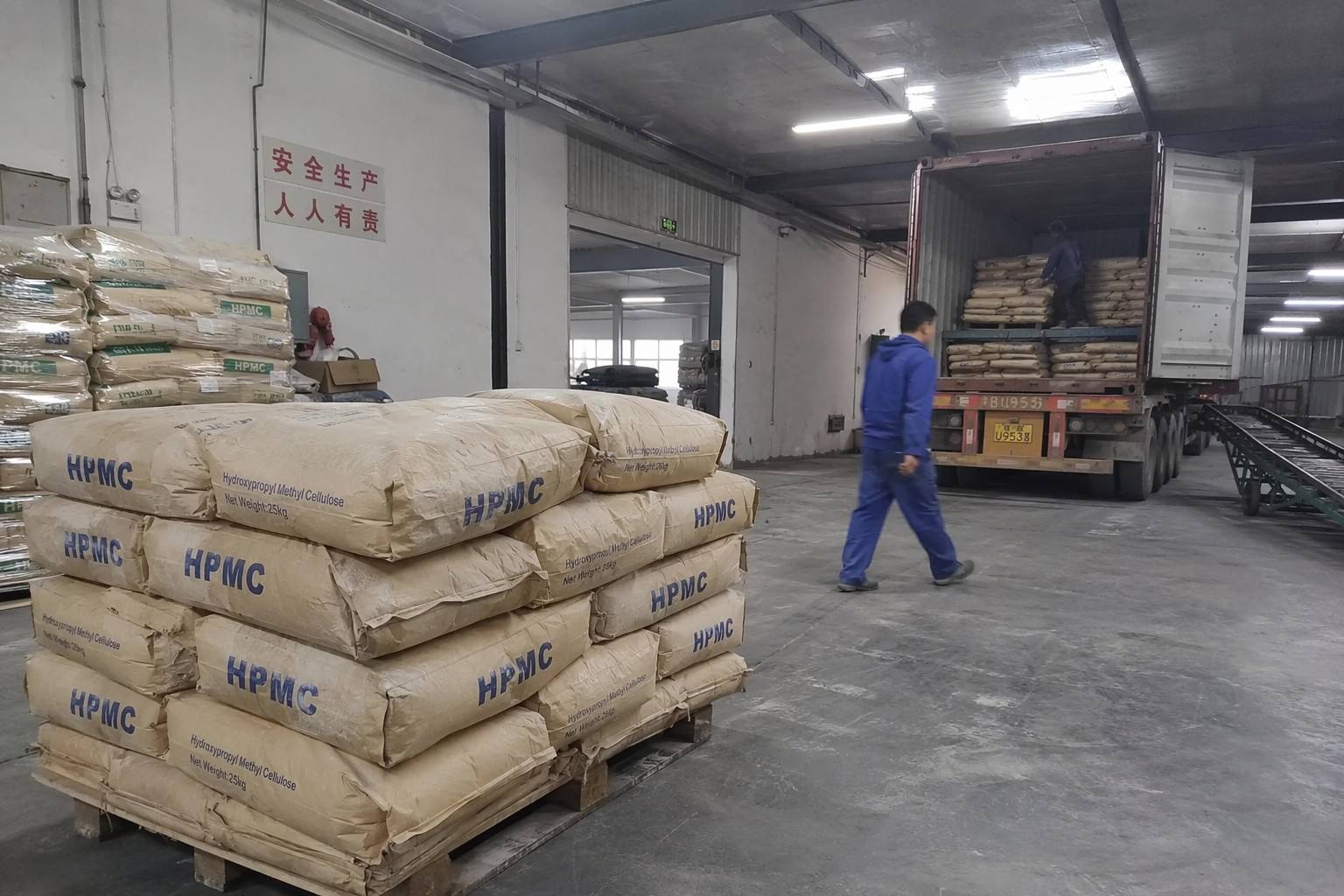
Align the specification, method, traceability, packaging and deviation process before commercial approval.
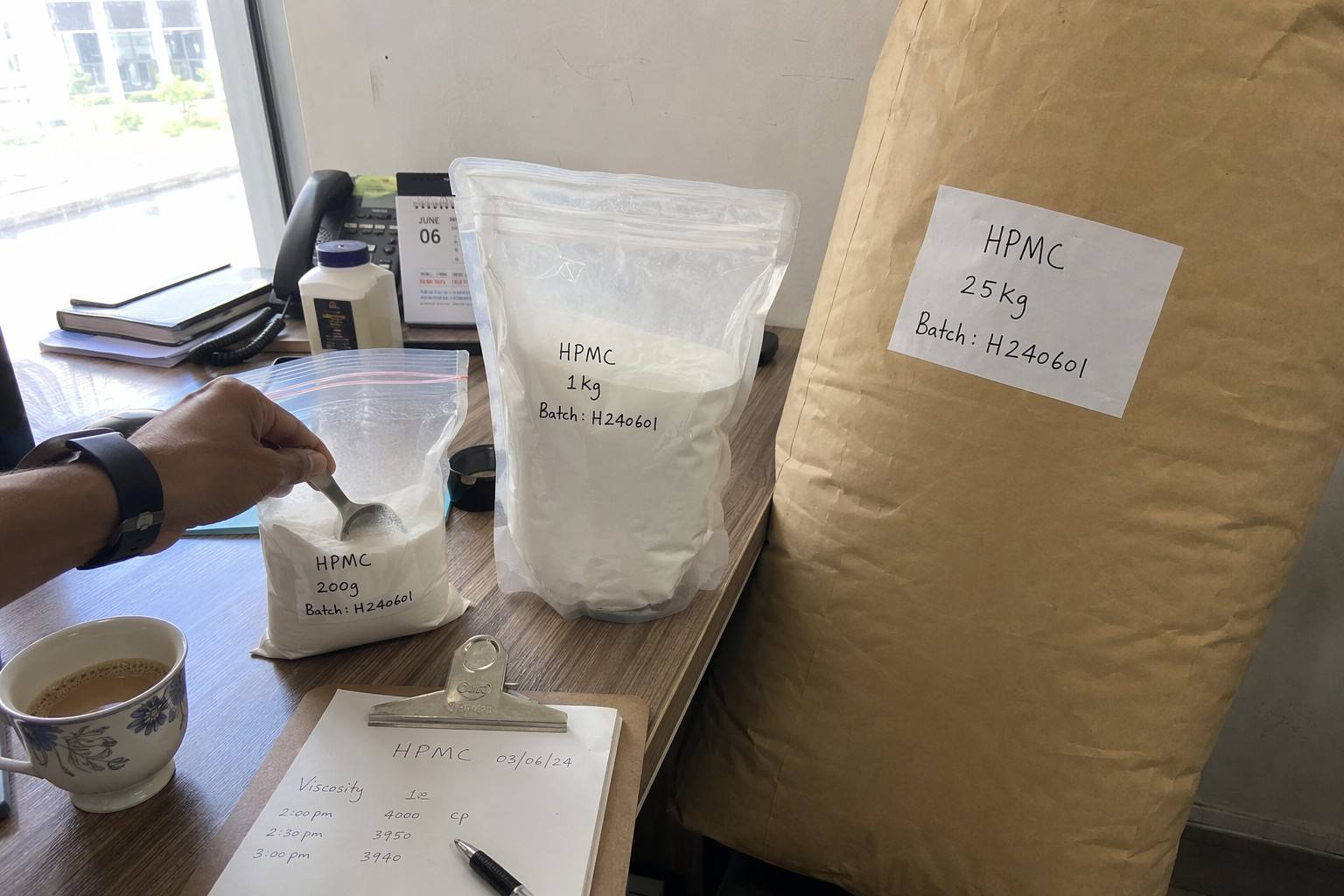
- Technical data sheet and stated viscosity method
- Batch-specific certificate of analysis
- Current safety data sheet
- Lot identification and retained samples
- Packaging integrity and dry storage
- Lead time and export documents
Information that improves matching
| Application | Self-Leveling Compounds |
| Current material | Grade, viscosity method and dosage range |
| Trial stage | Initial screening, replacement or approval |
| Key complaint | Describe handling and performance separately |
| Quantity | Sample, pilot or planned bulk volume |
| Destination | Country, port and packaging requirement |


Resolve the final questions before a trial
Can standard wall-putty HPMC be used?
It may not suit the required flow. Screen candidates specifically in the self-leveling formulation.
Why is dosage sensitivity important?
Small changes can affect flow and stability, so accurate weighing and repeat trials matter.
Can HPMC stop every pinhole?
No. Pinhole behavior also involves air, defoamer, mixing, substrate and placement.
Which tests should be recorded?
Track initial flow, flow retention, segregation, bleeding, air, set, surface and qualified strength results.
How should samples be compared?
Use identical lots, water, mixing energy, rest time, temperature and pour depth.
Related applications: Tile Adhesive. Wall Putty & Skim Coat page is under review.
Send your formulation problem and request a matched sample
Share the complete formulation context, conditions, current grade and the exact problem to solve.
Recommended enquiry fields
Use the active site form or email hpmc@jinghonghpmc.com. The disabled fields show the information needed for a useful reply.
Implementation note: connect these fields to the active WordPress form before publication. This static preview is not a submission form.
Technical scope: statements are conditional on the complete formulation and validation method. Raw-material specifications alone do not establish finished-system performance.