Are you a formulator or procurement manager navigating the complex world of cellulose ethers, trying to decide between HPMC and MHEC for your dry-mix mortar, tile adhesive, or plaster formulations? The wrong choice can lead to compromised product performance, increased costs, and even project failures. I’ve seen many professionals struggle with this decision, often relying on incomplete information or outdated assumptions.
But what if you could make an informed decision, backed by a clear understanding of their technical differences and application suitability? This guide will cut through the confusion, providing you with the insights needed to select the optimal cellulose ether for your specific needs, ensuring superior product quality and cost-effectiveness.
HPMC (Hydroxypropyl Methylcellulose) and MHEC (Methyl Hydroxyethylcellulose) are both crucial cellulose ethers, but their distinct molecular structures lead to varied performance characteristics, particularly in gel temperature, water retention, and application suitability. Understanding these differences is key to optimizing your formulations for specific construction applications like tile adhesives or plasters, ultimately impacting your product’s quality and cost-efficiency.

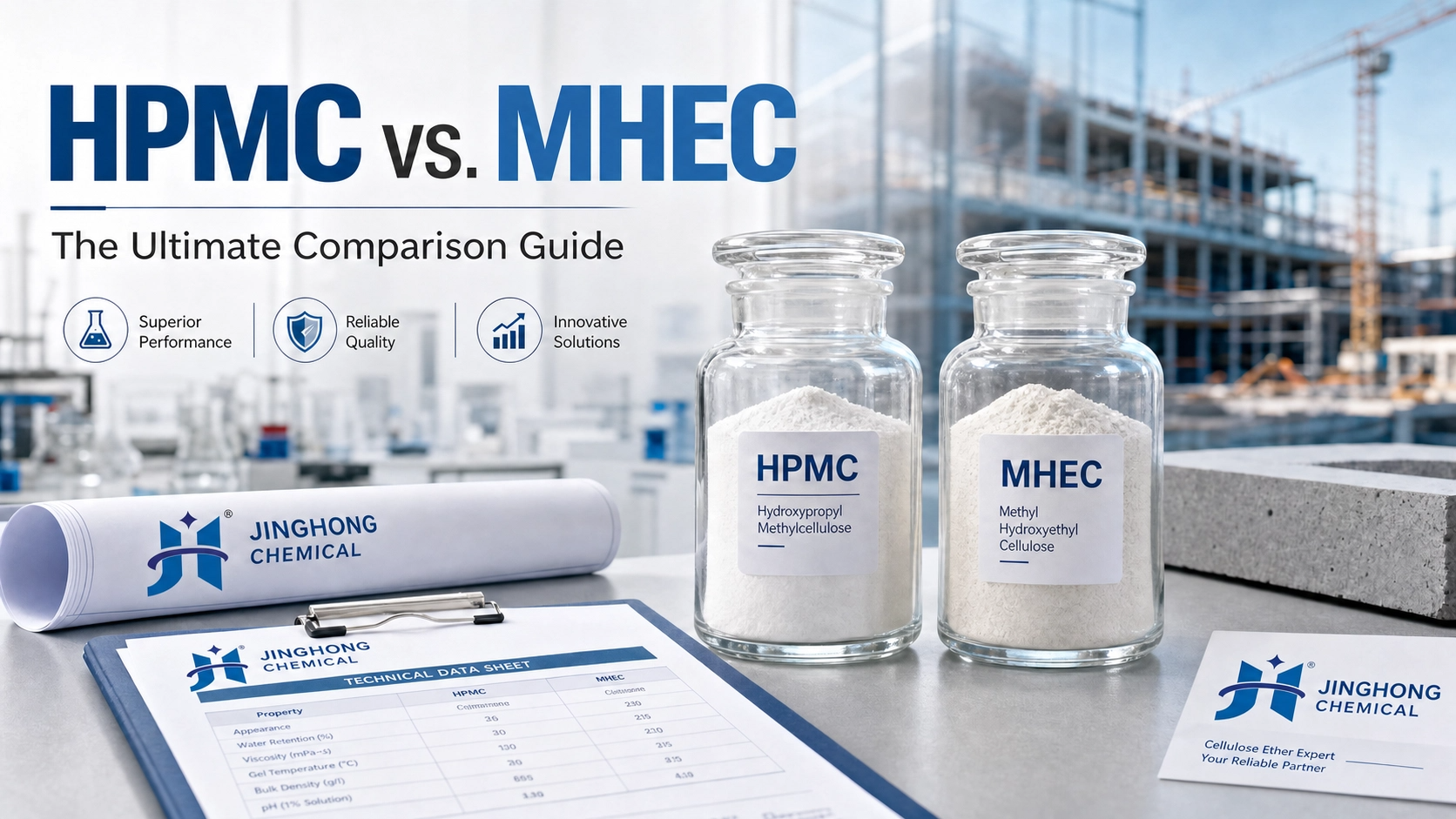
A visual comparison of HPMC and MHEC molecular structures, highlighting key differences.
1. Technical Performance: Why Does Gel Temperature and Water Retention Matter?
When evaluating cellulose ethers, two critical technical parameters often dictate their suitability for various applications: gel temperature and water retention. These properties are directly influenced by the chemical modification of the cellulose backbone and play a pivotal role in the performance of your final product.
Gel Temperature: The Heat Resistance Factor
Gel temperature refers to the temperature at which a cellulose ether solution transitions from a liquid to a gel state. This property is particularly important in applications exposed to varying temperatures, such as outdoor construction in hot climates. HPMC and MHEC exhibit different gel temperatures due to their distinct substituent groups.
-
HPMC (Hydroxypropyl Methylcellulose): Typically has a lower gel temperature, ranging from approximately 60°C to 75°C. This means that in hotter conditions, HPMC solutions might gel prematurely, potentially affecting workability and open time. However, for applications in moderate climates or where lower temperatures are maintained, HPMC performs exceptionally well.
-
MHEC (Methyl Hydroxyethylcellulose): Generally boasts a higher gel temperature, often exceeding 80°C, and can even reach up to 90°C or higher depending on the degree of substitution. This higher gel temperature makes MHEC particularly advantageous for applications in hot environments or where the mortar generates significant heat during hydration, as it maintains its viscosity and water retention properties for longer. For a detailed look at where MHEC fits across tile adhesives, putties, gypsum and dry-mix mortars, see what MHEC is used for.
Why it matters: A higher gel temperature ensures that the cellulose ether continues to function effectively (i.e., retain water and provide viscosity) even when the ambient temperature is high or the mortar itself heats up. This is crucial for maintaining consistent workability, preventing premature drying, and ensuring proper cement hydration in challenging conditions.
Water Retention: The Hydration Enabler
Both HPMC and MHEC are excellent water retention agents, but subtle differences can impact their efficiency. Water retention is the ability of the cellulose ether to hold water within the mortar matrix, preventing its rapid loss to the substrate or evaporation. This is vital for allowing the cement to fully hydrate and develop its strength.
-
HPMC: Provides strong water retention capabilities, contributing significantly to the open time and workability of mortars. Its molecular structure allows for efficient binding of water molecules, ensuring that sufficient water is available for cement hydration over an extended period.
-
MHEC: Also offers excellent water retention, often comparable to or slightly better than HPMC in certain formulations, especially at higher temperatures due to its superior thermal stability. The hydroxyethyl groups in MHEC can enhance its interaction with water, contributing to its robust performance.
Why it matters: Effective water retention directly translates to improved bond strength, reduced cracking, and enhanced durability of the hardened mortar. It also gives applicators a longer open time, which is essential for precise placement and adjustment of building materials. For more details on water retention, you can refer to industry standards like ASTM C1702 for evaluating water retention of mortars.

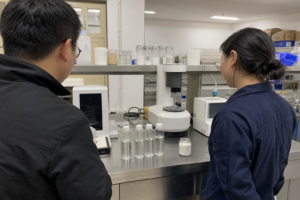
Laboratory testing comparing the gel temperature and water retention performance of HPMC and MHEC.
2. Application Guide: Tile Adhesive vs. Plaster – Which One Should You Choose?
Selecting between HPMC and MHEC often boils down to the specific application. While both are cellulose ethers, their distinct properties make one more suitable than the other for certain construction materials. Let’s dive into two common applications: tile adhesives and plasters.
For Tile Adhesives: Balancing Adhesion, Open Time, and Sag Resistance
Tile adhesives demand a delicate balance of properties. They need excellent adhesion to various substrates, sufficient open time for installers, and crucial sag resistance to prevent tiles from slipping, especially large-format or heavy tiles. In this application, both HPMC and MHEC are widely used, but their performance nuances can be significant.
-
HPMC in Tile Adhesives: HPMC is a workhorse in tile adhesives, providing excellent water retention, which is vital for proper cement hydration and extended open time. Its thickening effect contributes to good workability and rheology, making the adhesive easy to spread. For standard tile adhesives and in moderate climates, HPMC often provides a cost-effective and reliable solution.
-
MHEC in Tile Adhesives: MHEC, with its higher gel temperature, offers a distinct advantage in hot climates or for fast-setting adhesives where the mortar temperature can rise. It maintains its viscosity and water retention more effectively under these conditions, ensuring consistent performance and preventing premature drying. Additionally, MHEC can sometimes offer slightly better sag resistance due to its molecular structure, which is beneficial for heavy tiles or vertical applications.
Key Consideration: For high-performance tile adhesives, especially those used in challenging environments or with demanding tile types, MHEC might be the preferred choice due to its thermal stability. However, for general-purpose adhesives, HPMC remains a strong contender, often offering a better balance of performance and cost. For more in-depth information on tile adhesive formulations, you can explore resources from organizations like the European Federation of Adhesives and Sealants (FEICA).

Visualizing the distinct performance of HPMC and MHEC in tile adhesive and plaster applications.
3. Cost-Benefit Analysis: Is MHEC Worth the Premium Price Over HPMC?
For many B2B buyers and formulators, the decision between HPMC and MHEC ultimately comes down to a cost-benefit analysis. While MHEC often commands a higher price point than HPMC, its superior performance in specific conditions can justify the investment. It’s not just about the per-kilogram cost; it’s about the overall value delivered to your final product and project.
Understanding the Price Difference
The price disparity between HPMC and MHEC primarily stems from their manufacturing processes and the raw materials involved. MHEC typically requires a more complex etherification process to introduce the hydroxyethyl groups, which contribute to its higher gel temperature and enhanced thermal stability. This added complexity and the specific reagents used can increase production costs, which are then reflected in the market price.
When MHEC Justifies the Premium
Despite the higher cost, MHEC can be the more economical choice in the long run, especially in certain applications and environments:
-
Hot Climates/High Temperatures: In regions with consistently high temperatures or in applications where the mortar generates significant heat (e.g., thick-bed tile adhesives, self-leveling compounds), MHEC’s higher gel temperature ensures consistent performance. Using HPMC in these conditions might lead to premature gelling, loss of workability, and ultimately, product failure, necessitating costly rework or material waste. Here, MHEC’s stability provides a clear return on investment by preventing failures.
-
High-Performance Formulations: For premium products that demand superior adhesion, flexibility, and durability, MHEC’s enhanced properties can elevate the overall quality and market positioning of your mortar. The marginal increase in raw material cost can be offset by the ability to command a higher selling price or gain a competitive edge in performance.
Key Consideration: The decision should always be based on a holistic view, considering the specific application, environmental conditions, desired performance, and overall project budget. A detailed technical consultation with your supplier can help you conduct a precise cost-benefit analysis. For further reading on cellulose ether economics, you might find reports from chemical market analysis firms insightful.

A visual representation of the cost-benefit analysis for choosing between HPMC and MHEC in construction applications.
Conclusion: Making the Right Choice for Your Formulation
Choosing between HPMC and MHEC is not about one being inherently superior to the other, but about selecting the right tool for the right job. Both Hydroxypropyl Methylcellulose (HPMC) and Methyl Hydroxyethylcellulose (MHEC) are invaluable cellulose ethers in the construction industry, each bringing unique strengths to the table.
- Choose HPMC for general-purpose applications, in moderate climates, and when cost-effectiveness is a primary concern, as it offers excellent water retention and workability.
- Choose MHEC for high-performance formulations, in hot climates, or when superior thermal stability, sag resistance, and flexibility are paramount, justifying its premium price.
Ultimately, the best choice for your formulation will depend on a thorough understanding of your specific application requirements, environmental conditions, and desired performance characteristics. Don’t hesitate to leverage the expertise of your cellulose ether supplier.
Partner with Jinghong Chemical for Optimal Cellulose Ether Solutions
Still unsure which cellulose ether is best for your specific formulation? Jinghong Chemical offers a comprehensive range of high-quality HPMC and MHEC products, backed by 15 years of manufacturing expertise and dedicated technical support. Our team of experts can help you conduct a detailed analysis of your needs, recommend the optimal product, and assist with formulation adjustments to achieve superior performance and cost-efficiency.
Contact us today to discuss your project, request technical data sheets, or obtain free samples for testing.
Email: hpmc@jinghonghpmc.com
WhatsApp: +8615733156958
Website: www.jinghonghpmc.com