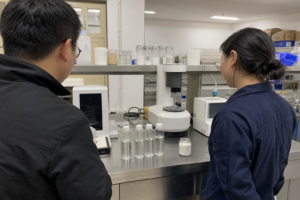
Cellulose ether can solve several application problems in repair mortar, but buyers often treat every failure as a simple viscosity issue. That assumption can lead to grade mismatch, excess water demand, or unnecessary cost. I prefer to diagnose the actual failure first, then match the additive to the formulation, substrate, repair thickness, and jobsite conditions.
Cellulose ether primarily helps repair mortar control water retention and rheology.1 A suitable grade can reduce rapid water loss, extend workable time, improve trowel feel, add body, and limit vertical sagging. However, it cannot independently guarantee adhesion, crack resistance, final strength, or long-term durability. Those properties depend on the complete repair system.
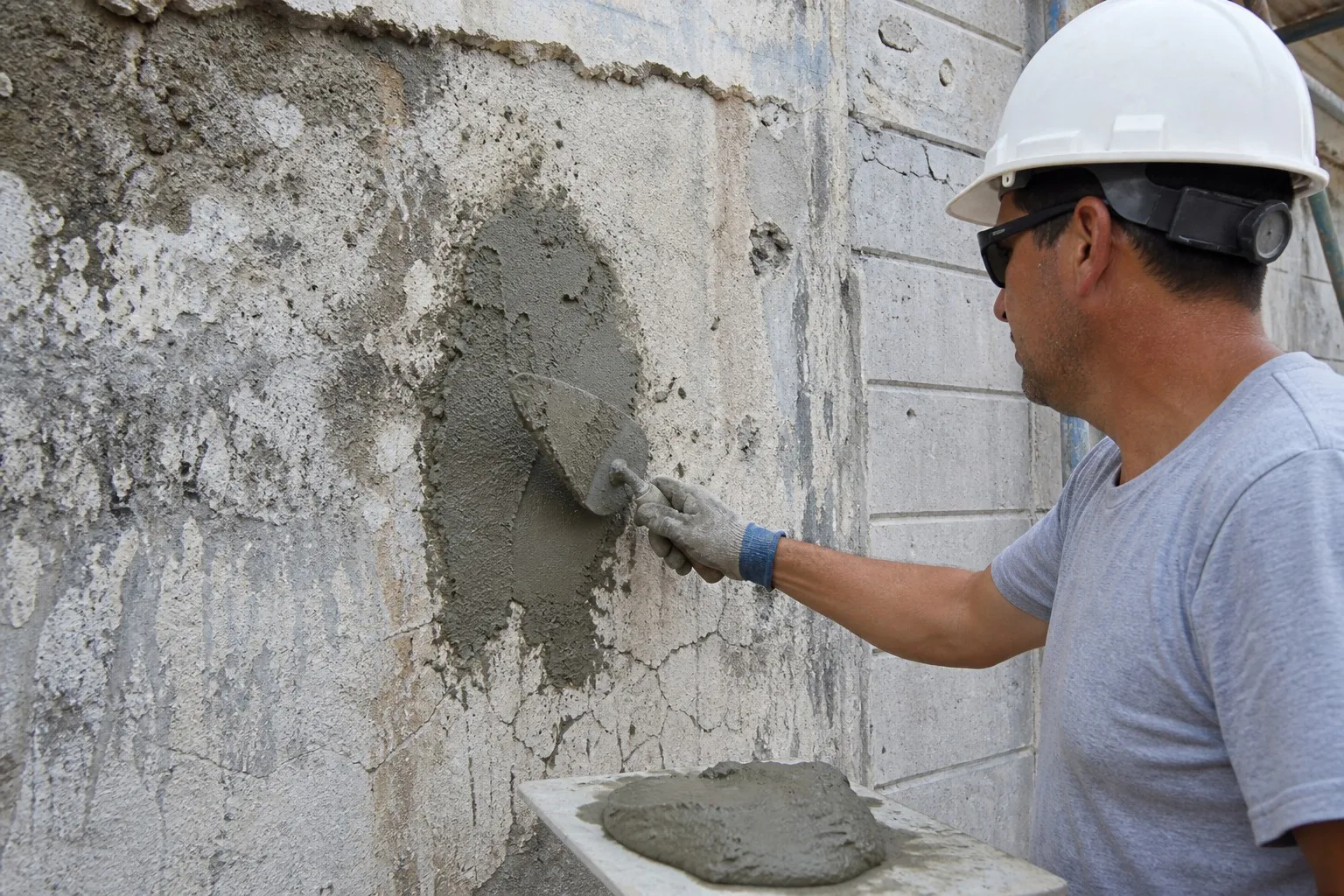
From our repair-mortar application tests and recurring customer inquiries, I have learned that similar complaints can have very different causes. A technical review therefore needs to separate symptoms from root causes before changing viscosity, dosage, water addition, or the wider formulation.
Which Repair Mortar Problems Can Cellulose Ether Address?
Repair mortar may lose workability, drag under the trowel, slump on a wall, or dry too quickly against an absorbent substrate. These symptoms disrupt placement and can weaken the interface indirectly. However, they do not all come from the same mechanism, so one standard grade cannot solve every complaint.
A properly selected cellulose ether can address rapid water loss, short open or working time, poor application consistency, insufficient body, segregation tendencies, and vertical sagging. It does this by modifying water retention and fresh-mortar rheology. The actual result depends on the binder system, aggregates, polymers, water content, substrate, application method, and curing conditions.
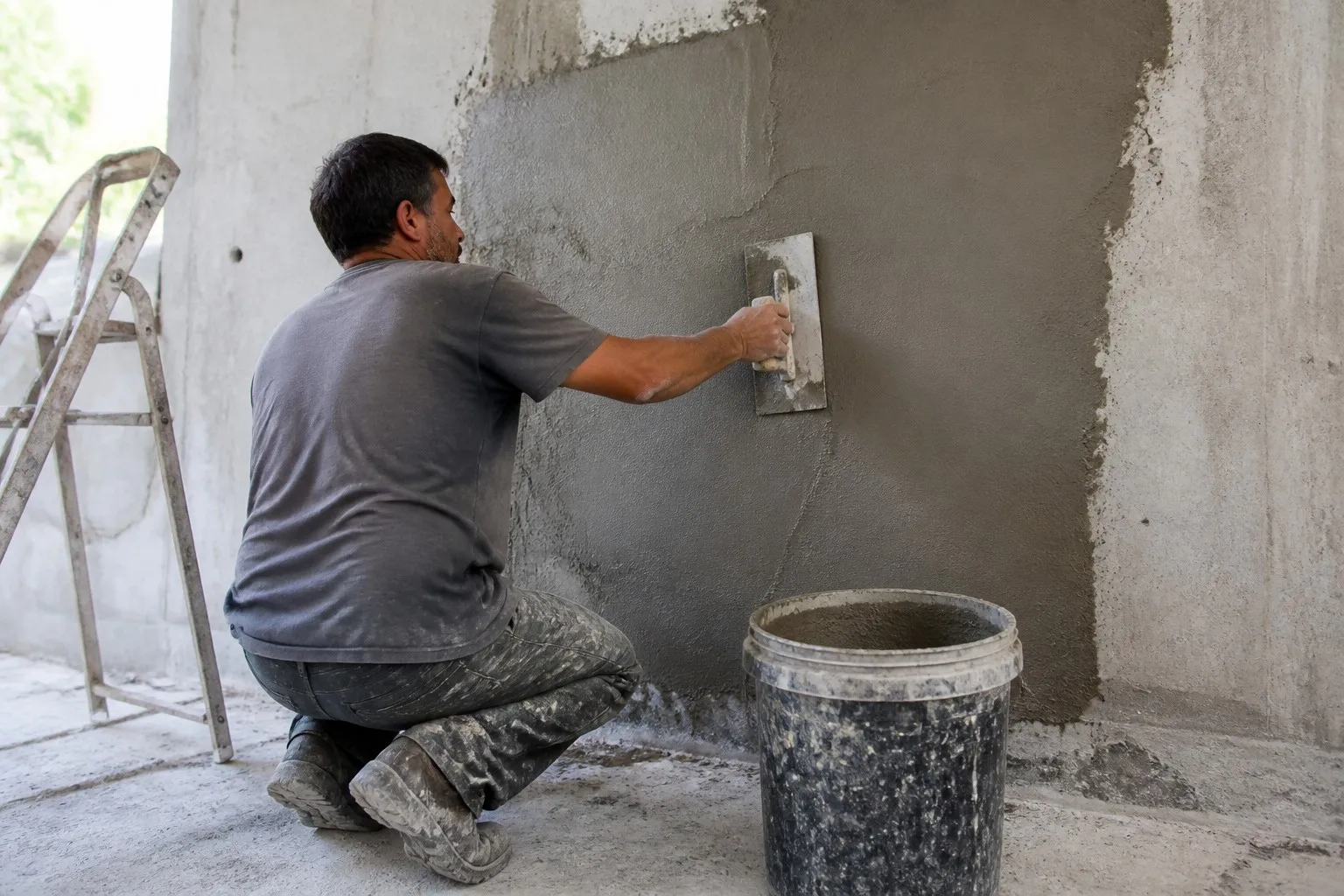
Rapid water loss into the substrate
Concrete, masonry, and old cementitious surfaces can absorb mixing water from fresh repair mortar.2 High temperature, wind, and low humidity can increase water loss from the exposed surface3 at the same time.
When too much water leaves the mortar too quickly, workers may notice:
- A short practical working time
- Fast skin formation
- Trowel drag
- Difficulty feathering or finishing edges
- Poor wetting at the repair interface
- Inconsistent texture between batches or application areas
Cellulose ether can retain part of the mixing water within the fresh mortar. This gives the binder more time to hydrate4 and helps the applicator maintain a workable interface. I view this as support for hydration and placement, not proof of final adhesion.
The substrate still needs appropriate preparation. Dust, laitance, oil, weak concrete, standing water, and unsuitable primers can defeat a well-designed mortar.
Weak body and poor trowel feel
A repair mortar may feel too fluid even when its measured water addition appears normal. It may also feel sticky, heavy, dry, or difficult to spread. These are different rheological responses.
Cellulose ether affects the mortar’s consistency and movement under applied force. A matched grade can give the mortar enough body to remain on the trowel while still spreading under pressure. However, “better trowel feel” is not one universal laboratory value. It varies with regional application habits, tool type, aggregate grading, repair depth, and worker expectations.
In our internal application comparisons, I often evaluate practical characteristics such as:
- Ease of initial mixing
- Wetting of dry powder
- Trowel pickup
- Spread under hand pressure
- Edge finishing
- Slump after placement
- Consistency after resting and remixing
These observations are useful for grade screening, but they are not a substitute for standardized performance testing.
Vertical sagging
Wall and overhead repairs need enough fresh-state stability to resist gravity. Cellulose ether can help develop this stability, but cellulose ether is only one part of the rheology package. Aggregate distribution, yield stress, water demand, lightweight fillers, fibers, and other thickeners can also influence sag.
| Observed problem | Possible contribution from cellulose ether | Other factors to investigate |
|---|---|---|
| Mortar dries during application | Improved water retention | Substrate absorption, wind, heat, batch size |
| Mortar feels thin | More fresh-state body | Excess water, aggregate grading, binder ratio |
| Mortar drags under the trowel | More balanced rheology may help | Excess thickener, low water, poor wetting |
| Mortar sags on a wall | Improved stability | Layer thickness, density, water addition |
| Surface skins too quickly | Slower moisture loss may help | Temperature, airflow, application sequence |
I recommend treating this table as a diagnostic starting point. A laboratory trial should reproduce the actual formulation and a realistic application condition before a purchasing decision is made.
How Does Cellulose Ether Improve Water Retention and Working Time?
Repair-mortar producers often ask for longer working time after receiving a field complaint. The request sounds simple, but “working time” may refer to bucket consistency, trowelability, surface wetness, or the ability to form a sound interface. Each definition requires a slightly different evaluation.
Cellulose ether improves water retention by slowing the movement and loss of water from fresh repair mortar. This can preserve application consistency and support cement hydration during the early stage. It may extend practical working time, but the result must be tested because temperature, dosage, binder chemistry, substrate absorption, and water addition all affect performance.
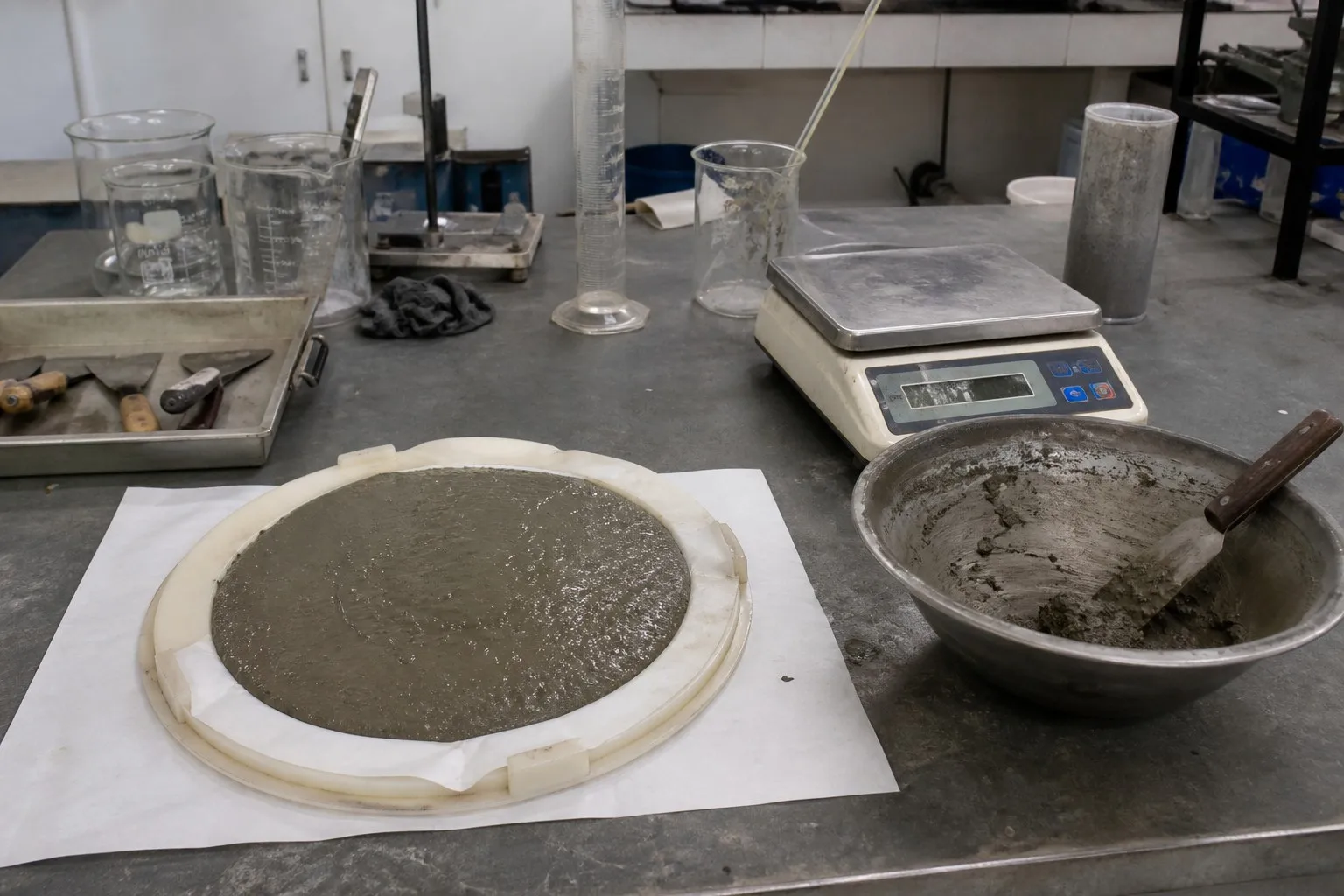
Water retention is not the same as set control
I regularly see buyers use “working time,” “open time,” and “setting time” as if they mean the same thing. They do not.
- Working time usually describes how long mixed mortar remains usable.
- Open time may describe the period in which the applied mortar can form an acceptable interface.
- Setting time describes the binder’s transition toward a hardened state.
- Pot life may have a formal definition under a chosen test standard or an informal jobsite meaning.
Cellulose ether primarily manages water and rheology. It may influence the measured or perceived timing of the mortar, but it should not automatically be treated as a dedicated set retarder.
Why test conditions matter
A water-retention result has limited procurement value unless the buyer knows how it was produced. The evaluation should record at least:
- Test method or internal procedure
- Mortar formulation
- Cellulose ether type and test dosage
- Water-to-dry-mix ratio
- Mixing speed and duration
- Resting and remixing procedure
- Ambient temperature and relative humidity
- Substrate or filter medium
- Time between mixing and measurement
Numerical results from different methods may not be directly comparable. For example, a test made on filter paper under controlled laboratory conditions does not reproduce a hot, windy façade with highly absorbent concrete. It can still support batch comparison, but it cannot fully predict field behavior.
In our application work, I use controlled tests to compare grades under the same conditions. I then ask the customer to confirm the result in the target formulation and local climate.
The danger of adding extra water
When a repair mortar loses workability, workers may add more water.5 That action can make placement easier for a short period, but it may also change the water-to-binder ratio, increase shrinkage risk, reduce strength, promote segregation, or alter color and surface texture.
A suitable cellulose ether may help maintain workability without uncontrolled water adjustment. However, the product data sheet should still define the recommended water range, and the producer should verify hardened properties at the actual water addition.
For repair products marketed under standards such as EN 1504-3, buyers should review the relevant declared performance and test reports for the complete mortar. A cellulose ether specification or certificate does not demonstrate that the finished repair product meets the standard.
Can Cellulose Ether Reduce Sagging and Improve Trowel Application?
A vertical repair may look acceptable during mixing but slide after it reaches the wall. Another mortar may stay in place yet feel too sticky to finish. If a supplier responds to both complaints with “use higher viscosity,” the recommendation overlooks the balance between stability and practical application.
Cellulose ether can reduce sagging and improve trowel application by adjusting fresh-mortar rheology, water distribution, and consistency.6 The best grade gives enough body for the required layer thickness without causing excessive stickiness, air entrainment, mixing difficulty, or poor wetting. The formulation should be tested on the intended wall, floor, or overhead application.
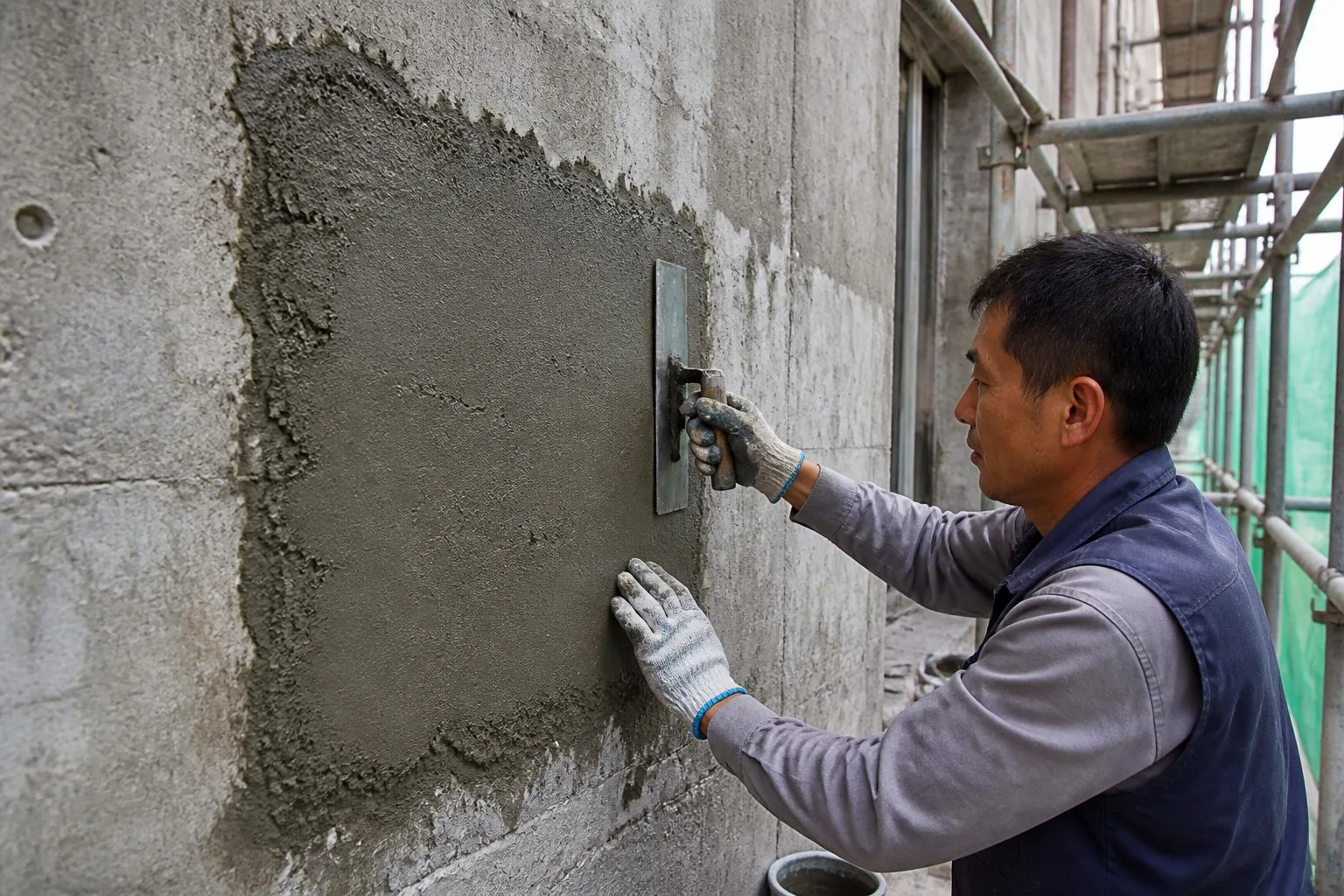
Sag resistance requires a defined test
The phrase “good anti-sag” is too vague for supplier comparison. Buyers should define:
- Whether the application is vertical or overhead
- The target thickness per pass
- The weight or density of the mortar
- The tool and placement method
- The waiting time before measurement
- The acceptable downward movement
- The ambient test conditions
For example, a grade that performs well in a thin cosmetic repair may not provide enough stability for a thicker structural patch. Conversely, the grade used in a thick wall repair may feel too heavy or sticky in a fine finishing mortar.
Application method changes the requirement
Repair mortar may be hand-applied, pumped, sprayed, poured, or placed with a trowel. Each method subjects the material to different shear forces.
| Application method | Important fresh-mortar properties | Cellulose ether selection concern |
|---|---|---|
| Hand troweling | Pickup, spread, edge finishing | Balance body with low drag |
| Vertical patching | Shape retention, sag control | Avoid excessive stickiness |
| Overhead repair | Cohesion, placement stability | Verify safety and layer thickness |
| Pumping | Flow under shear, pressure stability | Check pumpability and air content |
| Spray application | Atomization or projection behavior | Test with actual equipment |
| Floor repair | Flow and leveling | Excess thickening may be harmful |
I once reviewed a customer complaint described simply as “low viscosity.” Further discussion showed that the mortar had enough consistency in the bucket but moved downward after a thick vertical application. The useful target was therefore sag control at a defined layer thickness, not a higher viscosity number on the raw-material specification.
That distinction matters because cellulose ether viscosity is normally measured in a defined solution concentration, temperature, and instrument setup. It is a useful quality-control parameter, but it does not directly equal mortar performance.
Watch for secondary effects
Changing the cellulose ether grade or dosage can affect more than consistency. Depending on the product and formulation, buyers may need to check:
- Entrained air
- Wet density
- Water demand
- Set development
- Surface finish
- Early strength
- Compressive and flexural strength
- Pull-off or bond performance
- Shrinkage
- Pump or spray behavior
I recommend a staged trial. First, screen fresh properties. Second, test hardened performance. Third, run a site or pilot-production trial. This process is more reliable than selecting a grade from viscosity data alone.
Why Are Higher Viscosity and Higher Dosage Not Always Better?
Procurement teams sometimes request the highest-viscosity product because they associate a larger number with stronger performance. Formulators may also increase dosage after a complaint. Both actions can mask the real cause and create new problems, especially when the mortar already contains polymers, fibers, clays, or other rheology modifiers.
Higher viscosity or a higher cellulose ether dosage is not automatically better for repair mortar.7 Excessive rheology modification can increase stickiness, water demand, mixing time, air entrainment, or trowel resistance. Buyers should select the lowest effective level that meets defined fresh and hardened performance targets in the complete formulation.
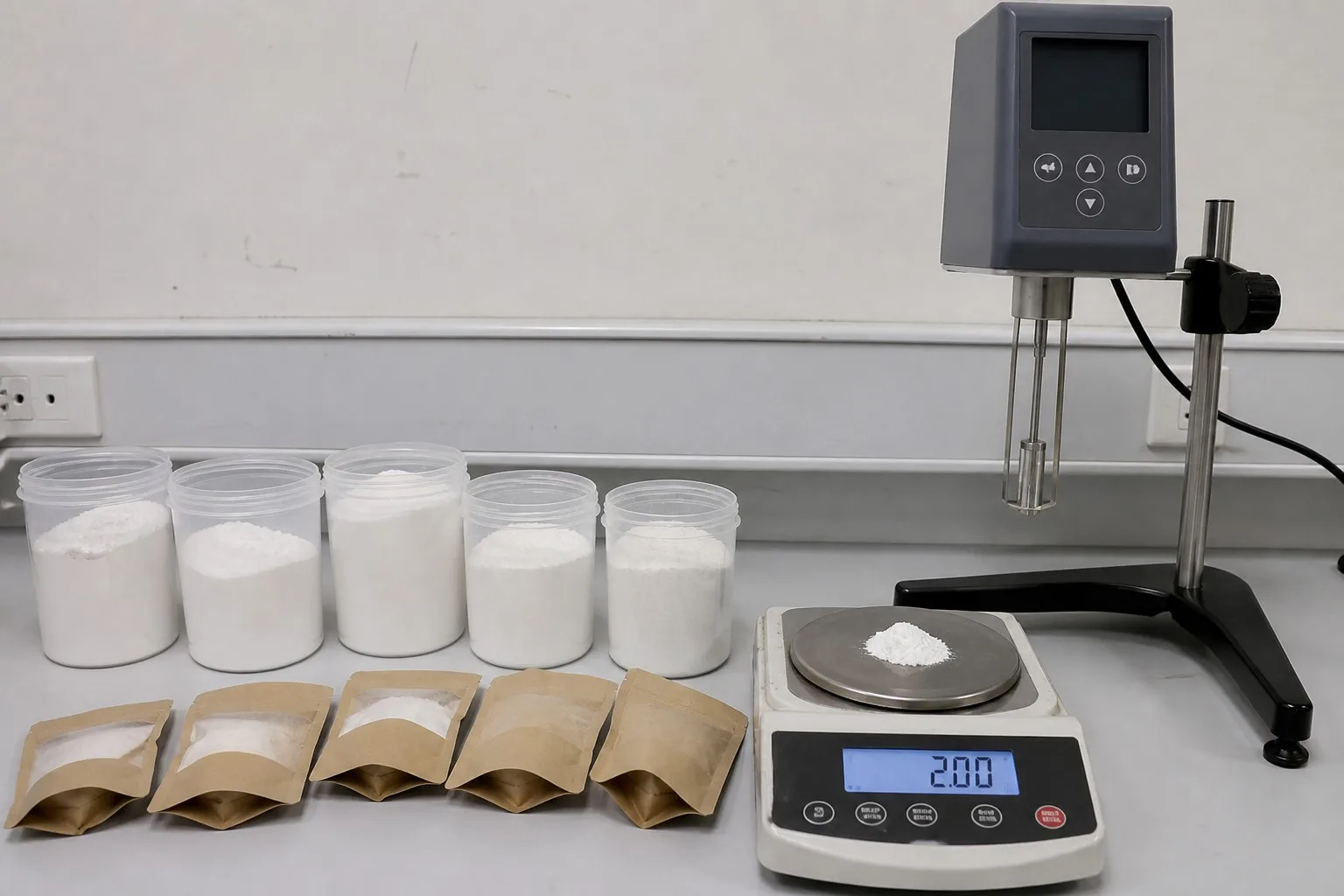
Raw-material viscosity is only one specification
A viscosity value is meaningful only when its measurement conditions are stated. Buyers should confirm:
- Solution concentration
- Test temperature
- Instrument and spindle or rotor
- Rotational speed
- Sample preparation method
- Hydration time
- Whether the result is nominal, typical, or guaranteed
Two products with similar stated viscosity can perform differently in mortar because their substitution chemistry, particle characteristics, dissolution behavior, purity, modification, and batch consistency may differ. In the same way, two products with different solution viscosity values may show similar practical application performance at different effective dosages.
Dosage must remain formulation-specific
I do not recommend an absolute dosage without seeing the formulation and test conditions. The appropriate amount depends on:
- Cement, gypsum, lime, or blended binder content
- Polymer powder type and level
- Aggregate particle-size distribution
- Filler mineralogy
- Fiber content
- Other thickeners or starch ethers
- Water addition
- Target layer thickness
- Application method
- Climate and curing practice
A dose that works in one cement-rich mortar may not transfer to a polymer-modified fine repair compound. Any trial dosage should be recorded as a percentage of the dry mix and verified through both fresh and hardened tests.
Use a controlled trial matrix
I usually suggest changing one factor at a time. A simple screening program may include the current grade as a control and several candidate grades at defined test levels. The producer can then record:
| Evaluation item | Why it matters |
|---|---|
| Mixing behavior | Identifies lumping, wetting, and dispersion issues |
| Initial consistency | Shows the starting application profile |
| Consistency after aging | Indicates practical workability retention |
| Trowel feel | Captures drag, pickup, and finishing behavior |
| Sag at target thickness | Tests the actual vertical requirement |
| Wet density or air content | Detects unintended aeration changes |
| Set and early hardness | Screens disruption to construction timing |
| Strength and bond tests | Checks the complete hardened system |
| Shrinkage or cracking observation | Identifies risks requiring further analysis |
The final selection should not rely on one attractive measurement. It should meet the defined application window without sacrificing critical hardened properties.
What Repair Mortar Failures Can Cellulose Ether Not Fix Alone?
A modifier may improve fresh mortar enough to make a trial look successful, but the underlying repair system can still be unsuitable. This creates a serious risk: good trowelability may be mistaken for proof of structural or long-term performance. I separate application quality from engineering performance.
Cellulose ether cannot independently guarantee bond strength, compressive strength, crack resistance, corrosion protection, dimensional stability, or durability.8 It also cannot compensate for contaminated concrete, active structural movement, incorrect repair geometry, poor curing, unsuitable binder design, or uncontrolled water addition. These issues require complete formulation testing and, where needed, qualified engineering evaluation.
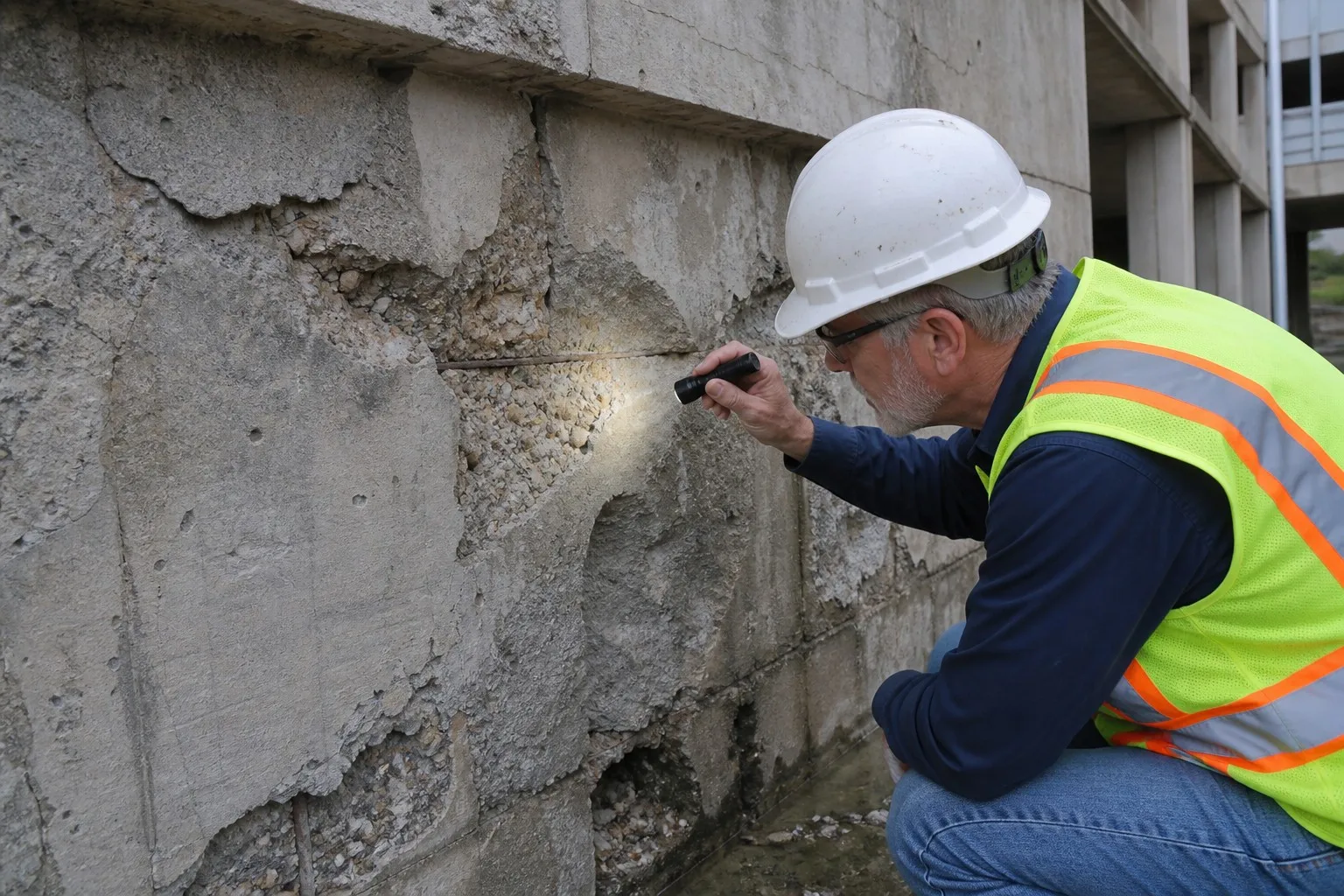
Bond strength is a system result
Improved water retention and wetting can support interface quality. However, final bond depends on many factors:
- Concrete surface strength
- Surface roughness and preparation
- Moisture condition
- Primer or bonding slurry
- Binder and polymer system
- Mortar shrinkage
- Placement pressure
- Curing
- Test age and method
A supplier should therefore avoid saying that cellulose ether “creates adhesion” as an isolated claim. Pull-off adhesion or other bond testing should be conducted on the finished repair system according to the applicable method and substrate preparation.
Cracking has multiple causes
Cracks may result from plastic shrinkage, drying shrinkage, thermal movement, excessive water, high layer thickness, rapid evaporation, restraint, structural movement, or an unsuitable aggregate and binder balance.9 Better moisture management may reduce one contributor under some conditions, but cellulose ether cannot guarantee crack prevention.
When cracks appear, I ask several questions:
- When did the cracks become visible?
- Are they superficial, through-thickness, or moving?
- What was the layer thickness?
- How much water was added?
- What were the temperature, wind, and humidity?
- How was the repair cured?
- Was the substrate stable and properly prepared?
- Were fibers, polymers, expansive components, or shrinkage-control measures used?
These details help determine whether changing the cellulose ether is relevant at all.
Structural repairs need professional evaluation
Repair products may be used in cosmetic, non-structural, structural, horizontal, vertical, or overhead applications. The consequences of failure vary greatly.
A qualified engineer or repair specialist should evaluate application-specific matters such as:
- Cause and extent of concrete deterioration
- Reinforcement corrosion
- Required structural capacity
- Compatibility with the existing concrete
- Exposure class
- Repair geometry
- Load transfer
- Fire, chemical, freeze-thaw, or chloride exposure
Our role as a cellulose ether manufacturer is to support additive selection, application testing, quality documentation, and formulation trials. We do not present our internal application laboratory as an independent structural-testing authority.
How Should Buyers Evaluate a Cellulose Ether Supplier?
A low price per kilogram can look attractive, but repair-mortar cost is shaped by effective dosage, batch consistency, rejected production, customer complaints, and field rework. Procurement teams need comparable evidence. Otherwise, a small raw-material saving may increase the total cost of the finished product.
Buyers should evaluate a cellulose ether supplier through documented specifications, batch consistency, application-test performance, effective dosage, technical response, supply capacity, and export support. They should verify COAs, safety documents, and relevant certifications rather than relying on logos or broad claims. Final approval should include laboratory and production trials in the buyer’s own repair mortar.
Compare total use cost
Price per kilogram does not show how much material is needed to achieve the target result. A better commercial comparison includes:
- Effective dosage in the target formulation
- Cost per metric ton of finished mortar
- Batch-to-batch adjustment needs
- Production downtime
- Rejected or reworked batches
- Packaging and logistics
- Technical support
- Complaint and field-rework exposure
I recommend keeping the current product as a control during qualification. This gives the producer a practical benchmark for both performance and cost.
Request verifiable documents
Depending on the market and purchasing agreement, buyers may request:
- Product specification sheet
- Batch Certificate of Analysis
- Safety Data Sheet
- Technical Data Sheet
- Manufacturing and quality-system information
- Packaging and shelf-life details
- Country-of-origin and export documents
- Regulatory declarations relevant to the destination
- Retained-sample and traceability procedures
Buyers should verify certificates with the issuing organization where appropriate. A document review supports supplier qualification, but it does not replace incoming inspection or application testing.
Send a complete technical inquiry
A useful inquiry should describe the problem rather than asking only for a viscosity grade. I ask buyers to include:
- Observed failure: rapid drying, sagging, drag, low body, or another symptom
- Target improvement: longer workability, better vertical stability, easier finishing, or another measurable goal
- Base formulation: binders, fillers, aggregate range, polymer, fibers, and other modifiers
- Current product: cellulose ether type, grade, viscosity method, and dosage
- Application details: substrate, layer thickness, tool, hand application, pumping, or spraying
- Process data: water addition, mixing procedure, resting time, and remixing
- Climate: temperature, humidity, wind, and season
- Curing conditions: method and duration
- Target market: applicable standards and customer expectations
- Purchasing needs: annual volume, packaging, OEM requirements, documents, and delivery destination
At Shijiazhuang Jinghong Chemical Technology Co., Ltd., we use this information to narrow the trial options for HPMC, HEC, MHEC, or related construction-grade products. We still ask customers to validate the selected grade in their own production and jobsite conditions.
Frequently Asked Questions
Does cellulose ether increase repair mortar bond strength?
Cellulose ether can support water retention, hydration, workability, and interface wetting. These effects may contribute to a more consistent repair. However, the additive does not independently guarantee bond strength. Buyers should test the complete mortar on a properly prepared substrate using the applicable bond or pull-off test method.
Can cellulose ether prevent cracks in repair mortar?
Cellulose ether cannot guarantee crack prevention. It may improve moisture control during early application, but cracking also depends on water content, shrinkage, layer thickness, aggregate grading, curing, environmental exposure, restraint, and structural movement. A cracking complaint requires a complete formulation and site-condition review.
Is HPMC suitable for every repair mortar?
HPMC is widely used in cementitious dry-mix products10, but one HPMC grade is not suitable for every repair mortar. The required grade depends on the binder system, target rheology, substrate absorption, thickness, application method, climate, and other additives. Laboratory and pilot-production trials should confirm the selection.
Should I select cellulose ether by viscosity?
Viscosity is an important quality-control parameter, but it should not be the only selection criterion. Buyers should compare the viscosity test method, water retention, rheology, air content, effective dosage, batch consistency, and performance in the actual repair-mortar formulation.
What samples should I test before bulk purchasing?
I suggest testing the current product as a control alongside candidate samples. The trial should measure mixing, workability retention, trowel feel, sag, wet density or air content, setting behavior, strength, bond, and shrinkage where relevant. A pilot-production and field trial should follow successful laboratory screening.
Conclusion
Cellulose ether can solve important repair-mortar problems related to rapid water loss, inconsistent workability, poor trowel feel, insufficient body, and vertical sagging. However, it is not a universal solution for cracking, adhesion, strength, or durability. The best result comes from matching the grade and effective dosage to the full formulation, substrate, repair thickness, application method, climate, and curing practice.
<!-- JH_HPMC_APPLICATION_LINKS_START --><p class="jh-related-applications"><strong>Related HPMC application:</strong> For diagnostic and trial guidance across cementitious dry-mix systems, review our <a href="https://jinghonghpmc.com/hpmc-for-dry-mix-mortar/">HPMC for dry-mix and repair mortar</a> application page.</p><!-- JH_HPMC_APPLICATION_LINKS_END -->
"Effect of Cellulose Ether and Starch Ether on Hydration ... - PMC", https://pmc.ncbi.nlm.nih.gov/articles/PMC9782582/. Research on cementitious mortars reports that cellulose ethers alter fresh-state rheology and improve water retention by changing the distribution and transport of mixing water within the mortar. Evidence role: mechanism; source type: paper. Supports: Cellulose ethers influence water retention and fresh-state rheological behavior in cement-based mortar systems.. Scope note: The magnitude and direction of the effect depend on cellulose ether chemistry, dosage, cement system, and test method. ↩
"Effect of Moisture Exchange on Interface Formation in ... - PMC", https://pmc.ncbi.nlm.nih.gov/articles/PMC5456528/. Concrete-repair guidance recognizes that substrate moisture condition and absorptivity affect water exchange with fresh repair mortars and can influence interface performance. Evidence role: mechanism; source type: research. Supports: Porous repair substrates can absorb water from newly placed cementitious repair materials, affecting the interface and early curing conditions.. Scope note: Actual water uptake varies with pore structure, prewetting, surface preparation, and the moisture condition of the existing substrate. ↩
"Guide for Curing Portland Cement Concrete Pavements, II ...", https://www.fhwa.dot.gov/publications/research/infrastructure/pavements/pccp/05038/005.cfm. Concrete curing guidance identifies higher temperature, greater wind speed, and lower relative humidity as conditions that increase evaporation from fresh cementitious surfaces. Evidence role: mechanism; source type: institution. Supports: Temperature, air movement, and relative humidity affect evaporation from fresh cementitious materials.. Scope note: Evaporation-rate guidance is commonly developed for concrete and provides contextual support; individual repair-mortar mixtures may respond differently. ↩
"Effect of curing water availability and composition on cement ...", https://krex.k-state.edu/items/361e7032-9930-4a71-882f-8a6907a03266. Cement-hydration references explain that maintaining sufficient moisture is necessary for continued hydration and development of the cementitious microstructure. Evidence role: mechanism; source type: education. Supports: Adequate moisture availability supports the hydration reactions of Portland cement.. Scope note: Maintaining moisture supports hydration but does not by itself establish the final strength or bond of a specific repair mortar. ↩
"Effects of Water-to-Cement and Sand-to-Binder Ratio ... - PMC", https://pmc.ncbi.nlm.nih.gov/articles/PMC12195022/. Cementitious-materials research shows that water-to-binder ratio strongly affects capillary porosity, strength development, and drying-shrinkage behavior. Evidence role: mechanism; source type: research. Supports: Increasing water relative to cementitious binder generally changes pore structure and may reduce strength and increase drying-related deformation.. Scope note: The extent of these effects depends on binder composition, aggregate content, admixtures, curing, and the amount of added water. ↩
"Effect of Cellulose Ether and Starch Ether on Hydration ... - PMC", https://pmc.ncbi.nlm.nih.gov/articles/PMC9782582/. Studies of cellulose-ether-modified cement mortars show that these polymers can change fresh rheological properties associated with cohesion, consistency, and resistance to deformation under gravity. Evidence role: general_support; source type: paper. Supports: Cellulose ether additions can modify yield stress, viscosity, cohesion, and application behavior of fresh cementitious mortars.. Scope note: Rheological measurements do not directly guarantee sag resistance or finishability for every mortar formulation, layer thickness, or application method. ↩
"Effect of Cellulose Ether and Starch Ether on Hydration ... - PMC", https://pmc.ncbi.nlm.nih.gov/articles/PMC9782582/. Published mortar studies report that cellulose ether dosage affects water demand, rheology, air content, setting behavior, and strength-related properties, demonstrating that dosage optimization is formulation-specific. Evidence role: general_support; source type: paper. Supports: Higher cellulose ether content can introduce trade-offs in fresh and hardened properties of cementitious mortars.. Scope note: The cited relationships differ among cellulose ether grades, binders, aggregates, and other admixtures and therefore do not define a universal maximum dosage. ↩
"Partial-Depth Repairs - Concrete - Pavement & Materials", https://www.fhwa.dot.gov/pavement/concrete/repair09.cfm. Concrete-repair guidance treats bond, durability, dimensional compatibility, and long-term performance as system outcomes governed by substrate preparation, repair design, material properties, installation, and curing. Evidence role: expert_consensus; source type: government. Supports: Concrete repair performance depends on the complete repair system, including substrate condition, material selection, placement, and curing.. Scope note: This supports the system-level nature of repair performance but does not test or certify any individual cellulose ether product. ↩
"Enhancing Performance with Internally Cured Concrete (EPIC ...", https://www.fhwa.dot.gov/innovation/everydaycounts/edc_7/enhancing_epic.cfm. Concrete materials guidance identifies evaporation, shrinkage, temperature change, restraint, mixture design, placement conditions, and curing as interacting contributors to cracking. Evidence role: general_support; source type: institution. Supports: Plastic shrinkage, drying shrinkage, thermal effects, restraint, mixture proportions, and curing conditions are recognized contributors to cracking in cementitious materials.. Scope note: A general list of mechanisms cannot diagnose the cause of cracking in a particular repair without site observations and appropriate testing. ↩
"Water Retention Mechanism of HPMC in Cement Mortar - PMC", https://pmc.ncbi.nlm.nih.gov/articles/PMC7372461/. Technical literature on dry-mix mortars describes hydroxypropyl methylcellulose as a cellulose-ether additive used to modify water retention, consistency, and application-related properties in cementitious systems. Evidence role: general_support; source type: paper. Supports: HPMC is used as a cellulose-ether modifier in cement-based dry-mix mortar formulations.. Scope note: Use in dry-mix mortars does not establish that any particular HPMC grade is appropriate for every repair-mortar formulation. ↩