
What Is HPMC Used for in Construction?
HPMC in construction helps manufacturers manage water retention, consistency, workability, and application time. However, buyers often treat it as a universal thickener, which can lead to incompatible grades and disappointing trials. I recommend selecting HPMC according to the complete formulation, application method, target performance, and commercial purchasing requirements.
HPMC is used in construction as a functional cellulose ether that may improve water retention, control rheology, support workable consistency, and help manage application time. Manufacturers commonly use it in tile adhesive, putty, cement-based mortar, gypsum materials, and other dry mixes. Each formulation requires grade selection and testing rather than a universal specification.

The application name provides only a starting point. The more important question concerns the task that HPMC must perform inside a particular formulation. I therefore look at the base material, other additives, application conditions, present problem, and target result before discussing a suitable sample.
What Tasks Does HPMC in Construction Perform?
A construction producer may ask for "high-viscosity HPMC" without defining the actual problem. That request can hide several different needs, such as rapid water loss, poor trowel feel, sagging, or limited working time. If I focus only on viscosity, I may recommend a grade that does not address the real formulation task.
HPMC in construction commonly performs four connected tasks: it retains water, modifies consistency and rheology, supports workability, and helps manage usable application time1. Its exact effect depends on the binder system, aggregate grading, other additives, mixing procedure, environmental conditions, and selected HPMC grade. Formulation trials must confirm the result.
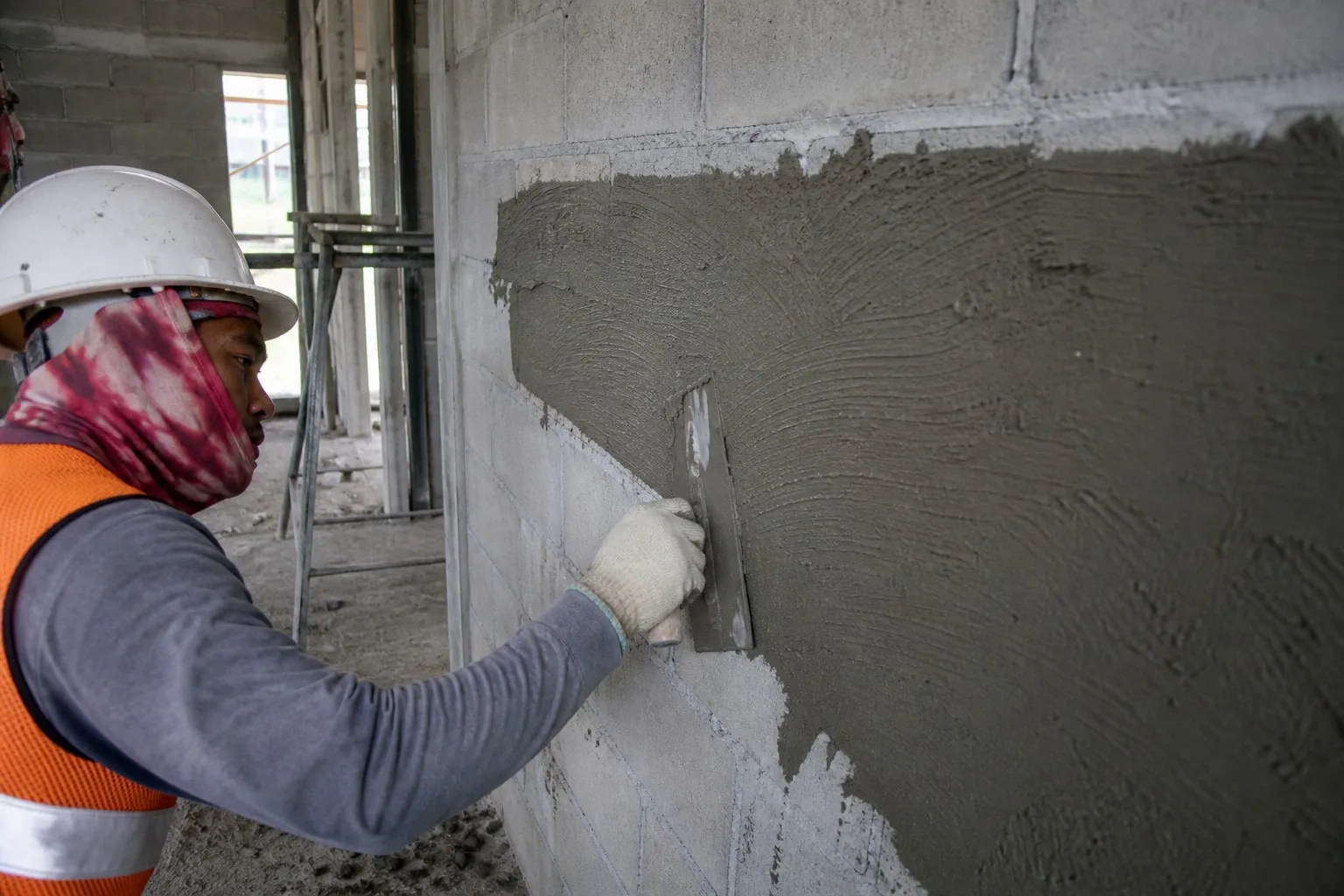
Water retention
Cementitious and gypsum-based systems need enough available water for their intended hydration, setting, and application processes. A porous substrate, warm weather, moving air, or a thin application layer may remove water quickly.2 HPMC is commonly selected to help slow that loss.
However, I do not treat water retention as an isolated promise. The complete mix influences the result, including:
- The binder type and content affect water demand and setting behavior.
- The aggregate particle distribution affects packing, consistency, and water movement.
- The substrate absorption affects how rapidly the applied material loses moisture.
- The application thickness changes the exposure of the wet mortar.
- The mixing process affects dispersion and the development of consistency.
Any supplier claim about water retention should be verified under the buyer's formulation and test method.
Consistency and rheology control
HPMC changes how a wet construction mix flows and responds to force.3 This rheological function may help a mortar remain stable while allowing a worker to spread or pump it. The desired behavior varies by application.
For example, a tile adhesive should resist excessive tile movement while remaining easy to comb with a notched trowel. A skim coat needs smooth spreading and manageable tool marks. A machine-applied mortar has different pumping and spray requirements.
I usually ask what "good consistency" means in the buyer's production and application process. A viscosity number alone cannot answer that question.
Workability and application-time management
Workers need enough time to mix, spread, adjust, and finish a material. HPMC may support lubrication, cohesive consistency, and moisture management during those steps. However, it does not independently determine final open time, setting time, bond performance, or structural strength4.
The binder, polymer powder, retarders, accelerators, fillers, defoamers, starch ethers, and local conditions can all influence the observed result. I therefore view HPMC as one part of an interacting additive system, not as a single-product solution.
How Is HPMC in Construction Used in Tile Adhesive?
Tile adhesive manufacturers often want easier troweling, stable ridges, sufficient adjustment time, and reliable wetting. A poorly matched HPMC grade may make the adhesive feel too heavy, too fluid, or inconsistent. It may also cause buyers to blame the cellulose ether for a problem that originates elsewhere in the formula.
HPMC in construction is used in tile adhesive to help retain water, control wet-mortar consistency, support trowel workability, and manage application time. The suitable grade depends on the cement system, sand grading, polymer content, other additives, tile type, substrate, climate, and required performance classification. Testing must confirm compatibility.
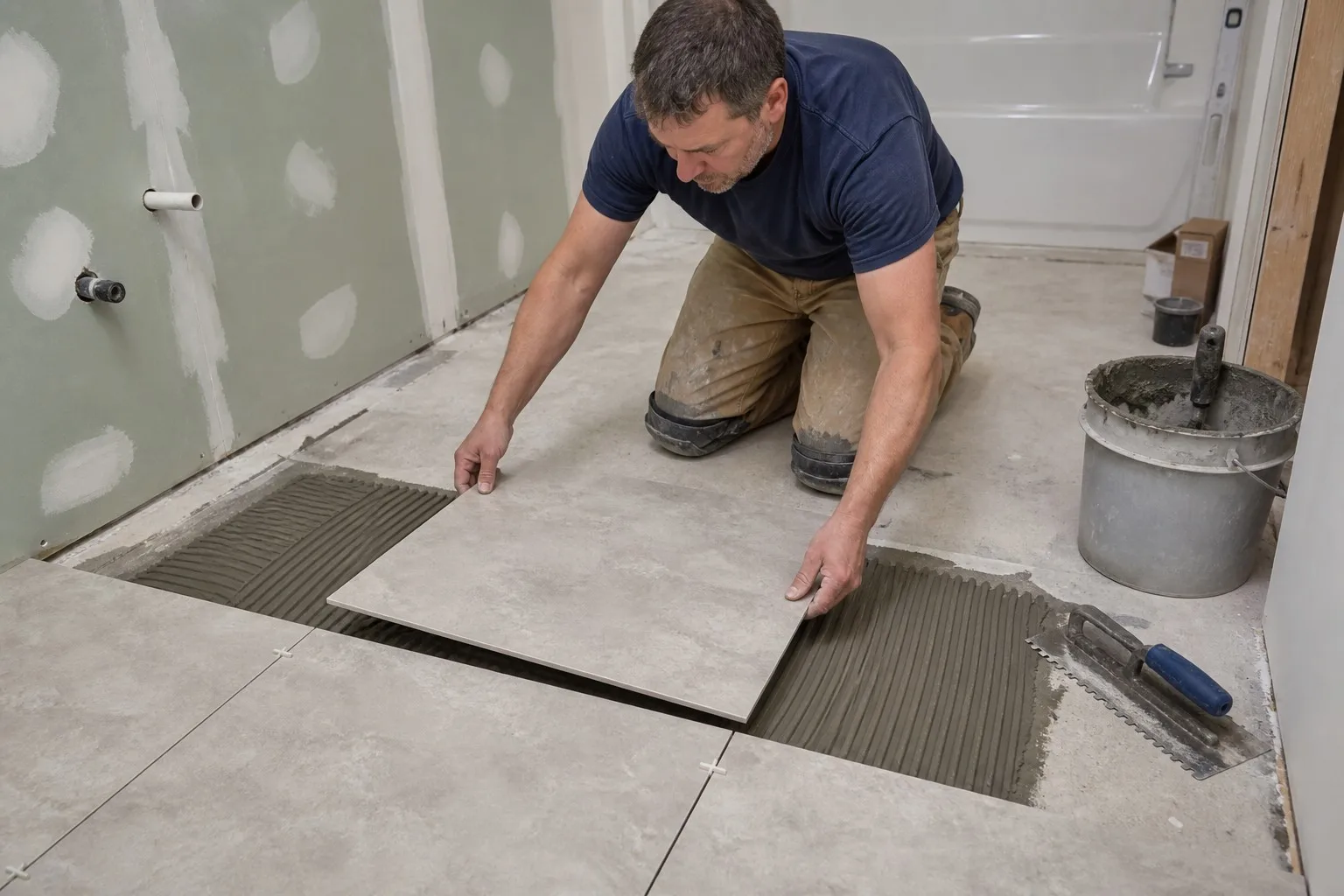
Tile adhesive has several performance priorities
Tile adhesive is not simply cement, sand, and a thickener. The finished product needs balanced wet and hardened properties. HPMC can influence the wet application stage, but it cannot guarantee adhesion or compliance with a tile adhesive standard5.
A manufacturer may evaluate these priorities:
- Trowel feel: The adhesive should spread without excessive drag.
- Ridge stability: The notched pattern should remain sufficiently stable after combing.
- Tile adjustability: The installer should have practical time to position the tile.
- Wetting behavior: The mortar should make suitable contact with the tile and substrate.
- Sag control: The system should limit unwanted vertical movement where required.
- Final performance: The complete formula should meet the applicable bond, durability, and classification requirements.
The HPMC grade may support several of these properties indirectly through water retention and rheology. Nevertheless, polymer type, cement characteristics, fillers, aggregate grading, and other modifiers also matter.
Why one tile adhesive grade does not fit every formula
Two producers can manufacture products called "tile adhesive" while using very different raw materials and targeting different markets. One formula may be designed for economical indoor ceramic tile installation. Another may target large-format tiles, demanding substrates, or an applicable performance classification.
| Selection factor | Why I ask about it |
|---|---|
| Cement and filler system | The mineral composition affects water demand and wet consistency. |
| Sand grading | Particle size distribution changes body, flow, and troweling behavior. |
| Redispersible polymer powder | RDP/VAE can influence flexibility, adhesion, and interaction with other additives.6 |
| Other modifiers | Starch ether, defoamer, fibers, and set-control agents can change application behavior. |
| Tile and substrate | Absorption, size, surface condition, and installation method affect practical needs. |
| Climate and working conditions | Heat, wind, and humidity may change water loss and usable working time. |
| Target standard | The producer should test the complete product under the applicable standard and local rules. |
In sample discussions, I ask the buyer to compare the proposed grade with a current reference under controlled conditions. The buyer should keep the water addition, mixing time, resting time, remixing process, and test environment consistent. A qualified laboratory or formulation professional should evaluate application-specific performance and applicable standard compliance.
What Does HPMC Do in Putty and Cement-Based Mortar?
Putty and cement mortar can develop poor spreading, rapid drying, sagging, cracking, or inconsistent finishing. Those symptoms can have several causes. If a buyer changes only the HPMC grade without reviewing the base formula and process, the trial may conceal the actual source of the problem.
HPMC is used in putty and cement-based mortar to help retain moisture, create workable consistency, improve cohesion, and support controlled application. The desired balance differs among wall putty, skim coat, masonry mortar, plaster, repair mortar, and EIFS base coat. Each product needs an application-specific grade and validation process.

Putty requires smooth application and finish control
A wall putty or skim coat usually needs smooth spreading, suitable body, limited sag, and a finish that matches the producer's market. The formulator must balance easy application with stability. A product that feels very thick in the bucket may still perform poorly on the wall.
I commonly ask putty manufacturers several practical questions:
- Does the product feel too heavy or sticky during spreading?
- Does it lose water quickly on an absorbent substrate?
- Does the wet material sag or lack sufficient body?
- Do workers experience excessive tool marks or difficult finishing?
- Does the problem appear during laboratory mixing, factory production, or site application?
- Do local applicators use a fixed water ratio, or do they add water by feel?
These questions help separate a rheology issue from a water-demand, filler, binder, or process issue. They also help me avoid assuming that a higher nominal viscosity will solve every complaint.
Cement-based mortars need different balances
The term "cement-based mortar" covers many products. Masonry mortar, repair mortar, plaster, self-leveling underlayment, and EIFS components do not have identical flow or application requirements.
For example, a hand-applied plaster may need cohesion and smooth workability. A machine-applied product must also move through equipment under controlled conditions. A self-leveling system needs flow and leveling, so excessive thickening could work against the intended behavior.7 An EIFS base coat must be evaluated as part of a complete reinforced system rather than as an isolated wet mortar.
HPMC selection should therefore follow the application mechanism, not only the product label.
HPMC cannot compensate for every formulation problem
I caution buyers against using cellulose ether as a universal correction tool. HPMC may not solve problems caused by:
- Poor aggregate grading or inconsistent raw materials.
- An unsuitable binder-to-filler balance.
- Incorrect water addition or uncontrolled mixing.
- Incompatible polymer powder or other additives.
- Substrate preparation problems.
- Unverified production changes.
- Environmental conditions outside the intended application window.
The manufacturer should compare pilot and production batches because scale-up can change dispersion, mixing energy, temperature, and addition sequence8. Qualified technical personnel should approve the final formulation.
How Is HPMC Used in Gypsum-Based Materials?
Gypsum materials can set quickly and may be sensitive to small formulation or process changes. Producers need enough working time and a suitable finishing profile without losing control of setting and strength development. A cellulose ether selected only by nominal viscosity may disturb that balance or fail to provide the expected handling.
HPMC is used in gypsum-based materials to support water retention, consistency, adhesion during application, and workable handling. Gypsum plaster, joint compound, gypsum adhesive, and related dry mixes have different priorities. The selected grade must work with the gypsum source, set-control system, fillers, application method, and target working time.
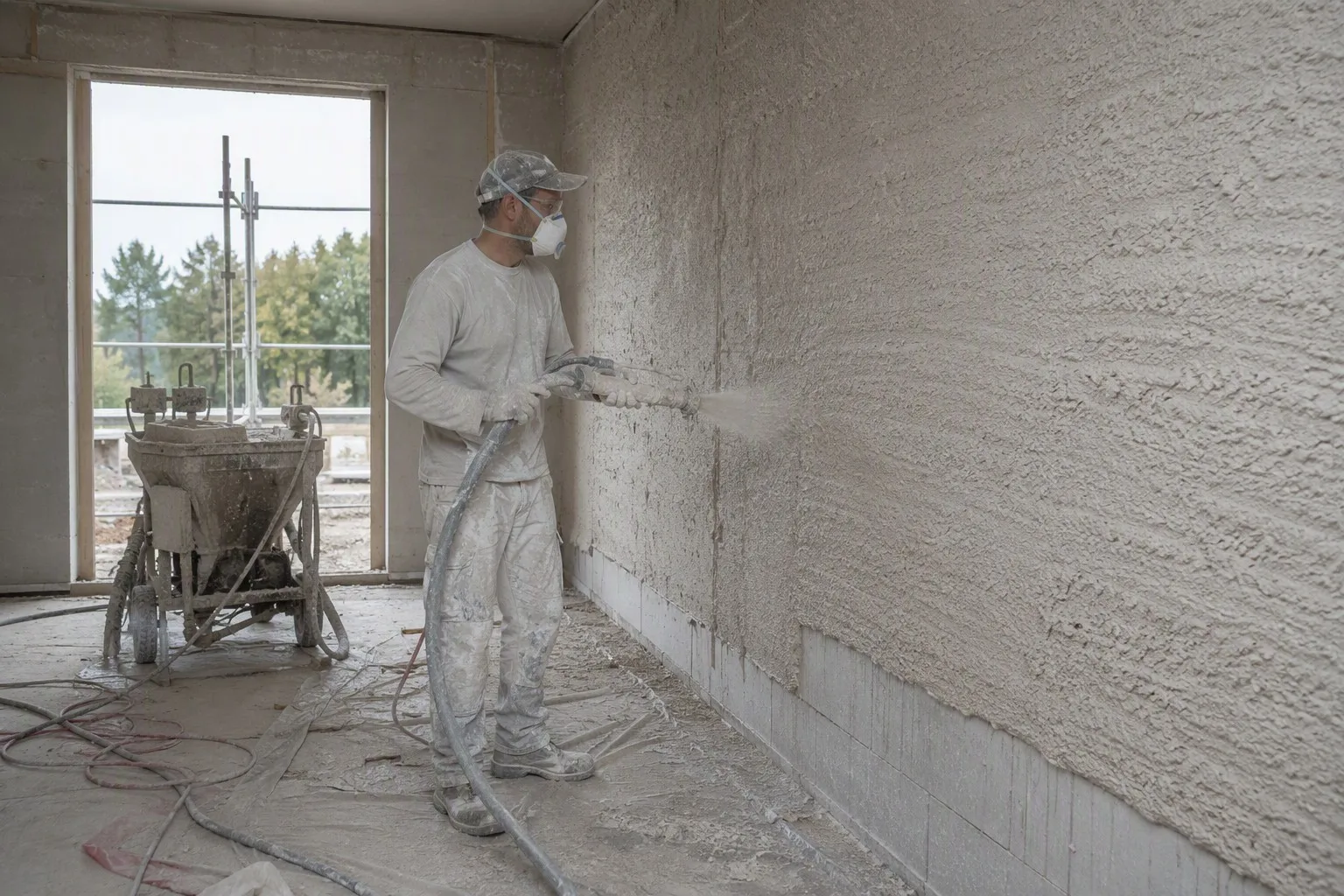
Gypsum chemistry changes the selection discussion
Gypsum-based systems differ from cement-based systems in setting behavior9 and practical application. Raw gypsum characteristics can also vary by source and processing route. The formulator may use retarders, accelerators, lightweight fillers, air-management additives, or other modifiers to obtain the required performance.
HPMC can support water management and wet consistency, but the entire set-control package requires evaluation. If a trial produces unexpected setting, finishing, or strength behavior, the buyer should not automatically conclude that HPMC is the only cause.
I usually ask whether the buyer uses:
- Natural or synthetic gypsum as the main raw material.
- A hand-applied or machine-applied process.
- Retarders or accelerators.
- Lightweight aggregates or special fillers.
- A defined working-time target.
- A current cellulose ether reference.
- A specific local or international test method.
These details provide a more useful starting point than a request for "gypsum HPMC."
Different gypsum products need different behavior
| Gypsum application | Common evaluation priorities |
|---|---|
| Gypsum plaster | The producer may evaluate mixing, spreading, consistency, working time, and finishing. |
| Joint compound | The producer may focus on smoothness, tool feel, stability, sanding behavior, and drying. |
| Gypsum adhesive | The producer may assess wet consistency, practical placement time, sag, and substrate contact. |
| Machine-applied gypsum | The producer must also consider pumping, spraying, hose stability, and equipment compatibility. |
The manufacturer should use controlled comparative tests because visual impressions can be misleading. The same operator should prepare reference and trial mixes when possible. The test should control water amount, mixing sequence, mixing energy, rest time, ambient conditions, and substrate.
I also recommend checking results over the intended application window rather than judging only the first few minutes after mixing. A product can feel acceptable immediately but change during the period when installers actually use it.
Any setting, adhesion, strength, or durability claim should be verified through a qualified laboratory and the applicable product standard. HPMC can support formulation performance, but it does not replace formal product testing.
Why Is Viscosity Not Enough When Selecting HPMC in Construction?
Viscosity provides a useful comparison point, but buyers sometimes treat it as a complete grade specification. That approach creates purchasing risk because the reported value depends on the test method and does not describe every application property. Two products with similar reported viscosity may behave differently in the same mortar.10
Buyers should not select HPMC in construction by viscosity alone. They should also evaluate the viscosity test method, water retention behavior, modification type, particle characteristics, compatibility, application performance, batch consistency, documentation, price target, and supply requirements. A controlled sample trial offers stronger evidence than a specification number by itself.
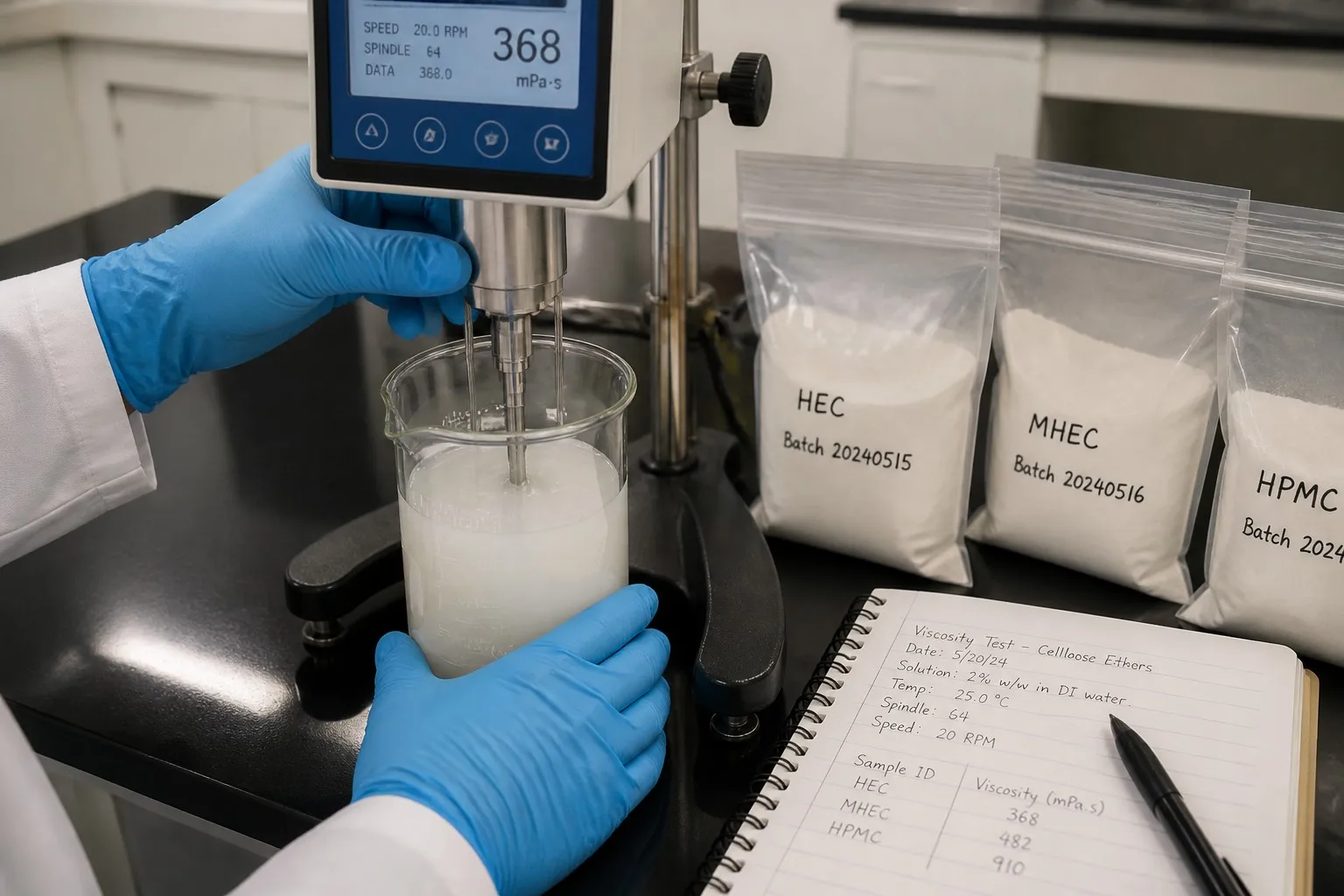
A viscosity value needs test context
A supplier should state how it measures viscosity. The result can depend on sample concentration, temperature, instrument, spindle or geometry, speed, preparation method, and measurement procedure.11 A buyer cannot safely compare two reported values if the suppliers use different methods.
I recommend that buyers request a clear specification and then reproduce the comparison using their own agreed method. A third-party laboratory may help when the buyer needs independent confirmation.
Commercial suitability includes more than technical performance
A technically promising grade may still be unsuitable for procurement if it does not fit the buyer's cost, packaging, documentation, lead-time, or volume requirements.
| Evaluation area | Questions I recommend asking |
|---|---|
| Application fit | Does the sample perform in the buyer's actual formula and process? |
| Test transparency | Does the supplier identify relevant test methods and specification limits? |
| Batch consistency | Can the supplier provide current batch documentation and retention-sample procedures? |
| Documentation | Can the supplier provide a COA and SDS/MSDS for the supplied product? |
| Packaging | Does the bag type, labeling, palletizing, and OEM format fit the import process? |
| Supply capacity | Can the supplier support the required quantity and delivery schedule? |
| Technical communication | Does the supplier ask detailed formulation questions before recommending a grade? |
| Commercial fit | Does the total landed cost align with the target product and market position? |
Buyers should verify documents rather than treating a logo or certificate reference as proof. They should confirm the issuing body, scope, validity, product coverage, and correspondence between the document and the supplied material.
I use a structured inquiry to reduce selection risk
When I handle an initial grade-selection discussion, I ask the buyer to provide:
- The exact application, such as tile adhesive, wall putty, gypsum plaster, or cement render.
- The current formulation, with confidential details shared only as the buyer considers appropriate.
- The other additives, including RDP/VAE, starch ether, defoamer, retarder, accelerator, or fibers.
- The current problem or target result, such as rapid water loss, weak ridge stability, difficult spreading, or limited adjustment time.
- The present reference grade, including its supplier specification and test method when available.
- The price target, because the final grade must be commercially realistic.
- The required quantity, including sample needs, trial volume, and expected order size.
- The destination and packaging needs, because logistics can affect the purchasing decision.
I view this process as risk management. It reduces the chance of ordering an incompatible grade, misdiagnosing a formula issue, or discovering unstable performance during production scale-up.
How Should Buyers Test HPMC Samples Before Bulk Purchasing?
A small sample can appear successful even when the comparison method is uncontrolled. Buyers can also miss scale-up risks if they move directly from a hand-mixed test to a large order. I recommend a staged evaluation that connects supplier documentation, laboratory comparison, pilot production, and commercial approval.
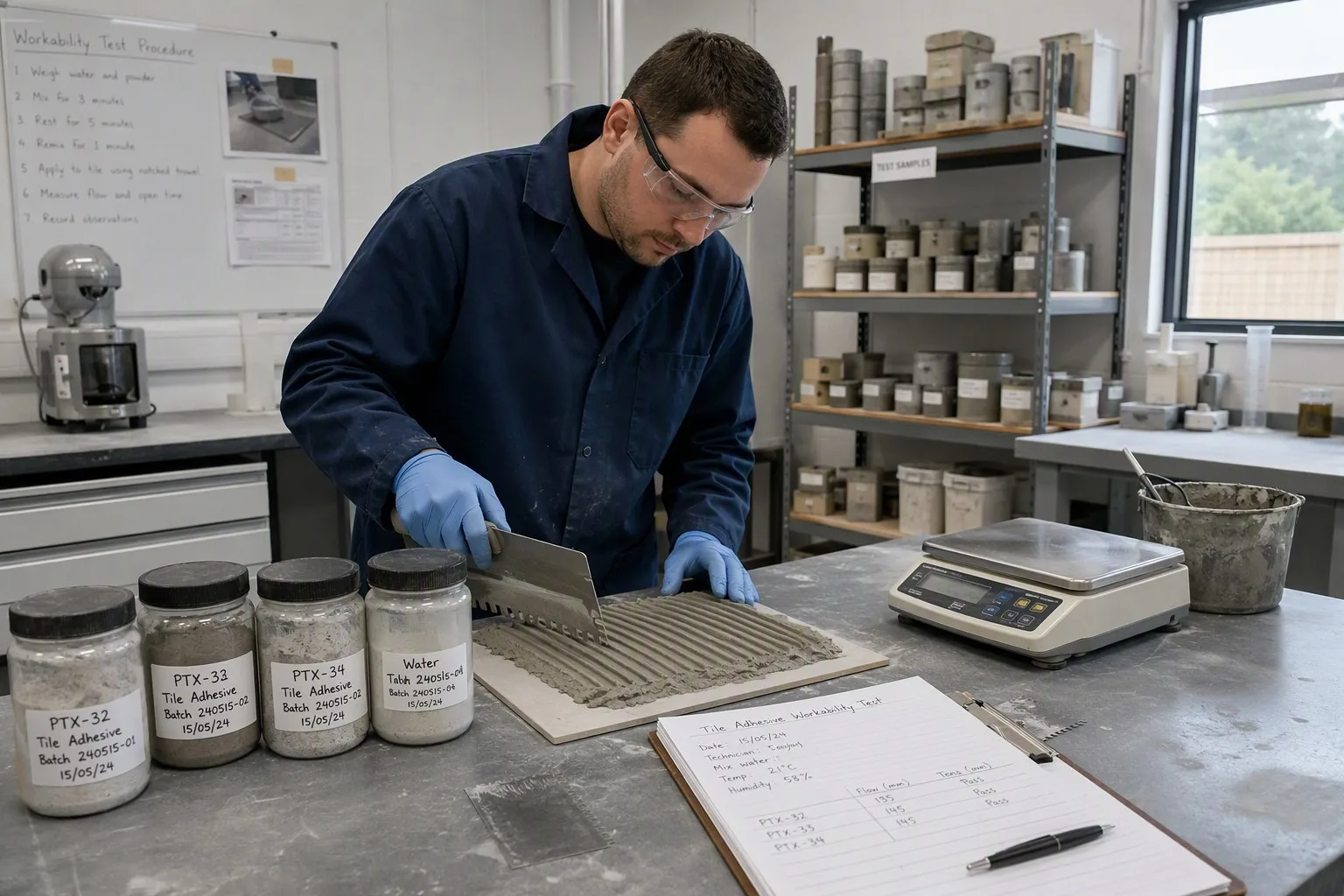
Buyers should test HPMC samples against a current reference in the same formulation, using controlled water addition, mixing, resting, application, and environmental conditions. They should then confirm the result through a pilot batch and relevant product tests before bulk purchasing. The buyer should document every variable and approve clear acceptance criteria.
A staged process makes results easier to interpret
I suggest that buyers separate grade approval into several steps:
- Document review: The buyer checks the specification, COA, SDS/MSDS, labeling, packaging, and declared test methods.
- Identity and incoming checks: Qualified personnel confirm that the sample corresponds to the supplier's documentation.
- Controlled bench comparison: The formulator compares the sample with the current reference in the same base mix.
- Application observation: The team evaluates mixing, consistency, spreading, sag, troweling, finishing, and practical working behavior as relevant.
- Performance testing: A qualified laboratory conducts the tests required for the product and market.
- Pilot production: The factory checks dispersion and behavior under representative equipment conditions.
- Commercial review: Procurement confirms cost, supply terms, packaging, lead time, and order requirements.
- Bulk-batch approval: The buyer compares the first commercial delivery with the approved sample and specification.
Buyers should control the comparison variables
The team should keep the formulation constant unless the trial specifically evaluates a reformulation. The team should also record raw-material batch numbers, water temperature, room conditions, mixing equipment, mixing time, rest period, and application substrate.
A fair test should not compare one grade at a carefully optimized condition with another grade under a different process. If the new HPMC requires formula adjustment, the technical team should document that adjustment and assess its commercial impact.
I have seen inquiry discussions become much clearer when a buyer reports an observed problem rather than saying that a sample is simply "good" or "bad." A useful report might state that the trial felt heavier during spreading, retained ridges longer, or required a different water demand. The formulator can then investigate the cause.
Finally, the buyer should retain samples from approved and delivered batches. The buyer should define acceptance criteria with qualified technical personnel. Supplier support can narrow the options, but the manufacturer remains responsible for validating its finished construction product.
Frequently Asked Questions
Is HPMC only a thickener in construction materials?
No. HPMC may increase consistency, but it also commonly supports water retention, rheology control, cohesion, workability, and application-time management. Its contribution depends on the complete formulation and use conditions. Buyers should evaluate its functional performance rather than selecting it only by a viscosity label.
Does higher-viscosity HPMC always perform better?
No. Higher nominal viscosity does not automatically mean better water retention, workability, sag control, or value. It may even create excessive drag or unsuitable consistency in some systems. Buyers should compare grades using the same test method and validate them in the actual formulation.
Can one HPMC grade work in tile adhesive, putty, and gypsum plaster?
A grade may function in more than one application, but one grade does not automatically provide the best balance in every system. Tile adhesive, putty, cement mortar, and gypsum materials have different binders, additives, application methods, and performance priorities. Each use requires testing.
Does HPMC guarantee tile adhesive bond strength?
No. HPMC does not independently guarantee bond strength or compliance with a tile adhesive standard. Cement quality, polymer powder, aggregate grading, formulation balance, substrate, curing, and application conditions also affect performance. A qualified laboratory should test the complete adhesive under the applicable standard.
What information should I send when requesting an HPMC sample?
I recommend sending the application, current formulation, other additives, present problem or target, current reference grade, viscosity test method, price target, required quantity, destination, and packaging requirements. This information helps a supplier propose a more relevant sample and reduces trial-and-purchase risk.
Conclusion
HPMC in construction is a task-specific additive that may support water retention, rheology, workability, and application-time management. Buyers should not choose it from viscosity or price alone. They should connect the grade to the formulation, other additives, production process, application conditions, and procurement needs. If you need an HPMC sample from Jinghong Chemical, send me your application, current formula, performance target, reference grade, price target, and expected order quantity. I can use that information to support a more focused preliminary grade discussion.
<!-- JH_HPMC_APPLICATION_LINKS_START --><p class="jh-related-applications"><strong>Related HPMC applications:</strong> For application-specific selection guidance, review our <a href="https://jinghonghpmc.com/hpmc-for-tile-adhesive/">HPMC for tile adhesive</a>, <a href="https://jinghonghpmc.com/hpmc-for-dry-mix-mortar/">HPMC for dry-mix mortar</a>, and <a href="https://jinghonghpmc.com/hpmc-for-self-leveling/">HPMC for self-leveling compounds</a> pages.</p><!-- JH_HPMC_APPLICATION_LINKS_END -->
"Effect of Cellulose Ether and Starch Ether on Hydration ... - PMC", https://pmc.ncbi.nlm.nih.gov/articles/PMC9782582/. Studies of cellulose ethers in cementitious mortars report that hydroxypropyl methylcellulose can alter water retention and fresh-state rheology, with resulting effects on workability and application behavior. Evidence role: mechanism; source type: paper. Supports: Research evidence that hydroxypropyl methylcellulose affects water retention and fresh-state rheological and workability properties in mortar formulations.. Scope note: The magnitude and direction of these effects depend on formulation composition, dosage, test method, and environmental conditions. ↩
"Surface Modification of Lightweight Mortars by Nanopolymers ... - PMC", https://pmc.ncbi.nlm.nih.gov/articles/PMC7143614/. Fresh cementitious materials lose moisture more rapidly when evaporation is increased by temperature or air movement and when absorbent substrates draw water from the applied layer. Evidence role: mechanism; source type: research. Supports: Technical research showing that substrate suction, temperature, air movement, and exposed surface area influence moisture loss from fresh cementitious materials.. Scope note: Actual water-loss rates vary with the mortar composition, substrate condition, layer thickness, and local climate. ↩
"Water Retention Mechanism of HPMC in Cement Mortar - PMC", https://pmc.ncbi.nlm.nih.gov/articles/PMC7372461/. Experimental studies show that cellulose ethers, including HPMC, can modify rheological parameters of fresh mortar, such as viscosity and resistance to flow. Evidence role: mechanism; source type: paper. Supports: Experimental evidence that HPMC or related cellulose ethers modify rheological parameters of fresh cement-based mortars.. Scope note: Reported rheological responses are formulation-specific and cannot alone predict field application performance. ↩
"Improving the Early Age Strength of Eco-Efficient Mortar with ...", https://pmc.ncbi.nlm.nih.gov/articles/PMC11432842/. Mortar setting, adhesion, and hardened strength are system-level properties influenced by binder composition, aggregates, polymeric and chemical admixtures, curing, and testing conditions rather than by a single additive alone. Evidence role: general_support; source type: paper. Supports: Evidence that setting, adhesion, and hardened strength in mortar systems depend on binder chemistry, aggregate, polymers, admixtures, curing, and test conditions in addition to cellulose ether.. Scope note: This does not exclude HPMC from contributing to these outcomes indirectly through its effects on water retention and fresh-state behavior. ↩
"ISO 13007-6:2020 - Ceramic tiles — Grouts and adhesives", https://www.iso.org/standard/74378.html. Recognized ceramic-tile adhesive standards define product classifications and test methods for specified performance properties, including tensile adhesion, open time, and slip resistance where applicable. Evidence role: definition; source type: institution. Supports: The existence of recognized tile-adhesive standards that specify classifications and test methods for properties such as adhesion, open time, and slip.. Scope note: The applicable standard and legal requirements vary by jurisdiction, product category, and intended market. ↩
"Effect of redispersible vinyl acetate and versatate ...", https://www.sciencedirect.com/science/article/abs/pii/S0950061811004041. Research on polymer-modified cement mortars indicates that redispersible polymer powders can affect adhesion and deformability through polymer-film formation and interactions with the cementitious matrix. Evidence role: mechanism; source type: paper. Supports: Research showing that redispersible polymer powders affect polymer-modified mortar microstructure, adhesion, deformability, and related mechanical properties.. Scope note: Performance depends on polymer chemistry, dosage, curing conditions, and the complete mortar formulation. ↩
"A critical review of rheological models in self-compacting ...", https://pmc.ncbi.nlm.nih.gov/articles/PMC10693590/. Studies of self-leveling cementitious materials identify sufficient flowability and controlled rheology as essential for spreading and leveling under their intended placement conditions. Evidence role: mechanism; source type: paper. Supports: Evidence that flowability and rheological control are critical to the placement and leveling behavior of self-leveling cementitious materials.. Scope note: The acceptable flow range and the effect of thickening depend on the specific product design, placement thickness, and applicable test method. ↩
"Effect of operating conditions and design parameters in a ...", https://www.academia.edu/73037847/Effect_of_operating_conditions_and_design_parameters_in_a_continuous_powder_mixer. Powder-mixing research shows that blend homogeneity and additive dispersion can vary with equipment scale, energy input, operating conditions, and ingredient-addition sequence. Evidence role: mechanism; source type: research. Supports: Process-engineering evidence that powder mixing outcomes can change with mixer scale, energy input, sequence of addition, and operating conditions.. Scope note: The specific scale-up effects for a dry-mix mortar depend on the mixer design, fill level, material properties, and process controls. ↩
"[PDF] Stages of Hydration", https://www.intrans.iastate.edu/wp-content/uploads/2020/04/2019_hydration_poster.pdf. Gypsum plasters set primarily through hydration of calcium sulfate hemihydrate to calcium sulfate dihydrate, a reaction pathway distinct from the hydration processes of Portland cement. Evidence role: mechanism; source type: government. Supports: Authoritative background on gypsum plaster setting through hydration of calcium sulfate hemihydrate and its distinction from Portland-cement hydration.. Scope note: Commercial gypsum formulations may also contain retarders, accelerators, fillers, and other modifiers that change practical setting behavior. ↩
"Hydroxypropyl Methylcellulose—A Key Excipient in ... - PMC", https://pmc.ncbi.nlm.nih.gov/articles/PMC12196896/. Studies of cellulose ethers in mortar indicate that behavior is influenced by characteristics beyond nominal solution viscosity, including molecular structure and substitution, so similar reported viscosity values need not yield identical mortar performance. Evidence role: general_support; source type: paper. Supports: Evidence that cellulose ether molecular characteristics and substitution patterns, in addition to nominal viscosity, influence mortar water retention and rheological behavior.. Scope note: Direct equivalence can only be established through testing in the specific formulation and under an agreed measurement method. ↩
"State‐Of‐The‐Art Quantification of Polymer Solution Viscosity ...", https://pmc.ncbi.nlm.nih.gov/articles/PMC8519067/. A viscometry result is method-dependent: temperature, sample concentration and preparation, instrument configuration, and applied shear conditions must be specified for meaningful comparison. Evidence role: definition; source type: institution. Supports: Viscometry guidance establishing that reported viscosity is conditional on temperature, shear conditions, instrument geometry, and sample preparation.. Scope note: The relevance of a laboratory viscosity measurement to mortar performance requires separate formulation testing. ↩