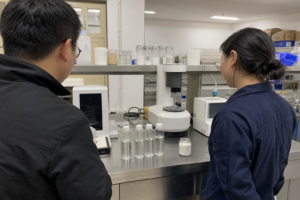

An HPMC delivery can look routine until a damaged liner, mismatched batch code, or unexpected application result stops production. That is the problem with incoming cellulose ether: paperwork and intact-looking bags do not, by themselves, establish suitability.
I use a risk-based HPMC receiving inspection that connects receiving records, warehouse sampling, laboratory checks, and a small application trial. The aim is not to repeat the supplier’s entire release program. It is to obtain enough controlled evidence for a defensible decision while preserving traceability if questions emerge later. The workflow below can be adapted to the purchased HPMC grade and intended application.
How Do You Inspect HPMC Packaging and Control the Lot on Arrival?
Problem: A torn outer bag, wet pallet, or unreadable label can compromise traceability before the material reaches the laboratory. If warehouse staff receive first and investigate later, suspect bags may be mixed with usable stock or issued to production.
Agitation / Answer: Treat every delivery as quarantined on arrival. Record transport condition, count and label legibility; inspect bags, seams, liners, pallets, and moisture evidence; segregate anything suspect. Packaging inspection does not prove chemical quality, but it prevents damaged or unidentified material from entering released inventory while QC reviews the lot.

I start at the receiving bay, not at the viscometer. The receiver records the delivery reference, supplier, product, batch codes, arrival date, package count, and visible condition. Time-linked photographs should show both damage and identification. After acceptance, the material still needs the controlled protection described in this guide to storing HPMC in humid climates.
| Check point | What I look for | Immediate control |
|---|---|---|
| Vehicle and pallet | Water, contamination, collapse, puncture | Photograph and isolate affected units |
| Outer bag and seam | Tears, open stitching, abrasion, rework | Mark as suspect; do not sample through damage |
| Inner liner | Exposure or loss of seal where visible | Keep segregated pending QA review |
| Label | Product, grade, batch code, net content | Stop reconciliation if unreadable or inconsistent |
| Warehouse status | Clear lot boundary and status marking | Apply quarantine identification |
I do not create a universal defect allowance here. The buyer’s approved receiving procedure must define what damage is critical, what can be dispositioned, and who has authority. Packaging damage is evidence to investigate—not automatic proof that every bag or the powder inside has failed.
How Do You Confirm Batch Identity and Reconcile the COA?
Problem: A valid-looking certificate can still belong to another grade, batch, or shipment. Releasing material because “the COA is present” leaves a basic identity gap and can place the wrong rheology modifier into a dry-mix formulation.
Agitation / Answer: Reconcile the purchase order, delivery note, bag labels, and supplier COA field by field before testing. Product name, grade, batch identity, quantity, dates, specification revision, test methods, units, and authorization should form one traceable record. Any unexplained mismatch keeps the lot quarantined until documented clarification is approved.
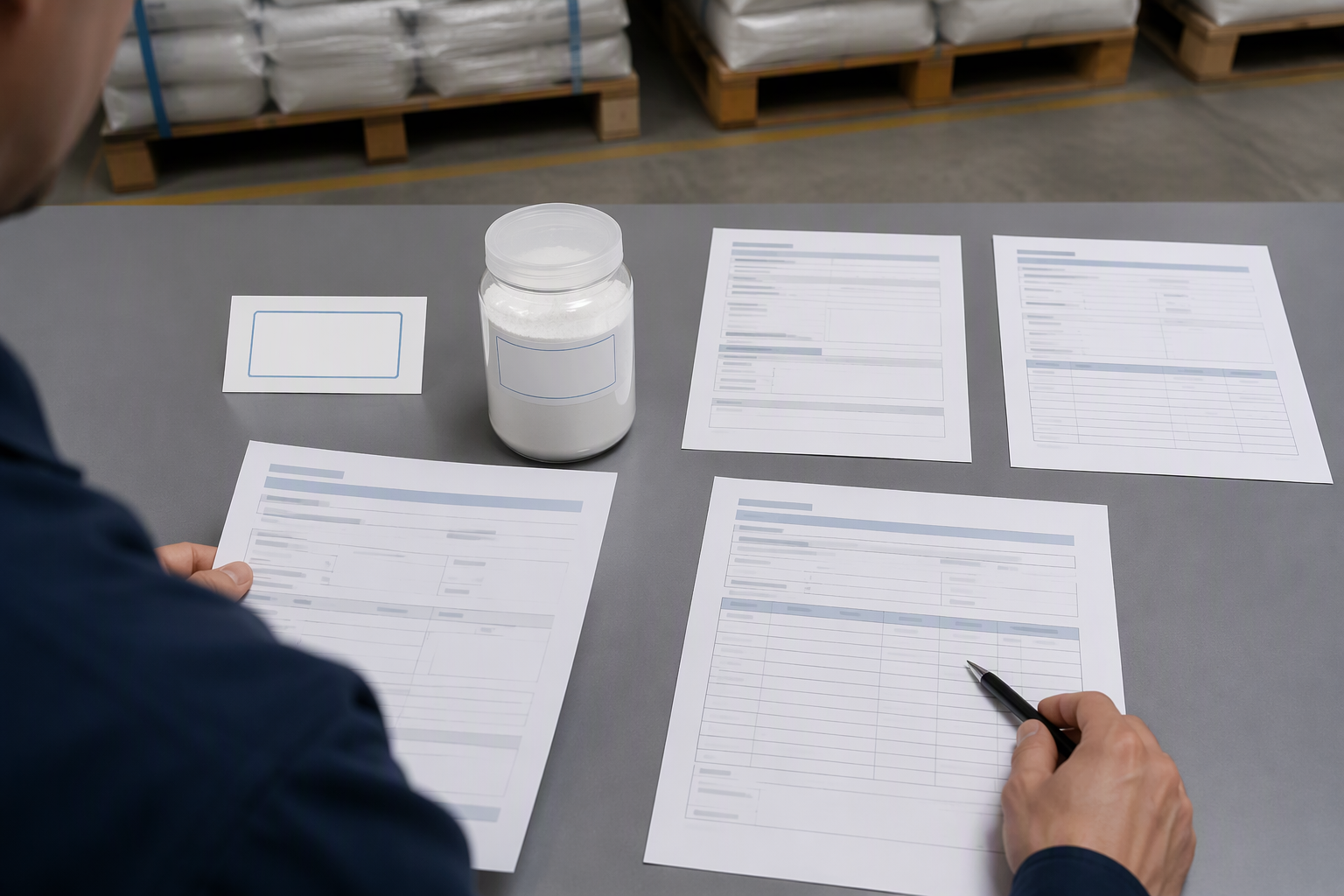
My identity check has two layers: documentary identity across all records and, where risk warrants it, material identity under the buyer’s approved method. Appearance may reveal gross anomalies, but it cannot identify an HPMC grade or confirm substitution level.
Use a reconciliation sheet rather than a visual glance:
- Match the ordered product designation and grade to every batch code received.
- Confirm that each physical lot has its corresponding COA.
- Compare reported properties, units, and methods with the current purchase specification.
- Check that results are reported—not merely marked “pass”—where the agreement requires values.
- Record omissions, altered formats, or unexplained revisions without guessing what they mean.
- Verify the document’s issue or authorization controls under the supplier relationship.
A practical field-by-field approach is expanded in this HPMC COA buyer’s guide. COA reconciliation is not independent verification of every result; it confirms correspondence and highlights exceptions. Nor does a COA replace receiving tests selected for the use case.
I keep multiple batch codes distinct because combining them destroys the link between sample, result, and disposition. For clerical discrepancies, I preserve the original, correction, approval, and decision trail.
How Should You Take and Retain a Representative Warehouse Sample?
Problem: Good testing cannot rescue a biased sample. Taking powder only from an easy-to-reach bag, using a damp tool, or mixing batch codes can produce precise results that say little about the delivered lot.
Agitation / Answer: Follow a buyer-approved warehouse sampling plan that defines lot boundaries, random selection, sampling locations, clean tools, composite or individual samples, sample quantity, sealing, labels, and chain of custody. Keep a separately sealed retained sample under controlled storage. Never invent sample counts or acceptance rules at the receiving bay.

Before opening anything, I verify that the instruction matches the material, package, and purpose. It should state whether increments remain individual or form a composite, because those choices answer different questions. I avoid damaged areas unless investigating damage and keep suspect packaging separately identified.
A basic sampling record should capture:
| Record element | Why it matters |
|---|---|
| Supplier, product, and batch code | Links powder to the physical lot |
| Package identifiers selected | Makes selection reconstructable |
| Date, location, and sampler | Establishes custody |
| Tool condition and sampling points | Controls contamination and bias |
| Sample type and container seal | Distinguishes test and retained sample |
| Requested tests and laboratory receipt | Prevents undocumented handoffs |
ISO 2859-1:2026 supports attribute-based, AQL-indexed lot sampling.[1] It does not provide a ready-made HPMC plan. The buyer must confirm inspection level, AQL, lot definition, switching rules, acceptance criteria, and responsibilities. ISO 8213 covers sampling concepts for solid industrial chemicals, from powders to coarse lumps,[3] but sets no HPMC specification or release limit.
I label retained samples, seal them against moisture exchange, and use controlled storage. The buyer-approved retention period should reflect shelf life, complaint windows, contractual needs, and stability evidence—not a duration copied from another material.
Which Laboratory and Application Tests Should Incoming HPMC Pass?
Problem: A generic “incoming test” can create false confidence. Viscosity changes with method and test conditions, while moisture, ash, and pH answer different questions. Even conforming bench data may not predict mortar behavior.
Agitation / Answer: Test only against the buyer’s approved specification and named methods. A practical panel may include appearance or identity, viscosity, moisture, ash, and pH, followed by a controlled application trial. Compare like with like: sample preparation, concentration, temperature, instrument, timing, units, and formulation must be fixed and documented.
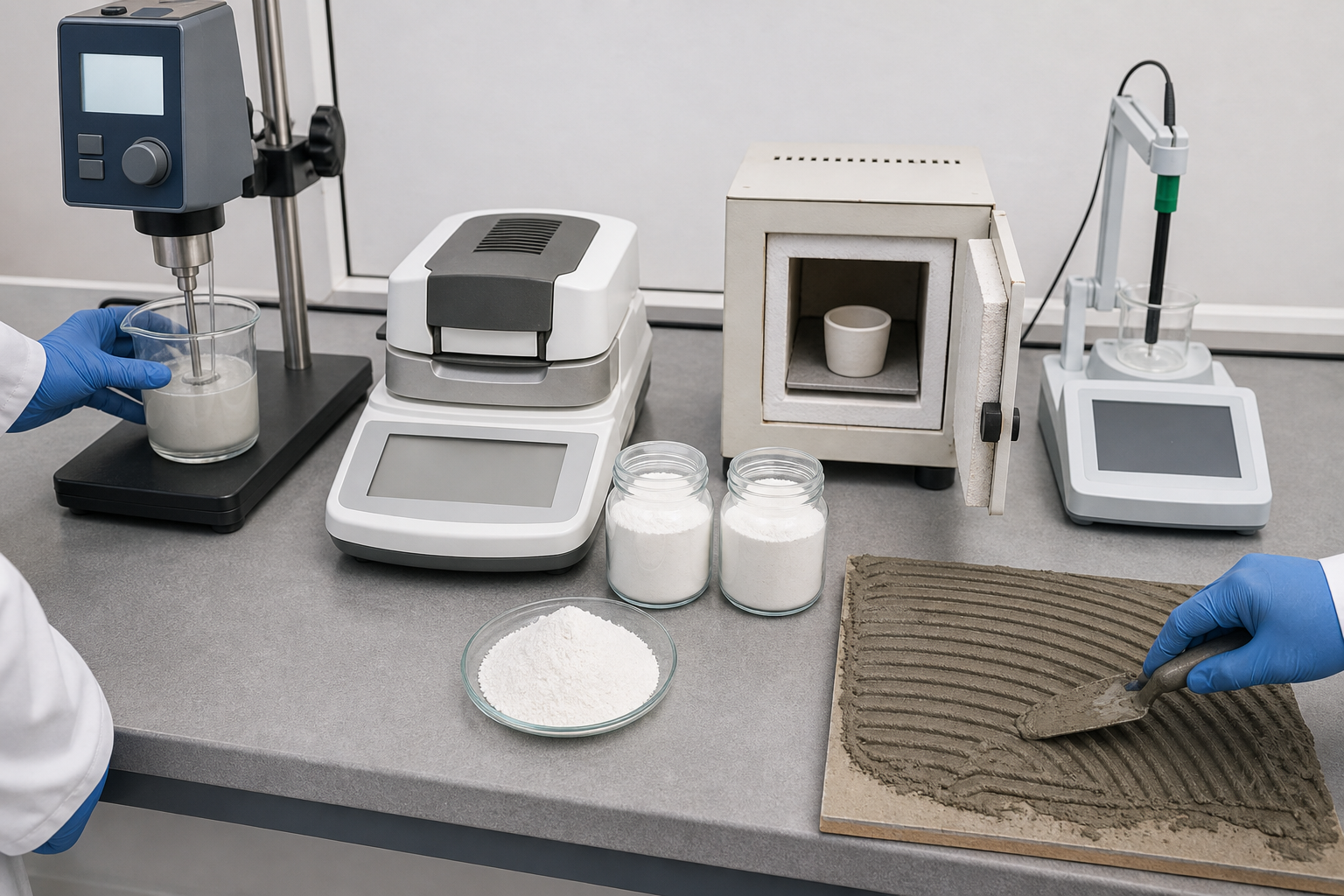
I translate each specification line into an executable method. “Viscosity” is incomplete without solution concentration, hydration, temperature, instrument or spindle, speed or shear condition, and reporting basis. Moisture depends on the drying method; ash on ignition conditions; pH on dispersion concentration, water, equilibration, and temperature. Acceptance limits belong to the purchased grade and agreement.
| Check | Decision value | Method control to document |
|---|---|---|
| Viscosity | Batch consistency under defined conditions | Preparation, concentration, temperature, instrument, speed |
| Moisture | Water condition and handling risk | Sample handling, drying method, calculation basis |
| Ash | Inorganic residue under specified ignition | Temperature, time, residue calculation |
| pH | Acidity/alkalinity of defined dispersion | Concentration, water, equilibration, temperature |
| Application trial | Performance in the intended system | Formula, mixing, rest time, environment, observations |
The application trial uses a stable reference formula and the procedure applied to approved material. Dry-mix observations may include mixing, water demand, consistency, sag or slip, open-time response, and workability retention where methods and decision rules are defined. This overview connects laboratory checks with production and tile-adhesive application verification.
ISO/IEC 17025:2017 addresses laboratory competence, impartiality, and consistent operation.[2] It does not prescribe HPMC limits, guarantee suitability, or replace buyer-defined application acceptance.
How Do You Decide Quarantine, Release, or Nonconformance Escalation?
Problem: Results can be technically sound yet operationally useless when nobody owns disposition. Informal release, unrecorded retesting, or supplier contact without preserved evidence turns a manageable exception into a traceability problem.
Agitation / Answer: Release only when an authorized reviewer confirms packaging, identity, COA reconciliation, sampling, required tests, and application evidence meet the approved plan. Otherwise maintain quarantine, open a nonconformance record, preserve samples and data, assess impact, and escalate through defined quality and procurement channels before any use or concession.
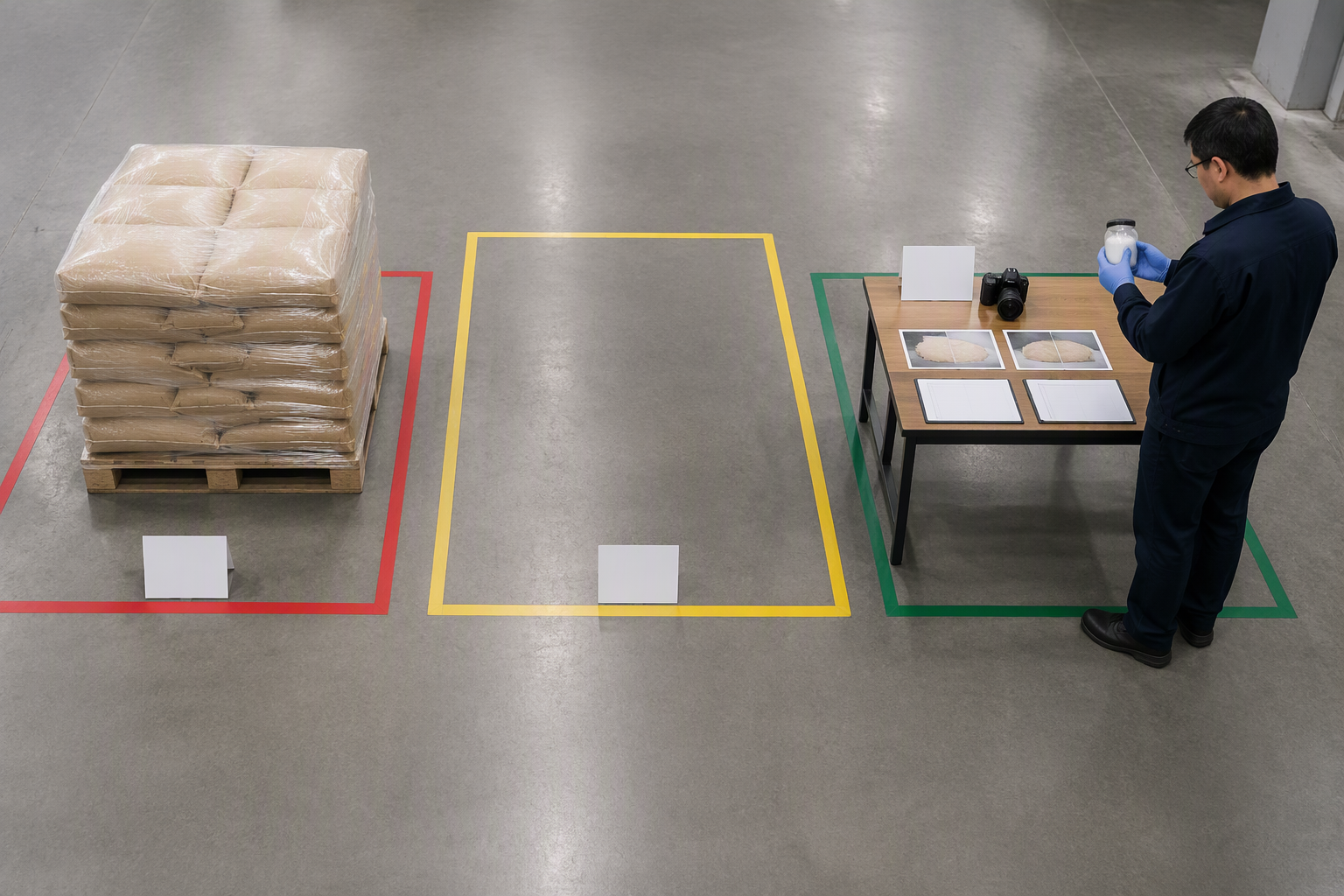
I make status visible in both the warehouse and inventory system: labels can be lost, while system status may not stop a forklift. The release record identifies the reviewer, date, lot, evidence, and specification revision. Concessionary use requires explicit authority, rationale, scope, and traceability.
Disposition checklist
- Release: all required evidence is complete and accepted by the authorized function.
- Continue quarantine: information is missing, results are pending, or a discrepancy remains unresolved.
- Investigate: check transcription, calculations, instrument status, method execution, and sample integrity without testing repeatedly until a pass appears.
- Escalate nonconformance: document the requirement, observation, affected quantity, batch identity, photographs, raw data, and retained-sample status.
- Assess impact: identify whether any quantity was moved, opened, blended, or used and place connected material under control.
- Disposition: return, replace, rework, concession, or reject only through the buyer’s authorized process and applicable agreement.
When supplier input is needed, I send an evidence package and request a documented response without diagnosing the cause prematurely. Recurring damage, document mismatches, or result shifts can justify supplier review even when a lot is released.
A connected quarantine-to-release workflow keeps the decision controlled. For grade-specific documents or a technical discussion, use the single route below.
FAQ
1. Should warehouse staff release HPMC when the COA says “pass”?
No. A COA is one evidence source. The buyer should first reconcile it to the purchase order, labels, batch identity, current specification, and required receiving checks, then obtain authorized release.
2. Can ISO 2859-1 tell me how many HPMC bags to sample?
Not by itself. ISO 2859-1:2026 is a framework for attribute acceptance sampling. The buyer must select and approve the applicable lot definition, inspection level, AQL, switching rules, and acceptance criteria.
3. Why keep a retained sample?
A sealed, traceable retained sample supports later investigation, comparison, or dispute review. Its quantity, container, storage, and retention period should be defined by the buyer’s procedure.
4. Is viscosity enough for HPMC receiving inspection?
Usually not. Viscosity is method-dependent and does not cover packaging, identity, moisture, ash, pH, documentation, or behavior in the intended formulation. The panel should follow the purchased grade’s risk and specification.
5. What should happen after one incoming result is out of specification?
Keep the lot quarantined, preserve raw data and samples, verify method execution and calculations, open a nonconformance, assess affected stock, and route disposition through authorized quality and procurement roles. Do not retest solely to obtain a passing result.
CTA: Contact Jinghong to align your HPMC grade, documents, test methods, and receiving-inspection expectations before the next shipment.
References and scope boundaries
- International Organization for Standardization, ISO 2859-1:2026 — Sampling procedures for inspection by attributes. It provides AQL-indexed acceptance-sampling schemes; it does not define a universal HPMC sample count, specification, or release decision.
- International Organization for Standardization, ISO/IEC 17025:2017 — General requirements for the competence of testing and calibration laboratories. It addresses laboratory competence and operation; it does not prescribe HPMC test limits or certify a specific batch.
- International Organization for Standardization, ISO 8213:1986 — Chemical products for industrial use—Sampling techniques for solid chemical products. It provides powder and solid sampling concepts; it does not replace a buyer-approved HPMC sampling plan or acceptance criteria.