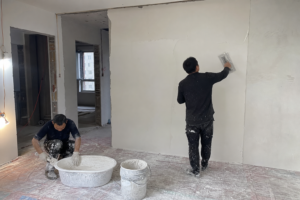
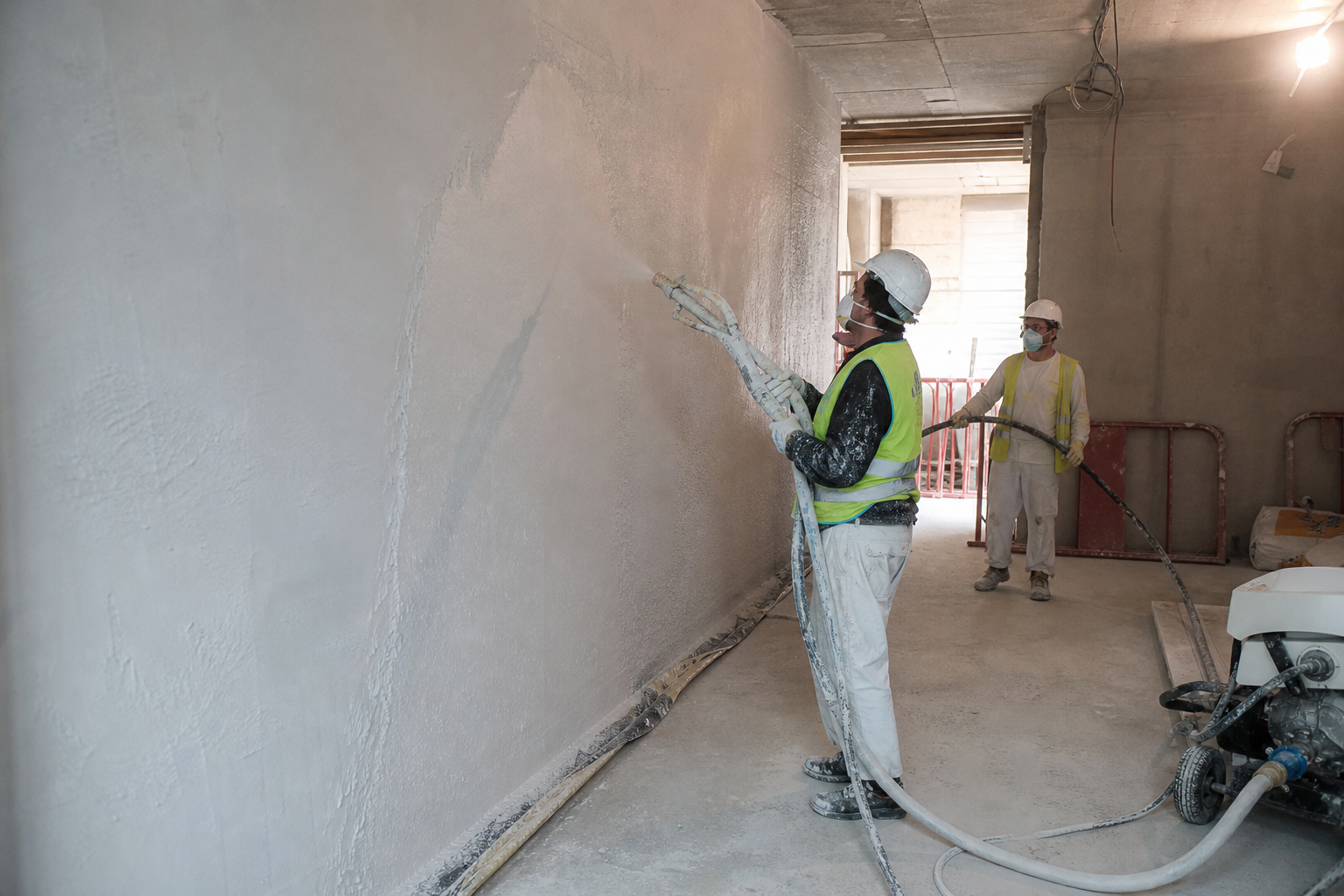
When a machine-applied gypsum plaster suddenly stops pumping steadily after an HPMC grade change, the first reaction is usually to blame the new cellulose ether. I understand why. The hopper looks wetter or stiffer than last week, the hose pulses, the nozzle spits, and the crew loses rhythm while the wall waits. But a grade change is never one variable: water demand, viscosity, dissolution speed, particle size, surface treatment, moisture, and dosing can all move at once. I do not accept a pump-side verdict until formulation behaviour, equipment condition, and water practice have been separated with matched evidence.
Direct answer: In most cases the pump has not failed because the new HPMC is “unpumpable”. A grade change moves water demand, hydration speed, and low-shear viscosity at the same time, and the machine amplifies every shift through the hopper, hose, and nozzle. Pumpability is a system result, so the diagnosis has to separate three groups: formulation behaviour (water demand, dissolution, dispersion), machine condition (hose route, nozzle restriction, pump element wear, feed rate), and water practice (measured water, standing time, pre-wetting). Change one variable at a time, repeat the reference grade at the end, and treat setting time as a separate question that HPMC does not control.
Table 1. Six variables that decide machine-applied gypsum plaster pumpability
| Variable group | What shifts at the machine | Typical symptom | How to compare it without changing the grade |
|---|---|---|---|
| Water demand | Paste stiffness at the same added water | Hopper looks dry, delivery slows or slips | Same water mass and batch size, reference vs candidate |
| Viscosity and dissolution | How fast the paste builds body after mixing | Mix tightens in the hose after standing | Same standing time before spraying |
| Dispersion in the dry mix | Whether a low-dosage additive is evenly spread | Intermittent lumps, spitting at batch start | Sample mixer discharge, bag or silo, and hopper |
| Hose and nozzle | Flow resistance and pattern quality | Surging, pulsing, uneven fan, spitting | Swap line and nozzle between the two grades |
| Feeding practice | Charge rate, standing time, pre-wetting | Wet or dry slugs at the start of a spray pass | Fixed bag count, fixed charge interval |
| Setting system | When the paste stops being workable | Stiffening in the hose at a repeatable time | Check binder reactivity and retarder separately |
1. Did the New HPMC Grade Change Water Demand and Consistency at the Hopper?
Problem: The same dry-mix formula now reaches the pump hopper with a different consistency, yet nobody has measured what actually changed.
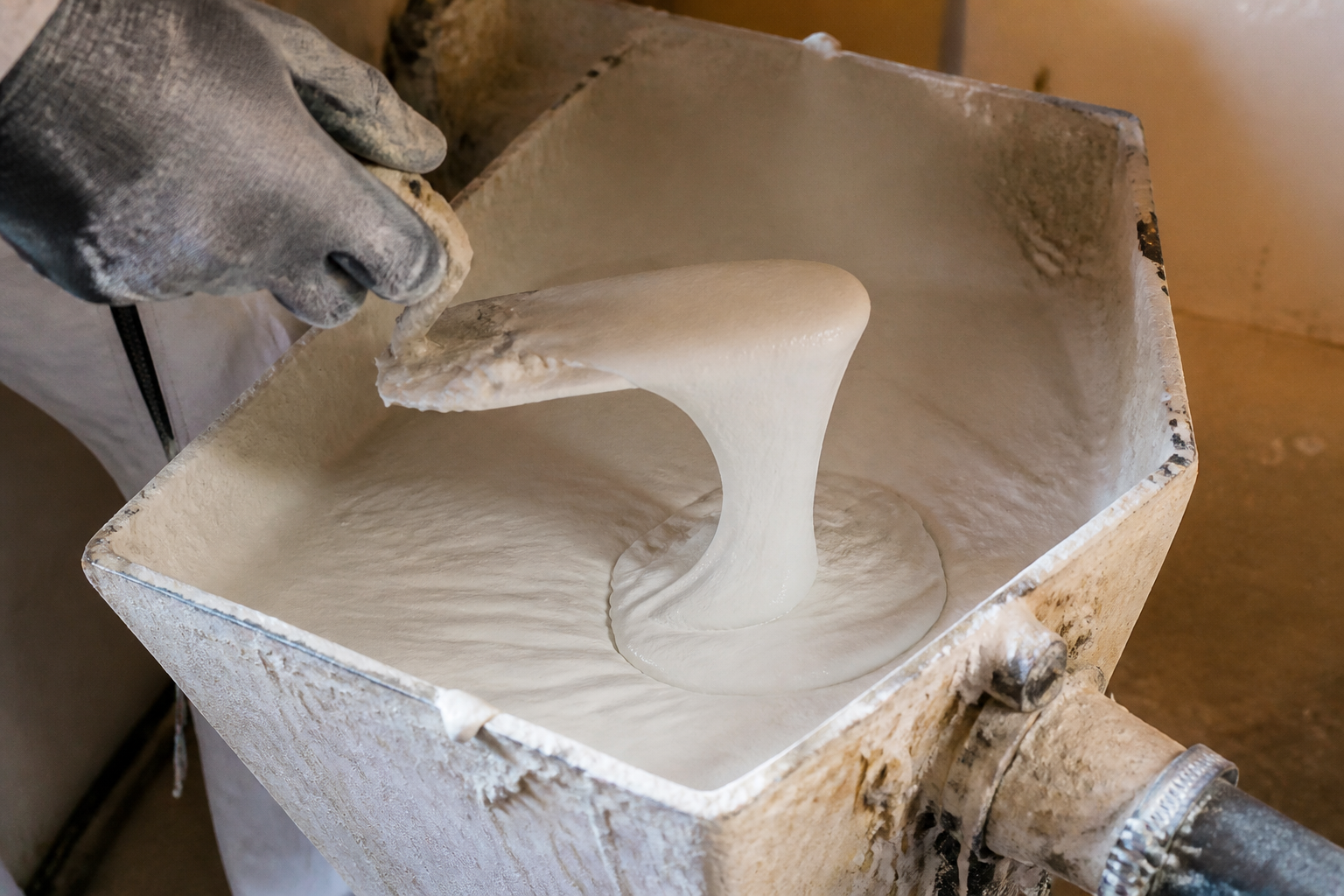
Agitation / Answer: Yes, often, and it is visible before any hose is blamed. Two grades can carry the same declared viscosity and still differ in water demand, hydration speed, and low-shear behaviour, because substitution, particle size, surface treatment, and moisture move together. A stiffer or wetter hopper is a formulation signal, not yet a pump verdict.
Solution: I start from a matched mix rather than an opinion. With the reference grade and the candidate grade I keep the gypsum lot, filler, retarder, water mass, water temperature, mixer, and mixing time identical. Then I compare consistency at first discharge, after a fixed standing period, and at the hopper. I note how the paste stands, spreads, releases from a trowel, and refills the pump inlet. Those observations are qualitative, but they become comparable when the procedure is fixed and one person makes them.
If the candidate needs more water to reach the same handling feel, I record it as a water-demand difference instead of correcting it on the spot. HPMC is a white or near-white ultrafine powder, and two grades can share a viscosity label while hydrating at different speeds and binding water with different strength, which is why the label alone settles nothing. ASTM C472 covers normal consistency and related physical determinations for gypsum plasters; [2] ASTM C1749 describes rotational rheometer terms such as yield stress and plastic viscosity for cementitious paste; [4] ASTM C1506 measures water retention under suction. [5] None of the three is a pump test, and I never quote one as if it were.
Only after that comparison do I allow a controlled water adjustment inside the range the formula already accepts. Adding water at the hopper until the hose stops pulsing can hide a grade mismatch while creating bleeding, segregation, or a weaker set. Jinghong’s gypsum plaster and joint filler overview explains the broader role of HPMC, and the water-retention test-method comparison shows why method context matters before two results are compared.
2. Is the Hose Line Starved by Segregation, Air, or a Partly Blocked Nozzle?
Problem: The hose surges and the nozzle spits, so the crew assumes the new HPMC cannot be pumped.
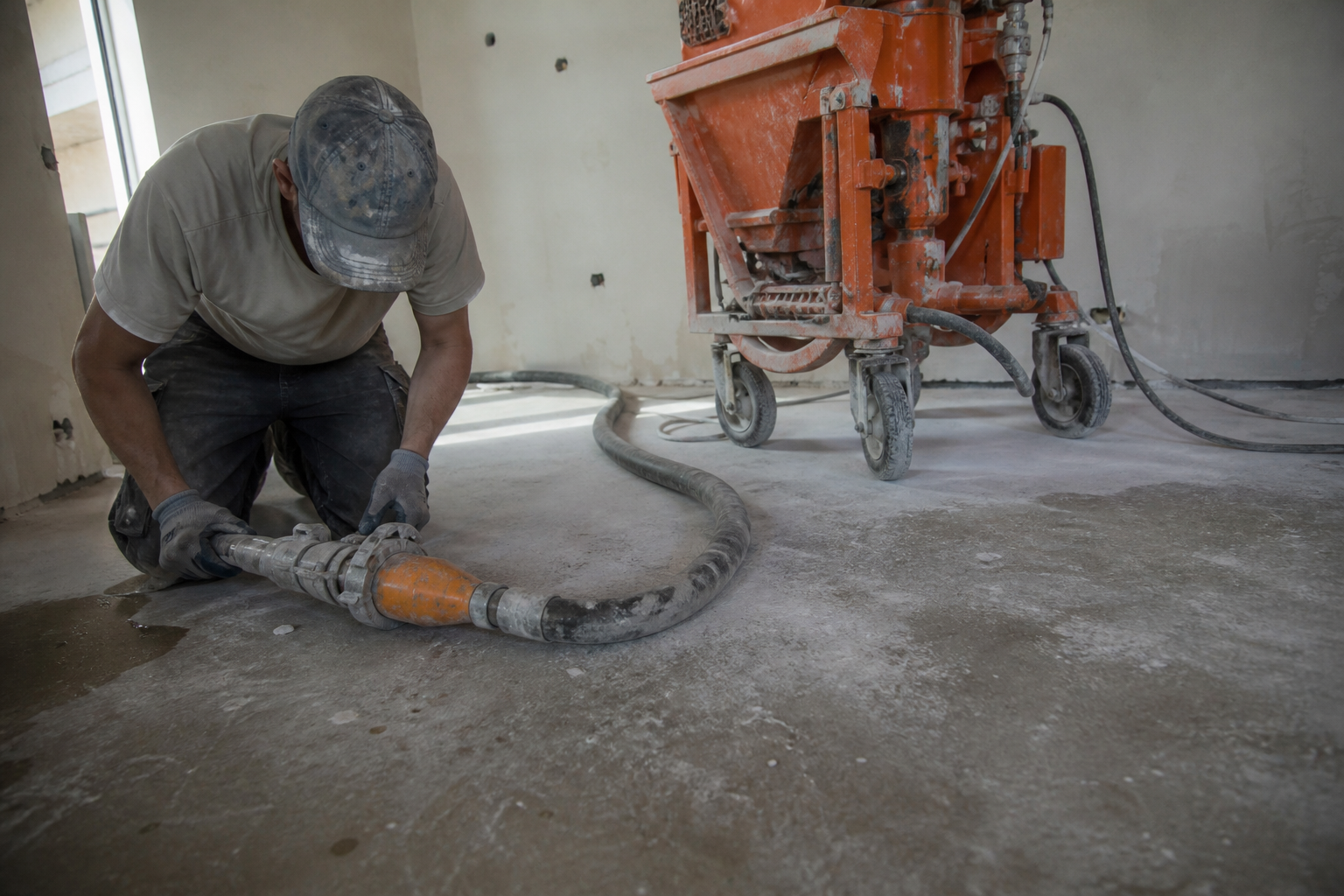
Agitation / Answer: Pumpability is a system result, not a powder property. Segregation, air ingress, a kinked or worn hose, a partly restricted or worn nozzle, and set residue can all produce surging and spitting. A more cohesive mix can carry a marginal restriction quietly, so a grade change often exposes a line fault that already existed rather than creating one.
Solution: Before touching the formula, I walk the line. I check the hose route for sharp bends, collapsed sections, and couplings left with hardened residue. I inspect the nozzle for build-up, worn parts, and obstruction, and I confirm that the air supply and spray pattern behave as they did with the reference mix. I also ask when the pump delivery element was last inspected, because wear changes output independently of any additive; on a screw or worm-type plaster machine that means the rotor and stator, on a piston machine it means the valve and wear parts.
Then I run the reference grade and the candidate grade through the same line at the same setting on the same day. I look for surging, uneven delivery, air bubbles at the nozzle, dry patches, and a pattern that collapses or spits. A restriction that appears with both grades belongs to the line; a symptom that appears only with the candidate belongs to the material or to the way the crew is running it. I keep the machine side in machine terms, such as delivery rate, water valve position, feed interval, and the nozzle fitted on the day, and I do not restate a machine observation as a chemistry conclusion.
I record the sequence in plain language and keep photographs of the line and nozzle condition without readable instrument values. If a gauge is unadjusted or its reading is unclear, I do not build a conclusion on it. Jinghong’s HPMC quality-testing guide covers incoming checks, and the receiving inspection checklist helps confirm that the grade delivered is the grade specified. The aim is to prove whether the line restricts both grades or only the new one.
3. Did Water Addition and Feeding Practice Drift at the Machine?
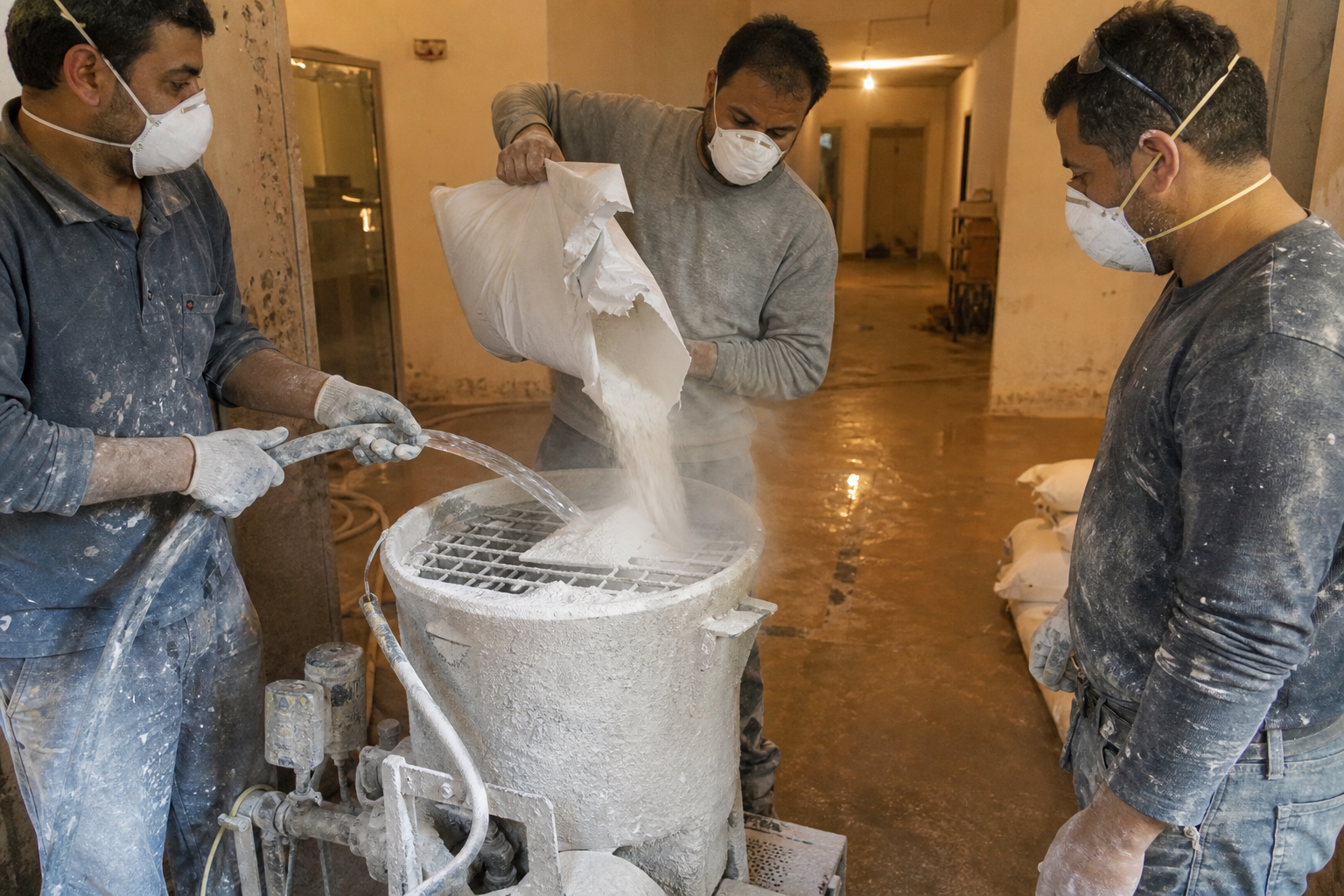
Problem: The operator adds water by hose timing, and the new grade makes that familiar gesture produce a different mix.
Agitation / Answer: Water at the machine is usually set by hose timing and operator feel. A grade that wets out faster or slower changes what the same gesture produces. Extra water lowers yield stress and can encourage bleeding, segregation, and a weaker set, while too little raises line friction. Neither outcome proves the grade is unsuitable.
Solution: At the machine I count bags and measure water. Bucket marks, hose timing, and “about right” are not measurements. I record who feeds, how fast the hopper is charged, how long the mix stands before spraying, and whether the hose was pre-wet or left with standing water. I also check the water source, because a change in supply, treatment, or temperature can shift how the paste behaves without any change in HPMC.
Next I compare the two grades at the same total water and the same feed rate. If the candidate thickens faster in the hopper, the operator may instinctively add water to keep the nozzle moving; that correction can look like a material fault when it is a practice response. If the candidate thickens more slowly, the crew may over-feed or spray a wetter mix that sags on the wall. Both are process findings, not proof that the grade is wrong.
Standard mixing practice fixes the energy input, so I keep mixer type and mixing time constant and note them in the trial sheet. ASTM C305 describes mechanical mixing of pastes and mortars of plastic consistency for testing purposes, [3] a reminder of how much mixing energy alone can change a result. I then write a short water and feeding procedure: calibrated water addition, fixed bag count, fixed charge interval, fixed standing time, and a stop rule if the nozzle pattern changes. It stays with the trial records so another shift can repeat it. Jinghong’s article on why HPMC is added to dry-mixed mortar explains why the additive belongs in the dry blend rather than in a late correction, and the humid-climate storage guide covers moisture exposure that can change feeding behaviour.
4. Was the Dry Mix Uniform, or Did the Grade Change Create Local Gel Blocks?
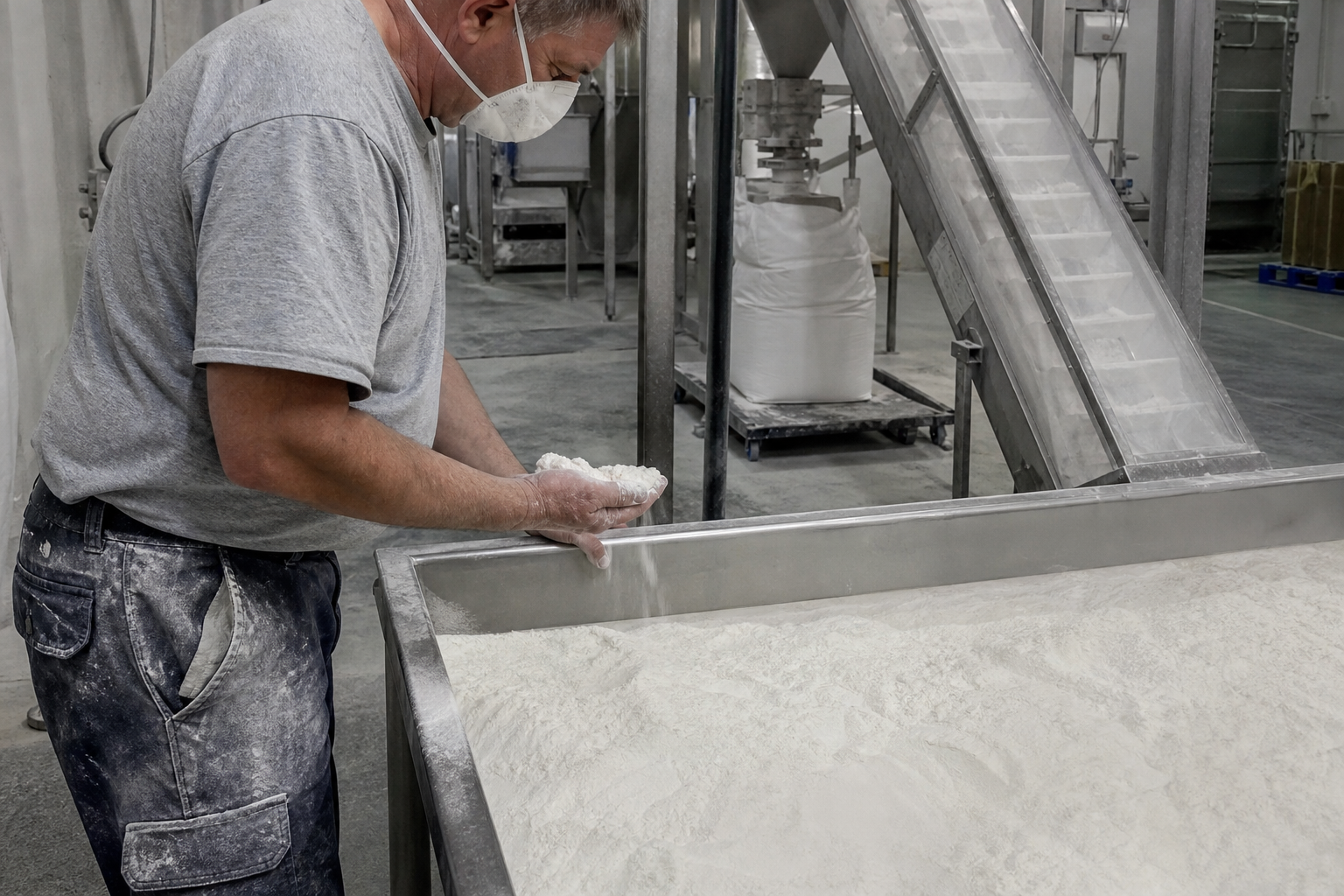
Problem: The pump blocks intermittently, especially at the start of a batch or near the bottom of a silo.
Agitation / Answer: A low-dosage additive can fail to disperse evenly. Faster wetting, a finer powder, a short dry-mix cycle, or a damp mixer can leave gel-rich pockets that travel with the paste and collect at the nozzle. Visible lumps, streaks, or caking in a white or near-white ultrafine powder deserve investigation before the pump is blamed.
Solution: Uniformity is a dry-mix question before it is a pump question. I sample the mixer discharge, the silo or bag, and the hopper, then compare appearance and hand feel. A sound dry mix should not show streaks, dense lumps, or damp caking. A small gel-rich pocket can pass through a screw pump for a while and then collect at the nozzle, producing an intermittent fault that looks like a grade problem.
I review the dosing record and the dry-mix sequence. Was the grade substituted at the same mass, or was a volume scoop used? Was the dry-mix time shortened? Was the additive added into a damp mixer or after the filler? A finer or faster-wetting grade may need more dispersion energy than the previous one, and a change in sequence can create localised wetting even when the formula is unchanged.
If lumps are present, I do not screen them away and declare the batch good. I retain them, photograph them, and trace them to a production window. I also confirm that the delivered grade matches the ordered grade through labels, lot records, and the certificate. Jinghong’s COA buyer’s guide explains how to read identity and method context, and its HPMC for gypsum plaster page describes application expectations. The output is a dispersion finding that can be corrected in the mixer, not a speculative pump repair.
5. How Do We Separate Material, Equipment, and Water Causes Before Changing Grade Again?
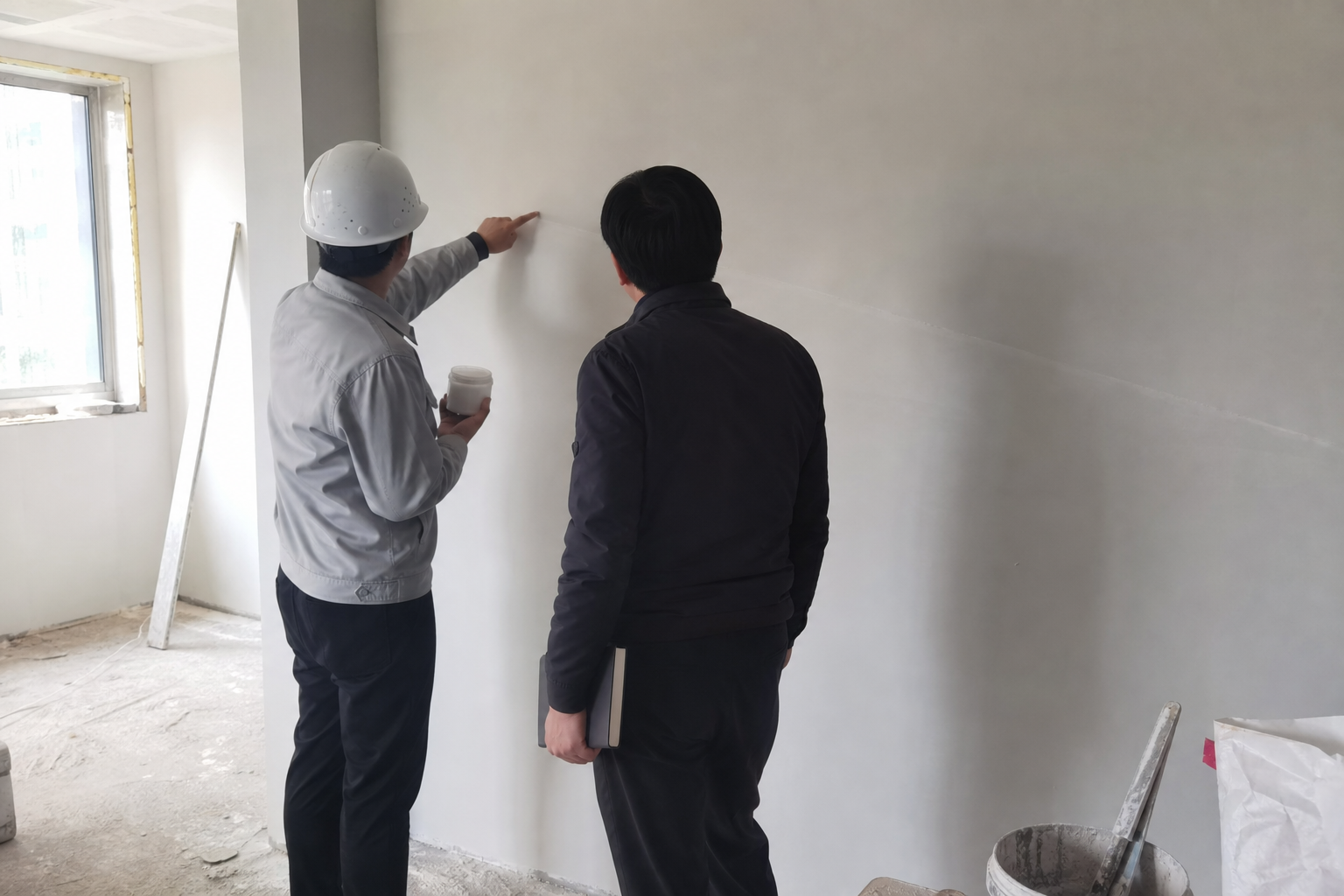
Problem: Production pressure pushes the team to switch back or raise the dosage before anyone has isolated the cause.
Agitation / Answer: Run a matched, alternating trial with retained samples of both grades: one formula, one pump, one hose, one nozzle, one water source, one operator. Change only the grade, then return to the reference grade. Material, equipment, and water causes separate only when the comparison is controlled and repeated on the same line.
Solution: I build the trial around one change: same gypsum lot, filler, retarder, water, mixer, pump, hose, nozzle, and operator. I run the reference grade, the candidate grade, and the reference grade again. The return run shows whether the line drifted. I record hopper behaviour, delivery rhythm, nozzle pattern, wall build, and trowel closure plainly, never invented numbers.
Table 2. Matched trial sequence for a pumpability complaint
| Run | Grade fed | What it tests | Decision it supports |
|---|---|---|---|
| A | Reference grade | Baseline delivery on this line today | Confirms the line is sound before the change |
| B | Candidate grade | Whether the symptom follows the material | Isolates a material or practice effect |
| C | Reference grade again | Whether the line or conditions drifted | Protects against blaming the grade for a worn part |
| D | Candidate, extended standing | Behaviour after residence time in the line | Splits progressive mix change from a fixed restriction |
Before the trial I confirm both grades are traceable and retained samples match the lots. I inspect the pump and line, fix anything that could confuse the result, and agree stop criteria so nobody keeps pumping a failing mix to finish a wall. Failure only after standing points to thixotropic build, water loss, or residence time; failure from first discharge points to water demand or dispersion.
Setting is a separate system, and mixing it into the pumpability question usually derails the diagnosis. Set time is governed mainly by the binder and its retarder. HPMC changes rheology and water retention and can shift setting, but a pump setting and a dosage change are not tools for retiming a plaster. Repeatable stiffening in the hose at any water content is a setting finding, kept outside the pump comparison.
The conclusion must fit the evidence. A grade that pumps through a clean line but finishes poorly differs from one that stalls a worn line; only the second is a transport finding. I share anonymised formulation context, grade identity, line condition, water practice, and trial records, and ask for a matched sample. EN 13279-2 provides reference test methods for gypsum binders and plasters, [1] and EN 13914-2 addresses design and application principles for internal plastering. [6] Neither turns a pump trial into a certificate, but both frame a defensible comparison. Jinghong’s fast-set diagnostic and receiving inspection articles keep setting and identity separate from pumpability.
1. Can a higher-viscosity HPMC grade improve pumpability?
Not automatically. A more cohesive mix may reduce segregation in the line, but higher low-shear viscosity can also increase flow resistance and demand more water. The effect depends on the pump, hose, nozzle, water content, and the rest of the formula. Compare grades through the same line before assuming that a higher viscosity number is better.
2. Why does the plaster pump well at first and then block?
The mix keeps changing after it leaves the mixer. Hydration, thixotropic build, water loss to the hose or substrate, foam collapse, and set residue at the nozzle can all narrow the flow path over time. Record when the fault appears and what changed in appearance just before it; that timeline separates a progressive mix problem from a fixed line restriction.
3. Is pumpability the same as workability?
No. Pumpability describes transport through the pump, hose, and nozzle without segregation, surging, or blockage. Workability describes how the plaster spreads, stands, and closes under the trowel. They are related through rheology, but a mix can pump smoothly and still finish badly, or feel pleasant on a hawk and stall a long hose.
4. Should we add water at the hopper to keep the line moving?
Only within the water range the formula has already been validated for. Uncontrolled water may restore flow temporarily while lowering yield stress, encouraging bleeding and segregation, and changing strength and setting behaviour. If the line needs extra water to stay open, treat that as evidence to investigate rather than a routine correction.
5. What should we retain after a pumpability complaint?
Keep sealed samples of both HPMC grades, the dry mix from the affected and reference batches, the water source, and any residue removed from the hose or nozzle. Add lot records, dosing records, the trial sequence, and photographs without readable instrument values. A complaint is easier to resolve when the material, the line condition, and the water practice can be reconstructed together.
CTA — Send us the pumpability evidence, not just the grade name
If machine-applied gypsum plaster loses pumpability after an HPMC grade change, send Jinghong’s technical team an anonymised formulation framework, both grade identities, the pump and hose arrangement, water and feeding practice, and your trial records. We can help organise a matched comparison and discuss a sample for validation in your own line. We will not diagnose a pump from a viscosity label alone, and we will not ask you to change dosage before the cause is separated.
References
- MKS EN 13279-2:2014 — Gypsum binders and gypsum plasters, Part 2: Test methods (Standardization Institute of the Republic of North Macedonia). EN 13279-2:2014 describes reference test methods for all gypsum binders and gypsum plasters covered by EN 13279-1; the applicable adopted edition and market requirements must be confirmed. Back
- ASTM C472-26: Standard Test Methods for Physical Testing of Gypsum, Gypsum Plasters, and Gypsum Concrete (ASTM International). It covers normal consistency, fineness, setting time, compressive strength, and density, and does not define pumpability. Back
- ASTM C305-20: Standard Practice for Mechanical Mixing of Hydraulic Cement Pastes and Mortars of Plastic Consistency (ASTM International). It is not a gypsum plaster test method. Back
- ASTM C1749-17: Standard Guide for Measurement of the Rheological Properties of Hydraulic Cementitious Paste Using a Rotational Rheometer (ASTM International). It is a guide, not a gypsum pumpability specification. Back
- ASTM C1506-17: Standard Test Method for Water Retention of Hydraulic Cement-Based Mortars and Plasters (ASTM International). It does not measure line transport or nozzle behaviour. Back
- GSO EN 13914-2:2021 — Design, preparation and application of external rendering and internal plastering, Part 2: Internal plastering (Gulf Standardization Organization). It is an identical adoption of EN 13914-2:2016 and addresses design considerations and essential principles for internal plastering systems and their application. Back