
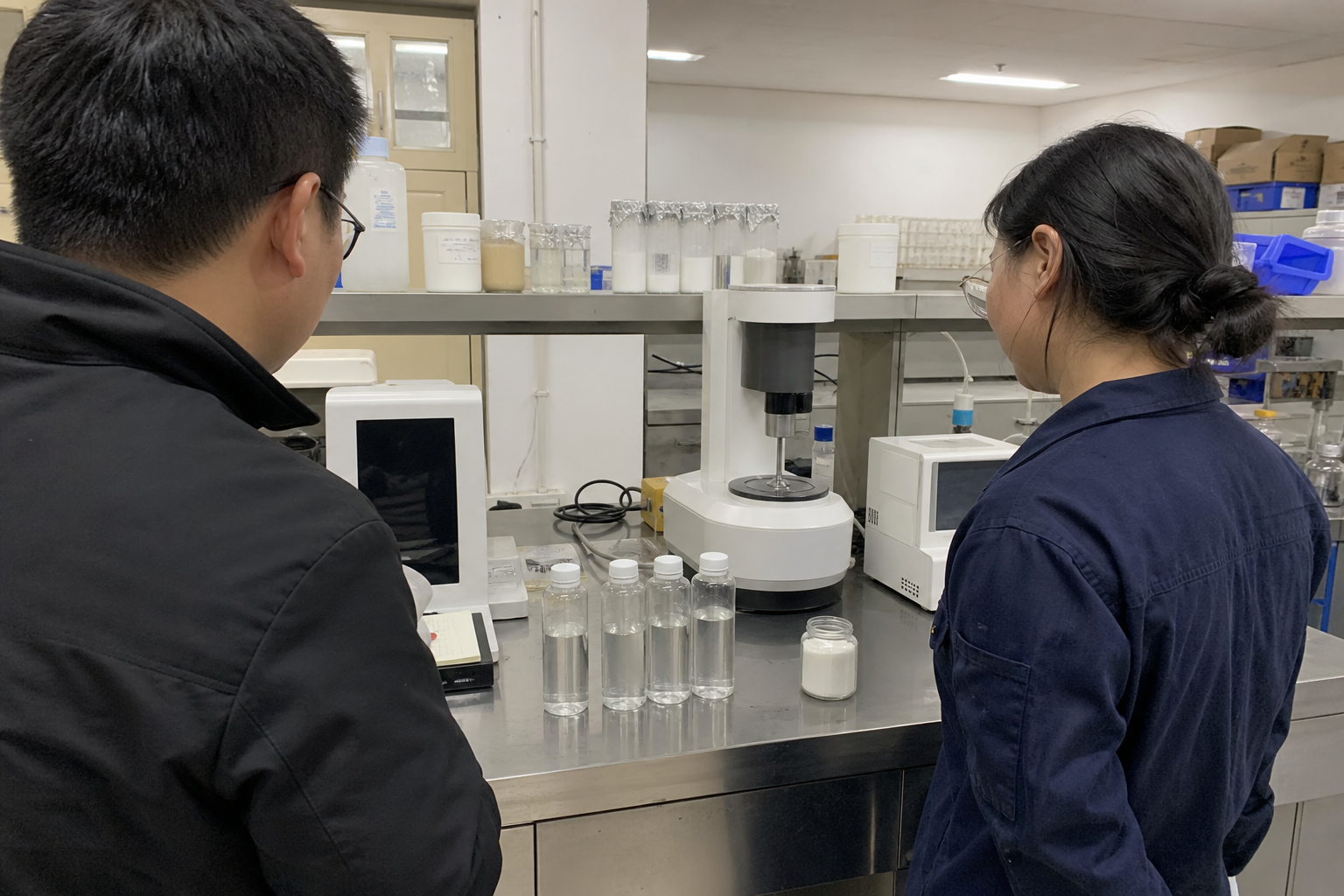
A buyer sees two HPMC gel temperature values and assumes the higher or lower number identifies the better material. That is the problem. If the laboratories used different concentrations, water, thermal histories, heating rates, instruments, or endpoints, the figures may describe different events rather than different products.
The consequence is avoidable supplier disputes, false batch alarms, and specifications that cannot be transferred to incoming QC. In our work with HPMC product selection, we therefore treat thermal gelation as a method-defined result: first align the procedure, then interpret the number. Research explains useful mechanisms, but it does not create one universal construction-grade method.[1][2]
1. Define What “Gel Temperature” Means Before Comparing Values
“Gel temperature” can sound like a single physical constant. In practice, a report may label the first visible haze, a viscosity change, a rheological feature, or a calorimetric event with the same words.
Agitation / Answer: HPMC gel temperature is not comparable until the endpoint is named. Turbidity, rheology, and DSC observe different signals during thermal change, so they can legitimately produce different numbers. Buyers should compare batches or suppliers only when sample preparation, heating program, instrument settings, and endpoint definition are identical.
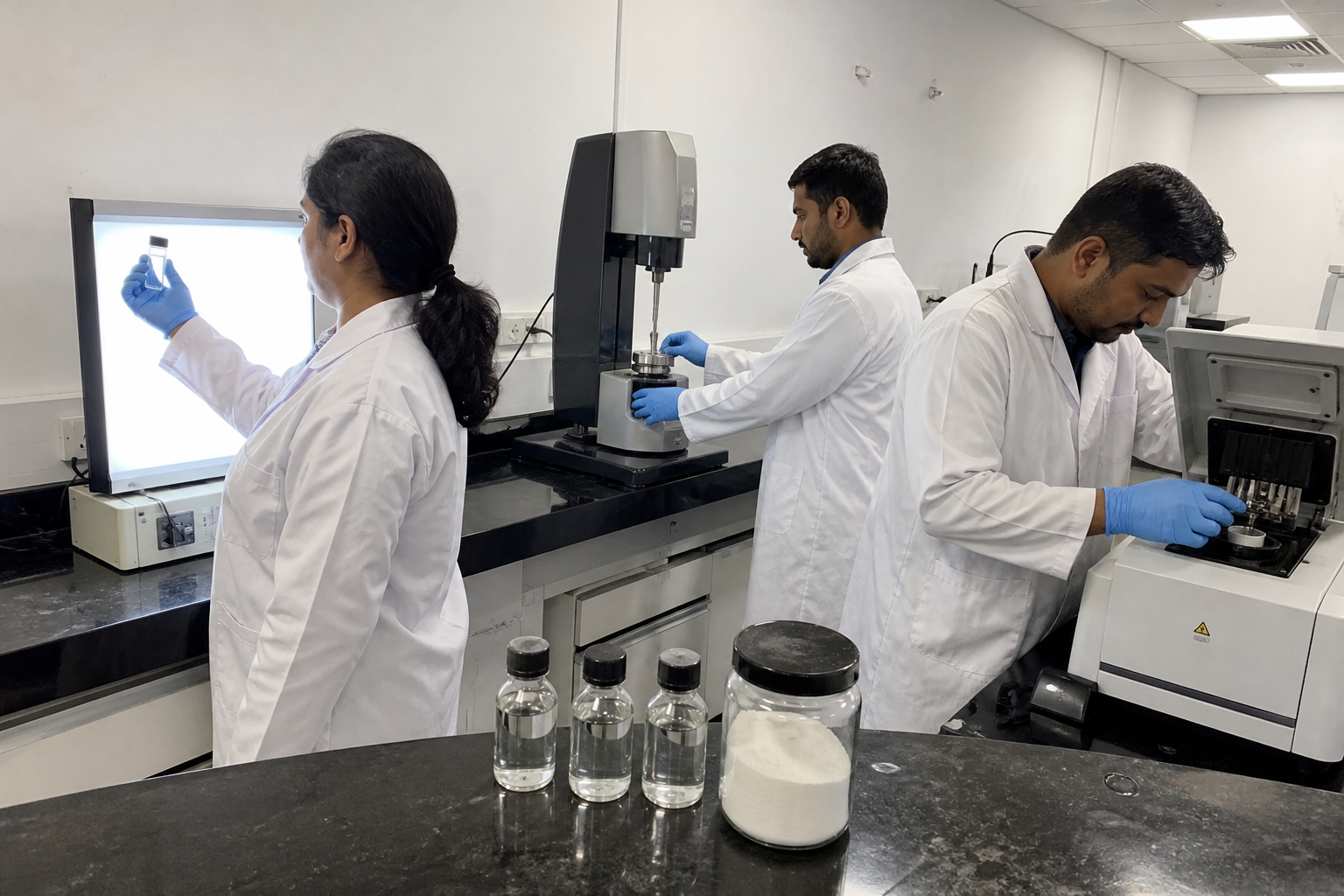
HPMC aqueous systems can show inverse thermoreversible behavior during heating, involving phase separation and network development. Published rheology research describes several features along that path—not one inevitable reporting point.[1] Another study of sol–gel behavior is informative within its own formulation and experimental system, not a purchasing standard for every commercial grade.[2]
| Technique | What it observes | Endpoint that must be written |
|---|---|---|
| Turbidity/visual | Light transmission or visible clouding | Threshold, wavelength/path length, or visual rule |
| Rheology | Changes in G′, G″, or complex viscosity | Onset, minimum, crossover, slope rule, frequency and strain |
| DSC | Heat-flow event | Onset, peak, or other stated analysis rule |
I ask the laboratory to replace “gel temperature” with an operational definition, such as “temperature at the specified rheological crossover under Method X.” Different endpoints can produce different numerical values even on the same prepared solution. This is why a food, pharmaceutical, or compendial method must not be presented as a universal construction-grade HPMC standard without an applicable scope and documented agreement.
A usable report records the signal, calculation rule, and raw curve. Without those three items, the number is an identification clue at most—not defensible evidence that one batch or supplier is superior.
2. Lock Sample Preparation and Solution History
Two laboratories may use the same powder and instrument yet prepare materially different test specimens. Small wording gaps around concentration, water, dispersion, hydration, storage, or prior temperature exposure can change the measured transition path.
Agitation / Answer: Lock solution concentration, concentration basis, water source and ionic composition, mixing sequence, hydration time and temperature, storage time, degassing, and prior thermal exposure. These variables define the test specimen. A result from another preparation history should be treated as a different method, not as direct evidence of a batch difference.
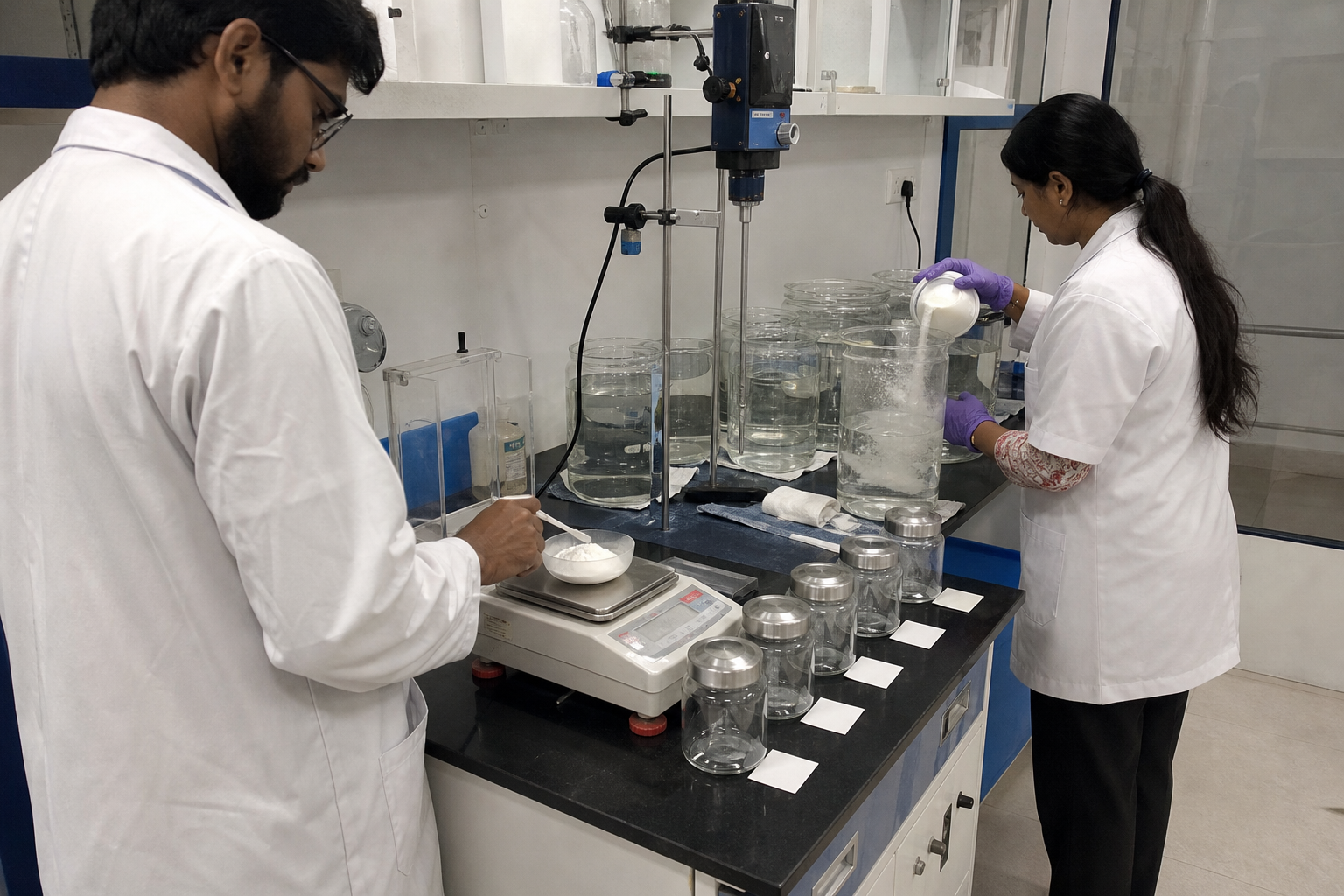
Concentration must state both the target and calculation basis—for example, whether it is mass fraction and whether moisture correction is applied. Water must be controlled rather than described only as “clean”: source, conductivity or relevant quality designation, pH where applicable, and deliberate salts or additives belong in the record. Ionic composition can influence polymer–water interactions, so plant water and laboratory purified water are not automatically interchangeable.
Use a preparation checklist:
- identify powder mass, water mass, balance resolution, and calculation;
- define addition order, mixing equipment, speed, duration, and vessel;
- document hot/cold dispersion steps without importing an unrelated compendial procedure;
- fix hydration temperature and duration, hold time, storage conditions, and maximum solution age;
- record bubbles, filtration or degassing, evaporation control, and any failed preparation.
Hydration and thermal history matter because HPMC structure evolves with water contact and temperature. Academic protocols illustrate how tightly researchers control preparation, but their concentrations and histories apply to those research systems only.[1] They should inform method design, not be copied as a Jinghong product specification.
For purchasing files, connect the preparation record to the lot and retained sample. If a disagreement appears, both parties should re-test splits from the same retained material using one agreed water lot or matched water specification. That turns a vague “lab difference” into a traceable method-transfer investigation.
3. Match Heating Program, Instrument, and Endpoint
Even perfectly matched solutions can yield non-equivalent values when one lab heats quickly, another slowly, and each instrument detects a different signal. A method name without operating parameters is not enough.
Agitation / Answer: Match the starting temperature, equilibration, heating rate, temperature range, geometry or cell, sample loading, evaporation control, calibration status, acquisition interval, and endpoint algorithm. Thermal gelation is path-dependent and instrument-dependent. A turbidity onset, rheological crossover, and DSC peak must never be treated as interchangeable values.
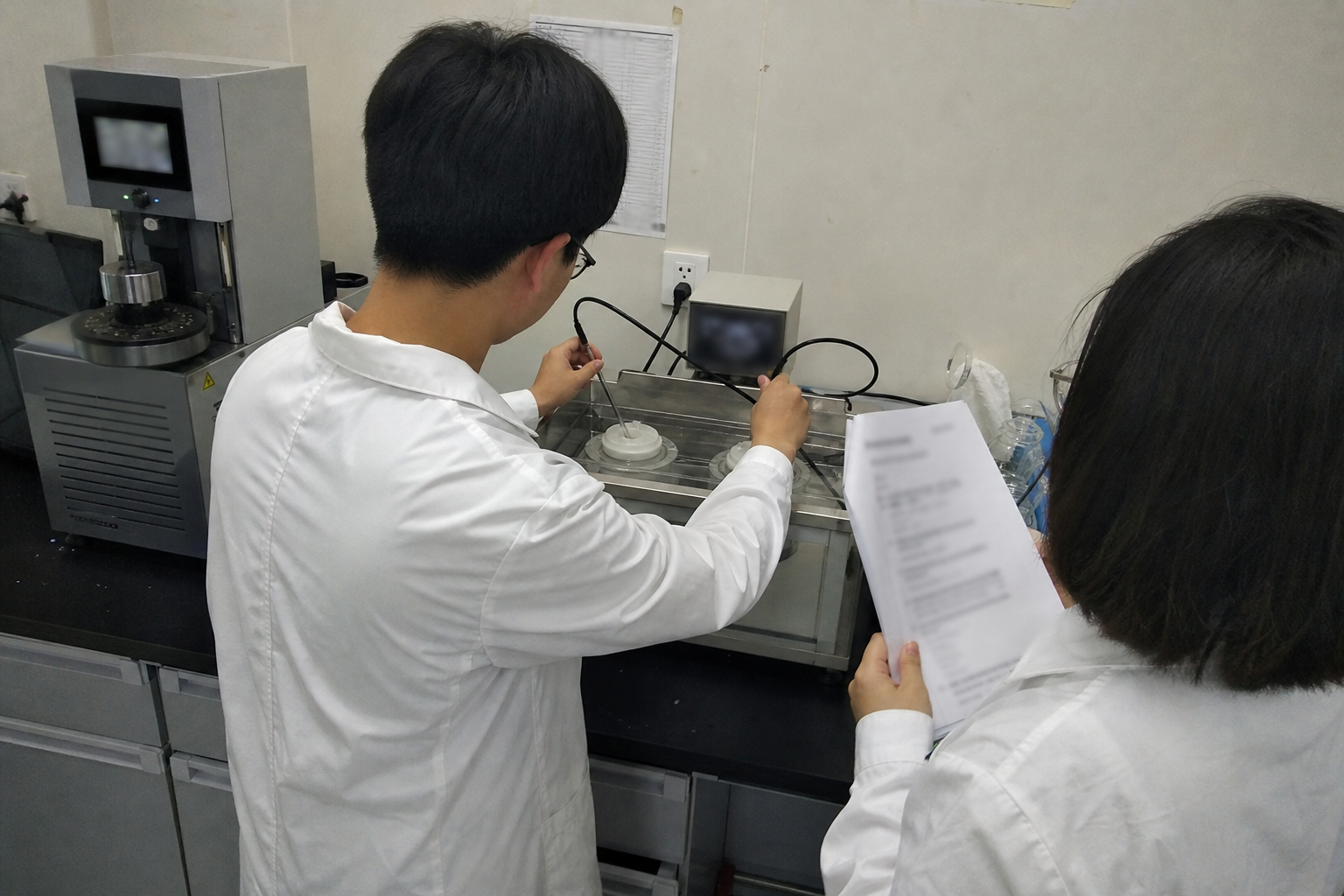
Heating rate changes how much time the specimen has to respond at each temperature. The actual sample temperature may also lag the programmed temperature. For rheology, geometry, gap, strain, frequency, pre-shear, and linear-viscoelastic verification can affect the curve. For turbidity, wavelength, path length, blank, threshold, and optical geometry matter. For DSC, pan configuration, sample mass, baseline treatment, and whether onset or peak is reported must be stated.
| Control block | Minimum transfer record |
|---|---|
| Temperature | Start, equilibration, ramp, range, sensor/calibration status |
| Instrument | Model, cell/geometry, loading, acquisition settings |
| Sample protection | Cover, seal, solvent trap, evaporation observation |
| Endpoint | Signal, mathematical rule, software/version, manual overrides |
Published thermal-gelation work using rheology demonstrates that the reported behavior is tied to defined experimental settings and formulation.[3] Earlier monitoring research likewise shows the value of observing the transition with a specified technique rather than assuming every detector reports the same event.[4] These papers support method discipline; they do not establish Jinghong acceptance values.
During method transfer, I exchange the complete SOP, one annotated raw curve, calculation template, instrument configuration, and a shared sample. Each laboratory runs replicate preparations, discusses curve features, and resolves procedural deviations before comparing results. Instrument equivalence should be demonstrated, not inferred from matching brand names.
4. Compare Batches Only Under One Written Method
A supplier COA value, a buyer’s incoming result, and a third-party report may look comparable in a spreadsheet. If their methods are not identical or demonstrably equivalent, the neat rows create false precision.
Agitation / Answer: Batch consistency requires one approved written method, the same operational endpoint, traceable raw data, and a pre-agreed decision rule. Compare supplier, incoming, and retained-sample results only after method alignment. When results conflict, investigate preparation and method transfer before judging the material or changing supplier status.
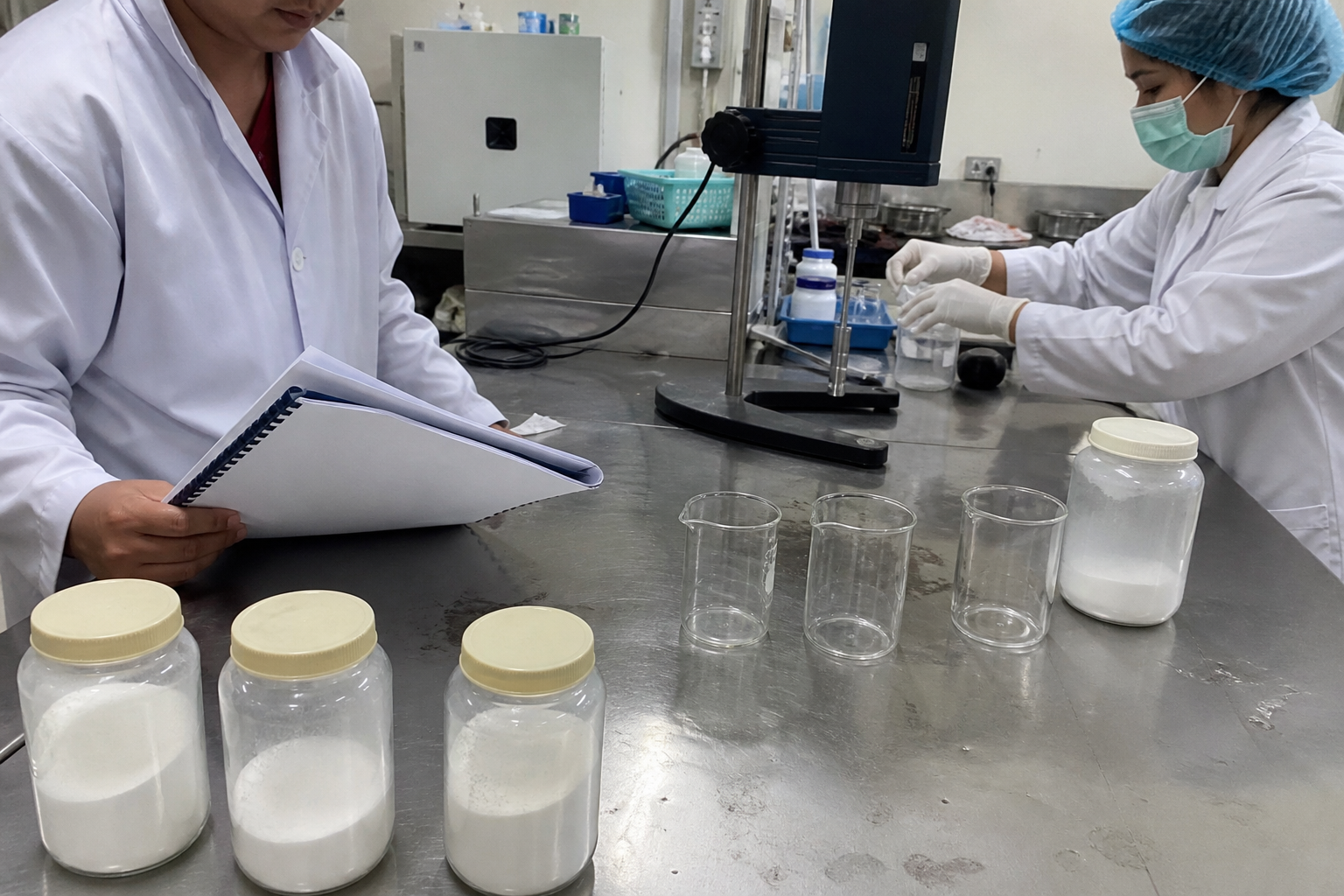
A buyer specification should identify the method revision alongside the property. “Report gel temperature” is incomplete; “report the defined endpoint according to SOP revision…” is auditable. Any acceptance limit or tolerance must come from the applicable, mutually approved Jinghong TDS/COA and purchase specification. I do not invent a typical range, expected bias, or generic tolerance when those documents have not confirmed one.
Use this comparison sequence:
- verify lot identity, sampling record, packaging condition, and solution-preparation record;
- confirm both laboratories used the same SOP revision and endpoint;
- review calibration status, raw curves, calculations, and deviations;
- test agreed splits of the retained sample under the aligned method;
- document the conclusion, disposition authority, and any corrective action.
This fits the broader discipline in our HPMC COA buyer’s guide and receiving inspection checklist. ISO/IEC 17025 provides useful background for laboratory competence, valid methods, traceability, and controlled reporting, but certification alone does not make two different methods equivalent.[5]
In an anonymized method-alignment case, two parties first froze commercial interpretation, exchanged SOPs and raw curves, identified different endpoint wording, prepared a shared retained sample, and repeated testing under one revision. The useful outcome was a common procedure and escalation path—not a claim about customer identity, shipment size, or a preferred numerical result.
5. Translate the Result Into Decisions Without Overclaiming
Once a controlled value exists, teams may still overreach: they may convert one laboratory endpoint into a promise about workability, water retention, open time, or field success. The test does not support that leap by itself.
Agitation / Answer: Use an aligned gel-temperature result for identity, consistency trending, or an agreed specification decision only within the validated method’s scope. Do not infer construction performance from that number alone. Confirm purchasing limits against the current Jinghong TDS/COA, then connect laboratory findings to relevant application verification and change control.

The decision should match the evidence. A consistent method-defined trend may support batch surveillance. A conforming value may satisfy one purchase-specification line. Neither automatically proves suitability in a customer’s cement, gypsum, detergent, coating, or other formulation. Application performance depends on the complete grade, dosage, recipe, raw materials, mixing, environment, and test design.
| Decision question | Appropriate evidence |
|---|---|
| Is the reported value comparable? | Same written method and endpoint |
| Does the lot meet contract requirements? | Approved specification plus controlled result |
| Is the batch consistent? | Trend under one method, sampling controls, retained sample |
| Will it work in the formulation? | Relevant application trial and agreed performance criteria |
Procurement should therefore maintain a method-to-specification matrix: property name, method revision, endpoint, responsible lab, approved limit source, retained-sample period, and escalation owner. Quality changes require review of both historical comparability and method-transfer status. A useful view of how laboratory control can connect with production and application verification appears in Jinghong’s HPMC quality-control process; it should not be read as a universal performance guarantee.
For supplier qualification, ask for the applicable TDS/COA, exact test-method reference, reportable endpoint, and change-notification practice. If methods differ, align them before negotiating numerical limits. That prevents a purchasing threshold from becoming detached from the procedure that gives it meaning.
FAQ
1. Is HPMC gel temperature an intrinsic constant?
Not as reported in routine QC. The observed value is tied to solution composition, history, heating program, detector, and endpoint rule.
2. Can turbidity and rheology results be compared directly?
No. They observe different signals. They become useful side by side only when each method and endpoint is clearly identified; their numbers should not be treated as interchangeable.
3. Can we use a food or pharmacopoeial method for construction-grade HPMC?
Only if its scope is applicable and buyer and supplier deliberately adopt and validate it. It is not automatically a universal construction-grade method.
4. What should we do when supplier and incoming QC results disagree?
Pause the material conclusion, compare SOP revisions and raw curves, then test an agreed retained-sample split under one aligned method.
5. Does a matching gel-temperature result guarantee application performance?
No. It supports only the validated test purpose. Relevant formulation and application trials are still required.
CTA: To align a supplier specification, retained-sample plan, and method-transfer package with the applicable product documents, contact Jinghong.
References
[1] Perez-Robles S, Carotenuto C, Minale M. “HPMC Hydrogel Formation Mechanisms Unveiled by the Evaluation of the Activation Energy.” Polymers (2022). PMC8838388. The paper examines defined aqueous HPMC research systems and rheological protocols; it is mechanistic context, not a universal purchasing specification.
[2] “Sol-gel behavior” research article, PMC5448872. Its findings are limited to the studied formulation and method and are cited here only to illustrate method-dependent sol–gel characterization.
[3] Thermal gelation/rheology study, PubMed PMID 24507257. The experimental system and rheometer conditions in the study should not be generalized into Jinghong grade limits.
[4] Thermal-gelation monitoring study, PubMed PMID 15901330. Cited as technique-specific measurement background, not as a construction-grade standard.
[5] International Organization for Standardization. ISO/IEC 17025 — Testing and calibration laboratories. This is laboratory-competence context; it does not prescribe a single HPMC gel-temperature endpoint.