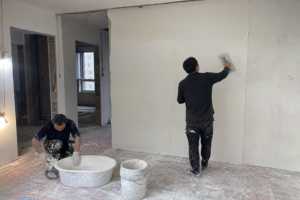
RDP is added to mortar when a rigid cementitious or gypsum-based matrix cannot provide the required bonding, cohesion, flexibility, or durability by itself. Without the right polymer modification, a mortar may struggle under substrate movement or application stress. I use RDP to help manufacturers target measurable performance in a complete, tested formulation. For the full overview of what RDP is, where it is used, and how to select a grade, see what is redispersible polymer powder used for.
RDP is added to mortar to form a polymer-modified mineral matrix after mixing and drying.1 This modification can improve adhesion, cohesion, flexibility, deformation tolerance, and resistance to certain cracking stresses. However, the actual result depends on the RDP grade, dosage, mortar formulation, substrate, curing conditions, and intended application.
I do not treat redispersible polymer powder as a universal solution. I first look at what the mortar must do, where it will be applied, and how its performance will be verified. Those questions help buyers avoid unnecessary formulation cost and potentially expensive application mismatches.
How Does RDP Work in Mortar?
RDP can look like one more white powder in a dry-mix formulation, so its function is easy to oversimplify. That simplification creates risk because the powder does not merely act as a filler. I evaluate how it disperses, interacts with the mineral system, and contributes after the mortar dries.
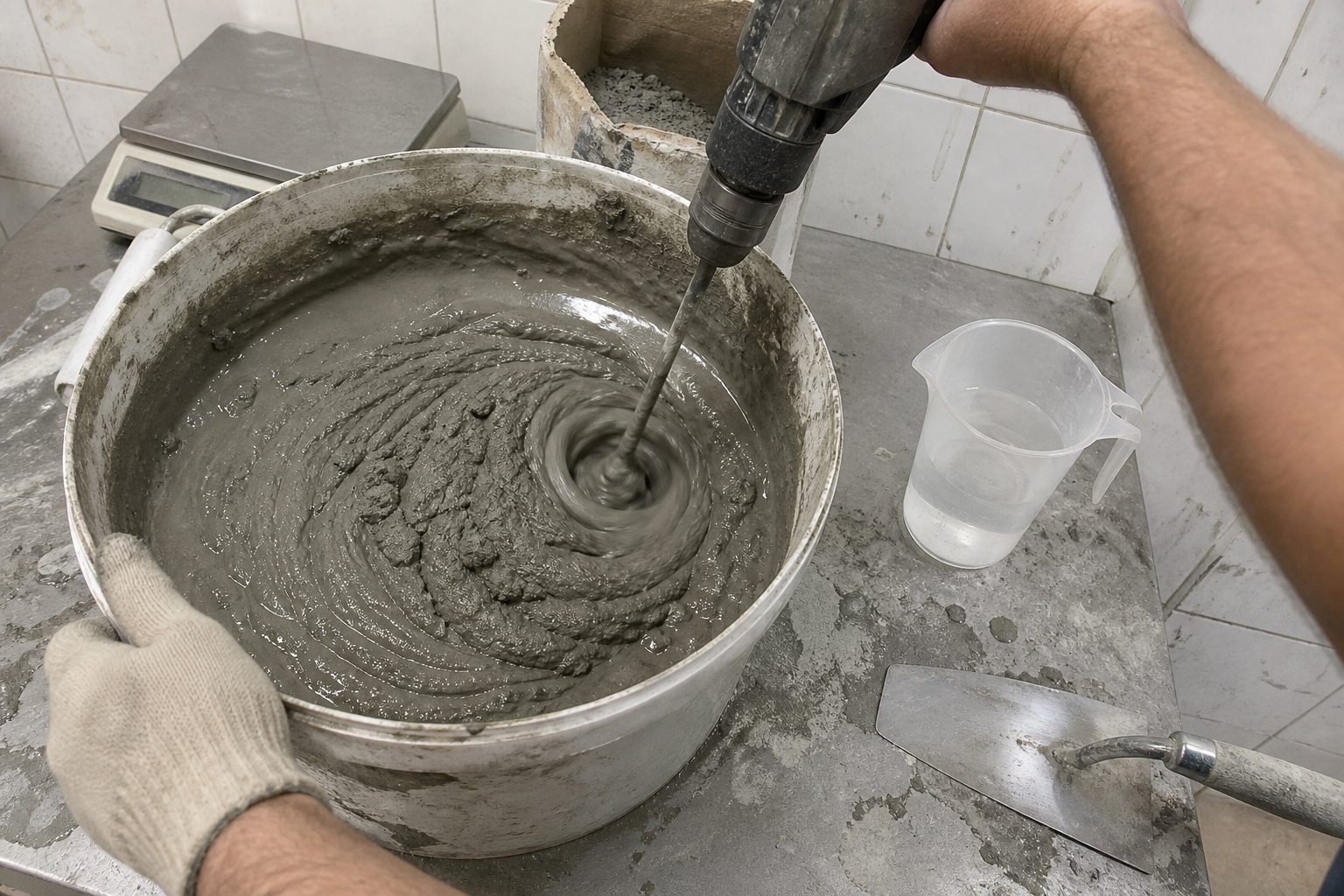
After water is added, RDP redisperses into small polymer particles throughout the fresh mortar.2 As hydration and drying progress, those particles come into closer contact and can form a polymer phase within the mineral matrix. This phase modifies the mortar’s interfaces and helps it meet selected bonding, cohesion, and flexibility requirements.
From dry powder to dispersed polymer
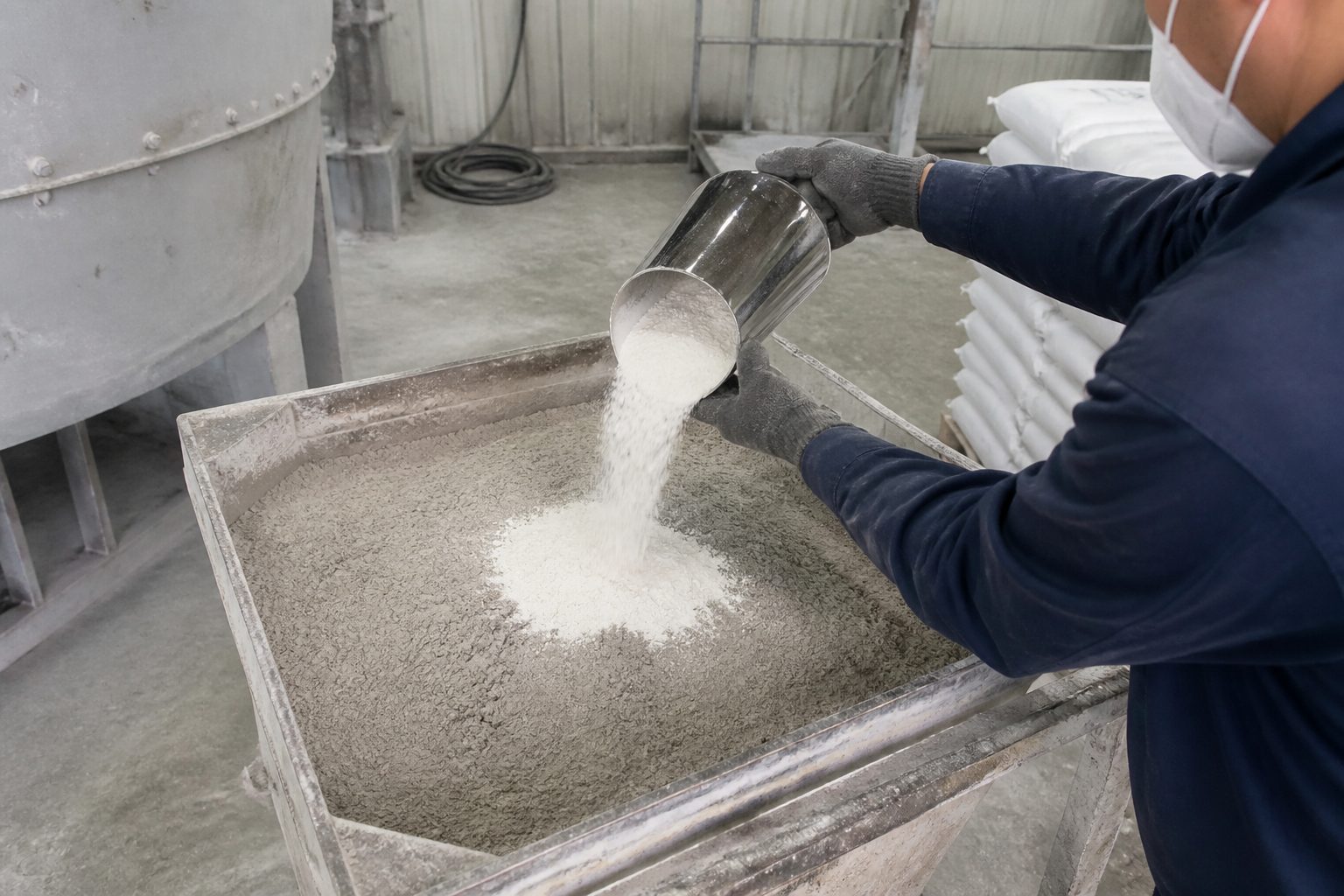
Manufacturers generally produce RDP by converting a polymer dispersion into a free-flowing powder, commonly through spray drying with protective materials. When a dry-mix mortar user adds the correct quantity of water, the powder should redisperse rather than remain as isolated dry particles or unstable agglomerates.
I pay attention to this redispersion behavior during product evaluation because it supports even polymer distribution. However, I do not use one raw-material observation to predict the complete mortar result. Cement type, aggregate grading, filler content, cellulose ether, water demand, mixing energy, and temperature can all affect the system.
The basic sequence is usually described as follows:
- The powder contacts water. The RDP begins to redisperse in the fresh mortar.
- Polymer particles become distributed. Mixing carries the particles through the binder, fillers, and aggregates.
- The mineral binder reacts. Cement hydration or another binder reaction develops the inorganic structure.
- Water is consumed or evaporates. The polymer particles move closer as the mortar sets and dries.
- A polymer phase develops. Under suitable conditions, the particles can coalesce and modify parts of the mineral matrix and its interfaces.
I use the term polymer phase carefully. The exact morphology depends on the polymer chemistry and formulation conditions. Buyers should verify detailed mechanisms against the supplier’s technical literature and established construction-material references.
Why the polymer phase matters
A conventional mineral matrix can be strong in compression while remaining relatively rigid.3 The polymer phase can help redistribute some local stresses and improve contact at key interfaces. These interfaces may include the boundary between mortar and tile, mortar and insulation board, or binder paste and aggregate.
The result is not automatic. Low temperatures, unsuitable curing, excessive water, dusty substrates, and incompatible ingredients may reduce the expected benefit. I therefore view RDP as one part of a system rather than an isolated performance guarantee.
In my internal application comparisons, I have seen two powders with acceptable incoming quality records behave differently in the same mortar. I treat that observation as a reason to run controlled formulation tests, not as proof that one raw-material figure predicts field performance.
What Performance Can RDP Add to Mortar?
Buyers often hear that RDP “improves everything.” That statement is too broad for responsible procurement. A polymer can support several performance targets, but every result remains application-dependent. I define the required property first and then select a test method that can measure it.
RDP can support improved adhesion, internal cohesion, flexibility, abrasion resistance, and tolerance of thermal or mechanical movement. It may also improve workability or water resistance in certain formulations. I confirm each benefit through relevant finished-mortar testing because RDP alone cannot guarantee crack prevention, waterproofing, or failure-free installation.
Adhesion and cohesion are not identical
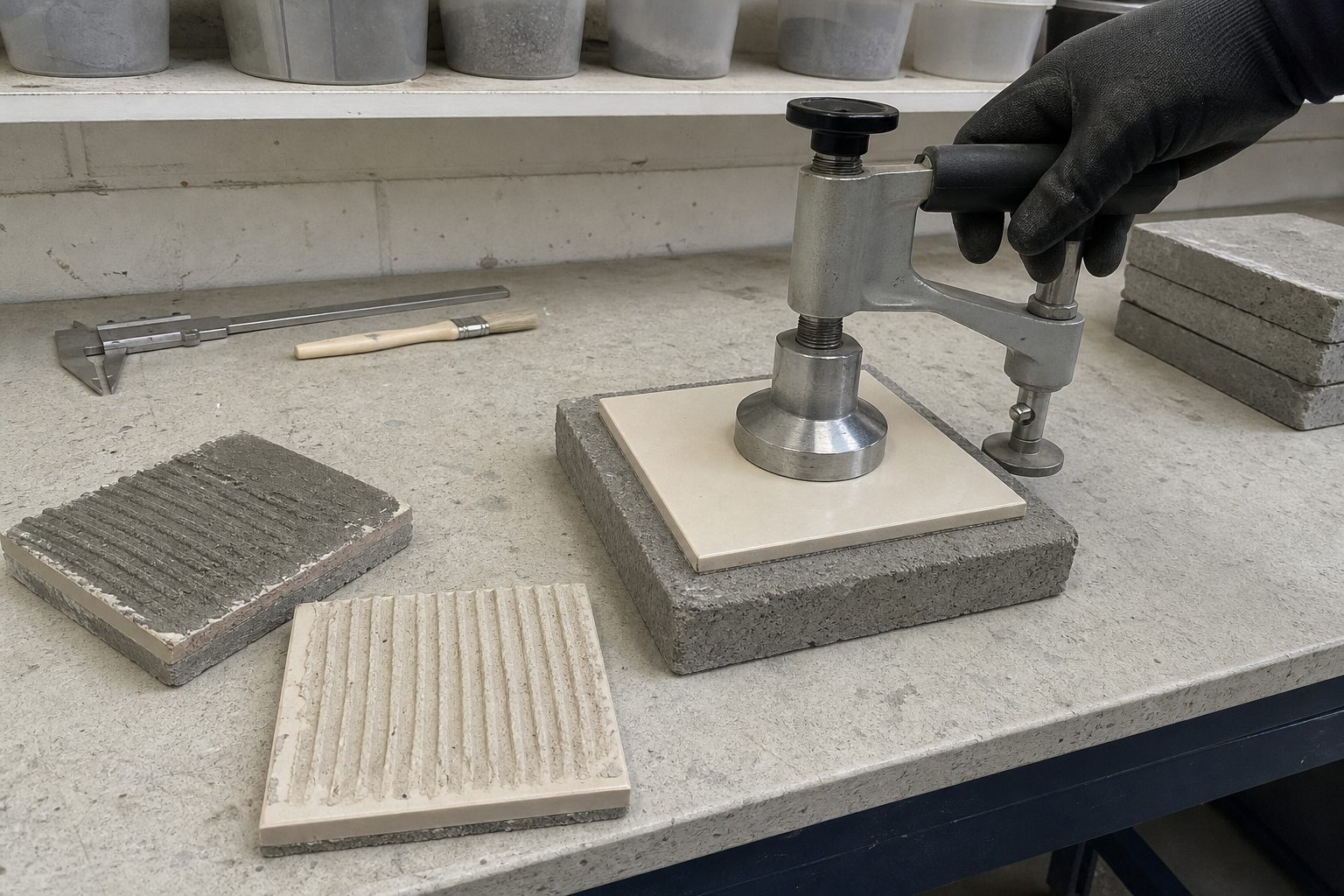
I separate adhesion from cohesion when I discuss mortar performance:
- Adhesion describes the mortar’s bond to another material, such as concrete, ceramic tile, insulation board, or render substrate.
- Cohesion describes the internal integrity of the mortar itself.
- Failure mode shows where the tested assembly failed and can provide context beyond one numerical result.
A high measured bond value can have different meanings depending on whether the failure occurred at the substrate interface, inside the mortar, inside the substrate, or at another layer. I therefore review both the value and the failure pattern when the test method records that information.
Flexibility and deformation tolerance
RDP can modify a brittle mineral system and help it tolerate some movement. This function matters in applications exposed to thermal cycling, vibration, shrinkage differences, or movement between layers. Tile adhesives, exterior insulation and finish systems, repair mortars, and flexible skim coats may all have different deformation requirements.
I avoid saying that RDP “stops cracking.” Cracking can come from many sources, including:
- Poor substrate preparation
- Excessive mixing water
- Incorrect aggregate grading
- Binder shrinkage
- Rapid drying
- Thick application
- Structural movement
- Poor joint design
- Incorrect installation or curing
RDP may help the formulation resist selected stresses, but it cannot correct every design or workmanship problem.
Typical performance targets by application
| Mortar application | Performance areas I commonly evaluate | Important variables I also check |
|---|---|---|
| Tile adhesive | Tensile adhesion, open time, slip, deformation | Tile type, substrate, water ratio, curing, adhesive class |
| EIFS base coat | Bonding, impact behavior, crack resistance | Insulation board, mesh, layer thickness, weather exposure |
| Wall putty or skim coat | Cohesion, adhesion, sanding balance | Filler grading, cellulose ether, substrate absorption |
| Repair mortar | Bond, shrinkage compatibility, durability | Repair depth, existing concrete, exposure, curing |
| Self-leveling mortar | Adhesion, abrasion resistance, surface integrity | Flow, setting time, defoaming, floor loading |
| Gypsum-based mortar | Adhesion, cohesion, workable application | Gypsum type, set control, water demand, substrate |
I use this table as a screening guide rather than a formulation prescription. Each market may also require compliance with different product standards. For example, tile adhesive buyers may evaluate products under the relevant edition of EN 12004 and its associated test methods, while other mortar products may fall under different regional standards. Buyers should confirm the applicable standard, edition, class, and accredited testing requirements with qualified professionals.
Why Do Mortar Applications Need Different RDP Grades?
A powder that works well in one tile adhesive may not be the best choice for a wall putty, EIFS base coat, or self-leveling mortar. I often see purchasing teams compare products only by polymer family or price per tonne. That shortcut can hide important formulation and application differences.
Mortar applications need different RDP grades because they face different substrates, stresses, exposure conditions, workability needs, and performance standards. Polymer composition and product design can affect flexibility, adhesion, water interaction, and compatibility. I therefore match the grade to the mortar’s task and validate it in the complete formulation.
Polymer chemistry affects selection
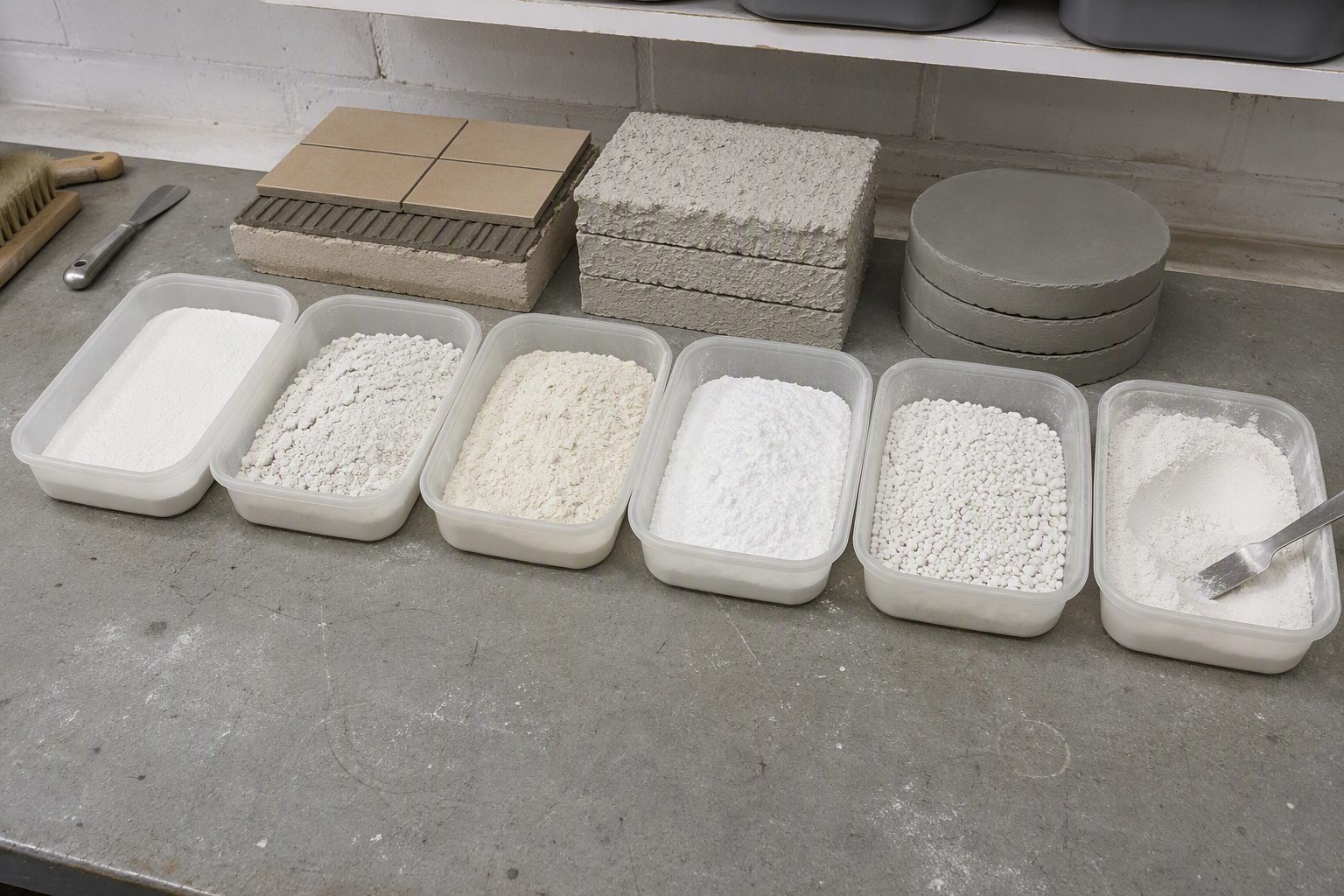
Many construction-grade redispersible powders are based on vinyl acetate copolymers, including vinyl acetate-ethylene systems commonly described as VAE.4 Other copolymer designs are also available. Buyers may encounter descriptions involving flexibility, hydrophobic properties, neutral behavior, or particular compatibility characteristics.
I do not recommend selecting a powder from the polymer name alone. Two products with similar broad chemistry may differ in protective colloid systems, residual moisture, bulk behavior, redispersion, ash-related characteristics, or application performance. Supplier nomenclature can also vary.
I usually collect the following information before proposing a candidate:
- The mortar type and intended use
- The binder system and binder content
- The aggregate and filler grading
- The cellulose ether type and dosage
- Other additives in the formulation
- The target water-to-dry-mix ratio
- The application thickness
- The substrate type and absorption
- Indoor or outdoor exposure
- Climate and curing conditions
- Required product classification
- Target cost per tonne of finished mortar
Flexibility requires context
A more flexible RDP is not automatically better. A very soft polymer may be useful where movement tolerance matters, but it may not provide the preferred balance in every rigid, fast-setting, or abrasion-sensitive system. The relevant film-formation behavior also deserves attention when a product will be used at low temperatures.5
I expect buyers to review technical data such as the stated glass-transition-related characteristics or minimum film-forming information when the supplier provides them. However, I treat these values as screening data. I still test the final mortar because fillers, cement, water, admixtures, and curing conditions influence actual behavior.
The cheapest grade can raise the total cost
I compare cost-in-use, not only cost per kilogram. A low-priced RDP may require a different addition level, cause production variability, or fail to achieve the required mortar class. Conversely, an expensive grade may add properties that the application does not need.
I suggest that buyers calculate:
RDP cost per tonne of mortar = dosage per tonne × price per kilogram
This simple calculation is only the first step. I also include rejected batches, laboratory time, customer complaints, production interruptions, and the commercial impact of a failed certification test. Those costs can exceed the initial difference between two powder quotations.
How Should I Select the RDP Grade and Dosage?
Grade selection can become risky when a supplier recommends one standard dosage without reviewing the formulation. Too little polymer may not reach the performance target, while too much may increase cost or alter setting, strength balance, and workability. I use staged trials to find an appropriate range.
I select an RDP grade and dosage by defining the mortar’s target performance, screening compatible products, and testing several controlled dosage levels in the same base formulation. I compare fresh and cured properties under relevant conditioning. I finalize the choice only after pilot production and application testing confirm performance, consistency, and cost.
Start with the application requirement
I begin with a written performance brief. The brief prevents the evaluation from becoming a vague comparison of powder appearance or price. It should identify:
- The intended mortar product
- The relevant market and standard
- The target classification or customer specification
- The expected substrate and installation method
- The environmental exposure
- The required packaging and shelf life
- The target formulation cost
I then request candidate technical data sheets, safety data sheets, certificates of analysis, and representative samples. These documents help with screening, but I treat them as supplier documents that require verification. I also confirm whether the certificate reports batch-specific results or only typical limits.
Keep trial variables controlled
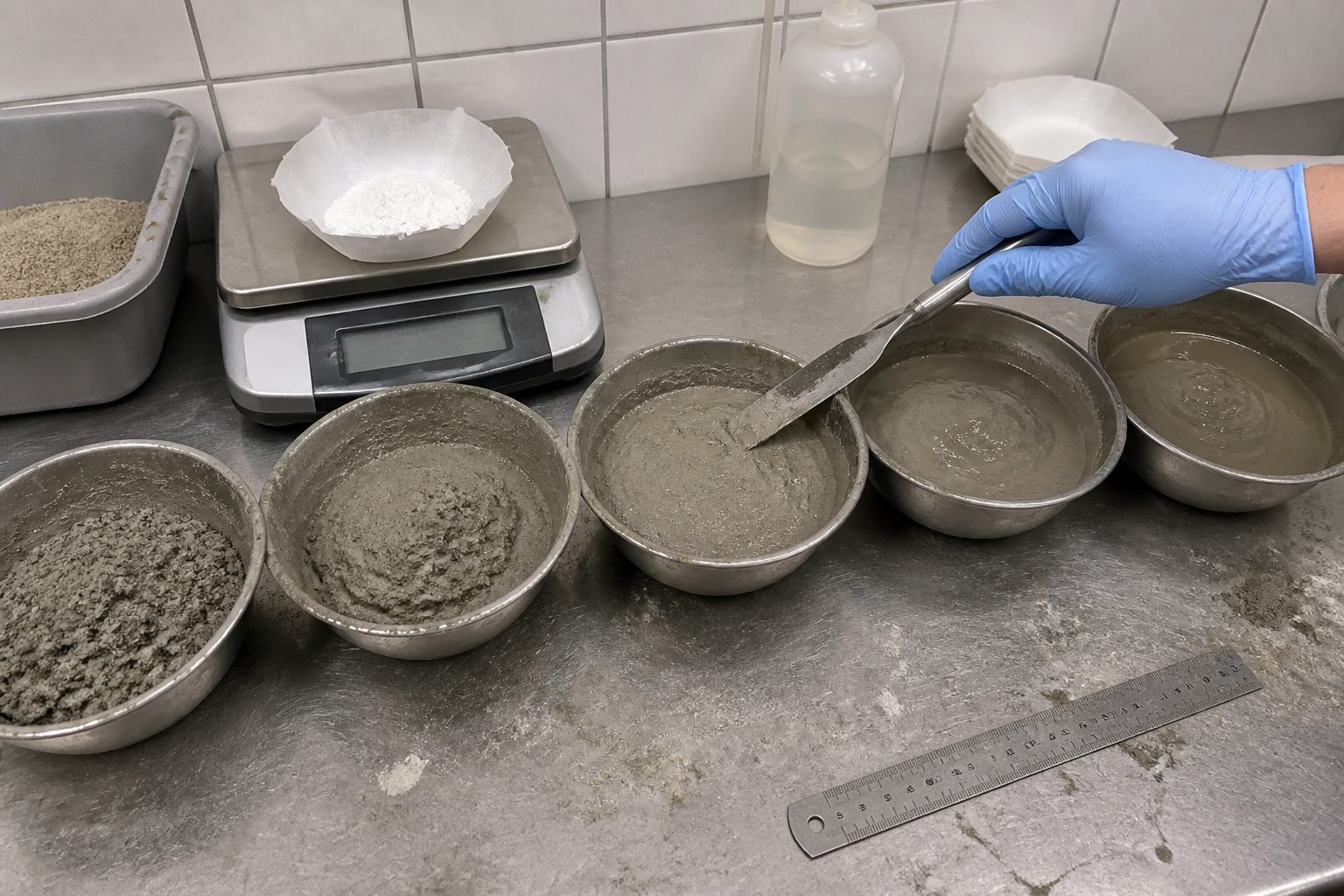
A fair comparison requires the same base formulation, mixing method, water level, conditioning, specimen preparation, and test schedule.6 If I change the RDP, cellulose ether, water ratio, and sand grading at the same time, I cannot identify which change caused the result.
A practical trial matrix may look like this:
| Trial stage | Main purpose | Variables I keep controlled |
|---|---|---|
| Blank formulation | Establish a reference | Binder, sand, fillers, water, mixing |
| Candidate screening | Compare RDP grades | Base formula and nominal polymer level |
| Dosage ladder | Find a useful range | Same RDP grade and other ingredients |
| Optimization | Balance all properties | Changes are made one at a time |
| Pilot batch | Check production transfer | Equipment, batch size, mixing sequence |
| Application trial | Confirm practical suitability | Substrate, tools, thickness, curing |
I do not publish one universal dosage because the correct amount can vary significantly with mortar type and target class. An experienced formulator or qualified testing laboratory should evaluate the application-specific range.
Test fresh and hardened mortar
I normally consider both fresh-state and hardened-state behavior. The exact test plan depends on the product, but it may include:
- Water demand and consistency
- Density and air content
- Mixing and wetting behavior
- Workability and trowel feel
- Slip or sag resistance
- Open time
- Setting behavior
- Tensile adhesion under relevant conditioning
- Flexural or deformation-related behavior
- Abrasion resistance
- Water exposure or weathering response
- Visual cracking and failure mode
I clearly separate internal screening from accredited third-party testing. Internal application tests can guide development, but they do not automatically prove regulatory compliance or suitability for every jobsite.
In my experience with customer formulation feedback, a powder that feels good during troweling does not always deliver the best cured result. The reverse can also occur. I therefore avoid choosing RDP from handling impressions alone.
How Should Buyers Evaluate an RDP Supplier?
A technically suitable sample can still create procurement problems if later batches vary or documentation is weak. Buyers need more than a low quotation and a single successful trial. I evaluate whether the RDP supplier can support repeatable manufacturing, transparent quality records, export delivery, and controlled change management.
Buyers should evaluate an RDP supplier through document review, representative sampling, batch-consistency checks, mortar trials, production capacity assessment, and commercial due diligence. I recommend verifying COA and SDS documentation, test methods, traceability, packaging, storage guidance, change-notification procedures, technical support, and export capability before approving routine orders.
Raw-material consistency is necessary but not sufficient
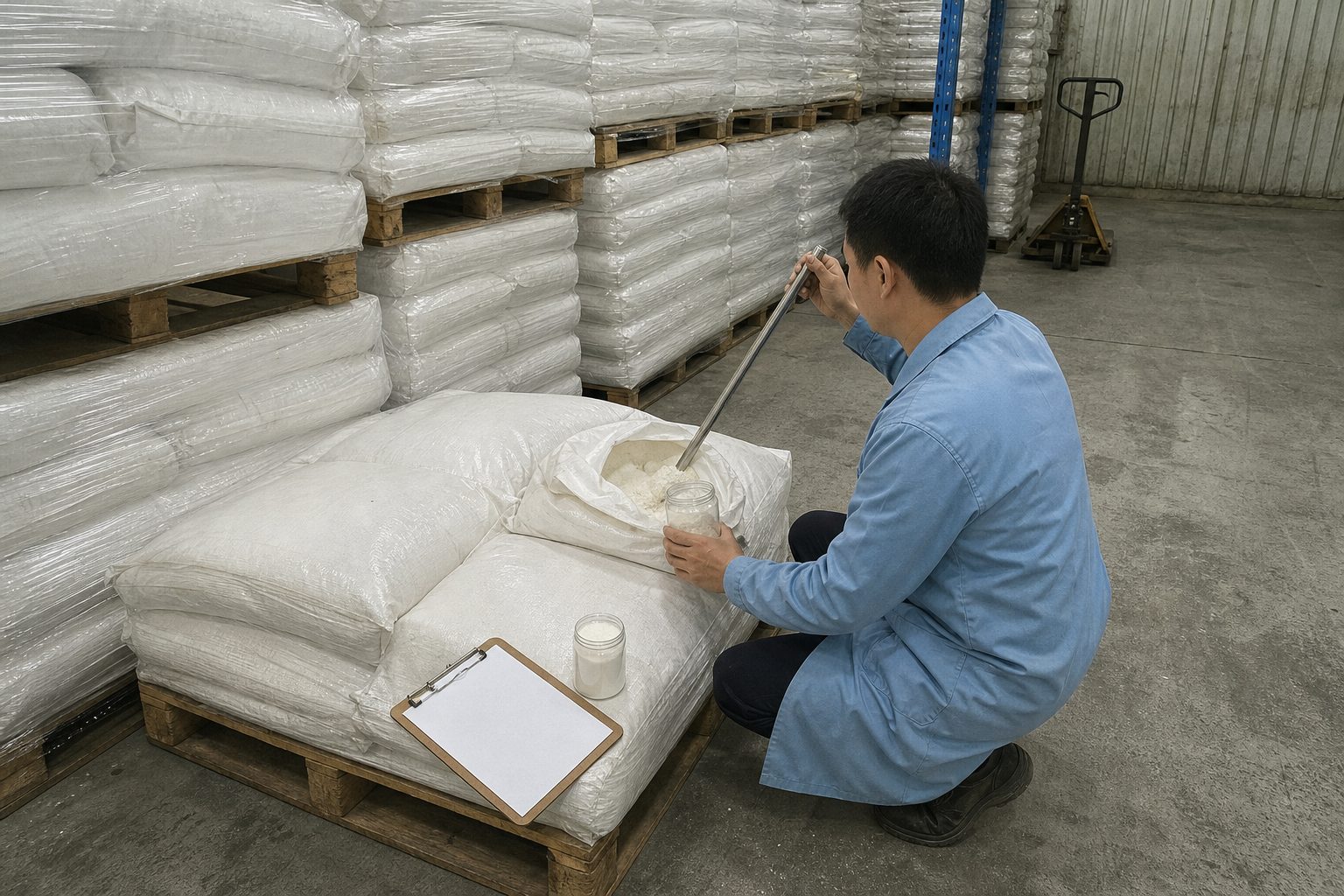
As an RDP manufacturer in China, I use production and quality-control records to monitor consistency. Typical supplier-controlled indicators may include appearance, moisture, bulk density, ash-related values, particle-size-related characteristics, or other internal specifications. The exact methods and limits can vary by product and producer.
These indicators matter because unusual changes can reveal a production or storage issue. However, I do not equate a compliant powder result with guaranteed mortar performance. A certificate cannot replace application testing.
I suggest that buyers compare:
- Results from several production batches
- The supplier’s stated test methods
- Sample-retention procedures
- Batch coding and traceability
- Calibration and equipment-control practices
- Complaint and corrective-action processes
- Storage and transport conditions
- Packaging integrity and palletization
- Shelf-life statements
- Procedures for formulation or raw-material changes
Verify certificates and claims
A supplier may present quality-system certificates, product reports, or compliance documents. I advise buyers to verify the issuing organization, scope, validity period, production-site coverage, and relevance to the purchased grade. A certificate for a company or management system does not necessarily certify every product’s application performance.7
For initial approval, I recommend a sequence such as:
- Review the technical and safety documentation.
- Obtain a sample that represents regular production.
- Test it against the existing grade or a defined control.
- Request batch data for multiple lots.
- Audit the factory directly or through a qualified third party when justified.
- Place a controlled trial order.
- Retain samples from incoming shipments.
- Monitor production and customer feedback over time.
Ask about technical and export support
For overseas B2B procurement, I also review communication and logistics. At Jinghong Chemical, our business context includes RDP production, internal mortar application comparisons, OEM packaging, COA and SDS support, and export service. I present those capabilities as points for buyer verification rather than as substitutes for independent qualification.
Buyers should confirm lead time, minimum order quantity, container loading, packaging materials, labeling, Incoterms, and document requirements. They should also clarify how the supplier handles technical complaints. A reliable supplier should ask for formulation details, batch numbers, storage history, mixing conditions, and test evidence before offering a conclusion.
Frequently Asked Questions
Is RDP necessary in every mortar?
No. I use RDP when the mortar needs polymer modification to achieve defined properties such as stronger bonding, improved cohesion, or greater deformation tolerance. Some basic masonry or plaster formulations may not require it. I base the decision on the application standard, substrate, exposure, performance target, and validated formulation.
Does adding more RDP always improve mortar?
No. I do not assume that a higher dosage always provides a better balance. More RDP may increase formulation cost and can change workability, setting behavior, strength balance, or other properties. I use a controlled dosage ladder and finished-mortar tests to identify an effective and economical range.
Can RDP prevent mortar cracking or tile hollowing?
RDP can help a formulation tolerate selected stresses, but it cannot prevent every crack or hollow area. I also evaluate substrate condition, water ratio, coverage, joint design, mortar thickness, curing, structural movement, installation technique, and compatibility. Contractors should investigate failures as complete systems rather than blaming or crediting one additive.
Can I replace one RDP grade with another at the same dosage?
I do not recommend automatic one-for-one replacement. Grades can differ in polymer design, flexibility, film-forming behavior, redispersion, and compatibility with other ingredients. I first compare technical documents and then run side-by-side mortar tests under identical conditions before approving a substitution.
Which documents should I request from an RDP manufacturer?
I request a current technical data sheet, SDS or MSDS, batch-specific COA, product specification, storage guidance, shelf-life statement, and relevant quality-system documents. I also ask about test methods, traceability, packaging, change notification, and sample retention. I independently verify certificates and performance claims when the purchasing risk justifies it.
Conclusion
RDP is added to mortar to help the cured system reach application-specific targets for bonding, cohesion, flexibility, and durability. I never select it from price, polymer name, or one quality-control value alone. I compare grades in a controlled base formulation, test relevant fresh and hardened properties, and confirm the result through pilot production and practical application trials.
If you are evaluating RDP for tile adhesive, dry-mix mortar, EIFS, putty, gypsum mortar, or self-leveling products, contact Jinghong Chemical to discuss your formulation requirements, documentation needs, sample testing, and bulk procurement plan.
<!-- JH_HPMC_APPLICATION_LINKS_START --><p class="jh-related-applications"><strong>Related HPMC applications:</strong> When you pair RDP with a cellulose ether in the same dry mix, review the HPMC guidance for <a href="https://jinghonghpmc.com/hpmc-for-dry-mix-mortar/">HPMC for dry-mix mortar</a> and <a href="https://jinghonghpmc.com/hpmc-for-tile-adhesive/">HPMC for tile adhesive</a> to balance fresh-state and hardened performance.</p><!-- JH_HPMC_APPLICATION_LINKS_END -->
<!-- JH_RDP_APPLICATION_LINKS_V1_START -->
Explore RDP by Mortar Application
Select an RDP grade according to the mortar application, substrate, binder system and measurable test target:
- RDP/VAE product overview
- RDP for Dry-Mix Mortar
- RDP for Tile Adhesive
- RDP for Wall Putty & Skim Coat
- RDP for Repair Mortar
- RDP for EIFS & External Insulation <!-- JH_RDP_APPLICATION_LINKS_V1_END -->
"Redispersible Acrylic Ester Polymers - PMC - NIH", https://pmc.ncbi.nlm.nih.gov/articles/PMC11595522/. Studies of polymer-modified cementitious materials describe how redispersible polymer powders redisperse in mixing water and subsequently form a polymer phase within the hydrated mineral matrix as water is removed. Evidence role: mechanism; source type: paper. Supports: Research describing the redispersion of polymer powders in cementitious mortars and formation of a polymer phase or film during drying and hydration.. ↩
"Redispersible polymer powder modified cementitious tile ...", https://www.sciencedirect.com/science/article/pii/S2405844021025147. Redispersible polymer powders are designed to recover a polymer-particle dispersion when mixed with water, allowing the polymer to be distributed through the fresh mortar. Evidence role: mechanism; source type: research. Supports: Research or technical reference material explaining that RDP is designed to redisperse into polymer particles when mixed with water.. Scope note: Actual dispersion quality can be affected by powder storage, mixing conditions, water chemistry, and the complete dry-mix formulation. ↩
"BOTH HIGH STRENGTH AND HIGH DUCTILITY ...", https://www.buffalo.edu/~ranade/publications/C1%20Rushing%20et%20al%20(2012).pdf. Concrete and other cementitious materials are commonly characterized by relatively high compressive strength but limited tensile capacity and brittle post-cracking behavior. Evidence role: general_support; source type: education. Supports: Authoritative teaching material explaining that cementitious materials are strong in compression but comparatively weak in tension and relatively brittle.. Scope note: The exact mechanical response of a mortar depends on its binder, aggregate, porosity, curing, and test method. ↩
"Action of redispersible vinyl acetate and versatate ...", https://www.sciencedirect.com/science/article/abs/pii/S0950061811002030. Construction-material literature identifies vinyl acetate-based copolymers, including vinyl acetate-ethylene systems, among the polymer dispersions commonly converted into redispersible powders for mortar modification. Evidence role: definition; source type: paper. Supports: Technical literature identifying vinyl acetate-ethylene and related vinyl acetate copolymers as commonly used polymer bases for redispersible powders in construction materials.. Scope note: The category also includes other polymer chemistries, and product composition varies by intended application. ↩
"Film Formation Mechanism of Aqueous Polymer Particle ...", https://pmc.ncbi.nlm.nih.gov/articles/PMC12203457/. Research on aqueous polymer dispersions shows that particle coalescence and continuous-film development are temperature-dependent; temperatures below the relevant minimum film-forming range can inhibit effective film formation. Evidence role: mechanism; source type: research. Supports: Polymer-science evidence that dispersion particles require suitable temperature conditions to coalesce into continuous films and that low temperatures can hinder this process.. Scope note: Minimum film-forming behavior measured for a polymer dispersion does not by itself predict performance in a cementitious mortar containing fillers, binders, and other admixtures. ↩
"Methods of testing cement - Part 1: Determination of strength", https://www.academia.edu/43087671/Methods_of_testing_cement_Part_1_Determination_of_strength. Standards-based testing practice requires controlled preparation, conditioning, and test procedures so that observed differences can be attributed to the material variable under evaluation rather than uncontrolled experimental variation. Evidence role: expert_consensus; source type: institution. Supports: Standards-based laboratory principles requiring controlled test conditions to obtain comparable and repeatable material-performance results.. Scope note: The specific controls and acceptance criteria must be selected according to the relevant mortar product standard and laboratory method. ↩
"ISO 9000 family", https://en.wikipedia.org/wiki/ISO_9000_family. Quality-management system certification, such as ISO 9001 certification, evaluates an organization’s management processes and does not constitute certification that each individual product meets a particular application-performance requirement. Evidence role: definition; source type: institution. Supports: Official clarification that ISO 9001 and similar management-system certifications assess an organization's quality-management system rather than certifying individual product performance.. Scope note: Separate product certification, testing, declarations of performance, or contractual specifications may apply depending on the product and jurisdiction. ↩