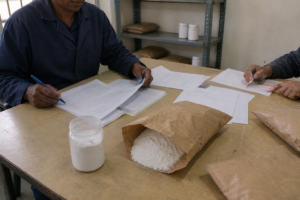
Choosing HPMC for tropical vs desert climates can become costly when buyers rely only on a country name or viscosity label. The wrong assumption can lead to premature skinning, short open time, sagging, delayed drying, or unstable workability. I reduce that risk by translating climate labels into measurable application conditions before recommending samples.
HPMC for tropical vs desert climates should be selected according to temperature, relative humidity, airflow, substrate absorption, application thickness, and the required working window1. Buyers should compare several grades or dosage levels inside the complete formulation. Laboratory screening should then be followed by controlled local trials before bulk purchasing.
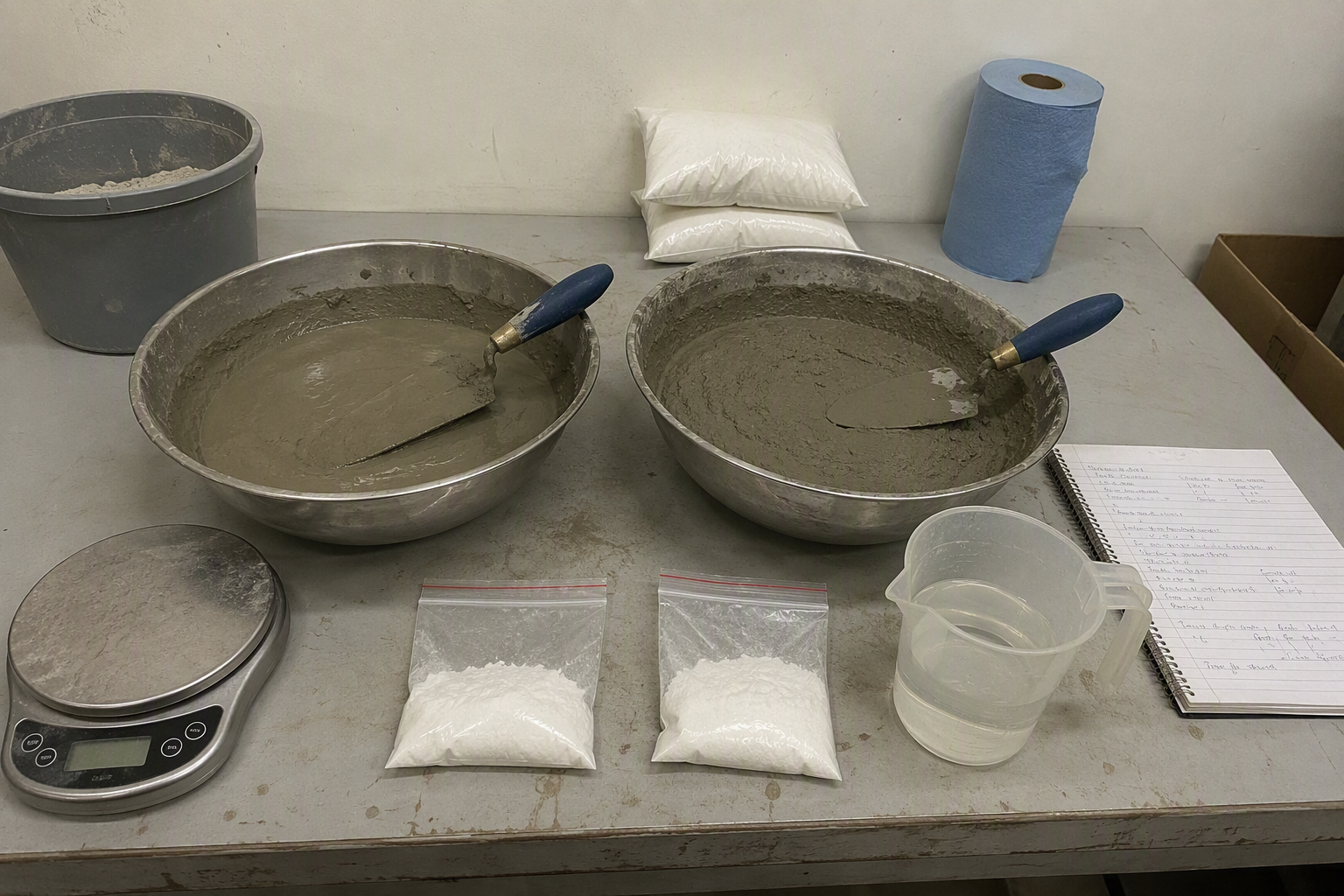
In the overseas inquiries I handle, two customers in “hot climates” can report opposite problems. One faces rapid surface drying in strong wind. Another struggles with slow drying and sagging in humid air. The useful question is therefore not where the mortar will be sold, but what the wet mortar experiences after mixing and application.
Why Must HPMC for Tropical vs Desert Climates Start With Site Conditions?
Climate names are convenient, but they hide the variables that control mortar behavior. If a buyer selects a grade based only on “tropical” or “desert,” the trial may address the wrong failure mechanism. That uncertainty becomes more serious when substrate absorption, wind, and application thickness vary between laboratory and jobsite.
HPMC selection should begin with a site-condition profile covering temperature, relative humidity, airflow, substrate absorption, layer thickness, and target working time. These factors help distinguish rapid water loss from delayed moisture release. I use the profile to define test conditions, not to declare one grade universally suitable for an entire region.
“Hot” Does Not Describe the Main Formulation Risk
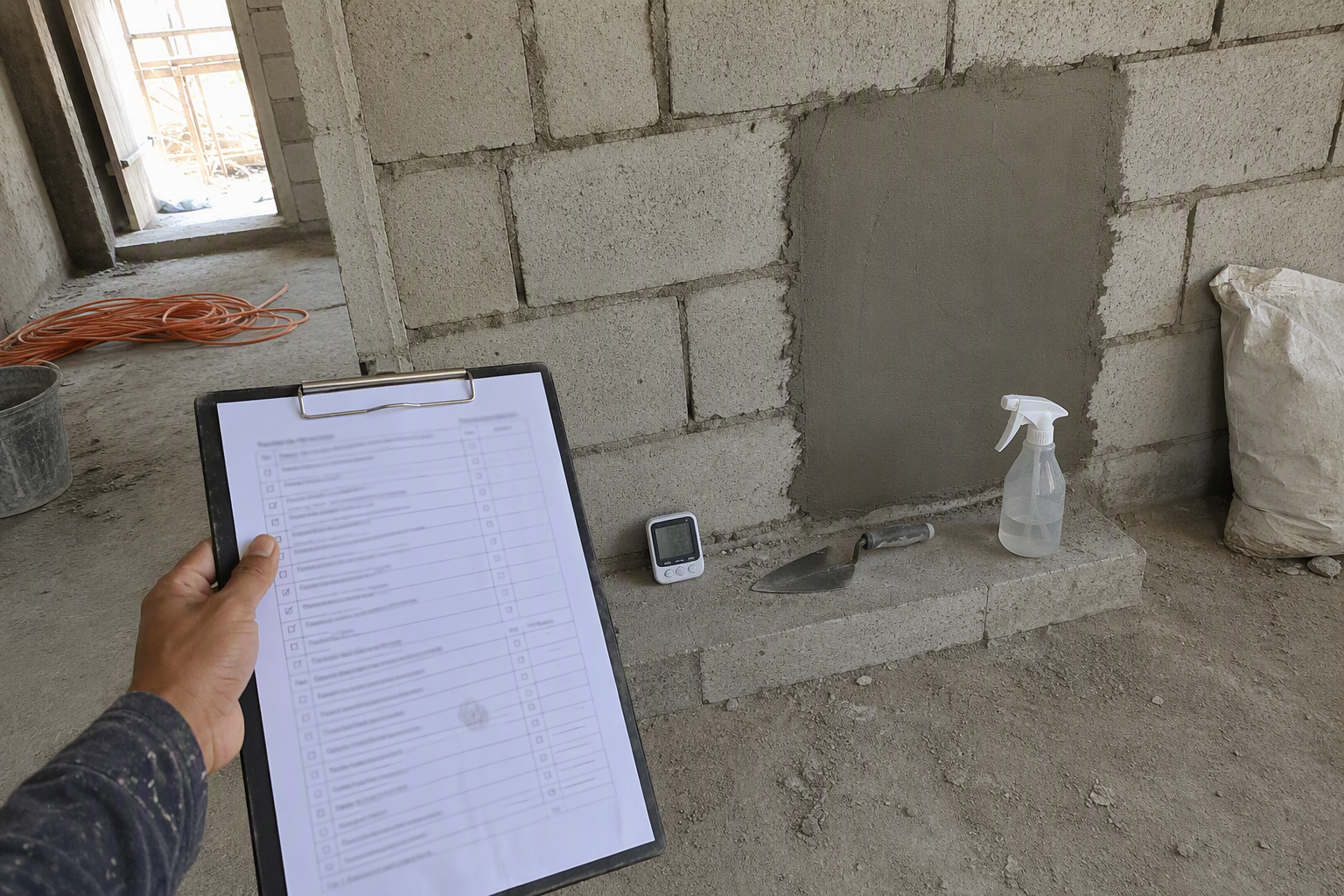
I often receive messages that say only, “We need HPMC for a hot country.” I cannot make a responsible recommendation from that information alone. High temperature may occur with dry air, humid air, strong wind, shade, direct sun, or a highly absorptive block wall. Each combination creates a different formulation risk.
A tropical market may involve high humidity that reduces evaporation from the applied layer. However, the same project may use warm, porous concrete blocks that pull water into the substrate2. A desert market may have low humidity and strong airflow, but indoor applications can behave differently from exposed outdoor work.
The climate label therefore needs to be separated into measurable variables.
| Evaluation factor | Possible tropical-market concern | Possible desert-market concern | Information I request |
|---|---|---|---|
| Temperature | Faster hydration and changing workability | Rapid water loss and accelerated skinning | Mixing, application, and substrate temperatures |
| Relative humidity | Slower drying or prolonged softness | Faster evaporation | Typical application range and seasonal variation |
| Airflow | Localized skinning near openings or fans | Severe exposed-surface drying | Indoor/outdoor use and wind exposure |
| Substrate | Variable absorption after rain or storage | Very dry, absorptive masonry | Substrate type and preconditioning |
| Application thickness | Slow internal drying in thicker layers | Thin layers losing water quickly | Minimum and maximum wet thickness |
| Working window | Need balanced slip and drying | Need adequate wetting and open time | Pot life, open time, and adjustment-time targets |
The Same Weather Can Produce Different Symptoms
Substrate condition can be as important as ambient humidity. A dry cement board, aerated concrete block, or old render may remove water from the mortar before the surface appears visibly dry. By contrast, a low-absorption tile or dense substrate can leave more water inside the mortar layer.
Application geometry also matters. A thin tile-adhesive rib has a large exposed area relative to its volume3. A thicker plaster layer behaves differently because it contains more water and has a longer internal path for moisture movement.
I ask buyers to document the actual symptoms:
- Does the adhesive form a skin before the tile is placed?
- Does the wet mortar lose trowelability inside the bucket?
- Does the applied ridge collapse or remain stable?
- Does the product feel sticky but fail to wet the tile?
- Does a putty or plaster remain soft longer than expected?
- Does the problem occur only on one substrate?
- Does the failure appear indoors, outdoors, or near strong airflow?
These observations turn a vague climate request into testable hypotheses. They do not prove the cause by themselves, but they help us choose a more useful trial direction.
How Do Tropical and Desert Conditions Change HPMC Formulation Risks?
Tropical and desert conditions can expose opposite weaknesses in the same dry-mix product. A formulation designed only to resist rapid water loss may become too slow or heavy under humid conditions. A mix optimized for smooth application in humidity may skin too quickly when dry wind and an absorptive substrate act together.
In tropical conditions, formulators often need to examine drying rate, sag, consistency, and extended moisture exposure. In desert conditions, they often focus on premature water loss, wetting, skinning, and usable working time. These are evaluation priorities rather than fixed rules because the complete binder-additive system controls the final result.
Typical Tropical-Climate Questions
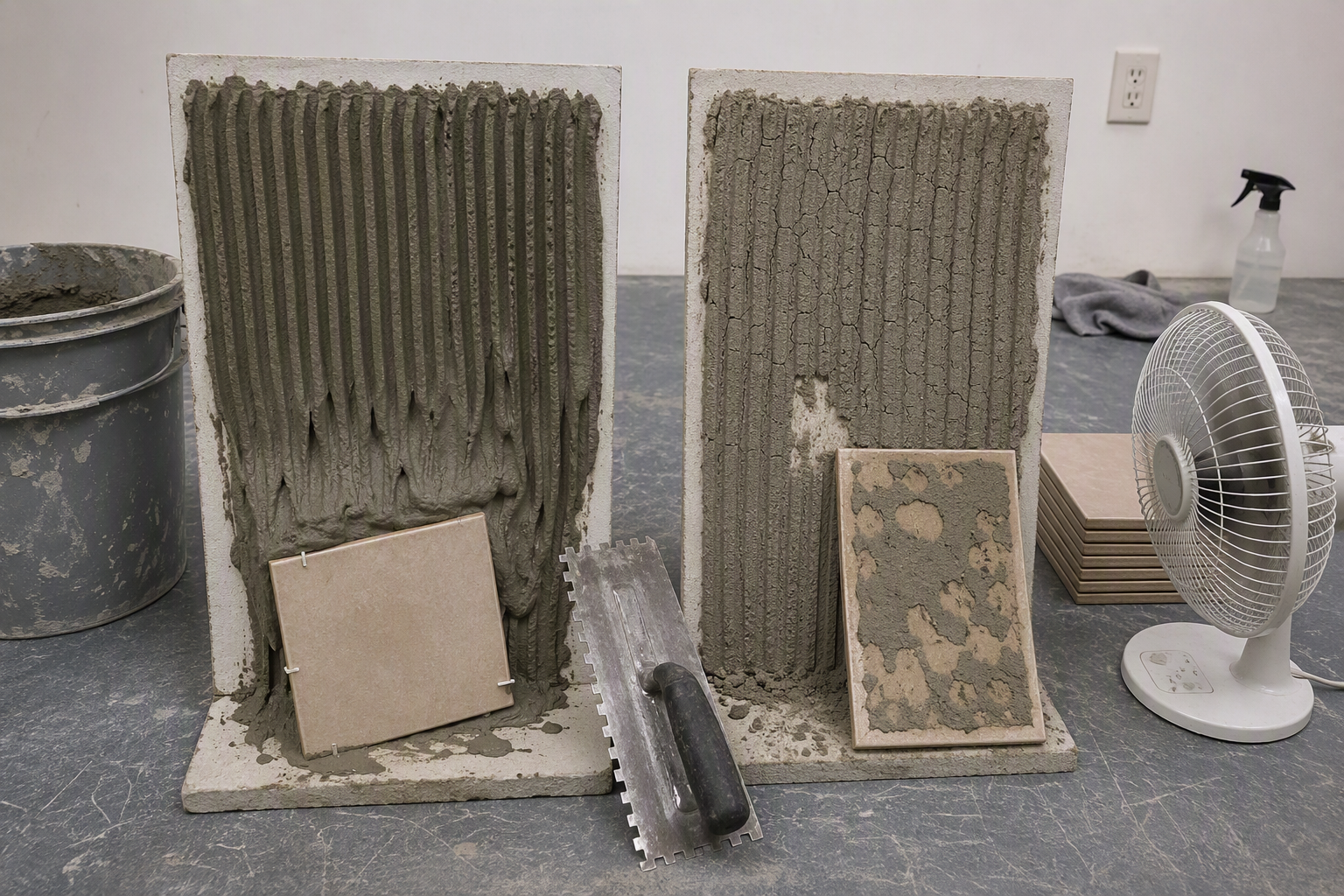
High humidity can reduce the evaporation potential around an applied mortar. That may support a longer wet state, but it can also contribute to slower surface drying. Thick application, low-absorption substrates, low ventilation, or high water demand may increase that concern.
For tile adhesive, buyers may need to balance:
- Open time against acceptable setting and drying behavior
- Sag resistance against trowelability and tile wetting
- Water retention against the complete binder reaction and moisture-release profile
- High viscosity against mixing, pumping, and spreading requirements
- RDP level against flexibility, tack, and drying behavior
For wall putty or gypsum-based products, humidity can create different concerns. A product may remain wet longer, feel sticky during finishing, or show inconsistent sanding time. Those symptoms should not automatically be blamed on HPMC. Binder chemistry, filler grading, water addition, starch ether, retarder, and application thickness may also contribute.
Typical Desert-Climate Questions
Dry air and airflow can increase exposed-surface water loss4. A hot, absorptive substrate can add another route for moisture removal. The combined effect may appear as rapid skin formation, reduced wetting transfer, short adjustment time, or inconsistent adhesion development.
However, I avoid promising that a higher-viscosity grade will solve these issues. Viscosity describes one important characteristic under a defined test method5. It does not independently establish water retention, open time, dissolution behavior, or compatibility inside a customer’s formulation.
| Observed symptom | Possible variables to investigate | Useful comparison |
|---|---|---|
| Rapid skinning | Airflow, water demand, substrate absorption, cellulose ether type | Candidate grades at equal dosage |
| Short open time | Surface drying, binder demand, thin application | Open-time test at staged tile-placement intervals |
| Poor wetting | Rheology, ridge stability, tile timing, water level | Transfer area after controlled placement |
| Sagging | Yield behavior, water addition, RDP, aggregate grading | Vertical slip test at fixed layer thickness |
| Delayed drying | Humidity, thickness, binder, excess water | Mass loss and finishing time under controlled conditions |
| Bucket thickening | Dissolution, temperature, additive interaction | Consistency measurements at set time intervals |
I treat each symptom as the start of an investigation. Technical literature can explain likely mechanisms, but literature-based reasoning does not replace field validation. Buyers should use recognized test methods where applicable and engage a qualified formulation specialist or testing laboratory for application-specific performance decisions.
Why Is Viscosity Not Enough When Choosing HPMC for Tropical vs Desert Climates?
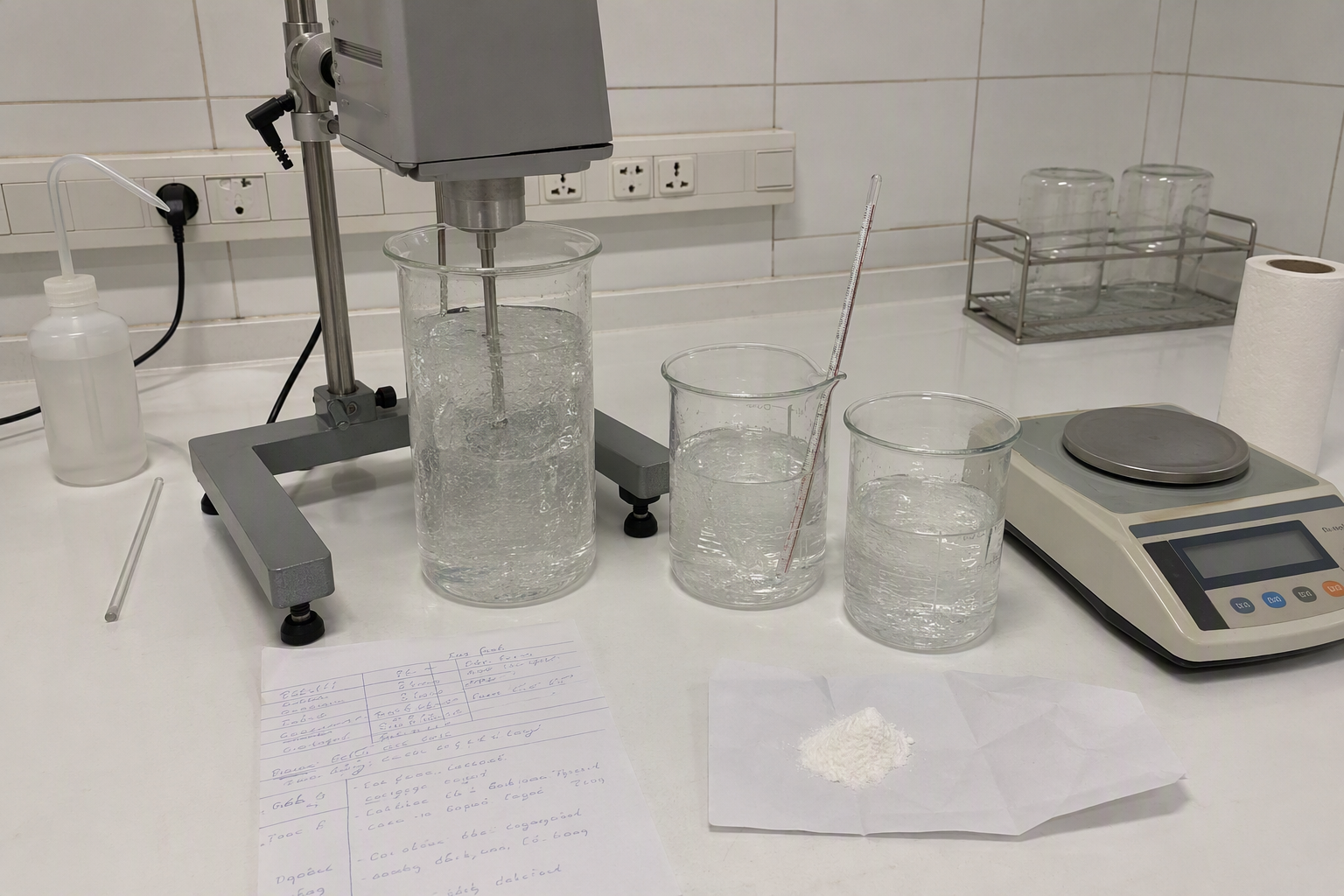
Viscosity is easy to compare on a technical data sheet, so buyers often use it as a shortcut. That shortcut can fail because test concentration, temperature, instrument, spindle, and preparation method affect the reported value. Two products with similar labels may behave differently in a working mortar.
A suitable HPMC grade must provide a workable balance of water retention, wetting, consistency, application feel, sag control, and compatibility. Higher measured viscosity does not automatically mean longer open time or better climate resistance. I compare viscosity only after confirming the test method and understanding the buyer’s full formulation.
Compare Test Methods Before Comparing Numbers
A viscosity figure without a method is incomplete procurement information. Buyers should request the measurement conditions and confirm that supplier samples are being compared on the same basis.
The comparison should document:
- Solution concentration
- Test temperature
- Instrument and spindle
- Rotation speed
- Hydration and preparation procedure
- Whether the value is a target, range, or typical result
- Batch identification and test date
A nominal 100,000 mPa·s product from one supplier may not be directly comparable with a similarly named product from another supplier if their methods differ. I therefore recommend using consistent internal testing before judging whether a sample is higher, lower, or equivalent in viscosity.
Evaluate the Mortar, Not Only the Polymer Solution
Mortar performance depends on interactions. Cement type, gypsum source, supplementary binders, filler mineralogy, aggregate grading, RDP, starch ether, defoamer, retarder, and water dosage can all alter the result6.
For example, increasing cellulose ether dosage may change consistency and water demand7. That change can influence spreading, wetting, entrained air, and drying. If the operator then adds more water to recover workability, the test no longer isolates the HPMC effect.
I prefer a controlled approach:
- Keep the base binder and aggregate lots constant.
- Record water addition by mass.
- Compare candidate grades at the same dosage first.
- Compare dosage levels only after the grade comparison.
- Measure fresh consistency at fixed time intervals.
- Apply the same layer thickness with the same tool.
- Condition substrates by a documented procedure.
- Record temperature, humidity, and airflow.
- Photograph wetting transfer and surface condition.
- Repeat the most promising trial before making a purchasing decision.
Water Retention Is Important but Not Sufficient
In our factory context, we manufacture construction-grade HPMC and test each batch for viscosity, water retention, moisture, and ash content. Our supplied business information states water retention above 95% for construction-grade HPMC. Buyers should still verify the applicable test method, sample specification, batch certificate, and relevance to their own mortar.
A laboratory water-retention result does not guarantee open time on every jobsite8. The field formulation introduces more variables than a single material test captures. I use laboratory data to screen consistency and reduce risk. I do not treat it as proof of performance in a tropical or desert application that has not been locally tested.
How Should Buyers Test HPMC for Tropical vs Desert Climates?
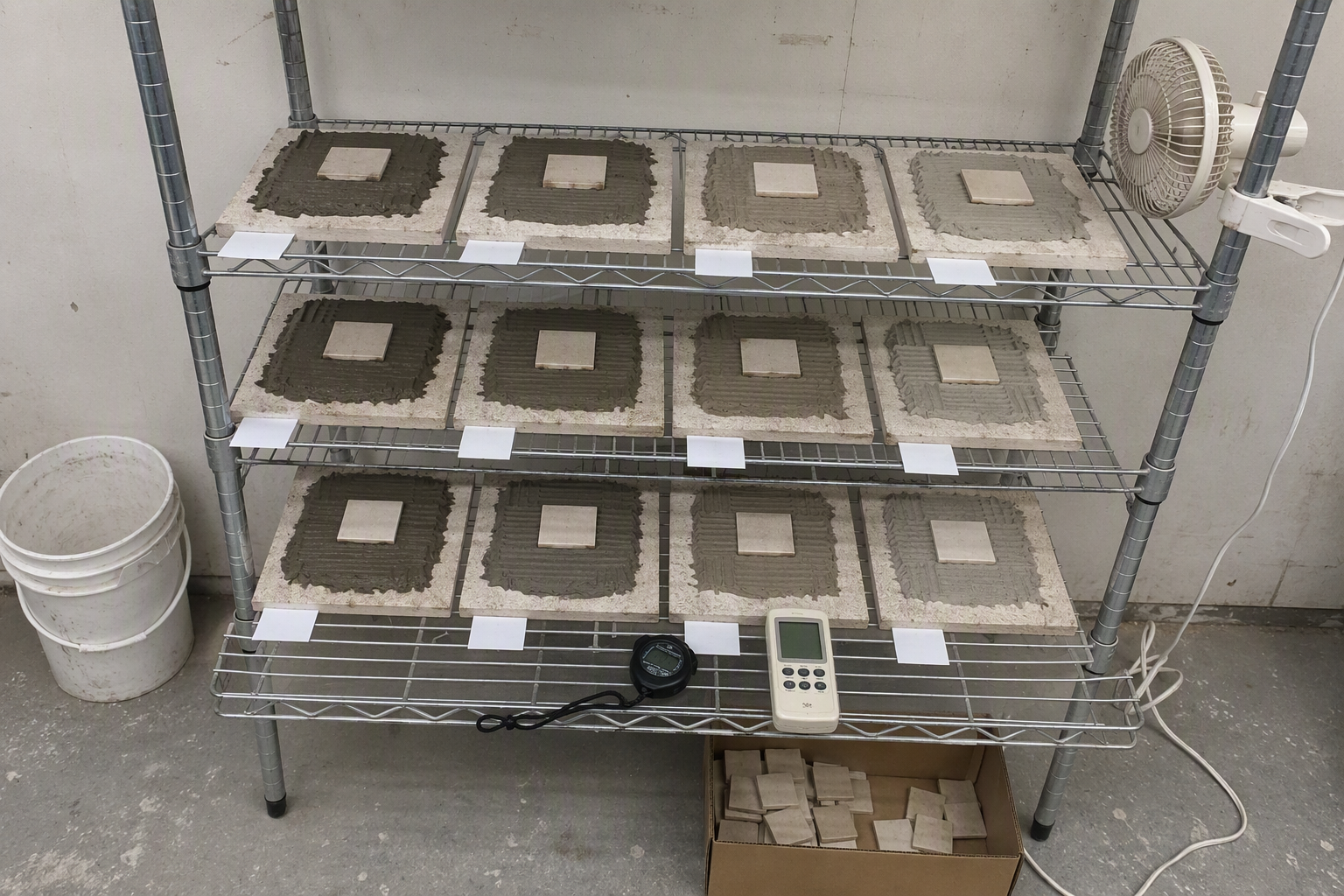
A single room-temperature test can hide climate-related failure. A sample may spread well in the laboratory but lose water quickly on a warm, dry substrate. Another sample may show good open time yet dry too slowly in a humid, thick-layer application. Buyers need a controlled trial matrix that reproduces important risks.
I recommend testing HPMC candidates across representative combinations of temperature, humidity, airflow, substrate condition, and application thickness. The buyer should keep the base formulation controlled and change one variable at a time. Final settings must reflect local conditions and applicable standards rather than universal climate thresholds.
Build the Trial Around Symptoms
The first test plan should be small enough to interpret. Testing too many grades, dosages, and additive combinations at once can produce data without a clear conclusion.
A practical screening sequence can include:
- Reference formulation: Use the current commercial formula as the control.
- Equal-dosage grade comparison: Replace only the HPMC grade.
- Dosage refinement: Test a limited dosage range for the strongest candidates.
- Climate simulation: Adjust temperature, humidity, airflow, and substrate conditioning.
- Compatibility check: Review RDP and other additive interactions.
- Local validation: Run pilot production and application trials before bulk purchase.
The exact environmental set points should come from the buyer’s target market, internal history, applicable standards, or qualified laboratory guidance. I do not apply one unsupported “tropical temperature” or “desert humidity” to every project.
Example Trial Matrix
The following matrix shows how I structure variables. It does not prescribe universal test conditions.
| Trial factor | Control condition | Tropical-risk simulation | Desert-risk simulation |
|---|---|---|---|
| HPMC | Current grade and dosage | Candidate A/B at controlled dosage | Candidate A/B at controlled dosage |
| Temperature | Buyer’s standard laboratory condition | Representative warm-site condition | Representative hot-site condition |
| Humidity | Standard controlled condition | Locally relevant higher humidity | Locally relevant lower humidity |
| Airflow | Minimal controlled airflow | Indoor ventilation or site airflow | Stronger representative airflow |
| Substrate | Standard reference board | Damp-sensitive or low-absorption substrate | Dry, absorptive substrate |
| Thickness | Standard application layer | Include thicker practical layer | Include thin exposed layer |
| Observation | Initial consistency | Drying, sag, finishing behavior | Skinning, wetting, open time |
Each condition should have a documented acceptance criterion. “Feels good” is useful operator feedback, but it is not enough for supplier approval.
Useful measurements may include:
- Mixing water required for target consistency
- Initial and time-dependent consistency
- Pot life under the chosen procedure
- Open time at staged intervals
- Tile wetting or transfer area
- Vertical slip or sag
- Surface skin formation
- Drying or finishing time
- Adhesion after defined curing conditions
- Repeatability across multiple mixes
Testing methods should follow relevant local or international standards where they apply. A qualified laboratory or formulation professional should review safety-critical and performance-critical applications.
How Can HPMC Be Adjusted Without Destabilizing the Full Formulation?
HPMC never works alone in tile adhesive, mortar, putty, or plaster. If a buyer changes the grade and then changes water, RDP, aggregate, and binder at the same time, the final result becomes difficult to explain. A successful laboratory adjustment may also fail during plant scale-up.
I recommend changing one main factor at a time while monitoring water demand and fresh-mortar behavior. Buyers should then test interactions with the binder, aggregate, RDP, and secondary additives. This approach does not guarantee success, but it makes the formulation response easier to interpret and reproduce.
Treat Water Addition as a Test Variable
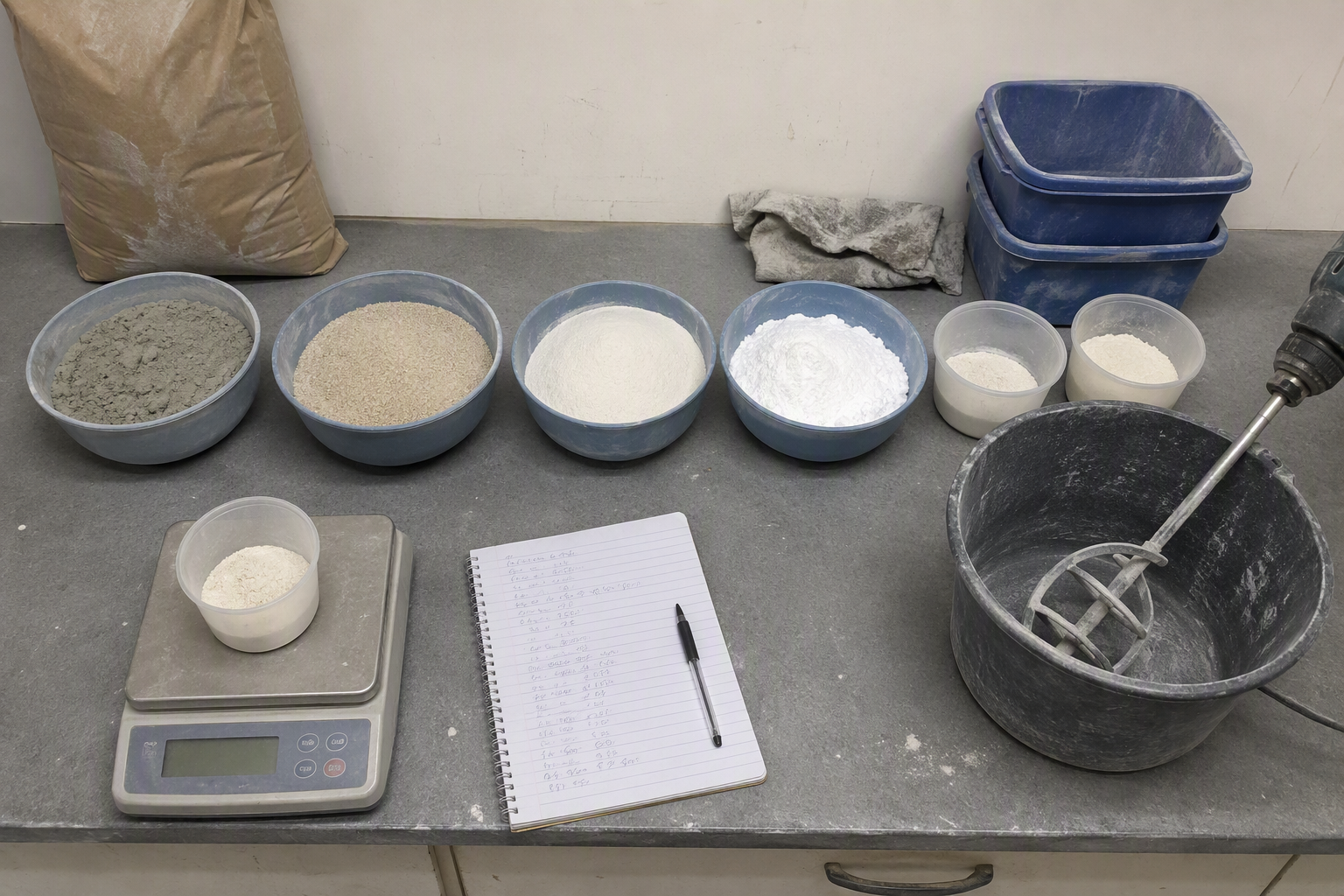
Operators sometimes adjust water by eye until every sample feels similar. That practice can hide important differences between HPMC candidates. A grade that appears easier to spread may simply have received more water.
I ask customers to record:
- Dry-mix batch mass
- Mixing-water mass
- Mixing speed and duration
- Resting and remixing time
- Ambient and water temperatures
- Consistency at defined intervals
- Operator comments using consistent terms
Both fixed-water and fixed-consistency comparisons can be useful, but they answer different questions. A fixed-water test shows how the additive changes rheology under equal water addition. A fixed-consistency test shows how much water is needed to reach a practical application state. Buyers should label the two approaches clearly.
Check RDP and Other Additive Interactions
RDP can affect flexibility, adhesion, cohesion, and application behavior9. Starch ether may influence sag and workability10. Retarders, accelerators, air-entraining agents, and defoamers can also change the fresh and cured system.
If a desert-market tile adhesive shows weak transfer after skinning, the trial should not assume that HPMC alone is responsible. The team should also review:
- RDP type and dosage
- Cement characteristics
- Aggregate grading
- Tile placement delay
- Notch size and ridge geometry
- Substrate absorption
- Mixing and maturation procedure
- Actual water-to-binder ratio
If a humid-market putty dries slowly or sags, the team should examine application thickness, ventilation, filler packing, binder level, water addition, and secondary rheology modifiers.
I view HPMC selection as one part of formulation risk management, not as a substitute for diagnosing the whole system.
Plan for Scale-Up and Supplier Qualification
A promising hand-mix trial should progress to a pilot batch before commercial approval. Plant mixing intensity, charging order, raw-material variation, storage, packaging, and transport can change product behavior11.
During supplier evaluation, I suggest that buyers request:
- Technical data sheet with test methods
- Current batch certificate of analysis
- Safety data sheet
- Sample batch identification
- Manufacturing and quality-control information
- Batch-to-batch specification ranges
- Packaging and storage guidance
- Production lead time and minimum order details
- Relevant compliance documents
Buyers should independently verify certifications and compliance documents with the issuing body or through an appropriate professional. Documents support procurement review, but they do not replace formulation testing.
At Jinghong Chemical, we can provide free samples, viscosity-grade suggestions, formulation troubleshooting, OEM support, and factory-direct bulk quotations. I base initial sample direction on the customer’s formula and target conditions. I still recommend local validation before the customer approves a commercial order.
Frequently Asked Questions
Is higher-viscosity HPMC always better for desert climates?
No. Higher viscosity does not automatically establish stronger water retention, longer open time, or better wetting. The result depends on the test method, dosage, binder system, water demand, substrate, airflow, and application thickness. I recommend comparing candidate grades at controlled water levels under representative dry-condition tests.
Should tropical-market mortar use a lower HPMC dosage?
Not automatically. High humidity, temperature, substrate absorption, product type, and layer thickness can pull the formulation in different directions. A lower dosage may change consistency, sag, water retention, or workability. Buyers should define the actual symptom and verify dosage changes in controlled trials.
Can one HPMC grade serve several countries?
Yes, one grade may work across several markets if their formulations and application conditions fall within a validated operating range. However, buyers should not assume that one grade can serve every climate, substrate, and product. I recommend keeping documented regional or application-specific validation data.
What information should I provide before requesting an HPMC sample?
I suggest providing the product type, current formula, binder system, existing HPMC grade and dosage, water addition, target viscosity method, substrate, application thickness, climate conditions, main failure symptom, and required working window. This information allows a supplier to suggest a more relevant sample set.
Is a laboratory result enough to approve a bulk HPMC order?
A laboratory result is useful for screening, but it does not establish field reliability by itself. Buyers should repeat the trial, test representative environmental and substrate conditions, complete a pilot batch, and obtain local application feedback. Critical performance should be verified using applicable standards and qualified professional evaluation.
Conclusion
Choosing HPMC for tropical vs desert climates requires more than matching a viscosity label to a country. I recommend converting climate descriptions into temperature, humidity, airflow, substrate, thickness, and working-window requirements. Buyers should then test HPMC inside the full binder-additive system, compare controlled samples, review supplier documents, and verify performance locally before scaling up.
For sample recommendations and formulation discussions, contact Jinghong Chemical at hpmc@jinghonghpmc.com or WhatsApp +86 157 3315 6958. Please include your current formulation, application conditions, and main performance problem so we can propose a focused trial plan.
"How long does it take concrete to cure properly » southernwv.edu", https://staging.southernwv.edu/how-long-does-it-take-concrete-to-cure/. Environmental temperature, relative humidity, air movement, substrate suction, and specimen geometry are recognized influences on water transport and early-age behavior in cement-based materials. Evidence role: general_support; source type: research. Supports: Environmental exposure, substrate condition, and application geometry influence water loss, workability, and curing of cement-based mortars.. Scope note: Such sources support the relevance of these variables generally; they do not identify a universally optimal HPMC grade or dosage. ↩
"Experimental characterization of moisture transport in brick masonry ...", https://www.academia.edu/144770987/Experimental_characterization_of_moisture_transport_in_brick_masonry_with_natural_hydraulic_lime_mortar. Studies of masonry construction describe capillary suction by porous units as a mechanism that removes water from fresh mortar and can affect the mortar–substrate interface. Evidence role: mechanism; source type: paper. Supports: Porous masonry units can draw water from fresh mortar through capillary suction.. Scope note: The extent of suction depends on unit porosity, initial moisture condition, mortar composition, and contact conditions. ↩
""Quantifying moisture transport in cementitious materials using ...", https://docs.lib.purdue.edu/open_access_theses/572/. Moisture transport in cementitious layers depends on exposed area and transport path length, so thin applications can exhibit drying behavior different from thicker layers. Evidence role: mechanism; source type: research. Supports: Layer thickness and exposed surface area affect moisture transport and drying behavior in cementitious materials.. Scope note: This geometric principle does not by itself predict open time or adhesion for a particular tile-adhesive formulation. ↩
"Guide for Curing Portland Cement Concrete Pavements, II , August ...", https://www.fhwa.dot.gov/publications/research/infrastructure/pavements/pccp/05038/005.cfm. Guidance on fresh cementitious materials identifies low relative humidity and higher wind speed as conditions that increase surface evaporation and the risk of rapid moisture loss. Evidence role: mechanism; source type: institution. Supports: Low relative humidity and increased air velocity increase evaporation potential from fresh cementitious surfaces.. Scope note: Evaporation potential is not a direct measurement of skin formation, which also depends on formulation, substrate, and application conditions. ↩
"Influence of pH Modifiers and HPMC Viscosity Grades ... - NIH", https://pmc.ncbi.nlm.nih.gov/articles/PMC3364405/. A viscosity result is interpretable only with its stated measurement method, including solution preparation, temperature, instrument configuration, and shear conditions. Evidence role: definition; source type: institution. Supports: Viscosity values obtained by rotational viscometry depend on specified sample preparation, temperature, instrument geometry, and operating conditions.. Scope note: Method standardization improves comparability of polymer-solution measurements but does not establish equivalent performance in mortar. ↩
"Effects of Polymers on Cement Hydration and Properties of ...", https://pmc.ncbi.nlm.nih.gov/articles/PMC10795056/. Research on modified cement mortars shows that rheology, water retention, adhesion, and strength reflect interactions among binders, aggregates, polymer additives, chemical admixtures, and water content. Evidence role: general_support; source type: paper. Supports: Fresh and hardened mortar properties arise from interacting effects of binder composition, aggregate and filler characteristics, admixtures, polymer modifiers, and water content.. Scope note: The relative importance and direction of each interaction are formulation-specific. ↩
"Water Retention Mechanism of HPMC in Cement Mortar - PMC - NIH", https://pmc.ncbi.nlm.nih.gov/articles/PMC7372461/. Experimental studies report that cellulose ethers modify fresh-mortar rheology and may change the water amount required to achieve a specified consistency. Evidence role: mechanism; source type: paper. Supports: Cellulose ether type and dosage influence the rheology and water requirement of cement-based mortars.. Scope note: Observed changes vary with cellulose-ether chemistry, dosage, cement, filler system, aggregate, and the consistency test used. ↩
"Effect of Cellulose Ether and Starch Ether on Hydration ... - PMC", https://pmc.ncbi.nlm.nih.gov/articles/PMC9782582/. Standards for cementitious tile adhesives treat open time as a system-level performance property assessed under defined application and tile-placement conditions, rather than as a direct substitute for a material water-retention result. Evidence role: general_support; source type: institution. Supports: Water retention and open time are distinct performance properties evaluated by different test procedures in cementitious adhesive systems.. Scope note: A distinction between tests does not prove that water retention is irrelevant; it indicates that the two measurements are not interchangeable. ↩
"[PDF] Enhancing the Performance of Road Repair Materials with ...", https://docs.lib.purdue.edu/cgi/viewcontent.cgi?article=1779&context=icdcs. Research on polymer-modified cement mortars finds that redispersible polymer powders can affect fresh-state behavior and hardened properties such as adhesion, cohesion, and deformability. Evidence role: general_support; source type: paper. Supports: Redispersible polymer powders modify the microstructure and fresh and hardened properties of cement-based mortars, including adhesion and deformability.. Scope note: Effects depend on polymer chemistry, dosage, cement system, curing conditions, and other additives. ↩
"Effect of Cellulose Ether and Starch Ether on Hydration of Cement ...", https://pmc.ncbi.nlm.nih.gov/articles/PMC9782582/. Studies of dry-mix mortars report that starch ethers can alter fresh-state rheology, with consequential effects on workability and resistance to sag or slip. Evidence role: mechanism; source type: paper. Supports: Starch ethers can modify the rheological behavior of cementitious mortars and thereby affect workability and resistance to deformation.. Scope note: The magnitude of the effect is sensitive to starch-ether type, dosage, cellulose-ether system, and mortar composition. ↩
"[PDF] Portland Cement Concrete Pavement Permeability Performance", https://docs.lib.purdue.edu/cgi/viewcontent.cgi?article=2592&context=jtrp. Research and technical guidance on cementitious dry mixes identify mixing conditions, raw-material variability, and storage moisture exposure as factors that can affect product consistency and subsequent performance. Evidence role: general_support; source type: research. Supports: Mixing procedure, constituent variability, and storage exposure can influence the consistency and performance of cementitious dry-mix products.. Scope note: The effect of packaging and transport depends on the product's moisture protection, handling history, and storage environment. ↩