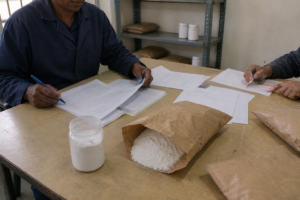
HPMC storage becomes difficult in humid climates because hydroxypropyl methylcellulose powder can absorb moisture during prolonged exposure. That moisture can encourage lumps, reduce powder flow, and complicate production dosing. If teams judge a shipment only by its outer bags, they may overlook hidden exposure. A controlled packaging, transport, storage, and inspection plan reduces this risk.
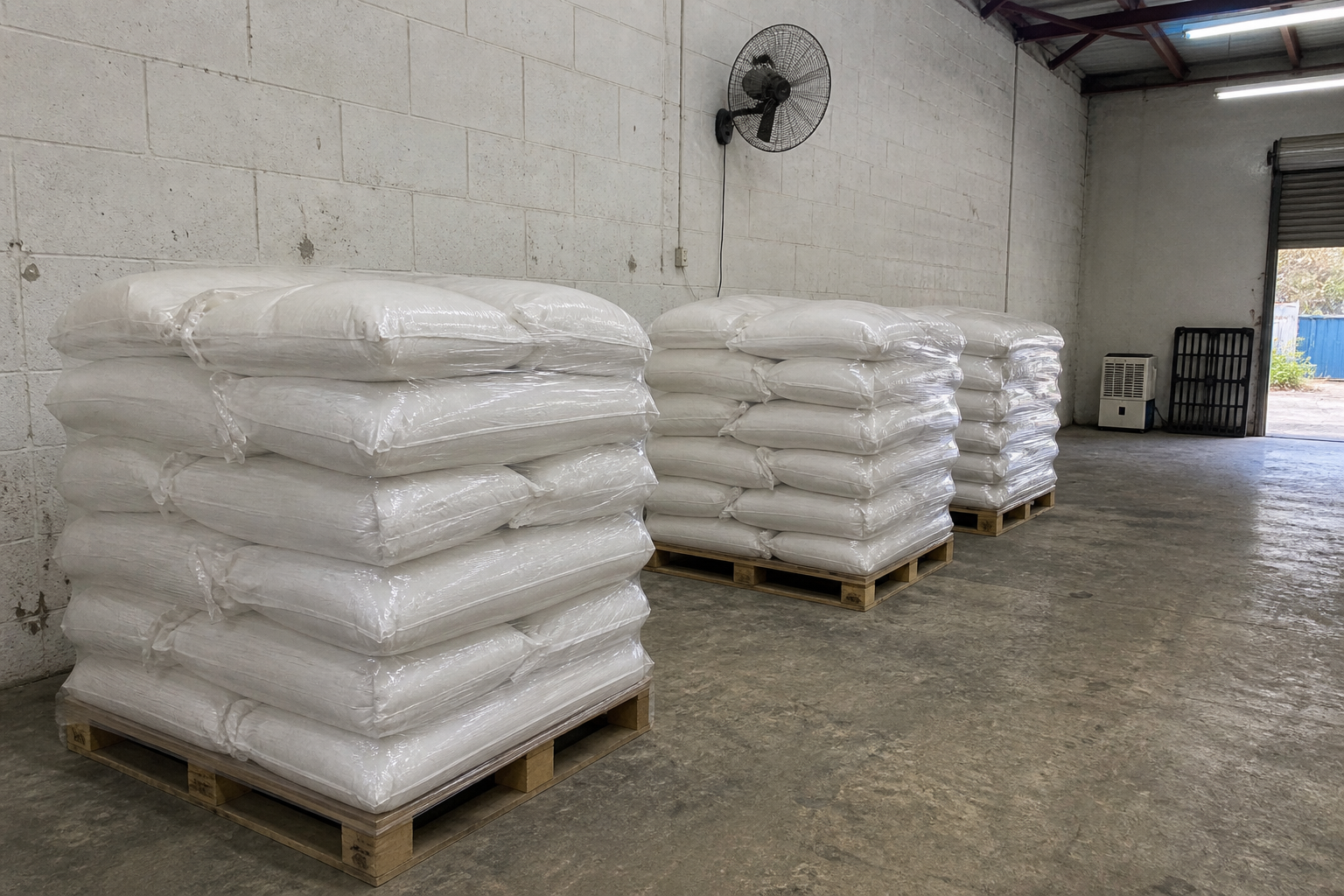
Effective HPMC storage requires sealed moisture-resistant packaging, protection from condensation during transport, and a dry, ventilated warehouse. Bags should remain off the floor and away from walls. After arrival, buyers should inspect packaging, review batch records, sample representative bags, and verify moisture, viscosity, and application performance before releasing a questionable lot.
I approach HPMC storage as an end-to-end moisture-risk decision. In my factory work, I connect moisture testing and powder condition with packaging, container exposure, warehouse handling, and application trials. This broader view helps purchasing and QC teams make evidence-based decisions instead of relying on appearance alone.
Why Does Moisture Cause Caking During HPMC Storage?
Caking can alarm warehouse and production teams, especially when an imported shipment has spent weeks at sea. The visible lumps create concern about viscosity and mortar performance. However, appearance alone cannot show whether the polymer has suffered a meaningful functional change.
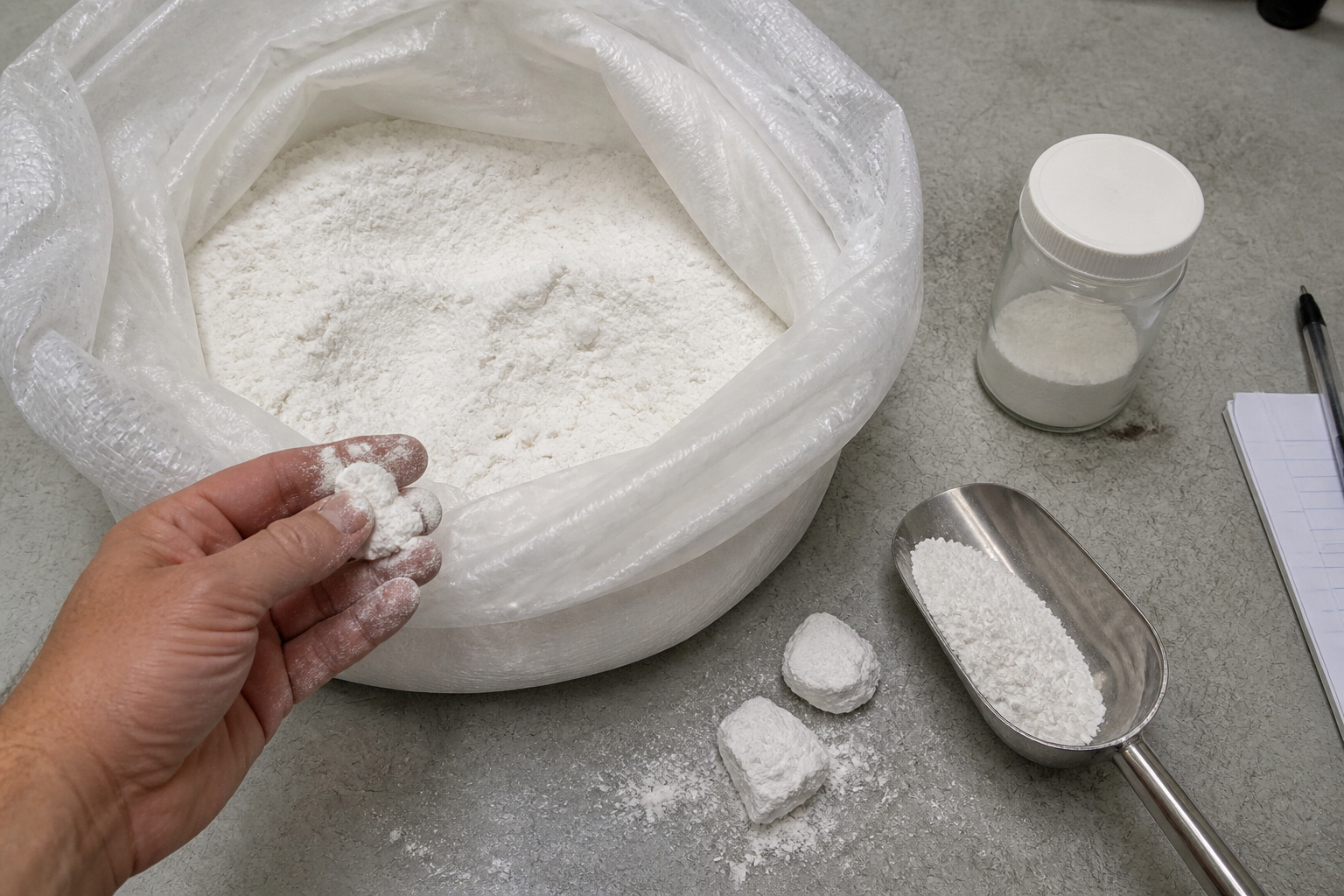
HPMC can absorb moisture during prolonged humid exposure, which encourages particles to stick together and form agglomerates. Light, friable lumps may represent a powder-handling issue, while hard or extensive caking may indicate more serious exposure. I recommend treating caking as a warning that triggers inspection and testing, not as automatic proof of product failure.
How moisture affects the powder
HPMC is a cellulose ether supplied as a fine powder. Like many powdered construction additives, it can take up moisture from humid air when packaging is open, damaged, poorly sealed, or insufficient for the transport environment.
As the powder gains moisture, several physical changes may occur:
- Fine particles may lose free-flowing behavior.
- Small agglomerates may form around localized moisture.
- Powder may adhere to the inside of the liner.
- Dosing and dispersion may become less consistent.
- Hard lumps may obstruct manual or automated feeding equipment.
- Non-representative samples may make QC results misleading.
The severity depends on more than ambient humidity. Exposure duration, temperature cycling, bag-seal quality, liner integrity, stacking pressure, and previous handling can all influence the condition of the powder.
An intact-looking outer bag does not prove that its moisture barrier remained effective.
The woven or paper outer layer usually provides mechanical strength and printed identification. The inner liner often provides the main moisture barrier. A small liner puncture, incomplete seal, or opening around the bag mouth can permit vapor entry even when the outside still looks normal.
Caking does not automatically mean performance failure
I separate physical condition from verified chemical or application performance. This distinction prevents both unnecessary rejection and unsafe release.
| Observation or test | What it can indicate | What it cannot prove by itself |
|---|---|---|
| Loose, free-flowing powder | Good handling condition | Guaranteed application performance |
| Soft lumps that break under light pressure | Mild agglomeration or compaction | Viscosity loss |
| Hard, persistent caking | Potential moisture exposure | Exact damage cause or final usability |
| Elevated moisture result | Moisture uptake or specification concern | Performance failure in every formulation |
| Viscosity outside the agreed range | Possible material or testing issue | Cause without method review |
| Poor application trial | Formulation or raw-material concern | Moisture as the sole cause |
When I investigate a caked lot, I compare it with the agreed product specification and approved reference sample. I also check whether the laboratory used the same viscosity method, solution concentration, water temperature, hydration procedure, and instrument conditions. HPMC viscosity results are method-dependent, so inconsistent testing can create false conclusions.
For a questionable shipment, a sensible evaluation includes:
- Representative sampling from more than one bag and pallet.
- Moisture testing with an agreed method.
- Viscosity retesting under the supplier’s stated conditions.
- Visual and sieve assessment of agglomeration.
- A small application trial in the buyer’s mortar, putty, or gypsum formula.
- Comparison with retained or approved material, where available.
I do not recommend sun-drying or uncontrolled oven-drying followed by direct production use. Those actions may produce uneven treatment, contamination, or misleading test results. A qualified QC team should decide how to evaluate and disposition the material.
Which Packaging Is Best for HPMC Storage and Long Transport?
Packaging buyers often look for one universally “best” bag. That approach can increase cost without removing every risk. It can also leave a shipment under-protected when the selected packaging does not match the route, climate, handling conditions, or acceptable loss exposure.
For HPMC storage, standard bags with sealed inner liners may suit controlled routes and routine shipment conditions. Higher-barrier options, including foil-lined packaging, may be considered for longer or wetter supply chains. I select packaging by comparing barrier performance, seal construction, puncture resistance, handling, transit duration, climate, and cost.
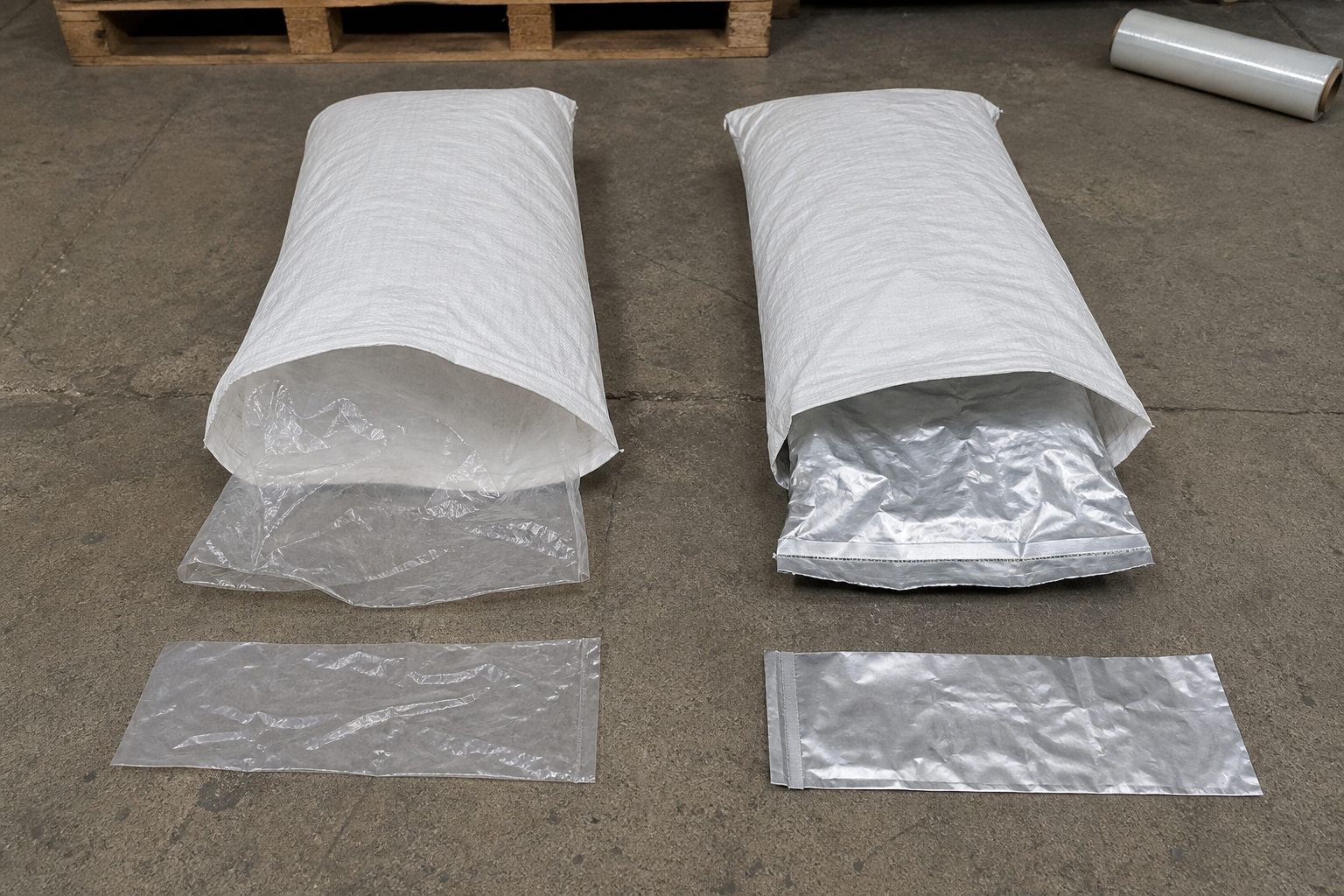
Standard bags with inner liners
A common industrial package uses a durable outer bag with a polyethylene or similar inner liner. The outer layer supports handling, stacking, labeling, and resistance to ordinary abrasion. The inner liner limits contact between HPMC and humid air.
This format can be practical when:
- The liner has a reliable closure or heat seal.
- Transit time is predictable.
- Container and warehouse conditions are reasonably controlled.
- Pallets receive adequate wrapping and protection.
- Handling does not create frequent puncture risks.
- Buyers use the product within the supplier’s documented shelf-life conditions.
However, the term “inner liner” does not define one standard level of protection. Liner material, thickness, seam quality, closure design, and permeability can vary by supplier. Buyers should request the actual packaging specification rather than relying on a general description.
Higher-barrier and foil-lined packaging
A foil-containing barrier can provide stronger resistance to water-vapor transmission than a basic polymer liner when it is correctly designed and sealed. It may be useful for demanding routes, long storage periods, tropical port exposure, or applications where moisture variation carries a high operational cost.
Foil-lined packaging also has limitations:
- Creases or punctures can compromise the barrier.
- Poor seals can negate the benefit of the barrier material.
- Rough handling may damage the inner layer without obvious outer damage.
- Additional packaging can increase material and disposal costs.
- A high-barrier bag cannot prevent damage caused by direct water entry through a major puncture.
- Barrier packaging does not replace container and warehouse controls.
I therefore avoid presenting foil packaging as either always necessary or always sufficient.
A risk-based packaging comparison
| Evaluation factor | Standard inner-liner bag | Higher-barrier or foil-lined option |
|---|---|---|
| Moisture-vapor resistance | Depends on liner material and seal | Often higher, subject to verified construction |
| Mechanical handling | Outer bag provides routine protection | May require added care to avoid barrier puncture |
| Seal sensitivity | High | High |
| Typical cost | Usually lower | Usually higher |
| Long sea routes | Requires route-specific review | May offer added protection |
| Tropical port dwell | Risk depends on exposure and controls | May reduce vapor transmission risk |
| Direct water exposure | Not designed as a complete safeguard | Not automatically waterproof |
| Recycling or disposal | Depends on local system | Multilayer structures may be more difficult |
| Selection basis | Specification and route risk | Specification, route risk, and acceptable loss |
Before I approve packaging for a bulk order, I consider several questions:
- How long will the shipment remain at sea and in ports?
- Will it cross large temperature zones?
- Does the route include a humid or rainy season?
- How many times will the pallets be handled?
- Is container loading performed indoors or during exposed conditions?
- Will the distributor hold stock for an extended period?
- What moisture, seal, and drop-resistance data can the packaging supplier provide?
- What are the consequences if one pallet becomes questionable?
Exact barrier specifications should come from verified packaging documents. Buyers can request information such as liner construction, sealing method, and relevant water-vapor transmission data. A qualified packaging professional should evaluate demanding or unusual routes.
How Can Sea Freight and Warehouse Controls Improve HPMC Storage?
A well-sealed bag can still enter a harsh logistics environment. Sea containers experience temperature changes, humid air, port delays, and repeated handling. If teams focus only on warehouse conditions after arrival, they may ignore the period when much of the moisture risk developed.
I protect HPMC storage by combining suitable packaging with container inspection, pallet isolation, condensation controls, sealed handling, and dry warehouse practices. No single step proves that damage cannot occur. The controls work as a system, and their details should reflect the shipping route, container condition, season, transit duration, and supplier guidance.
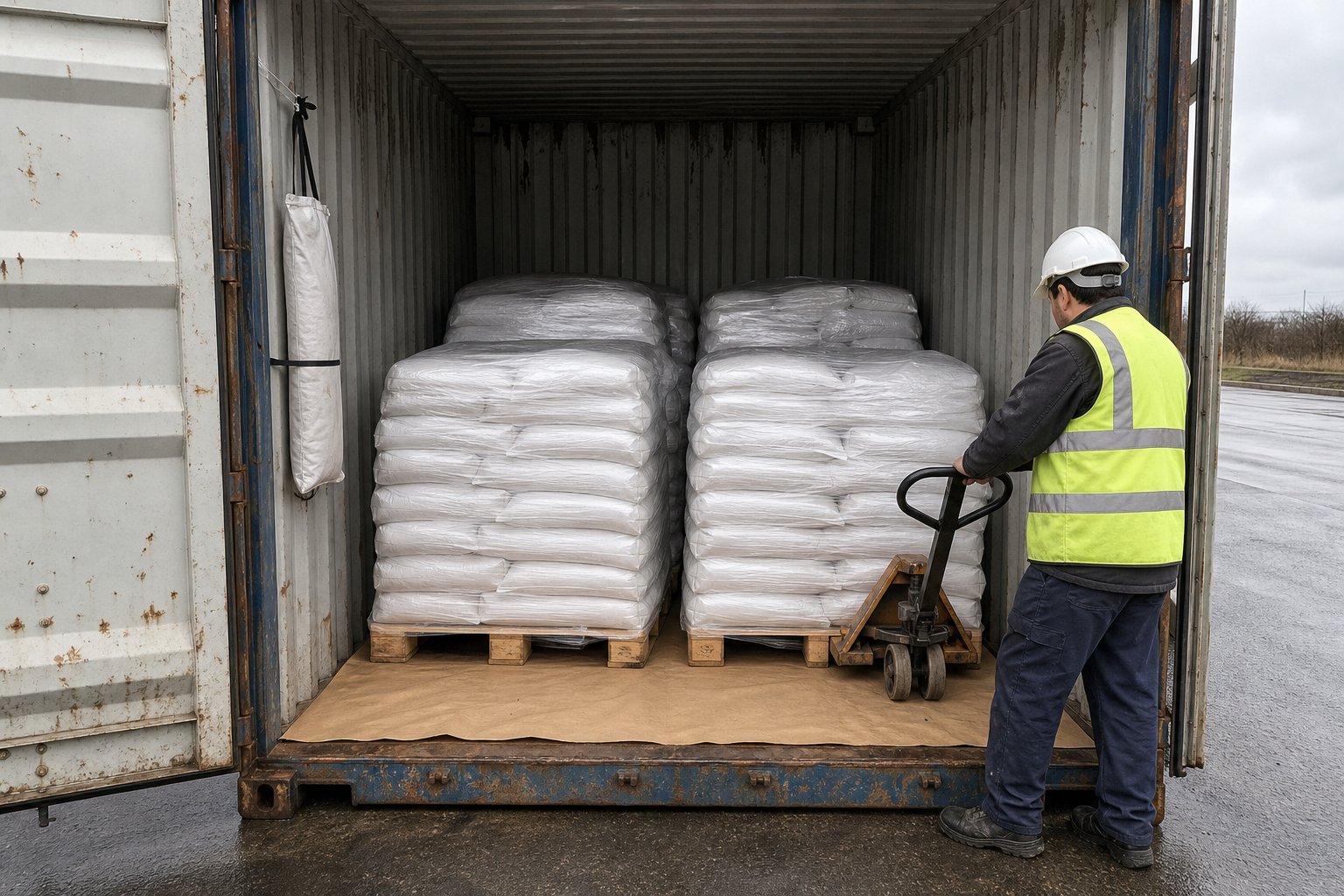
Why sea containers create moisture risk
A closed container does not necessarily maintain stable temperature or humidity. Sun exposure can heat the container during the day, while night conditions or a change in climate zone can cool its surfaces. Temperature cycling may encourage condensation when moist air contacts a sufficiently cool surface.
People often call this phenomenon “container rain.” However, visible droplets are only one warning sign. Moisture may also appear as damp flooring, staining, wet pallet boards, corrosion, odors, or localized bag damage.
When I review a moisture complaint, I consider:
- Container cleanliness and structural condition
- Door-gasket integrity
- Roof, wall, and floor damage
- Evidence of previous water entry
- Cargo moisture from pallets or adjacent goods
- Loading weather
- Transit duration
- Port dwell time
- Route temperature changes
- Pallet wrapping and airflow
- Proximity of bags to walls and floors
- Unloading conditions
- Shipment and inspection records
These factors indicate possible exposure pathways. They do not prove a specific cause without supporting shipment evidence.
Practical sea-freight controls
A loading plan can reduce avoidable risk:
- Inspect the empty container before loading.
- Reject or document containers with holes, damaged seals, standing water, strong odors, or visibly damp flooring.
- Use dry, suitable pallets.
- Prevent bags from contacting the container floor or walls directly.
- Use pallet wrapping, covers, slip sheets, or other protection appropriate to the route.
- Protect bags from sharp pallet edges and forklift damage.
- Keep the package seal closed throughout handling.
- Record the container number, seal number, loading date, and visible condition.
- Photograph the empty container and loaded cargo when practical.
- Avoid loading during rain or in exposed wet areas.
- Follow verified stowage and weight-distribution requirements.
Container desiccants can be one part of a control plan, but I do not provide a universal quantity. Desiccant type and loading depend on container size, route, transit time, cargo moisture, climate, packaging barrier, and the supplier’s calculations. Too little may be ineffective, while careless placement can create contact or leakage problems.
Buyers should verify the desiccant supplier’s instructions and request route-specific recommendations. The same caution applies to target humidity limits. A number that works in one controlled warehouse may not be a validated limit for every HPMC grade, package, or journey.
Warehouse practices after arrival
Once HPMC enters the warehouse, I recommend the following controls:
- Keep bags sealed. Staff should open bags only when production or sampling requires it.
- Store pallets off the floor. Pallets or suitable racking reduce exposure to floor moisture and cleaning water.
- Leave space from walls. Exterior walls may become damp or experience temperature changes.
- Use a dry, ventilated area. Teams should prevent rain entry and uncontrolled humid-air exposure.
- Avoid heat and ignition sources. Staff should follow the supplier’s safety data sheet and local rules.
- Protect bags from puncture. Forklift contact and sharp pallet edges can defeat the moisture barrier.
- Control partial bags. Operators should reseal opened liners promptly and identify the opening date.
- Rotate inventory. A first-in, first-out system helps prevent unnecessary aging.
- Maintain lot identity. Warehouse staff should not mix batch labels or obscure traceability.
- Follow documented shelf life. Buyers should verify the supplier’s stated period and conditions rather than assume that better packaging automatically extends shelf life.
I have found that simple warehouse discipline often matters as much as an expensive packaging upgrade. A foil barrier cannot compensate for a bag left open beside a humid production area.
What HPMC Storage Checks Should Buyers Complete on Arrival?
Receiving teams often face pressure to unload quickly and release raw material to production. That speed can hide useful evidence. If staff remove wrapping, discard damaged packaging, or mix pallets before inspection, QC may lose the information needed for a sound release decision.
An HPMC receiving inspection should cover the container, condensation evidence, pallet condition, bag seals, batch records, caking severity, and representative samples. If staff find a concern, QC should quarantine the affected lot, test moisture and viscosity, and conduct a small application trial before approving production use.
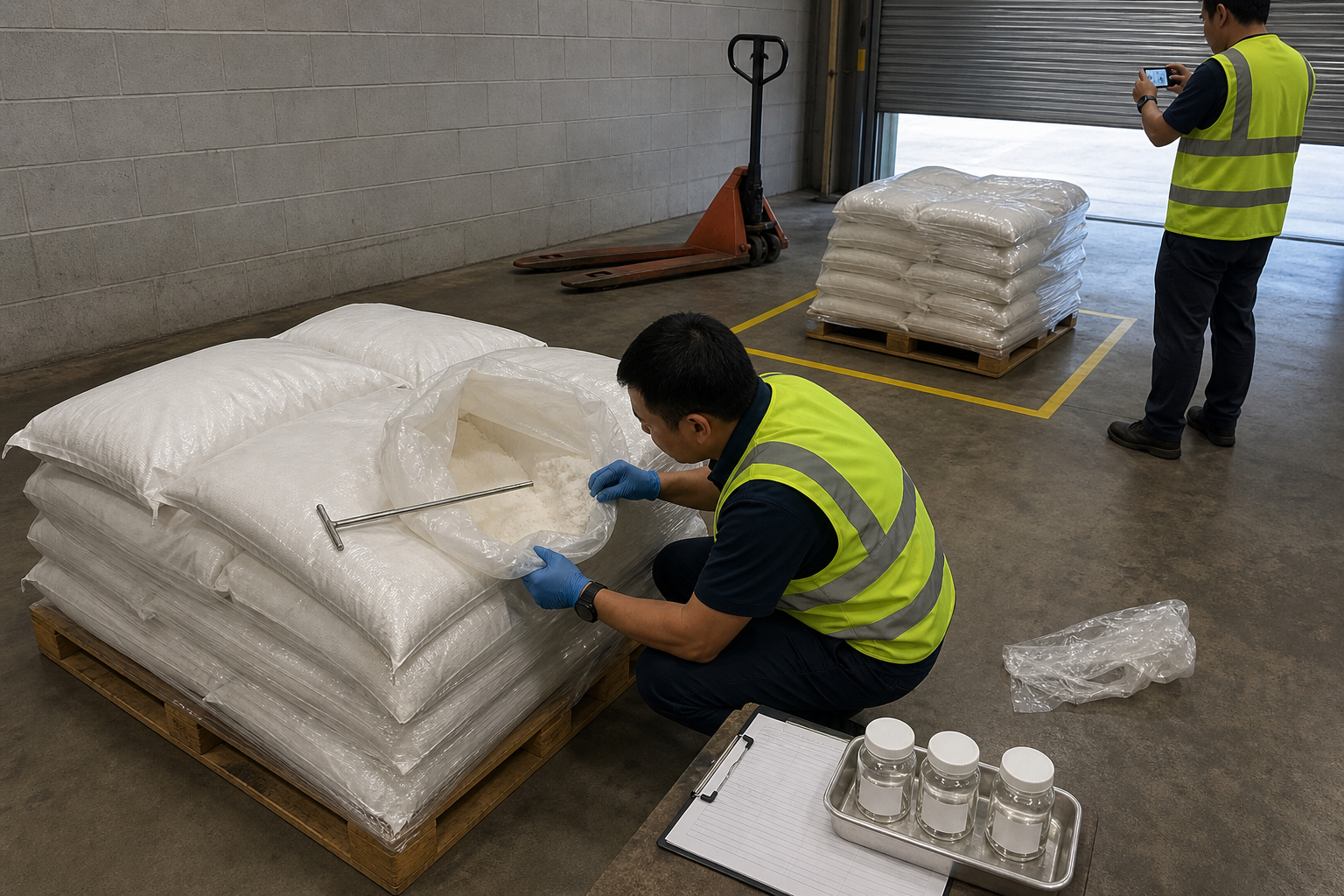
Before unloading the container
The receiving team should document conditions before changing them. Photographs should show the doors, seal, cargo position, visible wall and floor condition, pallet wrapping, and any damaged areas.
My recommended first-stage checks include:
- Does the container number match the shipping documents?
- Is the security seal intact and correctly numbered?
- Is there visible water, condensation, staining, corrosion, or damp flooring?
- Are there unusual odors?
- Have pallets shifted or collapsed?
- Are bags touching wet surfaces?
- Is pallet wrap torn or visibly wet?
- Are there signs of roof, wall, door, or gasket damage?
Staff should follow site safety rules when opening and entering containers. A qualified logistics or safety professional should address unsafe cargo movement, air-quality concerns, or structural damage.
Bag, pallet, and document inspection
After unloading, the team should separate affected pallets and avoid mixing them with apparently normal stock.
| Check area | What to inspect | Suggested action if abnormal |
|---|---|---|
| Outer bag | Tears, stains, abrasion, wet marks | Photograph and segregate |
| Inner liner | Seal condition, puncture, opening | Hold affected bags for QC |
| Pallet | Dampness, mold, broken boards | Isolate and document |
| Labels | Product name, grade, lot, date | Reconcile with documents |
| Powder condition | Flow, soft lumps, hard caking | Grade severity and sample |
| Quantity | Missing or damaged bags | Record against shipment |
| Batch documents | COA and agreed specifications | Verify identity and limits |
| Container | Water or condensation evidence | Retain photos and records |
A certificate of analysis is useful, but buyers should treat it as a document to verify. The product name, batch number, manufacturing date, test methods, and specification limits should match the purchase agreement and bag labels.
Representative sampling and release testing
Sampling only one convenient bag can miss localized exposure. Moisture may affect bags near container walls, doors, floors, or damaged pallet wrap more than bags in the center.
A sampling plan should consider:
- The number of pallets and batches
- Visible damage patterns
- Container position
- Top, middle, and lower bag locations
- Normal and suspect areas
- The buyer’s quality procedure
- Supplier guidance and applicable sampling standards
In our laboratory, we test every production batch for viscosity, water retention, moisture, and ash content. For an arriving questionable shipment, I focus first on tests that can support the release decision. These usually include moisture and viscosity, followed by an application trial relevant to the buyer’s formula.
For example, a tile adhesive producer may compare:
- Mixing behavior
- Wet mortar consistency
- Water demand
- Workability
- Open-time behavior
- Sag resistance
- Adhesion testing under its normal procedure
A wall putty or gypsum-product manufacturer may need different checks. The buyer’s technical team should select tests that reflect the actual formulation, substrate, climate, and quality requirements.
A practical receiving decision process
- Accept into normal quarantine if the shipment shows no abnormal condition.
- Create a separate hold area for visibly affected pallets or bags.
- Record all observations before repacking or moving the material.
- Notify the supplier promptly with lot numbers, photographs, and shipping details.
- Collect representative samples under the buyer’s written procedure.
- Test against agreed methods and specifications.
- Run a controlled application trial if physical condition or test results raise concern.
- Release, restrict, rework, or reject only after an authorized QC review.
This process keeps purchasing urgency separate from technical release. It also gives the supplier useful evidence for troubleshooting.
Frequently Asked Questions
Does caked HPMC always need to be rejected?
No. Caking is a warning sign rather than an automatic rejection result. QC should assess the hardness and extent of the lumps, packaging condition, moisture, viscosity, and application performance. A representative evaluation is especially important because light agglomeration and severe moisture exposure do not carry the same risk.
Can I dry damp HPMC in the sun before using it?
I do not recommend sun-drying questionable HPMC before direct use. Sun exposure can cause uneven drying, contamination, packaging damage, and uncontrolled temperature conditions. The material should remain quarantined until qualified staff complete representative sampling, laboratory testing, and an application-specific trial.
Is foil-lined packaging necessary for every HPMC shipment?
No. Foil-lined packaging may provide additional moisture-barrier performance, but it is not necessary or sufficient for every shipment. Buyers should consider the route, climate, sea-transit time, port dwell, handling intensity, warehouse duration, seal quality, and acceptable risk before choosing a package.
How should I store a partially opened HPMC bag?
I recommend removing only the required amount, expelling unnecessary air where practical, and resealing the inner liner immediately. Staff should label the bag with its opening date and batch number. The bag should remain off the floor in a dry area and should be used according to the supplier’s guidance.
Which tests should I request after suspected moisture exposure?
Buyers should usually begin with visual inspection, representative sampling, moisture testing, and viscosity testing under the agreed method. They should then run a small application trial in the intended mortar, putty, plaster, coating, or other formulation. Test selection and acceptance limits should match the purchase specification.
Conclusion
Reliable HPMC storage in humid climates depends on more than an unbroken outer bag. I recommend controlling the full chain: hygroscopic caking risk, liner or foil-barrier selection, sea-freight condensation exposure, warehouse handling, and evidence-based receiving inspection. Caking should trigger investigation, while moisture, viscosity, and application testing should support the final release decision.
<!-- JH_HPMC_APPLICATION_LINKS_START --><p class="jh-related-applications"><strong>Related HPMC application:</strong> For application and storage planning in demanding climates, review our <a href="https://jinghonghpmc.com/hpmc-for-hot-humid-climates/">HPMC for hot and humid climates</a> page.</p><!-- JH_HPMC_APPLICATION_LINKS_END --> Shijiazhuang Jinghong Chemical Technology Co., Ltd. provides construction-grade HPMC samples, viscosity-grade recommendations, batch testing support, packaging discussions, and factory-direct quotations. For a packaging or formulation review, contact hpmc@jinghonghpmc.com or WhatsApp +86 157 3315 6958.