Self-leveling mortar, an indispensable material in modern construction, relies heavily on its flowability for both application efficiency and final surface quality. However, precisely controlling and optimizing the flow characteristics of self-leveling mortar while maintaining other critical performance parameters remains a significant challenge for the industry. Hydroxypropyl Methylcellulose (HPMC), as a versatile additive, plays a crucial role in addressing this. This article will delve into the mechanisms by which HPMC functions in self-leveling mortar and highlight how Jinghong Chemical, through its specialized low-viscosity HPMC products, offers superior solutions for enhancing mortar flow, thereby optimizing construction efficiency and ensuring premium final quality.
Understanding the Role of HPMC in Self-Leveling Mortar Performance
Hydroxypropyl Methylcellulose (HPMC) is a non-ionic cellulose ether widely used in construction materials, particularly in dry-mix mortars. Its mechanism of action is complex and pivotal. In self-leveling mortar formulations, the inclusion of HPMC extends beyond mere thickening; it comprehensively influences the mortar’s water retention, thickening properties, thixotropy, and ultimately, its flowability and anti-segregation capabilities through a series of physicochemical interactions. Understanding these mechanisms is fundamental to optimizing self-leveling mortar performance.
1. Superior Water Retention Capabilities
Self-leveling mortar applications typically require an extended open time to allow the mortar to fully level and release entrapped air. HPMC possesses excellent water retention capacity, effectively slowing down the evaporation of water from the mortar and its absorption by the substrate. This water retention is critical for the cement hydration process, ensuring that the cement fully hydrates to achieve the desired strength and hardness. Insufficient water retention can lead to premature water loss, resulting in reduced flowability, surface cracking, and compromised mechanical properties 1.
Mechanism of HPMC Water Retention: The hydroxyl and ether groups on the HPMC molecular chains can form hydrogen bonds with water molecules, binding them within the polymer network. This physical entrapment reduces the amount of free water in the mortar, thereby decreasing the rate of water migration. Simultaneously, the three-dimensional network structure formed by HPMC in water also effectively hinders water evaporation.
2. Precise Thickening and Thixotropy Control
Another core function of HPMC is to provide a thickening effect, imparting the necessary viscosity to the mortar. However, for self-leveling mortar, this thickening action must be precisely controlled. Excessively high viscosity impedes mortar flow, while excessively low viscosity can lead to segregation and bleeding. HPMC imparts pseudoplasticity (or thixotropy) to the mortar, meaning that under shear stress (such as mixing or pumping), the mortar’s viscosity significantly decreases, exhibiting good flowability. Once the shear stress is removed, the viscosity rapidly recovers, allowing the mortar to maintain its shape and prevent aggregate settlement and segregation 2.
Mechanism of HPMC Thickening and Thixotropy: HPMC molecules in water entangle to form a network structure, increasing the system’s flow resistance and thus exhibiting a thickening effect. Under shear stress, these entangled molecular chains disentangle and align in the direction of shear, leading to a decrease in viscosity. When the shear stress is removed, the molecular chains re-entangle, and the viscosity recovers. This characteristic is vital for self-leveling mortar application, ensuring that the mortar is easy to spread during construction and quickly stabilizes after resting.
3. Enhanced Workability and Anti-Segregation Properties
Through the synergistic effects of water retention and thickening, HPMC significantly improves the overall workability of self-leveling mortar. It ensures better homogeneity after mixing, reducing the generation and entrapment of air bubbles. Furthermore, the polymer network formed by HPMC effectively suspends aggregates and cement particles within the mortar, preventing their settlement under gravity and thereby avoiding segregation and bleeding. This is crucial for achieving a uniform, dense, and defect-free self-leveling surface 3.
| HPMC Property | Impact on Self-Leveling Mortar | Key Benefits |
|---|---|---|
| Water Retention | Slows water evaporation and absorption, ensures full cement hydration | Extends open time, reduces surface cracking, enhances strength |
| Thickening | Imparts appropriate viscosity, prevents aggregate settlement | Improves anti-segregation, maintains homogeneity, enhances workability |
| Thixotropy | Shear-thinning, viscosity recovery upon rest | Easy pumping and leveling, rapid stabilization after placement |
| Air Content Control | Stabilizes air bubbles, improves freeze-thaw resistance | Enhances durability, improves surface quality |
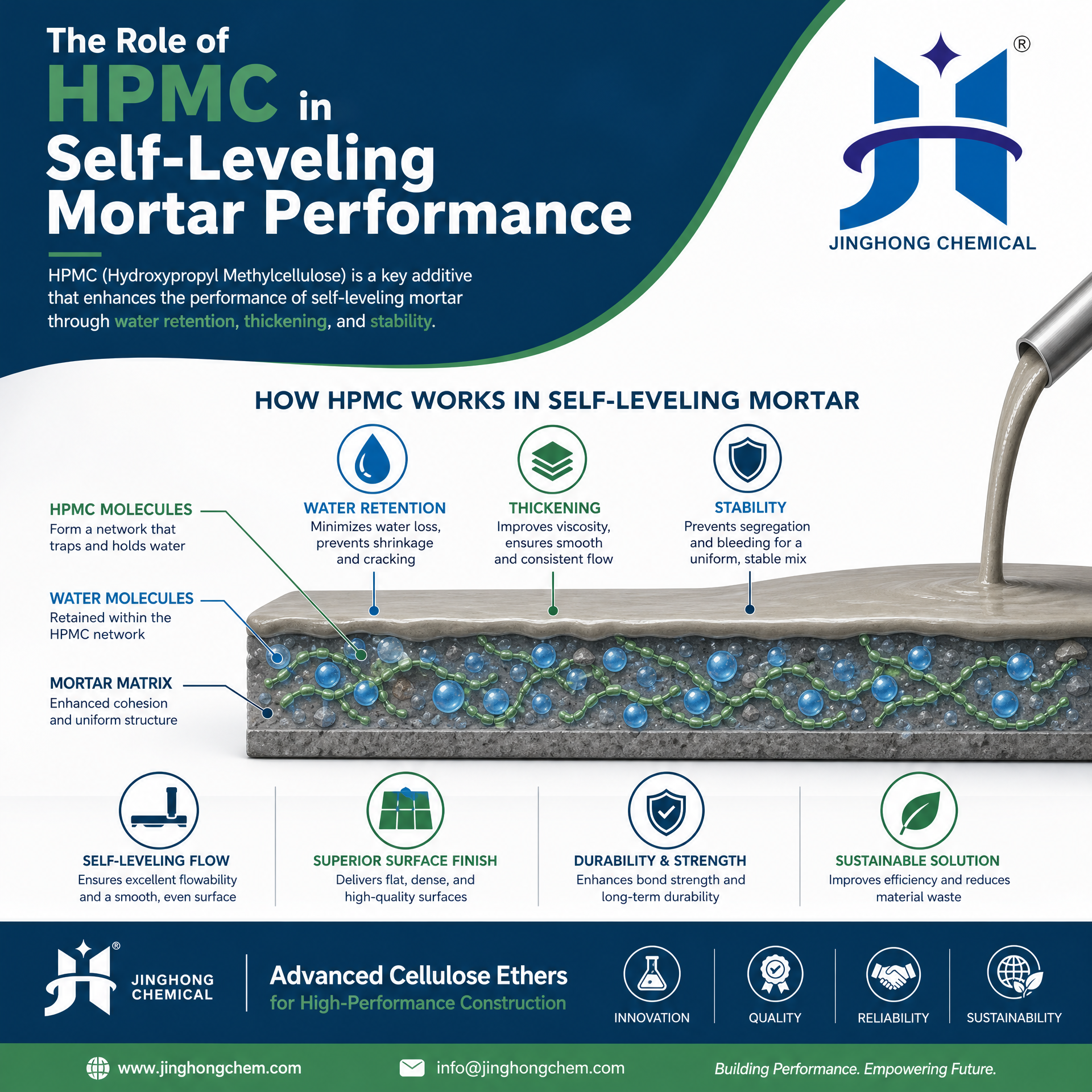
Figure 1: Schematic diagram of HPMC’s mechanism in self-leveling mortar. HPMC molecules ensure excellent mortar performance through water retention, thickening, and stabilization.
Optimizing Flowability: How Jinghong Chemical’s Specialized Low-Viscosity HPMC Enhances Mortar Rheology
One of the primary performance indicators for self-leveling mortar is its flowability. Ideal self-leveling mortar should spread rapidly and uniformly, creating a smooth, seamless surface without extensive manual leveling. However, traditional HPMC, while providing water retention and thickening, often excessively increases mortar viscosity, thereby limiting flowability and leading to application difficulties, poor leveling, and even air bubbles and surface defects. Jinghong Chemical, leveraging its profound expertise in cellulose ethers, has developed a range of specialized low-viscosity HPMC products specifically designed to optimize the flowability of self-leveling mortar, achieving significant performance breakthroughs.
1. Unique Advantages of Low-Viscosity HPMC
Traditional HPMC products typically have higher viscosities to provide stronger water retention and thickening effects. However, in self-leveling mortar, excessively high viscosity can become a bottleneck for flowability. Jinghong Chemical’s specialized low-viscosity HPMC, through precise molecular structure design and polymerization control, significantly reduces its impact on mortar viscosity while maintaining excellent water retention. This means the mortar can retain sufficient moisture at a lower viscosity, resulting in an extended open time and superior leveling performance 4.
Key Characteristics of Jinghong Chemical’s Low-Viscosity HPMC:
-
Exceptional Flowability: Maximizes the self-leveling capacity of mortar, reducing application resistance while ensuring necessary viscosity.
-
Reduced Air Entrapment: Lower viscosity allows air bubbles to escape more easily from the mortar, leading to a denser, void-free surface.
-
Extended Open Time: Provides ample working time while maintaining flowability, especially beneficial for large-area applications.
-
Excellent Pumpability: Reduces pumping resistance, minimizes equipment wear, and enhances construction efficiency.
-
Superior Surface Finish: Contributes to a flat, smooth, and blemish-free final surface.
2. Mechanism of Jinghong Chemical’s Low-Viscosity HPMC
Jinghong Chemical’s specialized low-viscosity HPMC does not simply involve reducing the HPMC dosage. Instead, it optimizes the length and substitution degree of the HPMC molecular chains, allowing them to form a finer and more uniform polymer network in water. This network effectively binds water molecules, providing essential water retention without excessively increasing the macroscopic viscosity of the system. Under shear stress, its molecular chains disentangle more easily, giving the mortar a lower yield stress and higher flowability 5.
| HPMC Type | Viscosity Range (mPa·s) | Impact on Flowability | Typical Applications |
|---|---|---|---|
| High-Viscosity HPMC | 75,000 – 200,000 | Significant thickening, limited flowability | Tile adhesives, skim coats, external wall insulation mortars |
| Medium-Viscosity HPMC | 20,000 – 75,000 | Moderate thickening, balanced performance | Plastering mortars, masonry mortars |
| Jinghong Chemical Specialized Low-Viscosity HPMC | 3,000 – 15,000 | Significantly enhances flowability, balances water retention | Self-leveling mortars, high-flow grouts |
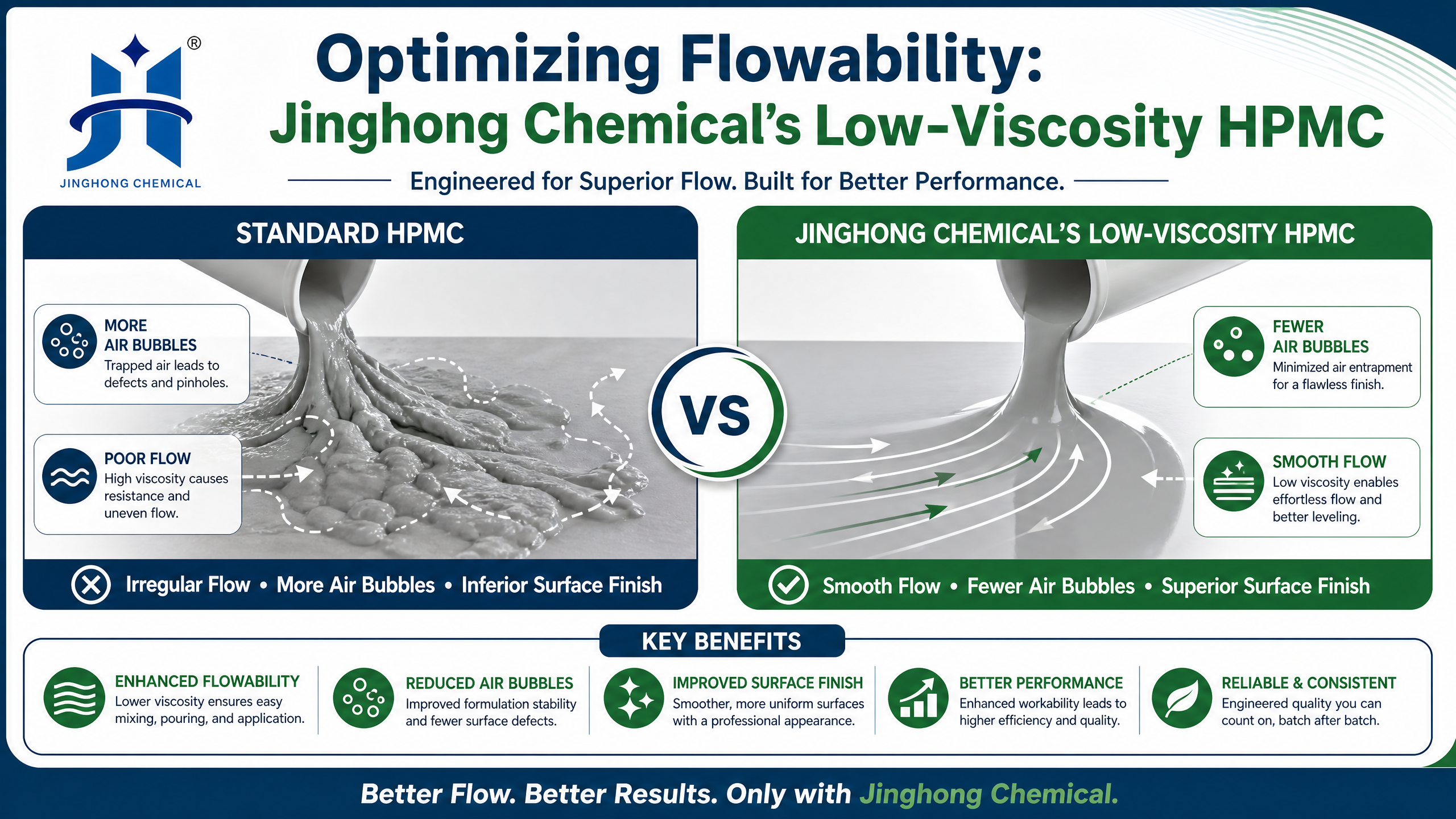
Figure 2: Comparison of Jinghong Chemical’s specialized low-viscosity HPMC with standard HPMC in terms of flowability. Low-viscosity HPMC significantly improves mortar rheology, reduces air bubbles, and enhances surface finish.
3. Practical Application Cases and Benefits
Jinghong Chemical’s specialized low-viscosity HPMC has been successfully applied in self-leveling mortar formulations across numerous large-scale construction projects. For instance, in a commercial complex’s underground parking floor project, the use of Jinghong Chemical’s HPMC products enabled the contractor to overcome issues of uneven leveling, excessive air bubbles, and low construction efficiency commonly associated with traditional mortars. The final floor surface achieved the required flatness, construction time was reduced by 15%, and material waste decreased by 8%, earning high praise from the client. This unequivocally demonstrates the exceptional value of Jinghong Chemical’s low-viscosity HPMC in enhancing self-leveling mortar performance and construction benefits.
Testing and Standards: Ensuring Consistency with Jinghong Chemical HPMC Grades
In the production and application of self-leveling mortar, ensuring product stability and consistency is paramount. This not only impacts construction quality and final results but also directly affects the safety and durability of the engineering project. Jinghong Chemical understands this critical need, which is why all its HPMC products, especially the specialized low-viscosity HPMC for self-leveling mortar, undergo stringent quality control and adhere to international testing standards. Through precise measurement and monitoring of key performance indicators, Jinghong Chemical ensures that its HPMC grades consistently deliver reliable and uniform performance to customers.
1. International Standards and Test Methods
The performance evaluation of self-leveling mortar typically follows a series of international and national standards. These standards specify test methods and performance requirements to ensure that products meet specific application needs. Jinghong Chemical’s HPMC products are developed and manufactured with reference to and compliance with the following key standards:
-
ASTM C1708/C1708M – Standard Test Methods for Self-Leveling Mortars Containing Hydraulic Cements 6: This standard details test methods for critical performance aspects of self-leveling mortars, including initial flow, flow retention, setting time, and compressive strength. Jinghong Chemical’s HPMC products help mortar formulations meet these rigorous requirements for flowability and mechanical properties.
-
EN 13813 – Screed material and floor screeds – Screed material – Properties and requirements 7: The European standard EN 13813 specifies the performance and requirements for screed materials, including compressive strength, flexural strength, and abrasion resistance. HPMC plays a role in improving mortar rheology, enhancing early strength, and overall durability.
-
ISO 13007-4 – Ceramic tiles — Grouts and adhesives — Part 4: Test methods for adhesives 8: Although primarily for tile adhesives, its test methods for rheology and open time also provide valuable references for self-leveling mortar performance evaluation. The inclusion of HPMC effectively extends the mortar’s open time, improving construction efficiency.
2. Jinghong Chemical’s Quality Control System
Jinghong Chemical has established a comprehensive quality management system, meticulously controlling every stage from raw material procurement to final product shipment. For HPMC products, particular attention is paid to critical indicators such as viscosity, substitution degree, purity, and moisture content, as these directly influence HPMC’s performance in self-leveling mortar.
Key Aspects of Jinghong Chemical’s HPMC Quality Control:
-
Raw Material Screening: Strict selection of high-quality refined cotton to ensure the foundational quality of HPMC production.
-
Production Process Monitoring: Utilization of advanced automated production lines and real-time monitoring systems to precisely control reaction temperature, pressure, and time, ensuring batch-to-batch consistency.
-
Finished Product Performance Testing: Before shipment, each batch of HPMC undergoes comprehensive performance testing, including viscosity, gel temperature, pH value, ash content, fineness, and simulated application tests for mortar performance, such as flowability, water retention, and compressive strength.
-
Application Technical Support: Jinghong Chemical boasts a professional technical team that provides customers with application guidance and formulation optimization advice for HPMC products in self-leveling mortar, ensuring clients can fully leverage the performance advantages of HPMC.
| Test Item | Evaluation Metric | Contribution of Jinghong Chemical HPMC |
|---|---|---|
| Flow Test (ASTM C1708) | Initial flow, flow retention | Ensures excellent self-leveling capability and extended working time |
| Setting Time Test | Initial and final setting times | Precisely controls mortar hardening speed to suit different construction needs |
| Compressive Strength Test (EN 13813) | Early strength, 28-day strength | Promotes cement hydration, enhances mechanical properties and durability |
| Water Retention Test | Mortar water loss rate | Reduces water evaporation, prevents surface cracking, ensures full hydration |
| Anti-Segregation Test | Aggregate settlement, bleeding | Stabilizes mortar system, prevents aggregate settlement, ensures homogeneity |
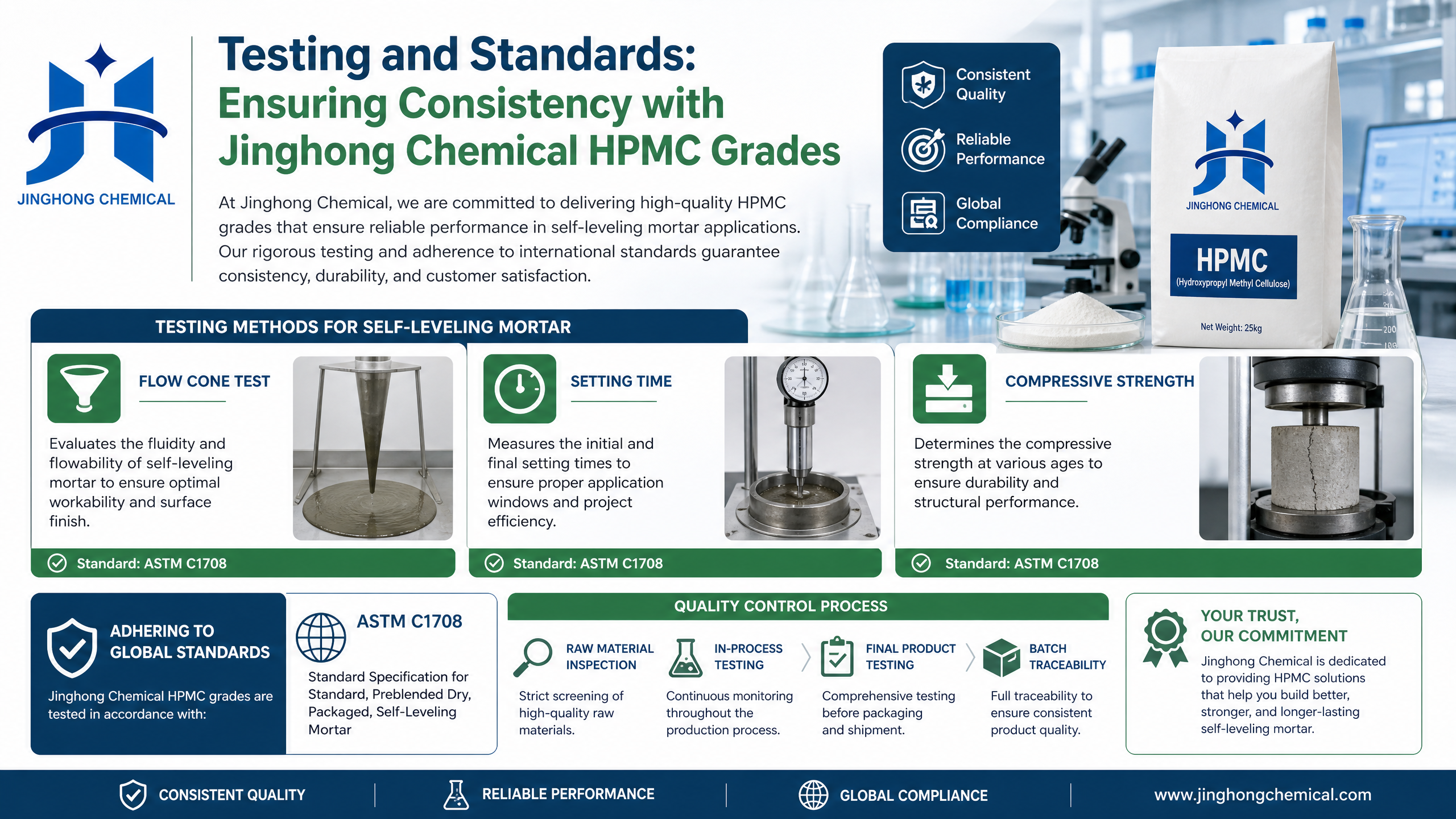
Figure 3: Jinghong Chemical HPMC quality control and testing standards. Rigorous testing procedures and international standards ensure product consistency and reliability in self-leveling mortar applications.
Conclusion: Jinghong Chemical’s Specialized HPMC – The Ideal Choice for Self-Leveling Mortar Flow Optimization
The flowability of self-leveling mortar is central to its performance, directly impacting construction efficiency, surface quality, and ultimate service life. By deeply understanding the multifaceted mechanisms of HPMC in mortar and leveraging Jinghong Chemical’s innovation in specialized low-viscosity HPMC development, we can offer more efficient and reliable solutions for the self-leveling mortar industry. Jinghong Chemical’s specialized HPMC products not only significantly enhance mortar flowability and reduce construction defects but also ensure compliance with stringent international standards, delivering exceptional performance and lasting value to construction projects.
Choosing Jinghong Chemical means choosing a stable, efficient, and professional partner. We are committed to providing the highest quality HPMC solutions for your self-leveling mortar products through continuous technological innovation and rigorous quality control, jointly advancing the development of the construction materials industry.
Contact Jinghong Chemical today to get customized HPMC solutions and jointly enhance the competitiveness of your self-leveling mortar products!
Frequently Asked Questions (FAQ)
1. What is HPMC, and what are its main roles in self-leveling mortar?
HPMC (Hydroxypropyl Methylcellulose) is a versatile polymer primarily functioning as a water retention agent, thickener, and workability enhancer in self-leveling mortar. It effectively slows down water evaporation, ensures full cement hydration, and imparts good thixotropy, making the mortar easy to level during application while remaining stable after placement to prevent segregation.
2. Why is low-viscosity HPMC more crucial for self-leveling mortar flowability?
Traditional HPMC, despite good water retention, often has high viscosity, excessively increasing mortar viscosity and limiting flowability. Low-viscosity HPMC, while maintaining sufficient water retention, has a lesser impact on mortar viscosity, thereby significantly enhancing the mortar’s self-leveling capability, reducing air bubbles, and improving surface finish.
3. How does Jinghong Chemical ensure the quality and consistency of its HPMC products?
Jinghong Chemical has established a comprehensive quality management system, strictly controlling every stage from raw material screening and production process monitoring to finished product performance testing. All HPMC products comply with international standards and undergo simulated application tests for mortar performance, ensuring stable and consistent performance across batches.
4. What are the important testing standards for self-leveling mortar flowability?
Self-leveling mortar flowability is typically tested according to international standards such as ASTM C1708 (initial flow, flow retention) and EN 13813. These tests evaluate the mortar’s spreadability and leveling effect during application.
5. Besides flowability, what other properties of self-leveling mortar can HPMC improve?
Beyond flowability, HPMC can significantly improve self-leveling mortar’s water retention, anti-segregation, crack resistance, early strength, and ultimate mechanical properties. It helps form a denser, more uniform mortar structure, enhancing product durability and service life.
6. How do I choose the right HPMC viscosity grade for my product?
Selecting the appropriate HPMC viscosity grade depends on the specific self-leveling mortar formulation, application requirements, and desired performance. Jinghong Chemical’s technical team can provide professional consultation and customized recommendations to help you choose the most suitable HPMC product.
References
Internal Link Placeholders (To be replaced upon deployment):
External Authority Link Placeholders (Already reflected in references, these are additional suggestions):