
The best HPMC grade for tile adhesive is not always the grade with the highest viscosity. I often see buyers focus on one specification, only to face short open time, tile slip, difficult spreading, or excessive dosage. I recommend selecting HPMC according to the complete formula, application conditions, performance target, and total production cost.
There is no universally best HPMC grade for tile adhesive.1 I recommend a construction-grade HPMC that provides suitable water retention, open time, wet-mortar consistency, anti-sag performance, and workability at an economical dosage. The final choice should be confirmed through side-by-side tests using the buyer’s actual tile adhesive formula and local application conditions.
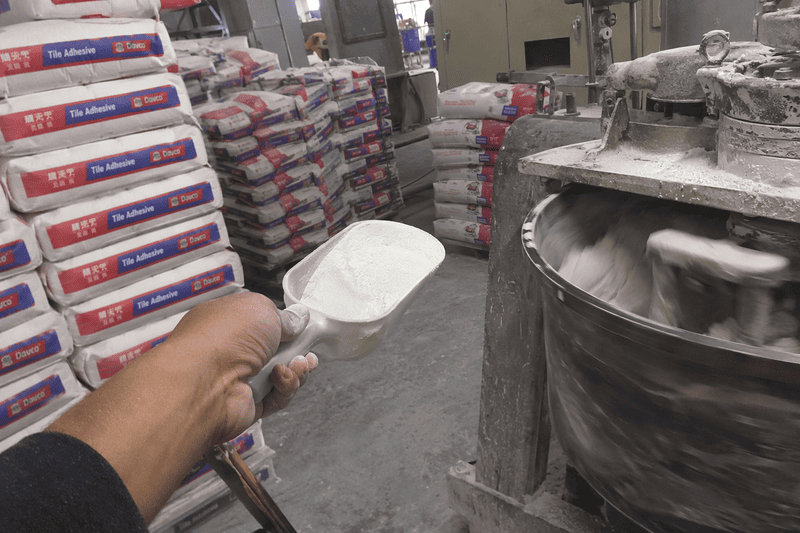
I manufacture and evaluate cellulose ethers, but I do not treat a specification sheet as a complete formulation answer. Cement type, filler grading, polymer powder, climate, substrate absorption, mixing, and worker habits can all change the result.2 I therefore use the grade specification as a starting point and application testing as the final decision tool.
What HPMC Grade for Tile Adhesive Should I Test First?
A first-time buyer often faces a long list of viscosity grades and modified products. That choice becomes confusing because similar numbers may produce different mortar behavior. I narrow the options by first defining the adhesive class, application method, climate, required open time, and acceptable dosage.
I normally start with a construction-grade HPMC or MHEC developed for cement-based tile adhesive, then select a practical viscosity range based on the formula and application. Medium-to-high-viscosity products are common starting candidates, but I never approve a grade by viscosity alone. I test at least two or three candidates in the same base formula before recommending scale-up.
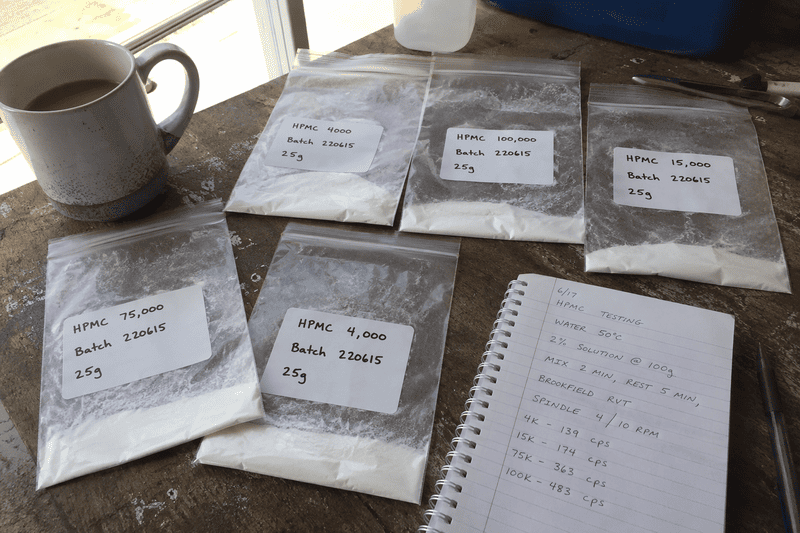
I Start With the Application Target
I first ask what the tile adhesive must do. A basic adhesive for small, porous ceramic tiles does not have the same requirements as an adhesive for large-format porcelain, vertical installation, hot-weather construction, or a highly absorbent substrate.
I usually collect the following information before selecting samples:
- Target tile adhesive class or local standard
- Tile type, size, and water absorption
- Horizontal or vertical installation
- Required open time and adjustment time
- Desired anti-sag performance
- Cement type and approximate cement content
- Filler type, particle size, and grading
- RDP or VAE powder type and dosage
- Starch ether, accelerator, retarder, or other additives
- Local temperature and relative humidity
- Substrate type and absorption
- Current HPMC dosage and application problem
- Target raw-material cost
This information helps me avoid choosing a grade that looks appropriate on paper but performs poorly in practice.
I Treat Viscosity as One Screening Parameter
Viscosity is important because it influences wet-mortar consistency, body, spreading behavior, and resistance to tile slip.3 However, I do not assume that a higher viscosity automatically creates a better tile adhesive.
A very high-viscosity product can sometimes make mortar feel heavy, sticky, or difficult to spread. It may also require changes in water demand or additive dosage. A lower-viscosity product may provide easier mixing and smoother troweling, but it may not deliver enough body in a particular formula.
I use viscosity as a screening range, not as a stand-alone quality score. I also check:
| Selection factor | What I evaluate | Why it matters |
|---|---|---|
| Viscosity | Consistency under a defined test method | Influences body and application feel |
| Water retention | Ability to limit rapid water loss | Supports cement hydration and usable open time |
| Modification | Unmodified or application-modified grade | Can affect sag resistance and workability |
| Dissolution | Dispersion and lump formation | Influences production and mixing reliability |
| Moisture and ash | Batch specification compliance | Supports storage and formulation control |
| Dosage response | Performance at several addition levels | Reveals the real cost of use |
| Batch consistency | Variation across production lots | Reduces factory and job-site instability |
In my experience, the best first sample is not necessarily the most expensive or the highest-viscosity option. It is the grade that has a reasonable chance of meeting the defined application target without forcing unnecessary changes to the rest of the formula.
Which Properties Matter Most in an HPMC Grade for Tile Adhesive?
A buyer can receive an HPMC sample with an impressive viscosity value and still obtain disappointing mortar. That problem usually appears when the evaluation ignores water retention, open time, sag resistance, mixing behavior, and trowel feel. I therefore compare performance properties together rather than ranking grades by a single laboratory number.
I consider water retention, workable consistency, open time, anti-sag behavior, wet adhesion support, dissolution, and batch consistency the main selection factors. HPMC helps control water and rheology, but I do not treat it as the sole source of bond strength. Cement hydration, polymer content, substrate preparation, tile coverage, and curing conditions remain essential.
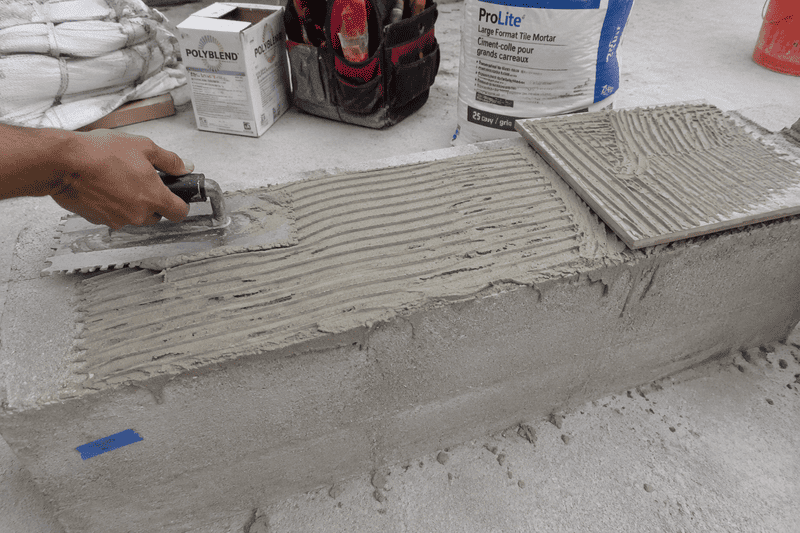
I Prioritize Controlled Water Retention
Fresh tile adhesive can lose water through evaporation and substrate absorption.4 If water disappears too quickly, the installer may have less time to place the tile, and the cement may not hydrate under the intended conditions.
HPMC helps retain water in the wet mortar.5 However, I look for appropriate retention, not an abstract maximum. The result depends on several variables:
- Cellulose ether chemistry and modification
- HPMC dosage
- Water-to-powder ratio
- Cement composition
- Fine-filler content
- Ambient temperature
- Wind and relative humidity
- Substrate porosity
- Mortar layer thickness
I have seen two HPMC samples with similar listed viscosity produce visibly different surface drying behavior in side-by-side drawdown tests. I treat that observation as useful evidence for the tested formula, not as universal scientific proof. A different cement or sand grading can change the ranking.
I Evaluate Open Time Under Realistic Conditions
Open time describes how long a combed adhesive can remain suitable for tile placement while maintaining the required performance.6 HPMC can support open time by controlling moisture loss, but the complete formulation determines the final result.
I test open time at defined intervals rather than judging only the fresh mortar. For an internal comparison, I may place tiles immediately and after planned delays, then assess wetting coverage or conduct a bond test according to the chosen procedure.
Hot, dry, or windy markets deserve special attention.7 A grade that performs well in a mild indoor laboratory may not provide the same working window on a hot construction site. I therefore ask importers and mortar producers about seasonal temperatures and common substrate conditions before I recommend a candidate.
I Balance Sag Resistance and Workability
An installer needs enough body to keep tiles from slipping, especially on walls. At the same time, the adhesive must spread cleanly and form stable trowel ridges without excessive pulling.
I look for balance among four practical observations:
- The mortar should mix without persistent lumps.
- The trowel should move without excessive resistance.
- The ridges should remain defined after combing.
- The tile should resist unacceptable downward movement.
A heavily modified grade may improve anti-sag behavior in one formula, but it can create excessive stickiness in another. I therefore test both application feel and measured movement. I also remember that starch ether, filler grading, water demand, and cellulose ether dosage can influence the same behavior.
How Do Formula and Climate Change the Best HPMC Grade for Tile Adhesive?
A successful grade in one market can fail in another. I often trace that difference to cement chemistry, filler characteristics, weather, substrate absorption, mixing time, or local water addition. If I ignore those factors, I can mistake a formulation mismatch for an HPMC quality problem.
The best HPMC grade for tile adhesive changes with the complete dry-mix formula and its use conditions. Hot climates may require stronger control of water loss, while cold or humid conditions create different setting and workability concerns. I recommend evaluating every candidate with the intended cement, fillers, additives, water ratio, substrate, and application procedure.
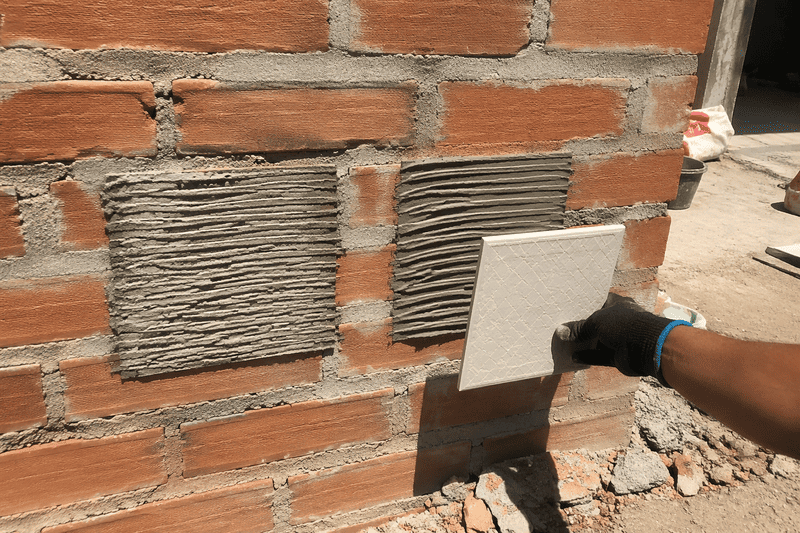
I Evaluate HPMC Inside the Complete Formula
HPMC does not work in isolation. It interacts with the mineral binder, aggregates, polymer powder, and other rheology modifiers.8 Even a change in limestone fineness can alter water demand and mortar feel.
I pay particular attention to these components:
| Formula component | Possible influence on HPMC evaluation |
|---|---|
| Cement | Changes setting behavior, water demand, and hydration |
| Sand or graded filler | Influences packing, troweling, body, and water requirement |
| Fine limestone | Can increase surface area and change consistency |
| RDP/VAE powder | Supports flexibility and adhesion but can alter workability |
| Starch ether | Can affect sag resistance, thickening, and application feel |
| Retarder or accelerator | Changes usable time and setting profile |
| Fibers | Influence cohesion and mixing |
| Water dosage | Strongly changes viscosity, ridge stability, and coverage |
I keep the base formula constant when comparing HPMC samples. If I change the cellulose ether, water ratio, cement, and RDP at the same time, I cannot identify the cause of the result.
I Account for Climate and Substrate Absorption
I consider climate an application variable rather than a footnote. High temperature and low humidity can accelerate surface drying. Wind can make that effect more severe.9 A porous concrete block or cement render can also pull water from the adhesive quickly.
In contrast, cool and humid conditions may slow water loss and cement setting. A grade selected only for hot-weather water retention may feel too heavy or remain wet longer than expected under different conditions.
I often use a simple condition matrix during sample planning:
- Hot and dry: I emphasize open time, skin formation, and water retention.
- Hot and humid: I watch consistency, setting behavior, and sag.
- Cool and dry: I monitor workability together with early hydration.
- Cool and humid: I examine setting, tile movement, and drying.
- Highly absorbent substrate: I test rapid water loss and tile wetting.
- Dense substrate: I examine slip, curing, and adhesive compatibility.
I Consider Local Mixing Habits
Factory instructions do not always match job-site practice. Some workers add extra water to make the adhesive easier to spread. Others shorten the mixing or maturation time. These changes can weaken ridge stability and alter sag behavior.
I cannot solve every job-site variation through HPMC selection. However, I can select a grade with a practical operating window and help the mortar producer define clear instructions. I recommend controlling:
- Water addition by weight
- Mechanical mixing speed and time
- Rest or maturation period
- Remixing time
- Pot life
- Trowel size
- Maximum open time before tile placement
I view these controls as part of product quality. A strong laboratory formula can still create complaints if the application procedure is unclear or unrealistic.
How Should I Test an HPMC Grade for Tile Adhesive Before Buying in Bulk?
A small sample can feel promising, but one quick hand-mix cannot prove factory suitability. Buyers face greater risk when they move directly from a specification sheet to a full container order. I reduce that risk through controlled comparisons, pilot production, retained samples, and batch-to-batch verification.
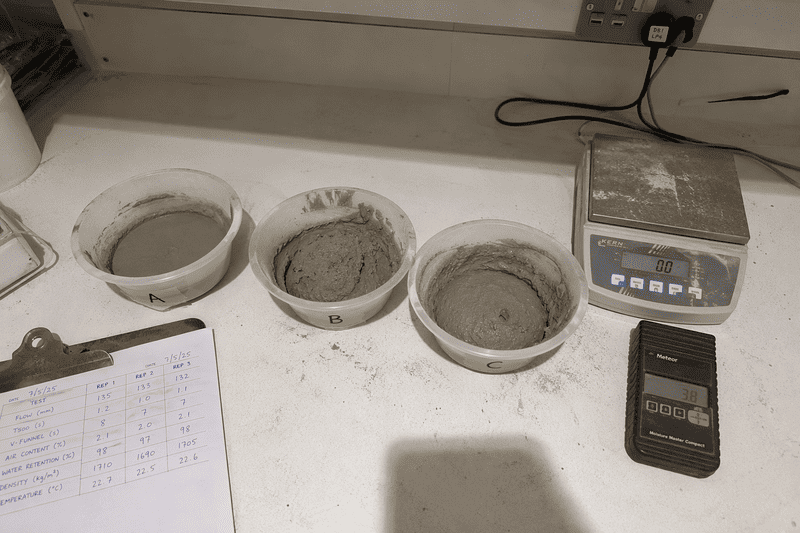
I recommend testing at least two or three HPMC candidates in the same tile adhesive formula, at equal initial dosage and controlled water addition. I then compare mixing, consistency, water retention, open time, sag, troweling, and relevant bond performance. After selecting a candidate, I confirm its dosage response and consistency in pilot-scale production.
I Use a Controlled Side-by-Side Procedure
I begin with a written base formula and one controlled batch procedure. I record raw-material lot numbers because a change in cement or filler can distort the comparison.
A practical screening procedure can include these steps:
- Condition the raw materials. I keep temperature and storage conditions as consistent as possible.
- Weigh every component accurately. I avoid volume-based dosing for low-level additives.
- Use the same initial HPMC dosage. I first compare products on an equal-dose basis.
- Control water addition. I record the exact water-to-dry-mix ratio.
- Standardize mixing. I keep mixer type, speed, mixing time, rest time, and remixing constant.
- Observe fresh properties. I record lumps, air, consistency, tack, trowel resistance, and ridge definition.
- Measure application properties. I evaluate sag, open time, wetting, and water retention using defined procedures.
- Test hardened performance. I use relevant standards or customer methods when bond strength or durability classification is required.
- Repeat the test. I confirm that the initial ranking is reproducible.
Where a buyer targets an EN 12004, ISO, ANSI, or local classification, I recommend using the applicable current standard and a qualified testing facility.10 My internal application tests support product development and sample screening, but I do not present them as a substitute for independent certification.
I Test More Than One Dosage
Equal dosage provides a fair starting point, but it does not reveal the most economical use level. One product may reach the target at a lower dosage, while another may require more material to provide similar workability or retention.
I normally build a dosage-response comparison around the buyer’s existing level. For example, I may test:
- The current dosage
- A slightly lower dosage
- A slightly higher dosage
I then compare performance and cost at each level. I avoid publishing one universal dosage because formulations and target properties vary widely.
I Verify Production-Scale Consistency
Laboratory mixing cannot reproduce every production condition. A ribbon mixer, ploughshare mixer, pneumatic transfer system, packaging line, and storage environment can affect dispersion and uniformity.
Before full scale-up, I recommend a pilot batch followed by a limited commercial batch. I also recommend retaining samples from the HPMC, dry mix, and finished adhesive. These retained samples help both sides investigate a later complaint.
Matching technical data sheets do not guarantee direct substitutability.11 Two products may show similar nominal viscosity but differ in modification, dissolution behavior, moisture, particle characteristics, or application response. I therefore verify each replacement instead of assuming that specification similarity equals formulation equivalence.
How Do I Compare the Cost and Quality of an HPMC Grade for Tile Adhesive?
A low price per tonne can appear attractive, especially in a competitive dry-mix market. However, that saving can disappear if the product requires a higher dosage, causes unstable water demand, or creates customer complaints. I compare effective use cost and production reliability rather than purchase price alone.
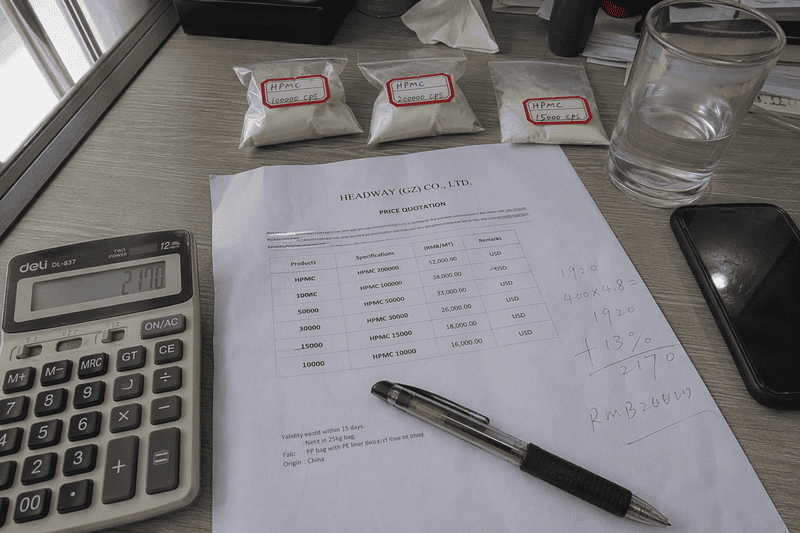
I calculate the cost of an HPMC grade for tile adhesive from its effective dosage per tonne of finished mortar, not only its quoted price. I also include batch consistency, rejected production, additional testing, job-site rework, technical support, documentation, packaging, shipping reliability, and the cost of changing the existing formula.
I Calculate Cost in the Finished Product
I use a simple calculation:
HPMC cost per tonne of tile adhesive = HPMC price per tonne × dosage fraction
For illustration only, I can compare two hypothetical offers:
| Candidate | HPMC price | Effective dosage | HPMC cost per tonne of adhesive |
|---|---|---|---|
| Grade A | $2,700/t | 0.30% | $8.10 |
| Grade B | $2,450/t | 0.38% | $9.31 |
| Grade C | $2,850/t | 0.27% | $7.70 |
In this example, Grade B has the lowest purchase price but the highest effective cost in the finished mortar. Grade C has the highest price per tonne of HPMC but the lowest calculated use cost. These figures are illustrative, and I would still need to confirm that each grade meets the same performance target.
I Include Hidden Costs
I look beyond the raw-material calculation because unstable material can create larger indirect expenses. Possible hidden costs include:
- Extra HPMC dosage
- Unplanned water adjustments
- Longer mixing time
- Production stoppages
- Inconsistent bag-to-bag performance
- Failed quality-control batches
- Customer returns
- Contractor complaints
- Rework and replacement materials
- Emergency air freight
- Reformulation and retesting
- Certification delays
I have seen buyers save a small amount on the initial quotation but spend more while correcting dosage and workability. I treat that experience as a commercial lesson rather than a universal outcome. A lower-priced grade can still be the right choice when it performs consistently at an economical dosage.
I Audit the Supplier as Well as the Sample
A good sample has limited value if future batches cannot match it. I therefore encourage buyers to evaluate the manufacturer’s production and quality-control system.
I expect a reliable supplier to discuss:
- Product grade and intended application
- Viscosity method, temperature, and solution concentration
- Moisture and ash specifications
- Batch traceability
- Retained-sample procedures
- COA and MSDS availability
- Packaging and pallet options
- OEM labeling requirements
- Production capacity and lead time
- Export documentation
- Complaint investigation
- Technical support during trial production
At Jinghong Chemical, I ask buyers for their formula, current HPMC grade, dosage, target performance, local climate, current problem, and cost limit where they can share them. I can then suggest samples for testing, but I still expect the buyer to verify the final product in the actual formula and market.
Frequently Asked Questions
Is higher-viscosity HPMC always better for tile adhesive?
No. I consider higher viscosity useful only when it supports the required consistency and application behavior. Excessive viscosity can make some formulas sticky, heavy, or harder to spread. I compare water retention, open time, sag resistance, dosage, and trowel feel before deciding whether a higher-viscosity grade offers a real advantage.
Can I replace one HPMC brand with another at the same dosage?
I do not recommend automatic one-to-one replacement. Two products can have similar viscosity specifications but different modification, dissolution, water-retention behavior, and dosage response. I first compare both products in the same formula, then adjust dosage only after I establish a controlled baseline.
Does HPMC increase tile adhesive bond strength?
I view HPMC as an important aid for water retention, workability, and open time. Those functions can support proper cement hydration and tile wetting. However, I do not treat HPMC as the sole determinant of bond strength. Cement, RDP, tile coverage, substrate preparation, curing, and installation practice also matter.
Should I use HPMC or MHEC in tile adhesive?
I have seen both HPMC and MHEC used successfully in cement-based tile adhesives. The better option depends on regional availability, formula design, climate, desired rheology, and supplier consistency. I recommend comparing application-grade samples under identical conditions instead of selecting only by the cellulose ether name.
What information should I provide when requesting an HPMC sample?
I recommend providing the tile adhesive formula, current grade and dosage, target product class, tile and substrate type, local climate, application method, current performance problem, annual demand, packaging preference, and cost target. More complete information helps me select relevant samples and reduces unnecessary testing.
Conclusion
The best HPMC grade for tile adhesive is the grade that delivers balanced water retention, open time, anti-sag performance, workability, dosage efficiency, and batch consistency in the actual formulation. I never select it by viscosity or price alone. I compare candidates under controlled conditions, test dosage response, verify pilot-scale production, and calculate the total cost in finished mortar.
If you need construction-grade HPMC, MHEC, HEC, or RDP/VAE powder, contact Shijiazhuang Jinghong Chemical Technology Co., Ltd. with your formula, target performance, dosage, climate, and application problem. I can help you select practical samples for side-by-side testing and provide COA, MSDS, OEM packaging, and export support.
<!-- JH_HPMC_APPLICATION_LINKS_START --><p class="jh-related-applications"><strong>Related HPMC application:</strong> For a formula-level walkthrough of grade selection and testing, review our <a href="https://jinghonghpmc.com/hpmc-for-tile-adhesive/">HPMC for tile adhesive grade selection</a> application page.</p><!-- JH_HPMC_APPLICATION_LINKS_END -->
"Methyl cellulose", https://en.wikipedia.org/wiki/Methyl_cellulose. Studies of cellulose ethers in cementitious mortars report that fresh-state and application performance depend on polymer properties, dosage, and the surrounding mortar formulation rather than on viscosity alone. Evidence role: general_support; source type: paper. Supports: Cellulose-ether performance in cementitious mortars depends on polymer characteristics, dosage, binder composition, aggregates, and test conditions.. Scope note: The literature may address cement mortars generally rather than every commercial tile-adhesive grade. ↩
"Redispersible polymer powder modified cementitious tile ...", https://pmc.ncbi.nlm.nih.gov/articles/PMC8606344/. Technical guidance for cementitious tile adhesives identifies formulation variables, substrate absorption, ambient conditions, mixing, and installation procedure as factors affecting workability, open time, and bond development. Evidence role: mechanism; source type: institution. Supports: Tile-adhesive workability and bonding are affected by mortar composition, substrate condition, ambient conditions, mixing, and installation practice.. Scope note: Guidance documents commonly describe practical installation effects and may not quantify the independent contribution of every variable. ↩
"Water Retention Mechanism of HPMC in Cement Mortar - PMC", https://pmc.ncbi.nlm.nih.gov/articles/PMC7372461/. Research on cellulose ethers in cement-based mortars shows that polymer viscosity and related molecular properties can modify mortar rheology, affecting consistency and resistance to deformation in the fresh state. Evidence role: mechanism; source type: paper. Supports: Cellulose-ether molecular characteristics and solution viscosity influence the rheological properties of cement-based mortars.. Scope note: Fresh-mortar rheology is not a direct substitute for a standardized tile-slip measurement in every adhesive system. ↩
"Effect of Moisture Exchange on Interface Formation in ... - PMC", https://pmc.ncbi.nlm.nih.gov/articles/PMC5456528/. Cement-based mortar research describes water loss from fresh material through evaporation and suction into porous substrates, processes that can alter near-surface moisture conditions during installation. Evidence role: mechanism; source type: research. Supports: Fresh cementitious mortars lose mixing water through evaporation and transfer into absorbent substrates.. Scope note: The relative importance of evaporation and substrate suction varies with weather, substrate condition, and mortar thickness. ↩
"Water Retention Mechanism of HPMC in Cement Mortar - PMC", https://pmc.ncbi.nlm.nih.gov/articles/PMC7372461/. Experimental studies of cementitious mortars generally find that hydroxypropyl methylcellulose and related cellulose ethers increase water retention by modifying water transport and the fresh mortar matrix. Evidence role: mechanism; source type: paper. Supports: Hydroxypropyl methylcellulose and related cellulose ethers increase water retention in cement-based mortars.. Scope note: The magnitude of water-retention improvement depends on cellulose-ether chemistry, dosage, and the mortar composition. ↩
"Is Open time related to bonding strength to the substrate ...", https://www.linkedin.com/pulse/open-time-related-bonding-strength-substrate-according-joe-chow-fekhc. Tile-adhesive test standards define open time through procedures that assess whether adhesive exposed for a specified interval retains the required bonding performance after tile placement. Evidence role: definition; source type: institution. Supports: Tile-adhesive standards define and test open time as a performance interval for adhesive exposed before tile placement.. Scope note: The precise procedure, exposure conditions, and acceptance threshold differ among EN, ISO, ANSI, and local standards. ↩
"Environmental Effects on the Physical Properties of ...", https://static.tti.tamu.edu/tti.tamu.edu/documents/371-1.pdf. Construction-materials guidance and evaporation research indicate that high temperature, low relative humidity, and wind can accelerate moisture loss from fresh cementitious materials, potentially shortening their workable exposure period. Evidence role: mechanism; source type: education. Supports: Higher temperature, lower relative humidity, and air movement increase evaporation from fresh cementitious materials.. Scope note: Actual tile-adhesive open time also depends on substrate suction, mortar formulation, layer thickness, and the applicable test method. ↩
"Water Retention Mechanism of HPMC in Cement Mortar - PMC", https://pmc.ncbi.nlm.nih.gov/articles/PMC7372461/. Research on modified cement mortars indicates that cellulose-ether effects on rheology, water retention, hydration, and adhesion are influenced by the binder system, aggregate fraction, polymer modifiers, and additional admixtures. Evidence role: mechanism; source type: paper. Supports: The effects of cellulose ethers in cement-based mortars are modified by binder chemistry, aggregate characteristics, polymer modifiers, and other admixtures.. Scope note: Individual interaction effects are formulation-specific and cannot establish the performance of a particular commercial HPMC grade. ↩
"Guide for Curing Portland Cement Concrete Pavements, II ...", https://www.fhwa.dot.gov/publications/research/infrastructure/pavements/pccp/05038/005.cfm. Established guidance on fresh cementitious materials identifies temperature, relative humidity, and wind speed as major controls on evaporation, with hotter, drier, and windier conditions increasing surface moisture loss. Evidence role: mechanism; source type: institution. Supports: Evaporation from fresh cementitious materials increases with temperature and wind and decreases with relative humidity.. Scope note: Evaporation guidance developed for concrete provides contextual support; a combed tile-adhesive bed has different geometry and substrate interactions. ↩
"EN 12004-1:2017 - Adhesives for Ceramic Tiles ...", https://standards.iteh.ai/catalog/standards/cen/48998e72-43b4-4ab9-9385-a9399c2c4689/en-12004-1-2017?srsltid=AfmBOoq4PIMbEIjg2W22OFBGOQlJaphFnVnksI1vsG6xyHchrfpaHcS1. Recognized standards frameworks, including EN 12004, ISO 13007, and ANSI A118, set out classifications, requirements, and test methods for ceramic tile adhesives or setting materials. Evidence role: historical_context; source type: institution. Supports: EN 12004, ISO 13007, and ANSI A118 are standards frameworks containing requirements and test methods for ceramic tile setting materials.. Scope note: The applicable edition, certification pathway, laboratory-accreditation requirements, and legal status depend on the jurisdiction and product claim. ↩
"Effect of Cellulose Ether and Starch Ether on Hydration ... - PMC", https://pmc.ncbi.nlm.nih.gov/articles/PMC9782582/. Research on cellulose ethers indicates that nominal viscosity alone does not fully characterize their behavior in cementitious mortars, because substitution chemistry, molecular structure, particle characteristics, and dosage can also affect performance. Evidence role: general_support; source type: paper. Supports: Cellulose ethers with similar nominal viscosity can differ in substitution, molecular characteristics, dissolution, and performance in cementitious systems.. Scope note: This supports the need for formulation-specific verification but does not demonstrate that every pair of products with similar data-sheet values will differ materially. ↩