Poor dry mortar performance often starts with an incomplete formulation. Many manufacturers focus on cement strength while overlooking polymer technology. The result is weak adhesion, poor flexibility, cracking, and customer complaints that increase production costs.
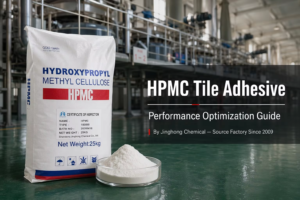
Redispersible Polymer Powder (RDP) is one of the most important additives in modern dry mortar. It improves adhesion, flexibility, water resistance, crack resistance, and durability. When combined with HPMC, RDP helps manufacturers produce high-performance dry mortar systems for a wide range of construction applications.
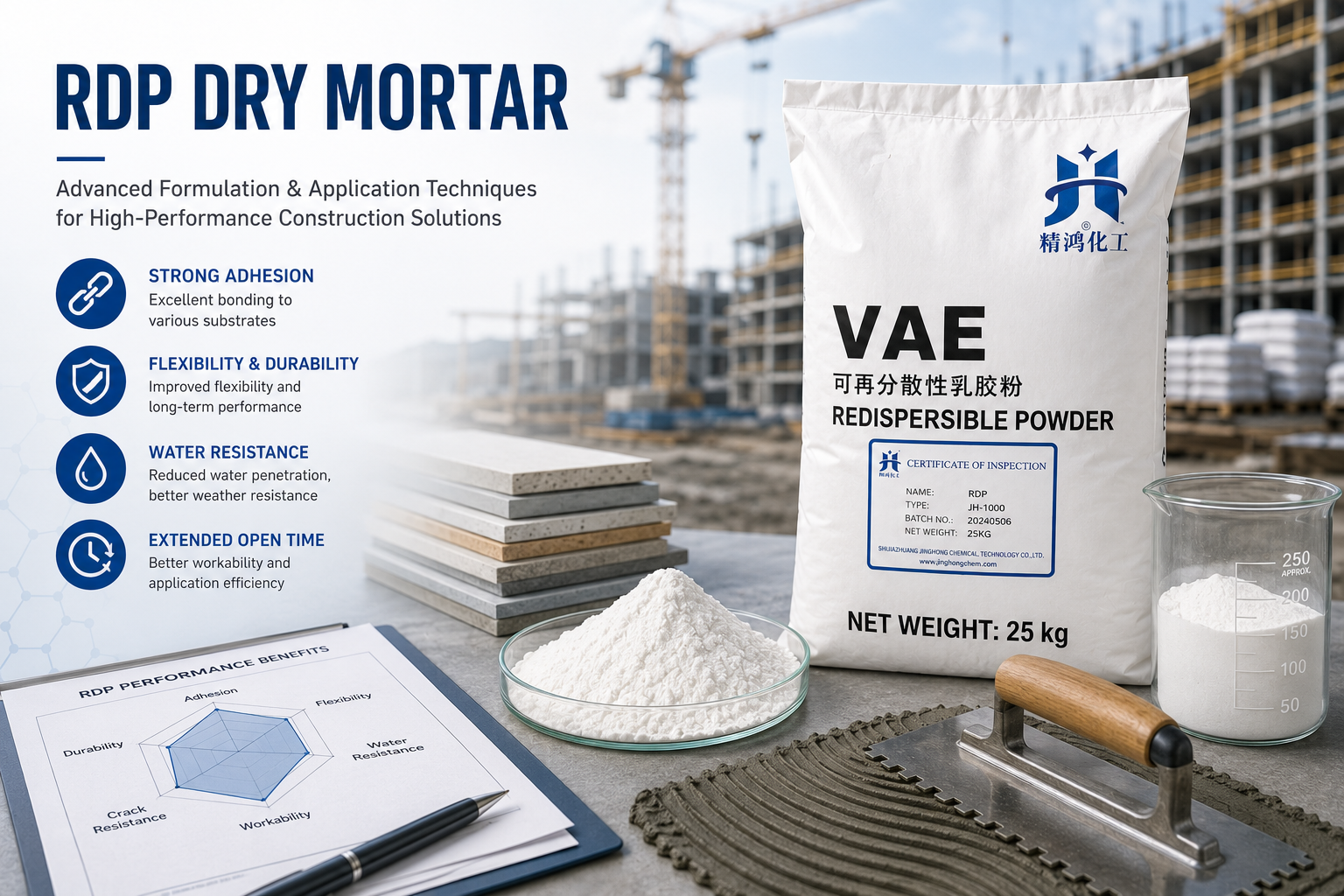
RDP Dry Mortar
During conversations with customers from Southeast Asia, Africa, and the Middle East, I hear one question repeatedly: How can we improve dry mortar performance without dramatically increasing production costs? In many cases, the answer is not adding more cement. It is selecting the correct polymer system. Understanding how RDP works inside cement-based formulations allows manufacturers to improve performance while keeping production efficient and competitive.
What Makes RDP Essential in Modern Dry Mortar Formulations?
Many people think dry mortar is simply a mixture of cement, sand, and fillers. That may have been true many years ago. Today, modern construction materials rely heavily on polymer technology to meet higher performance standards.
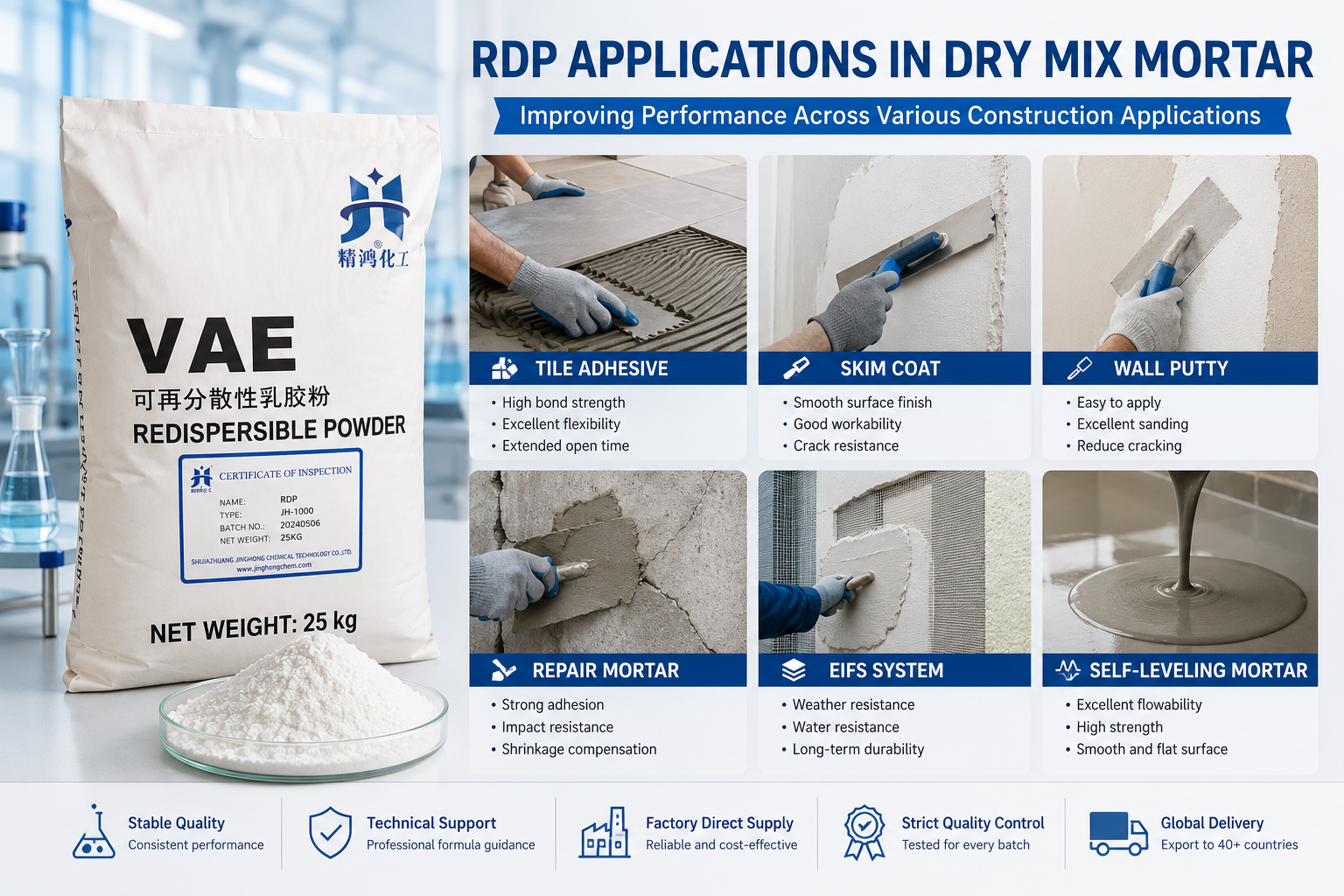
Redispersible Polymer Powder acts as a flexible polymer binder inside dry mortar. After water is added, the powder redisperses into a polymer emulsion and forms a continuous film during curing. This polymer network significantly improves adhesion, flexibility, durability, and water resistance compared with traditional cement mortar.
Redispersible Polymer Powder in Dry Mortar
How RDP Improves Cement-Based Mortar
Unlike cement hydration alone, RDP creates a flexible polymer film that bridges cement particles and aggregates. This film increases bonding strength while allowing the mortar to absorb movement caused by temperature changes or substrate deformation.
As a result, dry mortar becomes:
- Stronger adhesion to difficult substrates
- Higher flexibility
- Better crack resistance
- Improved water resistance
- Greater impact resistance
- Longer service life
These improvements are especially important for modern building systems where lightweight blocks, insulation boards, and large-format ceramic tiles place greater demands on mortar performance.
Why RDP and HPMC Work Best Together
Many customers ask whether RDP can replace HPMC. My answer is always no. These two additives perform different but complementary functions.
HPMC controls water retention, improves workability, extends open time, and reduces sagging during application. RDP focuses on mechanical performance after curing by improving adhesion, flexibility, and durability.
When used together, they create a balanced dry mortar formulation that performs well during both application and long-term service.
| Property | Cement Only | Cement + RDP |
|---|---|---|
| Adhesion | Medium | Excellent |
| Flexibility | Poor | Excellent |
| Crack Resistance | Low | High |
| Water Resistance | Medium | High |
| Durability | Medium | Excellent |
This combination is now widely used in tile adhesive, skim coat, repair mortar, EIFS, self-leveling mortar, and other polymer-modified dry mix products.
If you would like to understand these additives in greater detail, you may also enjoy these related articles:
- What Exactly Is Redispersible Polymer Powder and How Is It Made?
- Dry Mortar Additive: Enhancing Performance with Polymers
- Benefits of Buying Wholesale HPMC Directly from the Factory
For additional technical references, I also recommend reviewing information from:
- ASTM International — https://www.astm.org
- WACKER Construction Polymers — https://www.wacker.com
- European Chemicals Agency (ECHA) — https://echa.europa.eu
- ISO Standards — https://www.iso.org
These organizations publish valuable information about construction materials, polymer technology, and international quality standards used throughout the dry mortar industry.
How to Optimize RDP Formulations for Different Dry Mortar Applications?
Every dry mortar product has different performance requirements. A formulation that works well for tile adhesive may not perform well in repair mortar or self-leveling compounds. Selecting the right RDP grade and dosage is one of the most effective ways to optimize product performance while controlling production costs.
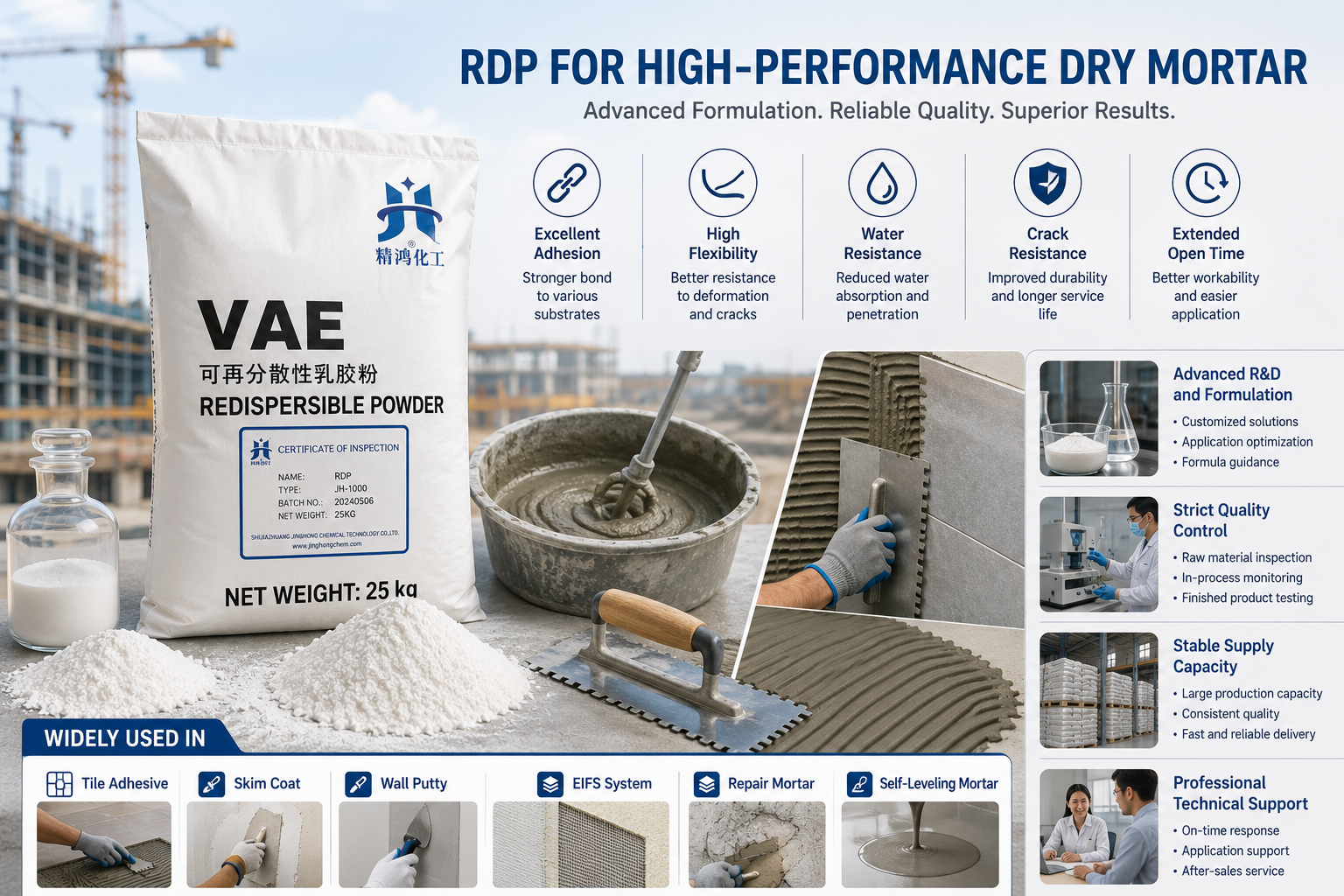
Different dry mortar applications require different RDP formulations. Matching the correct polymer grade and dosage to each application improves adhesion, flexibility, crack resistance, workability, and long-term durability.
RDP Dry Mortar Applications
Tile Adhesive
Tile adhesive is one of the largest application areas for Redispersible Polymer Powder. RDP increases bonding strength between mortar and ceramic tiles while improving flexibility and reducing the risk of tile failure caused by temperature changes or substrate movement.
Combined with HPMC, RDP also helps maintain proper open time and improves workability during installation.
Wall Putty and Skim Coat
For wall finishing materials, smooth application and crack resistance are essential. RDP improves cohesion and flexibility, allowing the coating to resist shrinkage cracks while producing a smoother finished surface.
Manufacturers can also reduce dusting and improve abrasion resistance by selecting an appropriate polymer grade.
Repair Mortar and EIFS
Repair mortars require high adhesion to old concrete as well as excellent impact resistance. EIFS systems require long-term weather resistance because they are continuously exposed to moisture, temperature changes, and UV radiation.
RDP provides the flexibility needed to accommodate these environmental stresses while maintaining strong bonding performance.
Self-Leveling Mortar
Self-leveling compounds must flow easily while maintaining strength after curing.
Proper RDP selection improves cohesion during flow, reduces surface defects, and helps prevent cracking after hardening.
| Dry Mortar Type | Typical RDP Dosage | Main Performance |
|---|---|---|
| Tile Adhesive | 1–3% | High Bond Strength |
| Skim Coat | 1–2% | Smooth Finish |
| Wall Putty | 0.5–2% | Better Workability |
| Repair Mortar | 2–5% | Crack Resistance |
| EIFS | 2–4% | Weather Resistance |
| Self-Leveling Mortar | 1–3% | Excellent Flowability |
What Best Practices Help Achieve Better Dry Mortar Performance with RDP?
Even high-quality RDP cannot deliver excellent results without proper formulation and production control. I often tell customers that choosing the right supplier is only the first step. Consistent manufacturing practices are equally important.
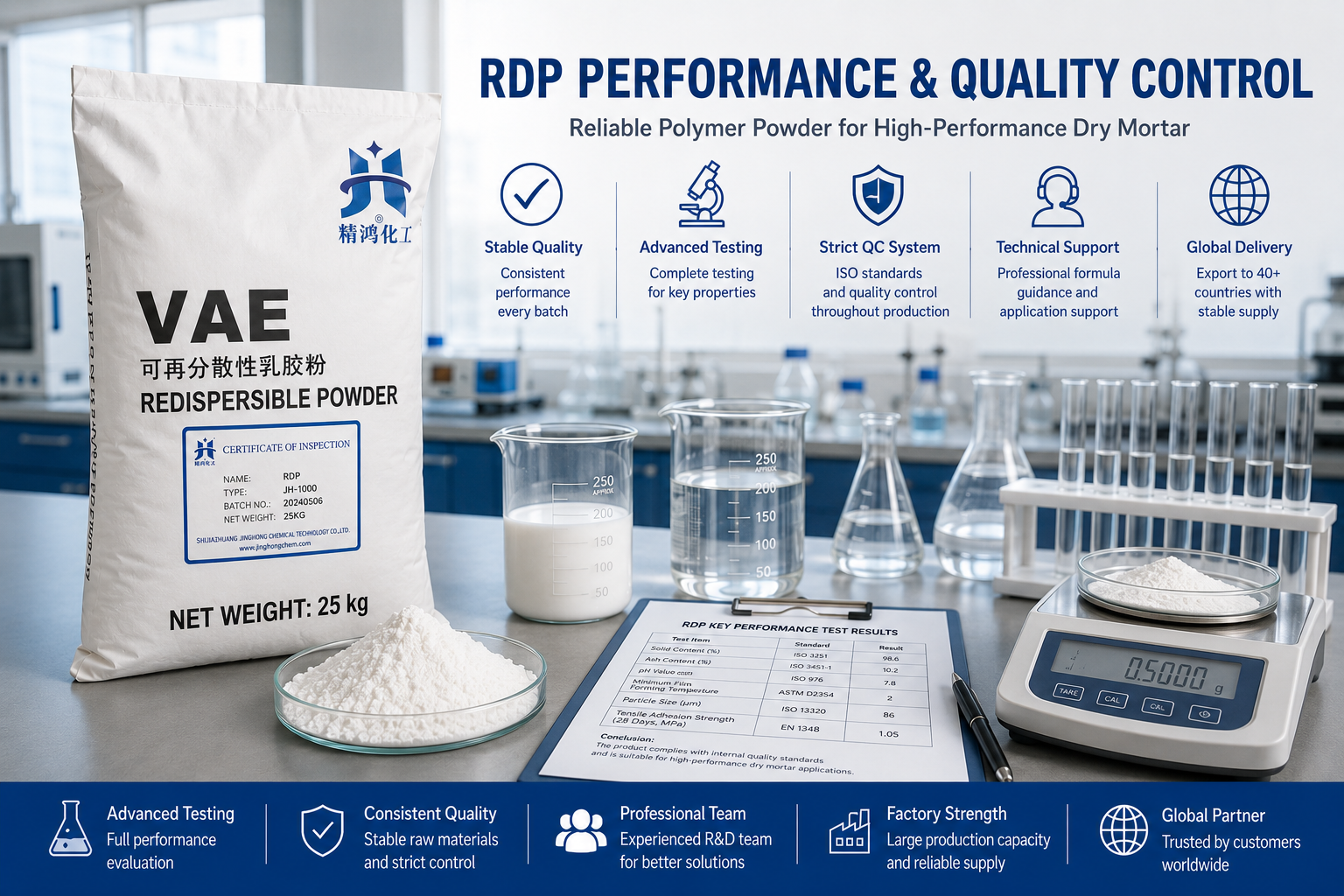
Better dry mortar performance depends on selecting the correct RDP grade, using the proper dosage, maintaining uniform mixing, controlling storage conditions, and working with a supplier that provides technical support.
Select the Right Polymer Grade
Different RDP grades are designed for different applications. High-flexibility grades are commonly used for repair mortar and EIFS, while standard grades are suitable for many tile adhesive and wall putty formulations.
Selecting the wrong grade may increase costs without improving performance.
Optimize Dosage
Adding more polymer does not always produce better results.
Instead, manufacturers should balance RDP with HPMC, cement, fillers, and other additives according to application requirements. Small formulation adjustments often deliver significant improvements while keeping production economical.
Maintain Stable Production
Consistent mixing time, raw material quality, and storage conditions all influence final product performance.
RDP should always be stored in a cool, dry environment to prevent moisture absorption before use. Manufacturers should also perform routine laboratory testing to verify batch consistency.
Work with a Technical Partner
One of the biggest advantages of working directly with an experienced RDP manufacturer is access to formulation support.
A reliable supplier can recommend suitable polymer grades, assist with formulation optimization, provide technical documentation, and help solve production challenges more efficiently than a trading company.
| Best Practice | Benefit |
|---|---|
| Select the Correct RDP Grade | Better Adhesion and Flexibility |
| Optimize Polymer Dosage | Improved Cost Efficiency |
| Uniform Mixing | Consistent Product Quality |
| Proper Storage | Longer Shelf Life |
| Combine RDP with HPMC | Balanced Fresh and Hardened Performance |
| Factory Technical Support | Faster Formula Optimization |
If you are developing new dry mortar products, you may also find these articles useful:
- Benefits of Buying Wholesale HPMC Directly from the Factory
- RDP Supplier: Finding Reliable Redispersible Polymer Powder
- Dry Mortar Additive: Enhancing Performance with Polymers
For additional technical information, I recommend:
- ASTM International — https://www.astm.org
- WACKER Construction Polymers — https://www.wacker.com
- European Chemicals Agency (ECHA) — https://echa.europa.eu
- ISO Standards — https://www.iso.org
Conclusion
Modern dry mortar performance depends on much more than cement alone. By selecting the right RDP grade, optimizing formulations for each application, and working with an experienced supplier, manufacturers can produce stronger, more durable, and more reliable construction materials while improving production efficiency and long-term customer satisfaction.