Are you tired of seeing tiles fall off or dealing with messy, fast-drying adhesives? Poor bond strength and short open times cause expensive rework and frustrated clients on every construction site. I have spent years in the chemical industry, and I know that using high-quality HPMC for tile adhesive is the only way to ensure lasting results and a smooth workflow.
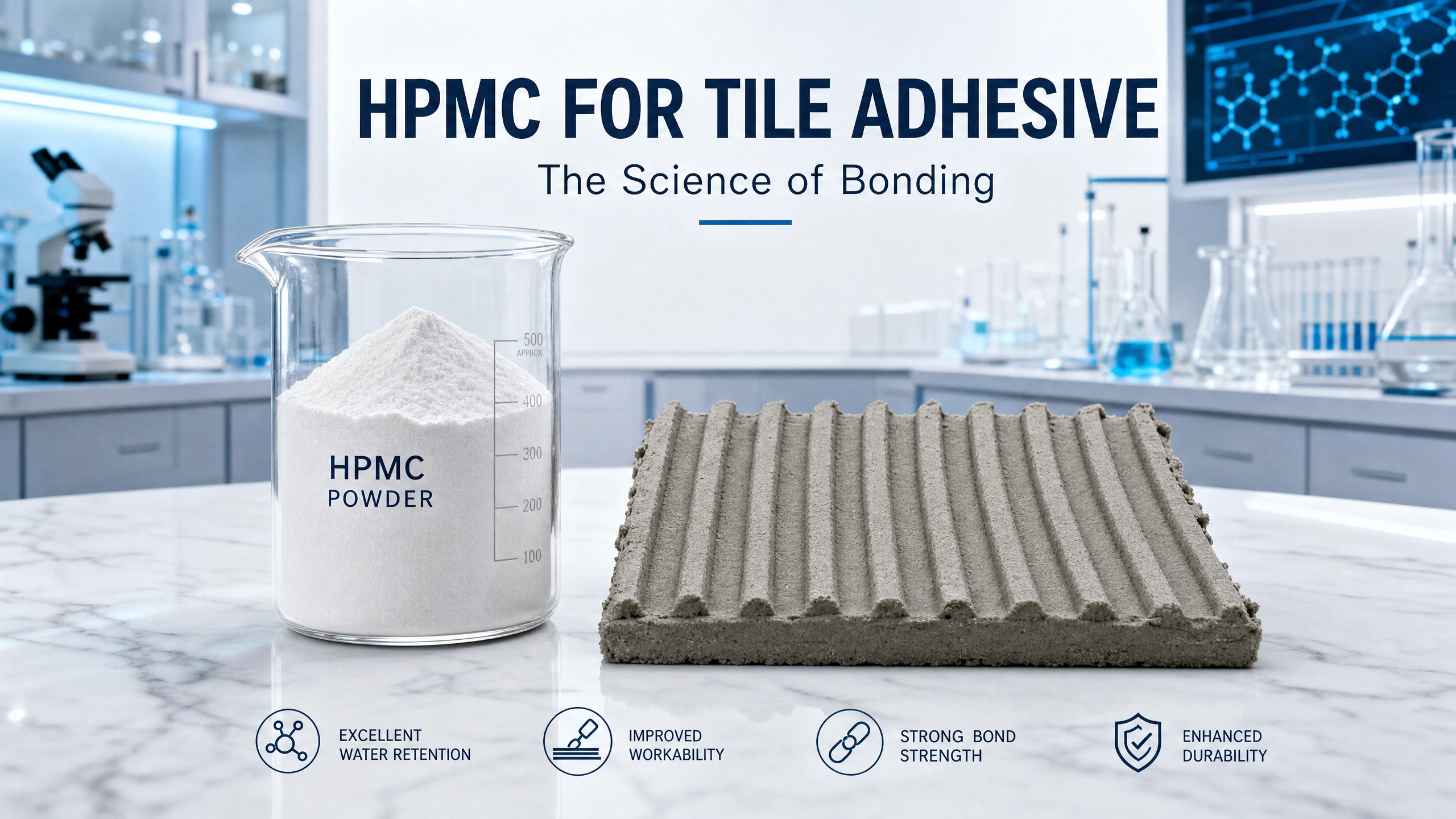
HPMC for tile adhesive is a vital additive that improves water retention, workability, and sag resistance. It prevents the mortar from drying too quickly, allowing cement to hydrate fully for a stronger bond. By adding HPMC, manufacturers create a creamy, easy-to-spread adhesive that keeps tiles in place even on vertical walls.

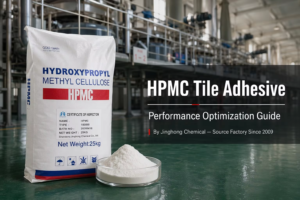
HPMC for tile adhesive application scene
I remember a project five years ago where a contractor used a cheap adhesive without enough cellulose ether. Within six months, the bathroom tiles started popping out. It was a disaster. Since then, I have always told my partners that the right additives make all the difference. Let me show you why this material is so important and how it works in your daily projects.
What is the Role of HPMC in Modern Tile Adhesive Formulations?
Do you struggle with adhesives that feel heavy or separate during mixing? Low-quality additives often lead to poor consistency, making it hard for workers to spread the mortar evenly on the wall. This inconsistency wastes time and lowers the quality of the final tiling job.
HPMC (Hydroxypropyl Methylcellulose) acts as a thickener and water-retaining agent in tile adhesives. It provides the necessary viscosity to hold tiles in place and ensures the mixture stays uniform. This chemical, often derived from natural cellulose, allows the adhesive to remain wet and workable for a longer period.

HPMC mixing with cement-based mortar
Technical Tip from My Lab: To avoid clumping, never add HPMC directly to wet mortar. Always dry-mix HPMC with your cement and sand first. This ensures each particle is separated before water is added, resulting in a smooth, lump-free paste with maximum water retention.
In my experience, the magic of HPMC lies in its ability to change how the mortar behaves under a trowel. When I visit factories, I see how they test the "slip" of the mixture. Without enough HPMC, the mortar is like wet sand; it has no soul. But with the right amount of our HPMC products, it becomes a smooth paste. This is because HPMC molecules trap water and create a lubricated network within the cement matrix.
To help you understand the technical side, I have broken down the main functions into a simple table. You can see how each property helps the contractor on the job site.
| Function | Technical Effect | Practical Benefit |
|---|---|---|
| Water Retention | Keeps water inside the mortar | Prevents premature drying and cracking |
| Thickening | Increases the body of the paste | Better "feel" and easier to spread |
| Lubrication | Reduces friction during mixing | Less effort for the worker |
| Air Entrainment | Introduces tiny air bubbles | Improves yield and workability |
I often tell my team that HPMC is like the glue within the glue. It does not just hold things together; it controls the timing. If the water leaves the mortar too fast, the cement cannot form strong crystals. This leads to a weak bond. By holding that water, HPMC ensures that the chemical reaction inside the cement happens perfectly. This is why even a small amount, sometimes less than 0.5%, can change everything.
How Does HPMC Enhance Water Retention, Open Time, and Sag Resistance?
Are you facing issues with tiles sliding down the wall or the adhesive drying before you can even place the tile? These problems lead to uneven rows and weak spots that fail over time. It is frustrating to keep adjusting tiles that just won’t stay where they belong.
HPMC improves water retention by forming a film that blocks water from escaping into the air or the substrate. This extended "open time" gives workers more freedom to adjust tiles. Also, its thickening properties provide high sag resistance, ensuring that heavy tiles stay perfectly aligned on vertical surfaces without sliding.

Tile adhesive sag resistance test with HPMC
Let’s talk about "Open Time" first. I once watched a worker in a hot climate struggle because his adhesive dried in ten minutes. He had to scrape it off and start over. With our high-quality HPMC, that same worker could have had 20 or 30 minutes. This is because HPMC creates a barrier. Think of it like a lid on a pot of water. It stops the steam from escaping, keeping the mix fresh. This is vital for large projects where you need to spread a large area of adhesive at once.
Then there is sag resistance. If you have ever tried to install a large format tile on a wall, you know the fear of it sliding down. HPMC gives the adhesive "yield stress." This means the paste is stiff enough to hold the weight of the tile but fluid enough to be moved when you push it. We test this in our lab by hanging heavy tiles on a vertical board. It is amazing to see how a tiny bit of powder keeps a 10kg tile from moving even a millimeter.
| Feature | Why It Matters | Impact on Quality |
|---|---|---|
| High Water Retention | Essential for porous tiles | No more "thirsty" substrates sucking out the water |
| Long Open Time | Better for large areas | Allows for more precise tile alignment |
| Anti-Sagging | Critical for wall tiles | Keeps rows straight and saves time |
I always suggest that if you want to test your supplier, look at their water retention rate. A good HPMC for tile adhesive should keep over 90% of the water inside the mix for at least 30 minutes. If it fails this, your tiles will eventually fail too. You can always contact us for a sample to run this test yourself. We take pride in our 15 years of production experience to get these parameters exactly right.
Which HPMC Grade is Best for Your Specific Project?
Do you feel confused by the many different viscosity grades and specifications available on the market? Choosing the wrong HPMC can result in an adhesive that is either too thick to spread or too thin to hold tiles. This confusion often leads to wasted money on materials that do not fit your needs.
The best HPMC grade depends on your specific application and local climate. Generally, a viscosity of 100,000 to 150,000 cps is ideal for standard tile adhesives according to ISO 13007 standards. However, for large format tiles or high-temperature environments, you may need a higher viscosity or a specially modified grade to ensure maximum performance.
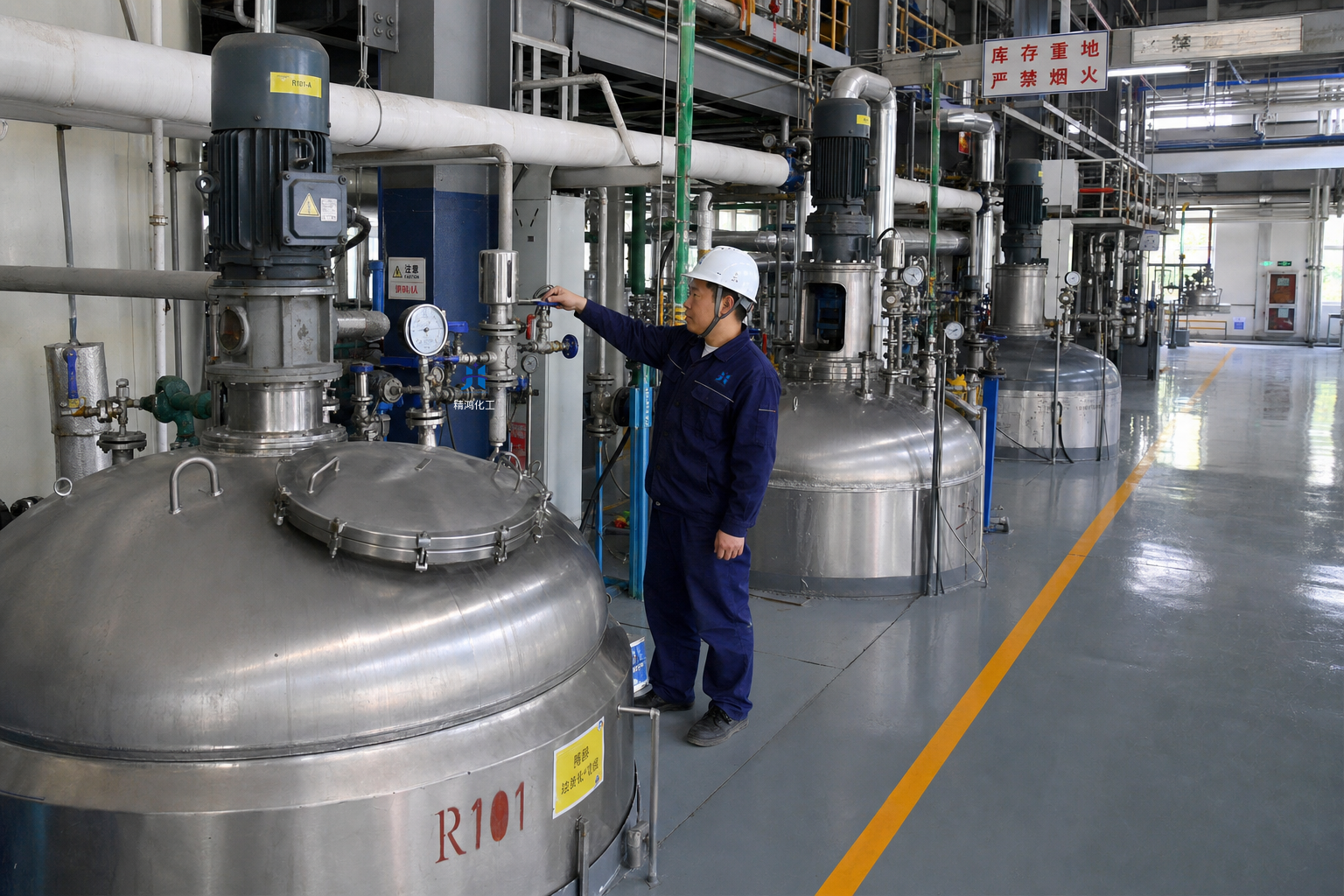
Jinghong Chemical HPMC production factory
I often get calls from buyers asking for "the best HPMC." I always tell them that "best" is relative. For example, if you are making a basic thin-set mortar for small indoor tiles, you don’t need the most expensive, high-viscosity grade. A standard 100k cps grade works great. But if you are exporting to the Middle East where it is 40 degrees Celsius, you need something with extra water retention.
We use a simple system to help our clients choose. We look at the tile size, the location (indoor vs outdoor), and the application method. For instance, "C1" and "C2" adhesives (standard vs high performance) require different HPMC levels. A C2 adhesive usually needs a more refined HPMC to pass the strict bond strength tests after heat aging.
| Project Type | Recommended Viscosity (cps) | Key Requirement |
|---|---|---|
| Standard Indoor Tiling | 100,000 | Good workability |
| Large Format Wall Tiles | 150,000 – 200,000 | High sag resistance |
| High-Temperature Areas | 150,000 (Modified) | Superior water retention |
| Self-Leveling Mortar | 400 – 60,000 | High flowability |
I remember a client from Southeast Asia who was using a very high viscosity grade for everything. He was spending too much money. I helped him switch to a customized 120,000 cps grade that we developed in our factory. He saved 15% on material costs and his customers actually liked the new "feel" of the adhesive better. This is why talking to a source factory is so valuable. We don’t just sell powder; we provide the right solution for your specific market.
Conclusion
Using the right HPMC for tile adhesive is the key to creating durable, professional construction results. It solves the most common tiling problems while making the job easier for workers.
Ready to Upgrade Your Tile Adhesive Performance?
As a professional source factory with over 15 years of experience, Jinghong Chemical provides high-quality HPMC tailored to your specific market needs. Whether you need superior water retention for hot climates or maximum sag resistance for large-format tiles, we have the right solution for you.
Contact us today for a free sample or a customized formulation consultation:
- Email: hpmc@jinghonghpmc.com
- WhatsApp: +8615733156958
- Website: www.jinghonghpmc.com
Let’s build stronger, longer-lasting projects together!