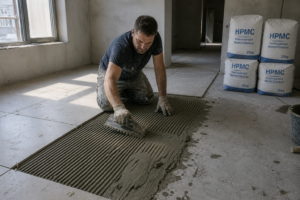
What Is HPMC Used for in Tile Adhesive?
HPMC in tile adhesive helps manufacturers manage water retention, consistency, workability, open time, and slip-control targets. However, buyers often select a grade by viscosity alone. That shortcut can lead to difficult application, inconsistent batches, and costly reformulation. I recommend matching the HPMC grade to the complete formulation and actual jobsite conditions.
HPMC is used in tile adhesive as a water-retaining and rheology-modifying cellulose ether.1 It helps the mixed adhesive remain workable, spread consistently, resist premature water loss, and meet practical open-time and anti-slip requirements. HPMC supports the application process, but cement, polymers, aggregates, and the complete formulation determine overall bonding performance.2
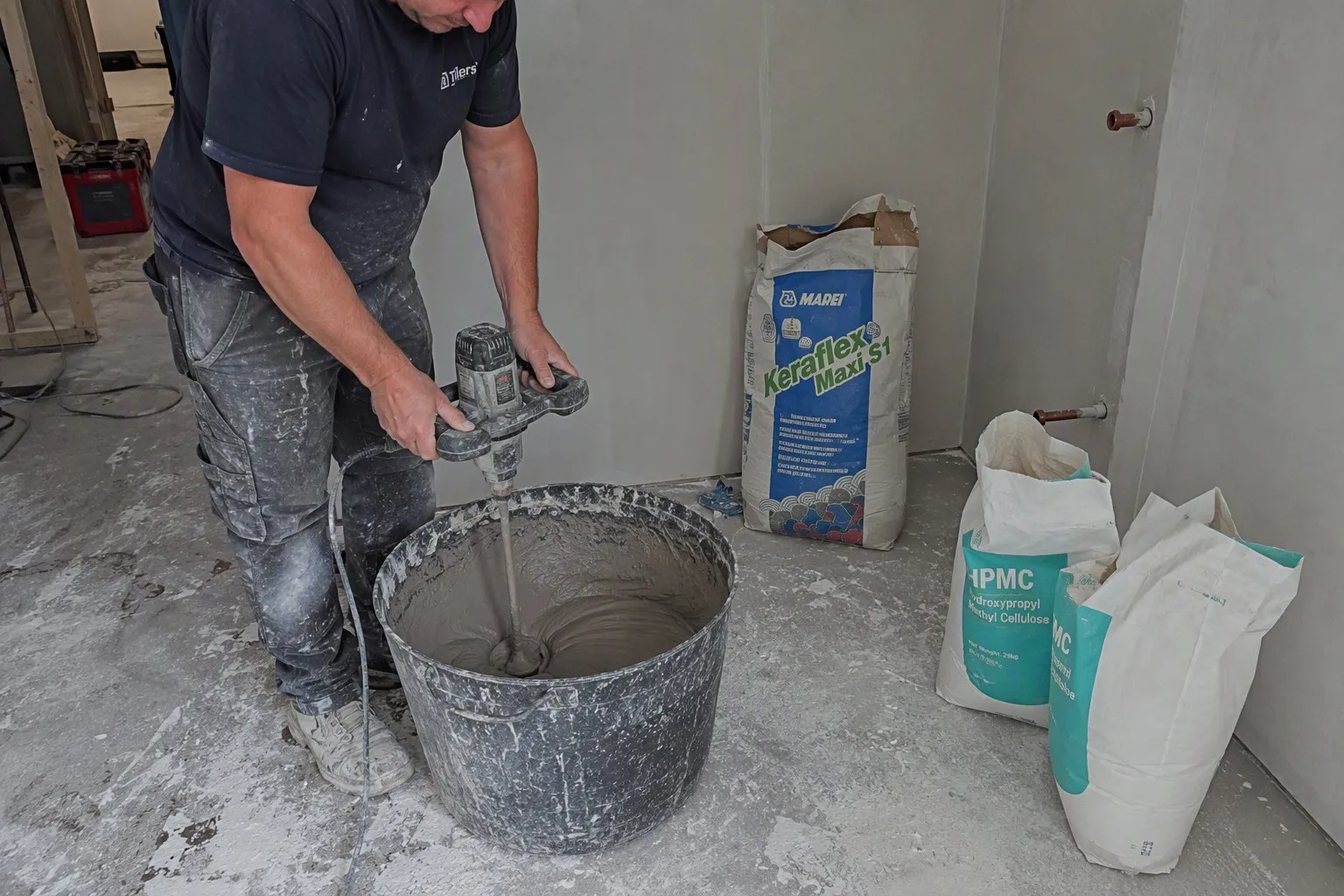
In my experience handling inquiries from tile-adhesive producers, many conversations begin with one question: “What viscosity do I need?” I usually step back before answering. The useful question is which grade can deliver the required application behavior under the buyer’s climate, substrate, tile type, and production conditions.
What Functions Does HPMC Perform in Tile Adhesive?
A tile-adhesive producer needs a mortar that mixes smoothly, spreads with reasonable effort, and remains usable long enough for tile placement. If the mortar loses water too quickly or has unsuitable consistency, installation becomes harder. I use HPMC to help control these application-stage properties without treating it as the adhesive’s primary binder.
HPMC performs two main functions in cement-based tile adhesive: water retention and rheology modification. These functions can support consistency, wet mortar stability, workability, open time, and slip-control targets. The practical result depends on the HPMC grade, dosage, cement system, fillers, polymer powder, water demand, and mixing process.
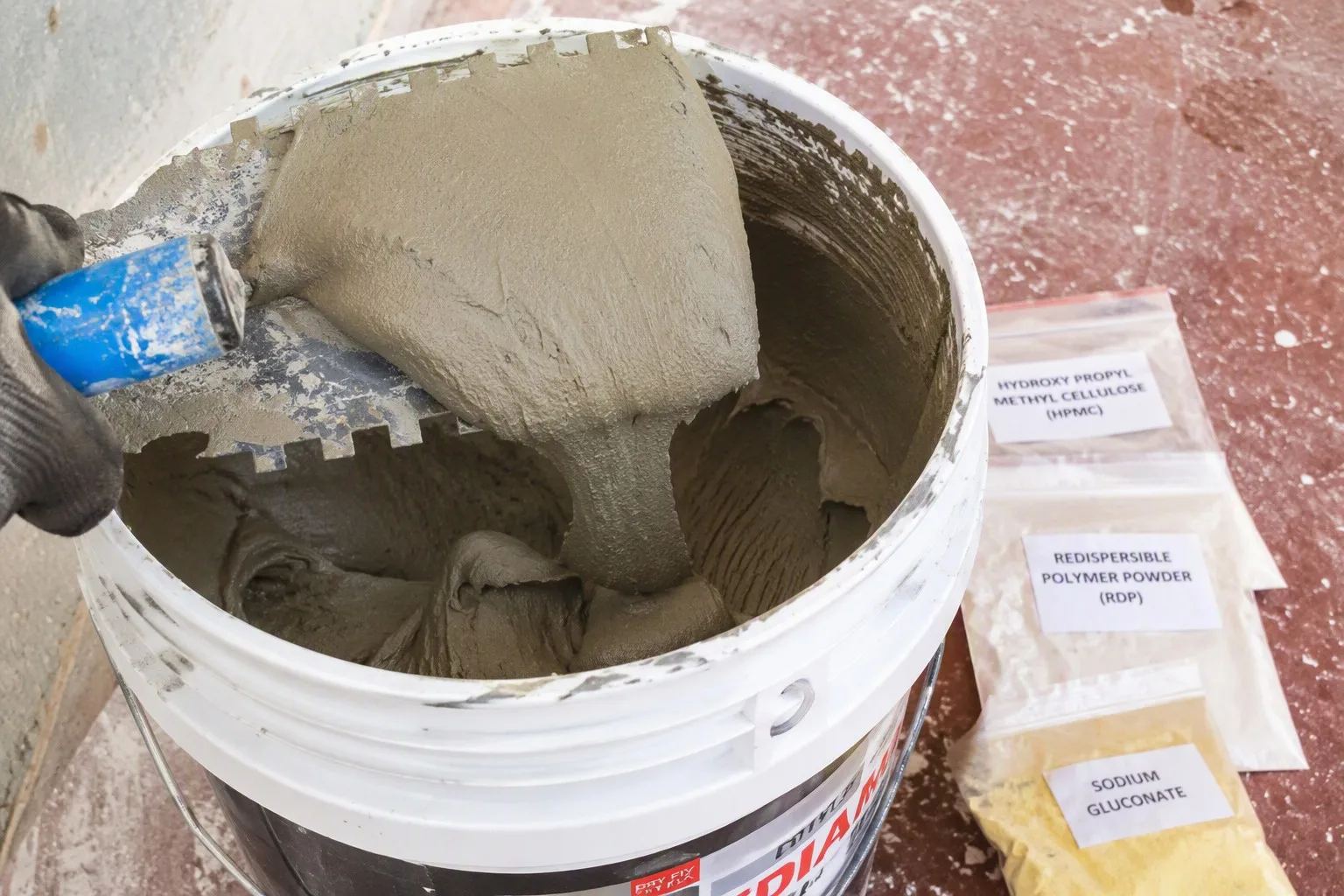
Water retention during application
Fresh cementitious tile adhesive contains water for both hydration and workable consistency. Absorbent substrates, dry air, heat, and wind can remove part of that water before the installer finishes placing the tile. HPMC helps slow this moisture loss.
Better-controlled water retention can help:
- Preserve workable consistency during application
- Reduce premature drying on absorbent substrates
- Support more consistent cement hydration conditions
- Maintain wetting ability during the intended open period
- Reduce sudden changes in troweling behavior
I do not describe this effect as automatic proof of stronger final adhesion. Water retention supports the conditions in which the complete adhesive system develops, but it does not replace correct cement chemistry, polymer modification, surface preparation, or curing.
Rheology and consistency control
Rheology describes how a material flows and deforms under force. For tile adhesive, the installer expects the mortar to move under the trowel but remain stable after application. HPMC contributes to this balance by modifying viscosity and flow behavior.
A suitable product may help the adhesive:
- Mix into a uniform paste
- Remain stable in the bucket
- Spread without excessive drag
- Hold trowel-ridge shape
- Limit tile movement after placement
- Maintain practical workability
The grade still needs to match the formulation. A product that gives strong thickening in one recipe may feel sticky, heavy, or difficult to wet in another.
HPMC works as one part of a system
I encourage buyers to view HPMC as one component in a multi-material formulation.
| Formulation component | Typical role in tile adhesive |
|---|---|
| Cement | Hydraulic binder and strength development |
| Graded sand or mineral filler | Structure, volume, and application texture |
| HPMC | Water retention and rheology management |
| RDP/VAE powder | Polymer modification, flexibility, and adhesion support |
| Starch ether or other additives | Specialized rheology or application adjustment |
| Water | Hydration and working consistency |
The exact contribution of each material depends on the formulation. I therefore avoid evaluating HPMC in isolation when the buyer’s real concern is finished tile-adhesive performance.
How Does HPMC Improve Water Retention in Tile Adhesive?
Rapid water loss can cause a tile adhesive to stiffen before the installer completes tile placement. The risk becomes more serious on porous blocks, cement boards, renders, or other absorbent surfaces. Hot, dry, or windy conditions can intensify the problem. I assess HPMC water retention with those practical variables in mind.
HPMC dissolves or disperses within the wet mortar and helps bind water in the fresh mixture. This process slows the migration of moisture into the substrate and surrounding air. The retained water can support workable consistency and hydration conditions, although the final result must be verified in the buyer’s complete adhesive formulation.
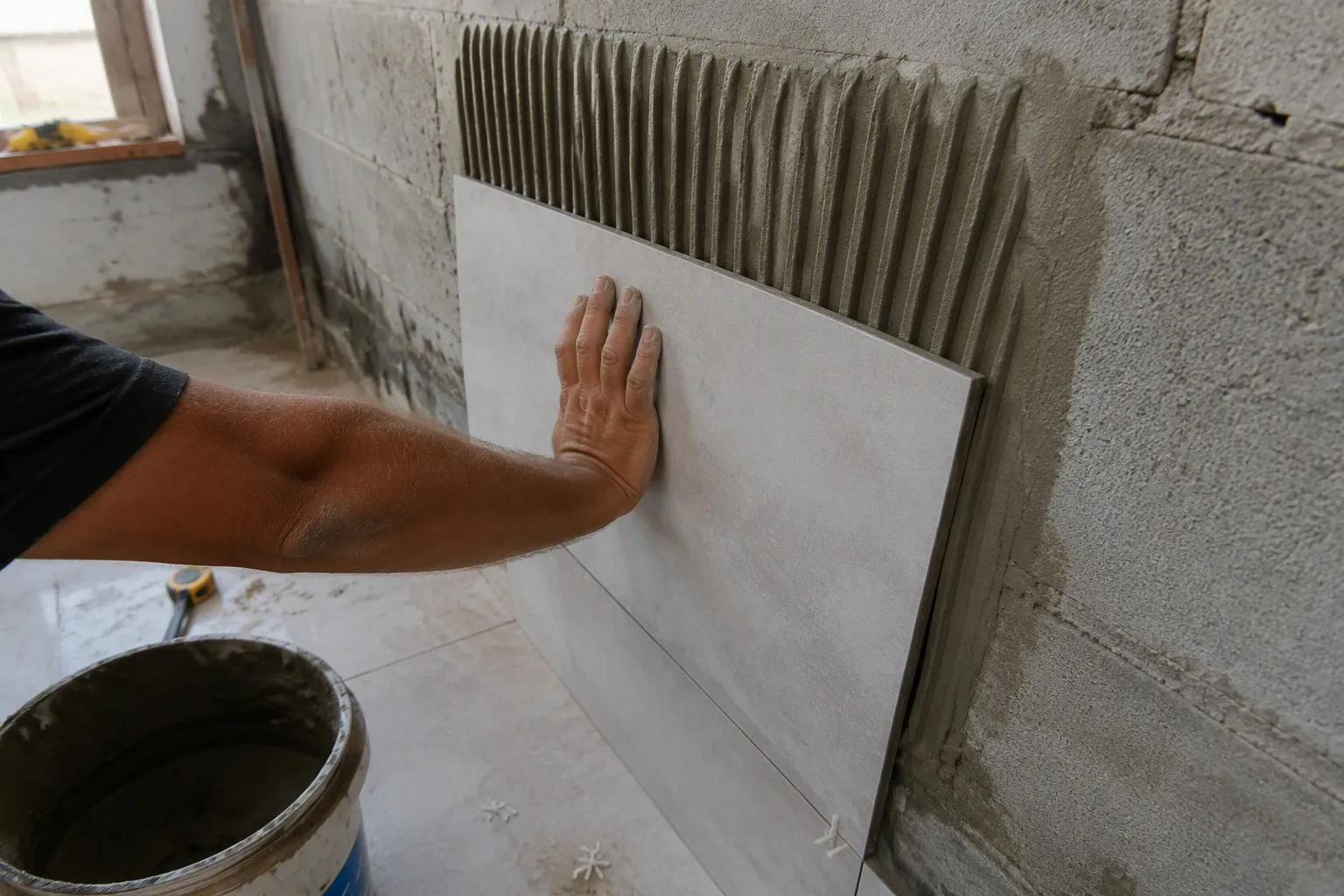
Why water loss matters
A cement-based tile adhesive needs sufficient moisture during mixing, spreading, wetting, and early curing. If the adhesive surface dries too quickly, the installer may lose useful placement time. The mortar can also become harder to comb with a notched trowel.
The application environment changes this behavior:
- High temperature can accelerate evaporation and consistency loss.
- Low relative humidity can increase surface drying.
- Wind or strong ventilation can shorten useful working time.
- Absorbent substrates can draw water from the mortar.
- Large-format or low-absorption tiles can change wetting and curing requirements.
- Thin adhesive layers can be more sensitive to moisture loss than thick layers.
I often receive inquiries in which a buyer initially provides only a viscosity target. After I ask about climate and substrate absorption, the requirement becomes clearer. A producer serving a hot, dry market may prioritize water retention and open-time behavior differently from a producer supplying indoor work in a moderate climate. I treat these conversations as requirement patterns rather than controlled experimental evidence.
Water retention is not the same as adding more water
A producer cannot always correct poor water retention by increasing mixing water. Excess water may change consistency, increase sag, alter trowel ridges, or disturb the balance of the formulation.
Instead, I recommend evaluating several connected variables:
- The HPMC grade and dosage range
- The water-to-dry-mix ratio
- The type and source of cement
- The filler grading and absorption
- The polymer and other additives
- The substrate and application thickness
- The intended climate and working time
A qualified laboratory should measure relevant properties with defined methods. Buyers can also compare samples in controlled internal trials before commissioning external testing. Where a product must meet EN, ISO, ANSI, or another market-specific standard, I recommend having the finished formulation evaluated against the applicable test requirements.
How Does HPMC Control Tile-Adhesive Rheology and Workability?
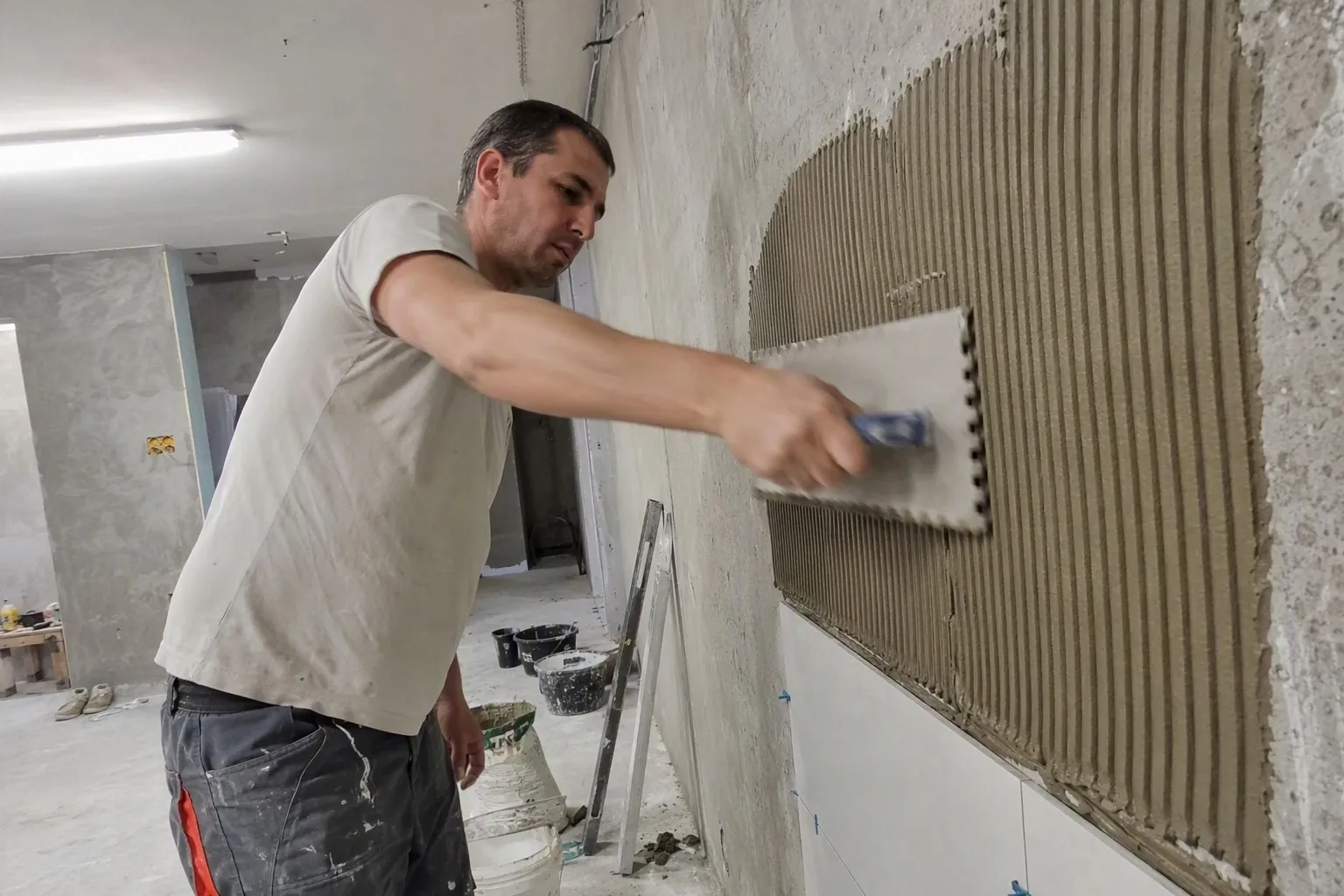
Tile adhesive must move under the trowel without behaving like a thin liquid. If the mortar is too fluid, ridges may collapse and tiles may slip. If it is too thick or sticky, installers may struggle to spread it. I use rheology requirements to translate these field concerns into a more useful HPMC selection process.
HPMC modifies the viscosity and flow behavior of wet tile adhesive. A suitable grade can support bucket stability, trowelability, ridge formation, consistency, and slip-control targets. However, rheology comes from the full recipe, so manufacturers should test HPMC alongside cement, fillers, polymers, water, and any other performance additives.
The balance between movement and stability
Tile adhesive experiences different forces during use. Mixing applies strong mechanical action. Troweling applies shear. After the installer stops moving the trowel, the mortar needs enough structure to stay in place.
I look for a balance among several properties:
- Mixability: The powder should wet and develop a uniform consistency.
- Trowelability: The mortar should spread without excessive force.
- Ridge stability: Notched ridges should retain an appropriate shape.
- Sag or slip control: Tiles should not move beyond the formulation’s target.
- Pot consistency: The mixed material should remain reasonably uniform during its intended use period.
- Surface wetting: The adhesive should maintain suitable contact behavior during tile placement.
One property can affect another. Stronger thickening may improve apparent body but create excessive drag. Greater water demand may make the mortar feel soft while changing sag behavior. A long open-time target may require broader formulation adjustments rather than only changing cellulose ether viscosity.
Why viscosity data need context
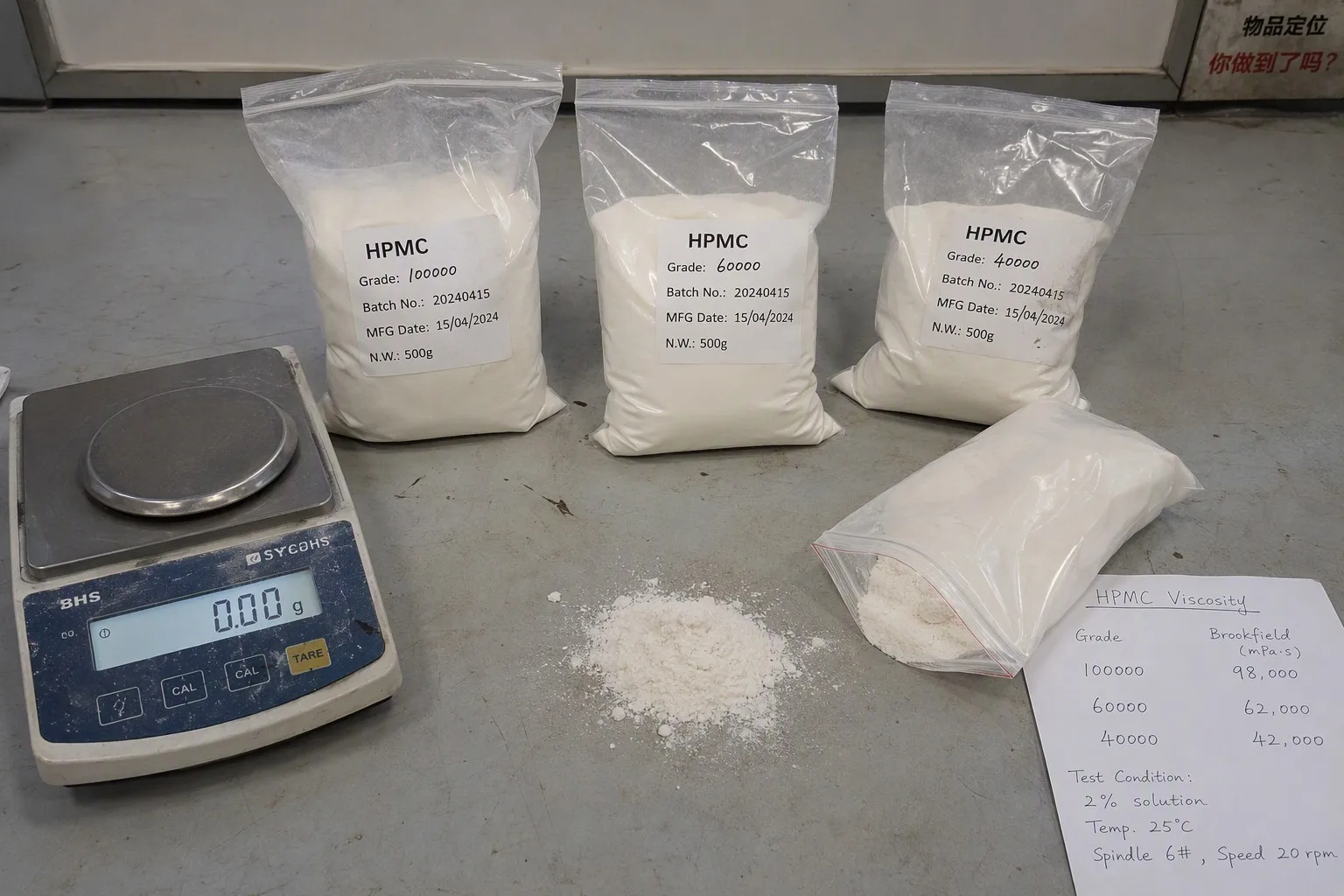
A viscosity value is meaningful only when the test method is clear.3 Suppliers may report measurements using different:
- Solution concentrations
- Test temperatures
- Instruments
- Spindle types and speeds
- Sample-preparation procedures
- Moisture corrections
For example, a value measured in a 2% aqueous solution should not be compared directly with a result obtained under a different concentration or method. I ask buyers to compare values on the same basis and request the supplier’s test conditions.
I treat the viscosity number as a screening specification, not as a complete prediction of tile-adhesive behavior.
I have handled inquiries where a customer requested the highest available viscosity because the number appeared to indicate better quality. After discussing trowel drag and the desired water ratio, the customer chose to evaluate several samples instead. That conversation did not prove a universal rule, but it illustrates why a headline specification cannot replace application testing.
Does Higher-Viscosity HPMC Always Produce Better Tile Adhesive?
Manufacturers sometimes assume that a higher viscosity number will produce better water retention, stronger adhesive, or more effective slip control. This assumption simplifies purchasing, but it can conceal formulation problems. I have seen buyers narrow their options too early because they treated one laboratory value as a complete performance grade.
No, higher-viscosity HPMC does not automatically produce better tile adhesive.4 An unsuitable grade can increase trowel drag, change water demand, create excessive stickiness, or disturb the formulation’s rheological balance. Buyers should select viscosity according to target workability, water retention, slip control, climate, substrate, tile type, and compatible dosage.
What can happen when viscosity is too high?
The result depends on the formulation, but an excessively thickening grade may contribute to:
- Heavy or tiring troweling
- Poor mortar spreadability
- Excessive apparent stickiness
- A need to adjust mixing water
- Difficult wetting or dispersion during production
- An imbalance between anti-slip behavior and easy application
- Higher additive cost without proportional field benefit
A lower-viscosity product is not automatically better either. If the grade provides insufficient structure or water retention in a specific recipe, the adhesive may fail to meet the producer’s application targets.
The goal is therefore appropriate rheological performance, not the largest number on a technical data sheet.
A better way to discuss grade selection
When a buyer asks me, “Which viscosity should I purchase?” I usually ask the following questions:
- What type of tile adhesive will the company manufacture?
- Which cement, sand, fillers, and polymer powder are already in the recipe?
- What water ratio does the producer currently use?
- What open-time and anti-slip targets are required?
- Will the product be applied indoors, outdoors, or both?
- What temperatures and humidity levels are common in the target market?
- Are the substrates highly absorbent?
- What tile types and sizes are expected?
- Which test standard or internal benchmark applies?
- What problem does the current formulation show?
These questions turn a raw viscosity request into an application profile.
| Buyer’s initial request | More useful selection question |
|---|---|
| “I need high viscosity.” | What troweling consistency and ridge stability are required? |
| “I need long open time.” | Under which temperature, humidity, and substrate conditions? |
| “I need no tile slip.” | What tile dimensions, weight, layer thickness, and test method apply? |
| “I need the lowest dosage.” | Which performance and cost targets must the dosage meet? |
| “I need better adhesion.” | Which component or test result is limiting the complete formulation? |
I never promise that one grade will be compatible with every recipe. I recommend bench testing, pilot mixing, and finished-product evaluation before bulk purchasing.
How Should Buyers Select an HPMC Grade for Tile Adhesive?
Choosing from a technical data sheet can appear efficient, but paper specifications do not reproduce a mixer, trowel, substrate, or climate. A mismatched grade can cause rejected batches, repeated adjustment, or jobsite complaints. I reduce this risk by treating grade selection as a structured sample-validation process.
Buyers should select HPMC by defining the tile adhesive’s required workability, water retention, open time, slip resistance, climate, substrate, and tile type. They should then compare technically suitable samples in the same base formulation, using controlled mixing and application procedures. The preferred grade should provide consistent performance at an economically practical dosage.5
Start with an application requirement sheet
I recommend recording requirements before requesting samples. The sheet does not need to be complicated, but it should include:
- Tile-adhesive type and intended market
- Relevant performance standard
- Cement source and grade
- Aggregate and filler composition
- RDP or VAE powder type
- Other cellulose ethers or rheology modifiers
- Current water demand
- Mixing equipment and mixing sequence
- Target application thickness
- Substrate type and absorption
- Tile type, size, and absorption
- Expected temperature and humidity
- Current formulation problem
- Packaging and annual volume requirements
This information helps a supplier suggest a manageable sample group. It also reduces the chance of choosing products that look similar on paper but behave differently in the mortar.
Use controlled comparison trials
I suggest changing one main variable at a time whenever practical. If a manufacturer changes the HPMC, polymer powder, cement, and water ratio in the same trial, the team may not know which change caused the observed result.
A basic internal comparison can include:
- Dry blending under the same conditions
- Using the same batch size and equipment
- Applying a defined water ratio
- Following identical mixing and resting times
- Recording wet consistency and ease of mixing
- Checking trowel feel and ridge shape
- Observing slip under a defined internal method
- Monitoring workable time
- Testing open time and adhesion through a qualified method
- Repeating the trial to assess consistency
I have worked with customers who tested two or three samples in their existing formula before placing a commercial order. Their comments helped narrow the grade choice, but I treat those comments as customer feedback rather than universal scientific proof.
Evaluate total formulation cost
Price per tonne matters, but it does not show the full purchasing cost. Buyers should also consider:
- Required dosage to reach the target performance
- Water adjustment and formulation changes
- Production efficiency
- Batch rejection risk
- Customer complaints and returns
- Jobsite rework
- Storage stability
- Supply continuity
- Technical support and documentation
A slightly lower purchase price can become expensive if the product needs more adjustment or varies between batches. Conversely, a higher unit price does not automatically prove better value. I compare cost-in-use and production risk, not price alone.
How Can Buyers Evaluate an HPMC Supplier for Tile Adhesive?
A technically suitable sample solves only part of the procurement problem. A manufacturer also needs repeatable commercial batches, accurate documentation, suitable packaging, and dependable export handling. If the approved sample differs from later shipments, the producer may face formulation drift and unplanned quality-control work.
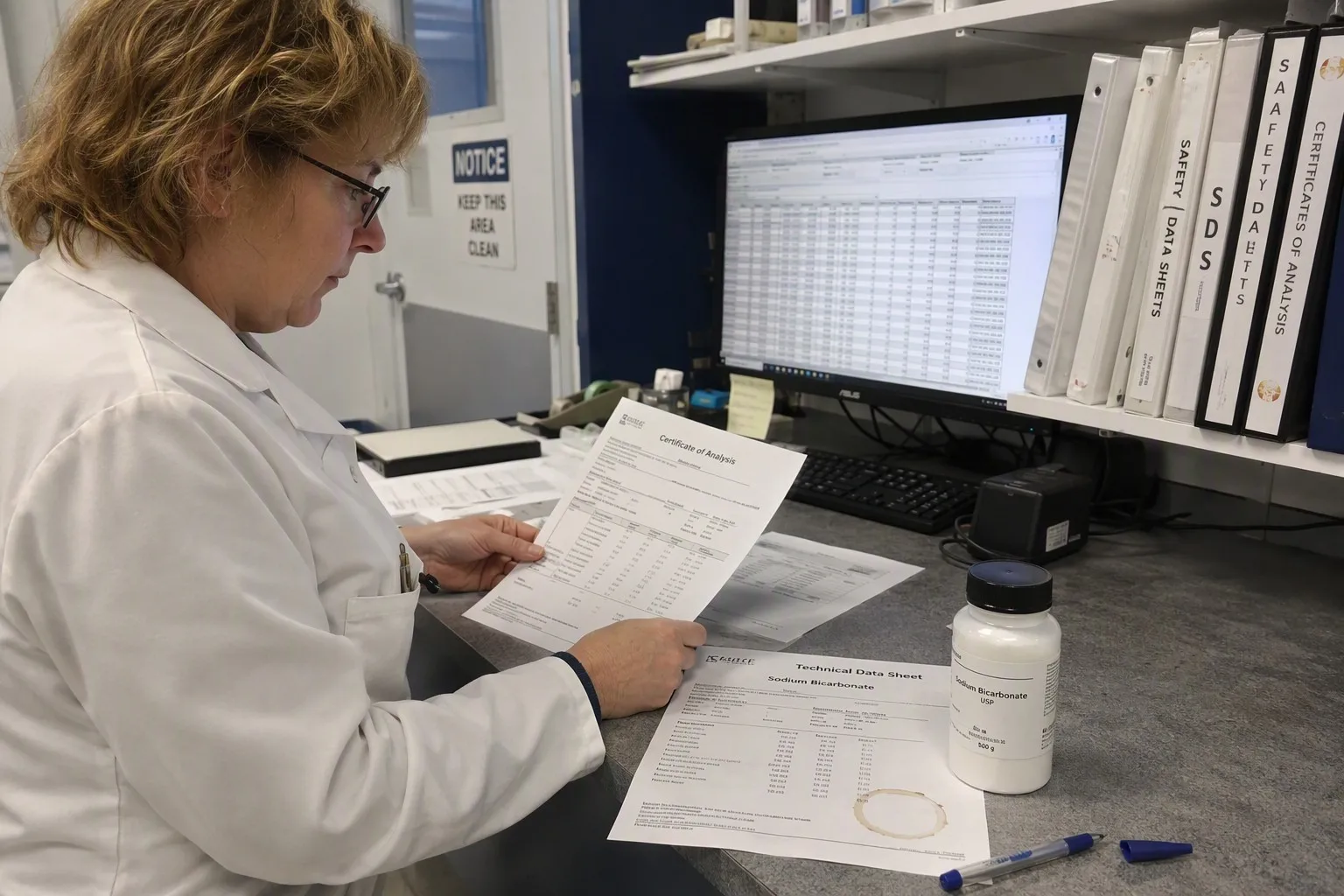
Buyers should evaluate an HPMC supplier by reviewing manufacturing capability, batch consistency, traceability, test methods, sample-to-shipment conformity, technical communication, packaging, lead times, and export documentation. They should verify COA, SDS or MSDS, and claimed certifications, then confirm product performance through incoming inspection and formulation testing.
Review technical and quality information
I suggest requesting documents before treating a supplier as approved. Depending on the market and company procedures, useful documents may include:
- Technical data sheet
- Certificate of Analysis for the supplied batch
- SDS or MSDS
- Product specification
- Test-method descriptions
- Packaging information
- Storage and shelf-life guidance
- Country-of-origin and export documents
- Quality-management certificates, where claimed
- Regulatory or compliance declarations relevant to the destination
A certificate should be treated as a document to verify, not as automatic evidence that every batch will suit the buyer’s tile adhesive. Buyers can confirm the certificate issuer, scope, validity period, covered site, and product relevance.
Compare the sample with commercial deliveries
A good supplier-qualification plan connects sample approval to incoming quality control. I recommend retaining the approved sample and recording its lot number. The purchasing and quality teams can then compare future batches against agreed specifications.
Important checks may include:
| Check | Procurement purpose |
|---|---|
| Product identity and labeling | Prevents grade or shipment confusion |
| Appearance and moisture condition | Identifies visible transport or storage issues |
| Viscosity under an agreed method | Supports lot-to-lot comparison |
| Moisture or loss on drying | Helps assess handling and specification compliance |
| pH, where relevant | Provides an additional consistency indicator |
| Mortar application test | Checks performance in the actual formulation |
| Packaging integrity | Reduces contamination and moisture risk |
| COA and lot traceability | Connects test data to the delivered batch |
The buyer’s laboratory should define acceptance limits based on the formulation and risk level. I also recommend periodic third-party testing when the application, contract, or local regulation requires independent verification.
Assess the supplier’s communication
Technical communication often reveals whether a supplier understands the application. I pay attention to whether the supplier asks about the formula, environment, test method, and performance target rather than recommending a grade solely from a requested viscosity number.
At Shijiazhuang Jinghong Chemical Technology Co., Ltd., we manufacture construction-grade cellulose ethers and polymer additives, including HPMC, RDP/VAE, HEC, and MHEC. We can provide samples, customized specifications, OEM packaging, COA and SDS/MSDS documentation, and export support. However, I still advise every buyer to validate the proposed product in the actual formulation before approving a bulk order.
Frequently Asked Questions
Is HPMC the main source of bond strength in tile adhesive?
No. HPMC mainly manages water retention, consistency, and rheology during mixing and application.6 Cement, polymer binders such as RDP, curing conditions, substrate preparation, tile characteristics, and the complete formulation influence final adhesion. I recommend testing the finished adhesive according to the applicable standard.
What HPMC viscosity should I use for tile adhesive?
No single viscosity suits every tile-adhesive formulation. I select candidate grades according to required workability, open time, slip control, water retention, climate, substrate absorption, and tile type. Buyers should also compare viscosity values only when concentration, temperature, instrument, and test procedures are equivalent.
Can HPMC extend tile-adhesive open time?
HPMC can support open-time targets by helping the wet mortar retain water and workable consistency. However, the result also depends on dosage, cement, polymer powder, fillers, water ratio, temperature, humidity, wind, substrate absorption, and application thickness. I recommend verifying open time through formulation-specific testing.
How should I test an HPMC sample before purchasing?
I recommend testing the sample in the buyer’s existing base formulation under controlled mixing conditions. The team should record water demand, mixing behavior, consistency, trowelability, ridge stability, slip, workable time, and open time. A qualified laboratory should evaluate standardized adhesion and durability requirements.7
What documents should an HPMC supplier provide?
A supplier should normally provide a technical data sheet, batch COA, SDS or MSDS, product specification, packaging details, storage guidance, and relevant export documents. If the supplier claims certifications, buyers should verify the certificate’s issuer, validity, scope, manufacturing site, and relevance to the purchased product.
Conclusion
HPMC in tile adhesive is primarily used to manage water retention and rheology, supporting workable consistency, trowelability, open-time requirements, and slip-control targets. I do not select it by viscosity or price alone. I compare the grade, dosage, formulation compatibility, batch consistency, and total procurement risk.
If you need to evaluate an HPMC grade for tile adhesive, contact Shijiazhuang Jinghong Chemical Technology Co., Ltd. with your formulation details, target market, climate, substrate, and application requirements. We can recommend samples and documentation for your own controlled validation before bulk purchasing.
"Water Retention Mechanism of HPMC in Cement Mortar - PMC", https://pmc.ncbi.nlm.nih.gov/articles/PMC7372461/. Peer-reviewed studies of cellulose ethers in cementitious mortars describe HPMC as a water-retaining admixture that also alters the fresh mortar's rheological behavior. Evidence role: mechanism; source type: paper. Supports: That hydroxypropyl methylcellulose is a cellulose ether used in cement-based mortar systems to modify fresh-state rheology and improve water retention.. ↩
"Redispersible polymer powder modified cementitious tile ...", https://pmc.ncbi.nlm.nih.gov/articles/PMC8606344/. Tile-adhesive performance standards evaluate tensile adhesion of the complete cementitious adhesive system under specified conditioning, rather than attributing bond strength to a single additive. Evidence role: general_support; source type: institution. Supports: That cementitious tile-adhesive performance, including adhesion, is assessed for the finished adhesive system and is influenced by its binder, polymer modification, aggregate composition, and curing conditions.. Scope note: Standards establish product-level test requirements; they do not isolate the contribution of HPMC in every formulation. ↩
"Non-Newtonian Fluids for Rheological Measurements", https://tsapps.nist.gov/publication/get_pdf.cfm?pub_id=851811. Metrology guidance notes that reported viscosity is inseparable from specified measurement conditions, including temperature, instrument geometry, and shear conditions for non-Newtonian fluids. Evidence role: definition; source type: government. Supports: That viscosity measurements depend on defined test conditions, including temperature and the measurement method, particularly for non-Newtonian materials.. Scope note: The relevance of individual variables depends on the specific HPMC solution and the viscometer method used. ↩
"Water Retention Mechanism of HPMC in Cement Mortar - PMC", https://pmc.ncbi.nlm.nih.gov/articles/PMC7372461/. Experimental studies of cellulose ethers in cement mortars show that fresh-state performance varies with polymer type, molecular characteristics, dosage, and mortar composition, so viscosity alone is not a complete predictor of application behavior. Evidence role: general_support; source type: paper. Supports: That the effects of HPMC on cement-mortar water retention, consistency, and workability depend on polymer characteristics, dosage, and formulation conditions rather than viscosity alone.. Scope note: Studies may use model mortars or specific commercial cellulose ethers and therefore cannot establish the optimum grade for every tile-adhesive recipe. ↩
"Part 31 - Contract Cost Principles and Procedures", https://www.acquisition.gov/far/part-31. Public-procurement guidance on life-cycle costing recognizes that acquisition decisions can account for performance, operating consequences, and risk in addition to initial purchase price. Evidence role: general_support; source type: government. Supports: That procurement decisions may assess whole-life or total cost, including quality, operational effects, and risk, rather than relying solely on purchase price.. Scope note: General life-cycle-cost guidance does not quantify the cost-in-use of a particular HPMC grade or tile-adhesive formulation. ↩
"Water Retention Mechanism of HPMC in Cement Mortar - PMC", https://pmc.ncbi.nlm.nih.gov/articles/PMC7372461/. Reviews of polymer- and cellulose-ether-modified cement mortars distinguish HPMC's fresh-state water-retention and rheology functions from the binding and strength-development roles of cement and polymer binders. Evidence role: mechanism; source type: paper. Supports: That HPMC is generally used as a water-retaining and rheology-modifying admixture in cement-based mortar, while cement and polymeric binders provide the principal binding functions.. Scope note: The relative contribution of each component to adhesion varies with the adhesive class, substrate, curing regime, and formulation. ↩
"Assessment of Cementitious Ceramic Tile Adhesives in ... - PMC", https://pmc.ncbi.nlm.nih.gov/articles/PMC10301792/. Tile-adhesive standards such as ISO 13007 and EN 12004 specify test methods for tensile adhesion and performance after defined conditioning regimes, providing a basis for finished-product evaluation. Evidence role: general_support; source type: institution. Supports: That major tile-adhesive standards specify test methods for tensile adhesion and conditioned performance of cementitious ceramic-tile adhesives.. Scope note: The applicable standard, classification, and required conditioning procedures vary by destination market and product category. ↩